.webp&w=384&q=75)

Loading, please wait...
Loading, please wait...

Chronic unilateral vestibular hypofunction presents a formidable challenge for both patients and clinicians across neurology and otolaryngology. The condition typically arises after incomplete recovery from acute peripheral insults, such as vestibular neuritis, labyrinthitis, or surgical resection of acoustic neuromas. Consequently, patients suffer from persistent dizziness, postural instability, oscillopsia during head rotation, and an increased risk of falls. In this clinical landscape, novel adjuncts such as vestibular electrical stimulation have garnered substantial scientific attention. When peripheral sensory hair cells or Scarpa's ganglion neurons suffer unilateral damage, the resting firing discharge becomes asymmetrical. The central nervous system immediately attempts compensation through neuroplastic reorganization within the vestibular nuclei and cerebellum. However, this natural compensation remains incomplete in a significant subset of individuals. These patients develop chronic perceptual dizziness, fear of movement, and profound psychological distress, including anxiety and depressive symptoms. Standard vestibular rehabilitation protocols utilize habituation, gaze stabilization, and balance re-training to foster central compensation. Nevertheless, many individuals reach a therapeutic plateau, leaving residual visual blurring and dynamic instability. Therefore, clinicians continually seek adjunctive modalities that can safely amplify central neural adaptation and enhance functional recovery for this challenging population.
A recent randomized controlled clinical trial evaluated the effectiveness of combining vestibular electrical stimulation with supervised vestibular rehabilitation in chronic unilateral vestibular hypofunction. Furthermore, researchers enrolled forty participants aged 18 to 65 years who experienced persistent vestibular symptoms. The trial randomly allocated these patients into two distinct treatment pathways. Specifically, the control cohort engaged in a rigorous, four-week supervised vestibular rehabilitation regimen. Meanwhile, the experimental cohort completed an identical rehabilitation program with the addition of vestibular electrical stimulation sessions. Clinicians administered specialized electrical currents to stimulate the vestibular nerve and modulate central afferent pathways. Out of forty enrolled participants, thirty-eight successfully finished the four-week protocol, demonstrating an excellent completion rate of ninety-five percent. Consequently, investigators comprehensively evaluated both groups before and after the intervention to gauge subjective and objective recovery. Their assessment battery included the Dizziness Handicap Inventory, Visual Analogue Scale for dizziness intensity, and the Berg Balance Scale. Additionally, researchers administered the Timed Up-and-Go test, the Activities-specific Balance Confidence scale, and static posturography. They also tracked emotional well-being using the Beck Anxiety Inventory and Beck Depression Inventory. Overall, this rigorous methodology allowed investigators to detect granular differences in functional balance and psychological symptom burden.
The trial revealed compelling functional improvements across both cohorts following four weeks of targeted therapy. Specifically, participants demonstrated statistically significant reductions in Dizziness Handicap Inventory scores and Visual Analogue Scale ratings. These changes indicated substantial relief from perceived handicap and dizziness severity in daily activities. Furthermore, both groups achieved marked enhancements in Berg Balance Scale scores and Activities-specific Balance Confidence ratings. Patients moved with greater postural assurance and reported heightened confidence during complex motor tasks. Interestingly, the combined intervention group exhibited prominent trends toward superior postural stability on static posturography compared to exercise alone. While supervised vestibular rehabilitation remains exceptionally potent as a standalone therapy, electrical stimulation provided meaningful complementary benefits. Notably, the intervention produced meaningful declines in psychological distress, reflecting decreased Beck Anxiety Inventory and Beck Depression Inventory measurements. Patients frequently experience debilitating emotional distress due to unsteadiness and fear of falling. Therefore, achieving concomitant psychological improvement represents a major clinical milestone in comprehensive neuro-otological management. Because participants tolerated the combined regimen without notable adverse events, the trial highlighted the clinical feasibility and safety of integrating electrical modalities into neurotological rehabilitation pathways.
The physiological rationale for pairing electrical stimulation with physical rehabilitation centers on central sensory reweighting and neuroplasticity. Following acute unilateral injury, tonic firing asymmetries between the healthy and damaged sides trigger persistent disorientation. Standard rehabilitation exercises stimulate sensory adaptation by repeatedly activating the vestibulo-ocular reflex and vestibulospinal reflexes. However, damaged peripheral receptors often fail to deliver sufficient afferent drive to re-establish physiological equilibrium. Vestibular electrical stimulation addresses this bottleneck by delivering targeted non-invasive currents across the mastoid processes. These electrical impulses depolarize primary vestibular afferents, mimicking natural motion signals. Consequently, the brain receives structured stochastic or directional input that facilitates synaptic reorganization within the medial and lateral vestibular nuclei. Moreover, electrical neuromodulation recruits cerebellar circuits that fine-tune gaze stability and postural balance. By lowering the sensory detection threshold through stochastic resonance, electrical currents enable patients to detect subtle head accelerations more rapidly. Thus, the nervous system recalibrates its internal model of spatial orientation with greater efficiency. In addition, this dual approach prevents maladaptive sensory substitution, such as over-reliance on somatosensory cues. Clinicians thereby accelerate functional compensation and prevent long-term functional decline in chronic vestibulopathies.
Integrating innovative neuromodulation into routine clinical practice requires structured multidisciplinary collaboration among otolaryngologists, neurologists, and physical therapists. Patients presenting with persistent dizziness frequently endure prolonged diagnostic journeys before receiving targeted vestibular therapy. Therefore, early identification of chronic unilateral vestibular hypofunction remains crucial for preventing permanent disability. Clinicians should establish objective baseline measurements using video head impulse testing, dynamic visual acuity, and computerized posturography. Once clinicians confirm uncompensated hypofunction, they can initiate structured vestibular rehabilitation without delay. When patients experience persistent unsteadiness or slow progress, incorporating vestibular electrical stimulation offers an attractive therapeutic adjunct. Clinicians can deliver this non-invasive modality during supervised clinic visits alongside gaze stabilization exercises. Furthermore, educating patients regarding physiological mechanisms alleviates anxiety and improves therapy adherence. Because psychological symptoms strongly correlate with subjective handicap, addressing emotional well-being represents a cornerstone of holistic care. Clinicians should systematically track progress using standardized scales to optimize exercise difficulty. Moving forward, larger multicenter trials will help define optimal stimulation parameters, current frequencies, and treatment durations. By embracing evidence-based adjunctive technologies, multidisciplinary care teams can substantially elevate recovery outcomes and restore independence for patients living with chronic vestibulopathy.
Vestibular electrical stimulation delivers low-intensity electrical currents to the peripheral vestibular system through transcutaneous electrodes placed over the mastoid processes. Consequently, this electrical input depolarizes vestibular afferents and activates central vestibulo-ocular pathways. When clinicians combine this stimulation with physical exercises, the dual input amplifies central neuroplastic adaptation. This mechanism helps the cerebellum recalibrate sensory processing faster than physical exercise alone, thereby improving gaze stability and static balance.
Patients routinely achieve substantial improvements in both subjective handicap and objective postural control following a four-week intervention. Specifically, validated metrics such as the Dizziness Handicap Inventory and Visual Analogue Scale demonstrate marked symptom reduction. Furthermore, performance-based assessments including the Berg Balance Scale and Activities-specific Balance Confidence scale reveal enhanced functional stability. Static posturography also demonstrates objective gains in sway control, while patients experience meaningful reductions in anxiety and depression.
Current clinical evidence confirms that vestibular electrical stimulation is exceptionally safe and well tolerated in adult outpatient populations. In clinical trials, participants completed stimulation protocols without serious adverse effects, experiencing high compliance rates above ninety percent. Transient mild tingling under the electrodes represents the most common minor sensation. Because clinicians deliver non-invasive stimulation under direct supervision, the therapy provides a secure, non-pharmacological strategy to accelerate balance recovery without risking medication-induced sedation.
Disclaimer: This content is for informational and educational purposes only... Refer to the latest local and national guidelines for clinical practice.
References

Read summarized clinical updates, watch expert medical content, and earn CME certifications right from your smartphone.
Open your smartphone camera to scan and install.





A randomized controlled trial demonstrates that combining vestibular electrical stimulation with vestibular rehabilitation significantly improves balance, confidence, and dizziness handicap in chronic unilateral vestibular hypofunction, offering clinicians an effective multidisciplinary strategy.
Today
Diaphragmatic dysfunction affects over a third of chronic stroke patients, worsening sleep, mood, and functional mobility. Ultrasound assessment and inspiratory training improve outcomes.
Today

The ClinGen Prenatal Gene Curation Expert Panel evaluated 63 disease relationships across 61 genes, establishing clinical validity for severe fetal phenotypes like hydrops and stillbirth to enhance prenatal genomic interpretation and clinical care.
Yesterday

Wearable sleep health technology provides continuous biometric monitoring to augment cardiovascular risk assessment. By tracking autonomic proxies and sleep architecture, these digital tools empower clinicians to guide cardiometabolic interventions, despite persistent challenges in wake detection specificity.
Today

A prospective study reveals that piriformis syndrome coexists in nearly 85% of patients diagnosed with lumbosacral radiculopathy. Ultrasound-guided diagnostic injections achieve significant pain reduction, highlighting the necessity of assessing peripheral entrapments alongside spinal pathologies.
Today
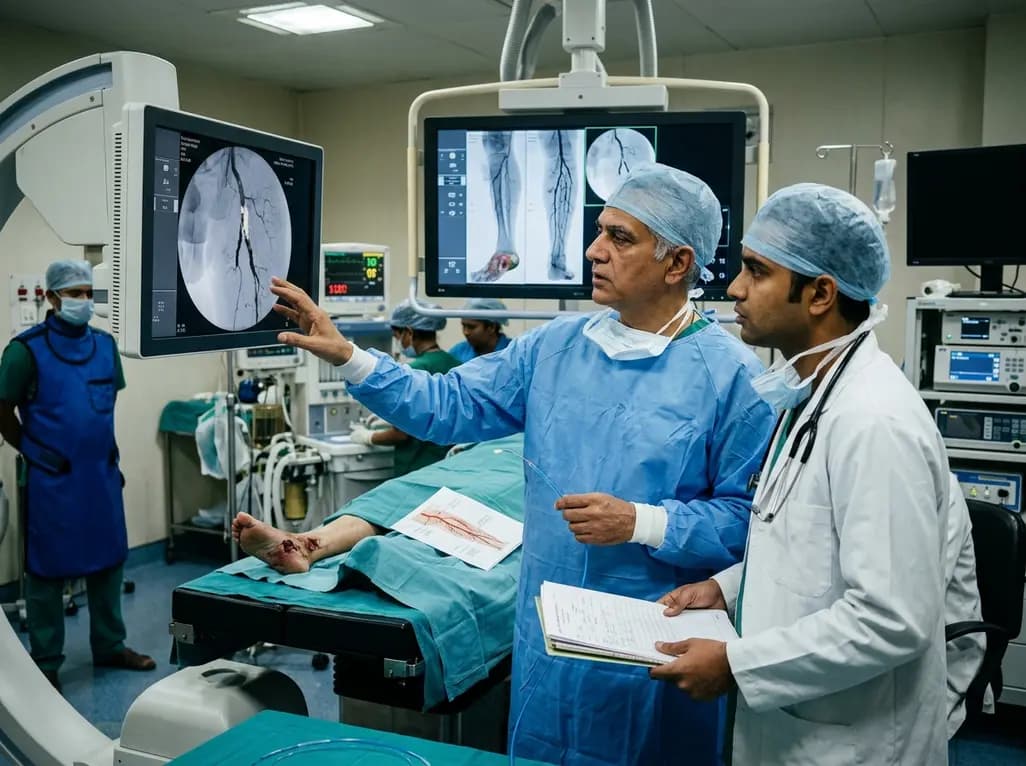
SWEDEPAD-1 trial insights show paclitaxel-coated devices do not improve long-term limb salvage in patients with chronic limb-threatening ischemia and tissue loss. While one-year reinterventions decreased, the devices were linked to a higher risk of major amputation at three months.
Today
