.webp&w=384&q=75)

Loading, please wait...
Loading, please wait...
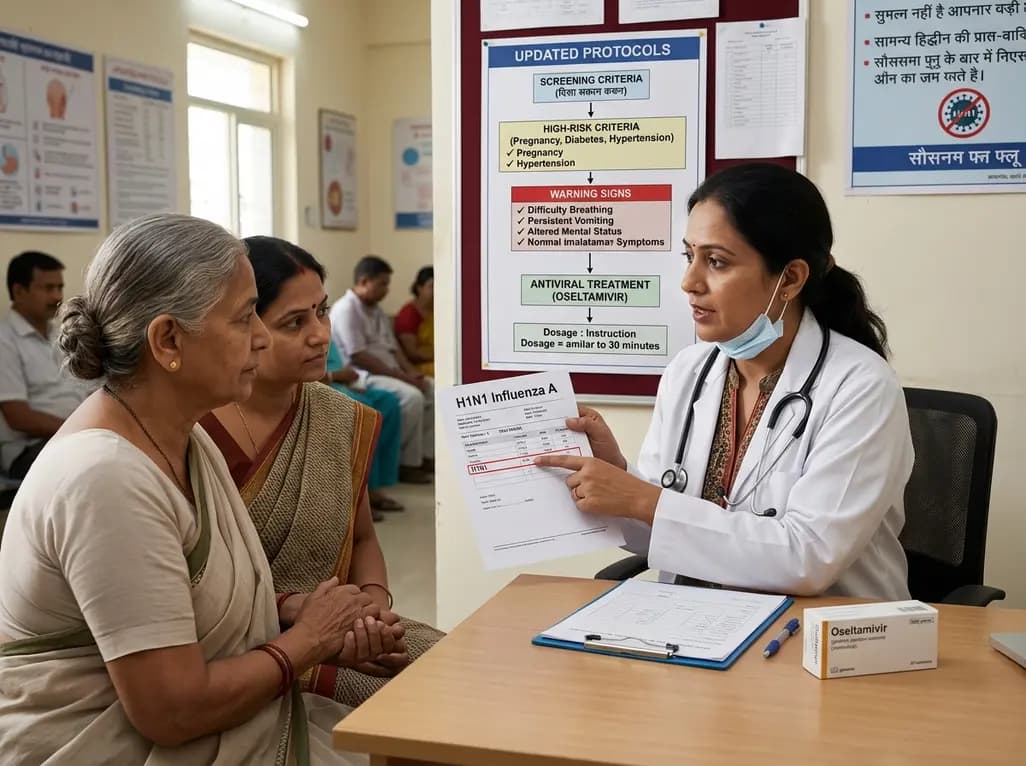
Seasonal respiratory infections place a substantial clinical burden on healthcare facilities across India. Recently, Uttar Pradesh Chief Minister Yogi Adityanath enacted decisive public health measures against the rising spread of seasonal influenza. Most significantly, the state mandated free H1N1 testing across all public healthcare facilities. Furthermore, authorities imposed a price ceiling on private laboratories to prevent inflated diagnostic charges during this outbreak. Because surveillance networks have already detected 685 confirmed cases, clinicians must rapidly identify high-risk individuals. Therefore, reviewing standard triage protocols and treatment guidelines is essential for healthcare providers.
The state administration responded proactively to rising case counts across multiple districts. Consequently, district hospitals received explicit instructions to create dedicated flu help desks and separate outpatient screening counters. This strategic separation reduces airborne transmission among vulnerable patients in crowded waiting areas. In addition, medical colleges must configure dedicated isolation wards and intensive care beds for severe presentations. Meanwhile, community surveillance initiatives mobilize grass-roots health workers, including Accredited Social Health Activists and Auxiliary Nurse Midwives. These frontline workers screen local communities to detect suspected infection clusters early. Moreover, the state expanded teleconsultation networks to offer accessible medical guidance for homebound individuals. Chief Minister Adityanath urged hospital administrators to share accurate public guidance while preventing unwarranted social anxiety. Therefore, health facilities must maintain adequate stockpiles of viral transport media, personal protective gear, and essential pharmaceuticals. Additionally, district officials evaluate local epidemiological trends daily to allocate clinical personnel effectively. As a result, healthcare teams can manage localized surges before inpatient beds reach complete saturation. Furthermore, public awareness campaigns emphasize preventive behaviors like prompt hand sanitization and coughing etiquette. By reinforcing coordinated surveillance alongside strict clinical protocols, the state aims to protect susceptible citizens and minimize mortality during the flu season.
Accurate viral confirmation relies on sensitive molecular diagnostics rather than non-specific rapid tests. Real-time reverse transcription-polymerase chain reaction (RT-PCR) remains the benchmark for identifying Influenza A (H1N1). Because RT-PCR demonstrates superior diagnostic accuracy, tertiary government laboratories prioritize this method for definitive viral verification. However, accurate diagnosis depends directly upon proper sample collection techniques. Specifically, trained clinicians must obtain combined nasopharyngeal and throat swabs using sterile Dacron or polyester swabs. Staff should immediately place collected specimens into viral transport media under strict cold-chain conditions. Furthermore, personnel must utilize full personal protective equipment during sampling procedures. Technicians should wear N95 respirators, face shields, gloves, and gowns to eliminate viral droplet exposure. Fortunately, public healthcare facilities across Uttar Pradesh now conduct this standardized H1N1 testing completely free of cost. Meanwhile, private diagnostic centers must observe official fee caps to protect consumers from inflated expenses. Nevertheless, physicians must recognize that negative molecular results cannot completely exclude infection if clinical signs strongly suggest severe disease. Therefore, clinicians must evaluate test results alongside symptom severity and underlying comorbidities. Accordingly, prompt laboratory processing helps infection control teams isolate confirmed patients without unnecessary delay.
The Ministry of Health and Family Welfare establishes a structured three-tier categorization framework to streamline influenza management. Category A comprises patients presenting with mild fever, cough, sore throat, headache, and generalized body aches. For this low-risk cohort, clinicians do not prescribe antiviral therapy or molecular testing. Instead, medical teams advise supportive symptomatic treatment, adequate hydration, and home rest. In contrast, Category B encompasses individuals displaying elevated clinical vulnerability. This group divides into two distinct clinical presentations. Category B1 includes patients who exhibit high fever and severe sore throat without comorbid conditions. Meanwhile, Category B2 includes individuals presenting with mild influenza symptoms who possess serious pre-existing health risks. High-risk conditions include pregnancy, age over 65 years, diabetes, cardiovascular disease, chronic lung disorders, and immunosuppression. Young children under five years also belong to this high-risk group. Consequently, physicians must initiate oral oseltamivir immediately for all Category B patients without awaiting test confirmation. Finally, Category C encompasses patients demonstrating severe respiratory distress, hemodynamic collapse, altered consciousness, or multi-organ dysfunction. These critically ill patients require immediate hospital admission, isolation care, and advanced supportive interventions. Additionally, clinicians should assess hospitalized Category C individuals continuously for secondary bacterial complications. Proper adherence to this triage system prevents unnecessary diagnostic testing while securing prompt treatment for vulnerable patients.
Healthcare practitioners must identify early warning signs that signal impending respiratory or hemodynamic collapse. In adult patients, clinical danger signs include acute dyspnea, persistent pleuritic chest discomfort, and severe dizziness. Furthermore, physicians should look for blood-stained sputum, persistent hypotension, and peripheral cyanosis around fingernails. These symptoms often reflect extensive viral pneumonitis or secondary bacterial sepsis requiring immediate intervention. In pediatric patients, the disease trajectory frequently deteriorates much faster than in adults. Consequently, healthcare providers must train parents to recognize pediatric warning signs promptly. High persistent fever failing to respond to antipyretics warrants urgent clinical re-evaluation. Similarly, inability to feed, intractable vomiting, lethargy, and seizures indicate severe central or systemic complications. Respiratory distress in young children typically presents with tachypnea, grunting, nasal flaring, and intercostal retractions. Moreover, clinicians must investigate any rapid worsening of baseline chronic conditions like asthma or congenital heart disease. Therefore, emergency departments must implement rapid triage protocols to fast-track children exhibiting these dangerous symptoms. As a result, early clinical recognition helps critical care teams initiate timely oxygenation, fluid resuscitation, and mechanical ventilation before cardiopulmonary arrest occurs. Accordingly, constant clinical vigilance saves lives during severe respiratory infections.
Timely pharmacological management forms the cornerstone of effective clinical care for influenza patients. Neuraminidase inhibitors represent the primary therapeutic defense against Influenza A (H1N1). Specifically, oseltamivir inhibits viral release from infected respiratory epithelial cells, thereby halting pulmonary disease progression. Clinicians observe maximal therapeutic efficacy when initiating oseltamivir within 48 hours of symptom appearance. However, physicians should still prescribe antivirals for severely ill or hospitalized patients presenting beyond this standard therapeutic window. For adult patients, national protocols recommend oral oseltamivir at 75 milligrams twice daily for five days. In contrast, pediatric dosing requires careful weight-based adjustments utilizing oral suspension formulations. Children weighing under 15 kilograms receive 30 milligrams twice daily. Meanwhile, children weighing over 40 kilograms receive standard adult dosages. Fortunately, the Uttar Pradesh government maintains robust centralized inventories of both oseltamivir capsules and pediatric suspensions. Additionally, clinicians should treat secondary bacterial infections with targeted antimicrobials following proper sputum culture collection. However, doctors must avoid prescribing empirical broad-spectrum antibiotics routinely for uncomplicated viral illness. Supportive therapies, including paracetamol for pyrexia and balanced fluid administration, remain essential components of outpatient recovery. Therefore, rational prescribing practices preserve medication supplies while optimizing clinical outcomes.
Q1: What are the primary diagnostic criteria for recommending an H1N1 test in outpatient settings?
Clinicians do not routinely recommend testing for mild influenza-like illness in the general population. Instead, physicians should order molecular testing primarily for hospitalized patients with severe respiratory illness, designated as Category C. Additionally, testing benefits high-risk patients with worsening symptoms, pregnant women, and immunocompromised individuals. Public health authorities also conduct targeted sentinel testing to track community viral variants and monitor seasonal epidemic trends across districts.
Q2: How should clinicians manage high-risk patients who present with mild influenza-like illness?
Clinicians must categorize high-risk individuals with mild influenza symptoms into Category B2 under national guidelines. Rather than waiting for confirmatory laboratory testing, physicians should initiate oral oseltamivir immediately. High-risk groups include pregnant women, elderly adults, young children, and individuals with chronic cardiopulmonary disorders. Furthermore, doctors should advise strict home isolation, rest, and adequate oral hydration, while scheduling follow-up evaluations within 24 to 48 hours to assess clinical progress.
Q3: What are the critical warning signs indicating severe H1N1 infection in children?
Severe pediatric influenza requires rapid emergency intervention when critical warning signs appear. Key pediatric indicators include persistent high fever unresponsive to antipyretics, excessive somnolence, marked irritability, and seizures. In addition, respiratory red flags comprise tachypnea, grunting, chest retractions, and cyanosis around lips or nail beds. If a child cannot feed orally or experiences recurrent vomiting, caregivers must seek immediate emergency hospital admission for supportive and antiviral care.
Disclaimer: This content is for informational and educational purposes only. It does not constitute medical advice or replace professional judgment. Refer to the latest local and national guidelines for clinical practice.
References

Read summarized clinical updates, watch expert medical content, and earn CME certifications right from your smartphone.
Open your smartphone camera to scan and install.





Uttar Pradesh has ordered free diagnostic testing for Influenza A (H1N1) across all government facilities while capping private lab fees. Explore updated MoHFW triage protocols, high-risk screening criteria, clinical warning signs in adults and children, and antiviral treatment strategies for Indian physicians.
4 weeks back

Chronic eosinophilic pneumonia can present with atypical bronchoalveolar lavage findings and an organizing pneumonia pattern, necessitating surgical lung biopsy.
Today

Discover the crucial distinctions between mesonephric and mesonephric-like proliferations of the female genital tract. Learn the key histomorphologic, immunohistochemical, and molecular differences essential for accurate diagnosis and clinical management.
Today
Kikuchi-Fujimoto disease rarely presents with refractory shock and sinus bradycardia in children. This case report highlights life-threatening hemodynamic instability requiring intensive care, preserved cardiac contractility, and the critical diagnostic role of early excisional lymph node biopsy.
Today

A narrative review investigates whether the articularis genus muscle functions as an independent anatomical entity or blends with the vastus intermedius. We evaluate its morphology, role in retracting the suprapatellar bursa, and direct clinical significance in anterior knee pain and arthroplasty.
Today

A Bayesian multilevel meta-analysis reveals that aerobic training combined with moderate carbohydrate restriction modestly lowers HbA1c in type 2 diabetes. However, sparse data and very low certainty leave incremental benefits over exercise or diet alone unproven, highlighting the need for individualized care.
Today
