.webp&w=384&q=75)

Loading, please wait...
Loading, please wait...

Older adults face substantial clinical risks when they leave acute hospital facilities for home. The transition care programme represents an essential bridge that helps vulnerable patients regain functional independence and prevent readmissions. However, hospital discharge coordinators often underestimate the psychological disorientation and practical friction that families encounter immediately upon arrival. Consequently, successful post-acute recovery demands active collaboration between hospital clinicians, community therapists, and family caregivers.
The immediate post-discharge phase presents severe vulnerabilities for geriatric patients recovering from acute illnesses. In hospital wards, round-the-clock nursing and structured environments create a protective shelter. However, returning home abruptly shifts vital health responsibilities directly onto elderly individuals and their informal caregivers. Patients frequently express sudden bewilderment because domestic spaces introduce unforeseen physical barriers and cognitive demands. Moreover, hospital teams often convey discharge instructions rapidly during hasty bedside rounds. As a result, patients leave facilities with incomplete understanding regarding medication adjustments, pending lab investigations, and follow-up schedules. In addition, acute pain, residual fatigue, and altered cognition further limit their capacity to retain verbal instructions. Caregivers consequently feel unprepared to manage complex medical equipment or sudden clinical deteriorations. When health systems fail to bridge this transitional gap proactively, preventable complications develop swiftly. Therefore, structured community interventions remain vital to ensure that vulnerable older adults sustain clinical stability during this precarious window.
A community-based transition care programme offers short-term restorative services to help older people regain autonomy while remaining safely at home. These structured programmes deliver multidisciplinary rehabilitation, including visiting nursing, physiotherapy, occupational therapy, and social work consultations. Furthermore, they aim to divert premature placements into residential aged care facilities by bolstering physical independence. Nevertheless, qualitative evaluations demonstrate a consistent divide between programme design and consumer comprehension. Many elderly participants initially enter these schemes without a clear understanding of service scope, team roles, or session frequency. In fact, consumers frequently mistake transitional restorative goals for ongoing domestic home help. Consequently, unrealistic expectations develop early, creating disappointment when services taper off after several weeks. Clinicians must therefore demystify the transitional model before patient discharge occurs. Transparent orientation sessions help align rehabilitation milestones with genuine consumer priorities. In addition, multidisciplinary teams must communicate precise timelines to avoid sudden disruption in essential supportive services. When clinicians explain these program frameworks clearly, patients engage more purposefully in restorative therapy.
Functional mobility and continence preservation form the primary clinical determinants of whether older individuals can safely remain at home. Once patients return to familiar domestic surroundings, everyday rooms often expose unexpected functional deficits. For example, navigating narrow corridors, low seating, and bathroom thresholds demands significant physical stamina and dynamic balance. Therefore, physiotherapists must urgently develop tailored action plans for walking that accommodate specific architectural constraints. Concurrently, urinary incontinence presents a profound emotional and physical challenge that precipitously accelerates institutional admissions. Hospitalized older adults often experience newly acquired or exacerbated incontinence following urinary catheterization, systemic infection, or enforced bed rest. In the home environment, sudden urgency combined with slow gait drastically increases disastrous fall risks. Furthermore, managing soiled bedding and protective garments rapidly exhausts physical stamina among elderly partners. Thus, transition teams must institute structured continence care pathways immediately upon discharge. These pathways must combine scheduled toileting, fluid management strategies, pelvic floor education, and appropriate assistive aids. By actively securing mobility and continence, clinicians directly protect both patient dignity and domestic safety.
Informal family caregivers carry an immense emotional and physical burden during post-acute transitions. In many households, aging spouses or adult children suddenly manage complex pharmacological regimens, wound care, and hygiene tasks. However, these dedicated individuals rarely receive formal technical training before assuming intensive caregiving duties. Consequently, caregivers confront profound sleep deprivation, escalating anxiety, and physical burnout within the first two weeks post-discharge. Although transitional care programmes supply assistive hardware such as shower chairs and mobility frames, logistical delays remain common. Delivering equipment days after discharge forces families to improvise unsafe transfers independently. Furthermore, consumers report substantial difficulty navigating administrative bureaucracy to secure essential medical consumables. Disjointed handovers between hospital specialists and community general practitioners exacerbate these operational frustrations. Caregivers frequently find themselves repeating medical histories to multiple visiting therapists who lack synchronized records. Therefore, health systems must integrate caregiver assessments directly into routine discharge planning. Providing timely equipment, accessible emergency contacts, and dedicated caregiver respite noticeably improves home stabilization.
The person-centred care framework provides an indispensable blueprint for optimizing community transition programmes. Person-centred care requires clinicians to honour individual values, encourage shared clinical decision-making, and foster genuine therapeutic partnerships. Research reveals that while technical services often function satisfactorily, transitional care programmes frequently fail to align fully with core person-centred domains. Specifically, visiting providers often prioritize standardized checklists and rigid organizational protocols over individual patient preferences. Older adults occasionally feel that clinicians impose rigid exercises without understanding their personal home routines or spiritual priorities. Similarly, caregivers often feel sidelined during care planning discussions, despite their indispensable daily contributions. To bridge this divide, clinicians must deliberately practice active listening and validate patient autonomy during every home consultation. In addition, care plans should emphasize collaborative goal-setting rather than paternalistic instruction. When teams treat patients and families as equal co-designers of the rehabilitation pathway, treatment compliance rises dramatically. Ultimately, embedding person-centred principles transforms transactional care visits into enduring therapeutic alliances.
A community transition care programme provides short-term, goal-oriented restorative care for older adults following acute hospital discharge. This service helps patients regain functional independence and daily living skills in their home environment. Multidisciplinary healthcare teams deliver coordinated nursing, physiotherapy, and social support for up to twelve weeks. Consequently, this model significantly reduces hospital readmission rates, supports family caregivers, and delays premature admission to permanent residential aged care facilities.
Post-hospital mobility deficits and urinary incontinence represent primary clinical drivers of accidental falls and caregiver exhaustion among older adults. Structured walking plans safely rebuild strength, dynamic balance, and physical confidence in domestic settings. Meanwhile, personalized continence action plans combine scheduled voiding, pelvic exercises, and appropriate absorbent aids to prevent nighttime falls and skin breakdown. By directly stabilizing these two vital functional domains, clinicians prevent acute physical injuries and domestic breakdown.
Family caregivers deliver the overwhelming majority of daily post-discharge care, including medication administration, wound dressing, and mobility assistance. Without formal instruction and emotional validation, caregivers quickly experience severe physical exhaustion and high anxiety. Integrating caregivers into discharge planning ensures that clinical instructions align with domestic capabilities. Furthermore, providing timely technical guidance, equipment training, and access to respite support preserves caregiver health, which directly sustains the patient’s ability to remain safely at home.
Disclaimer: This content is for informational and educational purposes only... Refer to the latest local and national guidelines for clinical practice.
References

Read summarized clinical updates, watch expert medical content, and earn CME certifications right from your smartphone.
Open your smartphone camera to scan and install.





This qualitative study explores how older adults and family caregivers experience a community-based transition care programme after hospital discharge. It identifies key challenges in continence, walking, and resource delivery, emphasizing the necessity of aligning post-acute support with person-centred care.
Today
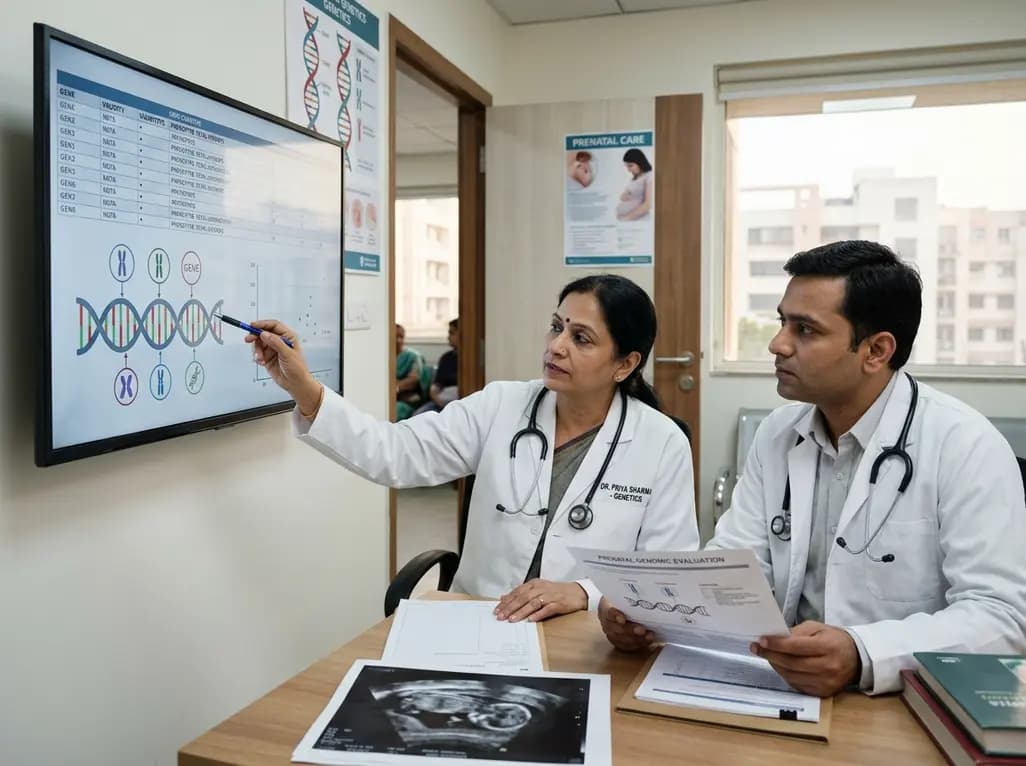
The ClinGen Prenatal Gene Curation Expert Panel evaluated 63 disease relationships across 61 genes, establishing clinical validity for severe fetal phenotypes like hydrops and stillbirth to enhance prenatal genomic interpretation and clinical care.
Today

A multicenter study validates a hybrid clinical decision support system combining rule-based logic and machine learning to optimize anticoagulant prescription reviews, reducing alert fatigue and intercepting prescribing errors.
Today
New research reveals that HOXD13 regulates primary cilia signalling and genomic stability in distal synovial fibroblasts, uncovering why conditions like rheumatoid arthritis target specific joints.
Today

Clinical guidelines rely heavily on isolated biomarkers like IGF-1 and HbA1c. However, portal insulin delivery fundamentally gates hepatic growth hormone sensitivity. This physiological continuum unites type 1 and type 2 diabetes, obesity, cirrhosis, and acromegaly, challenging conventional treatment strategies.
Today
