

Loading, please wait...
Loading, please wait...

Recent multi-institutional research highlights critical transgender adolescent health disparities across acute medical environments. Clinicians increasingly recognize that transgender and gender diverse adolescents encounter unique psychosocial stressors. Consequently, these young individuals experience disproportionately high rates of co-occurring behavioral conditions. A comprehensive retrospective cohort study analyzed real-world evidence from the TriNetX database between October 2020 and October 2025. Specifically, investigators evaluated 52,135 transgender adolescents and matched them with 52,135 cisgender peers aged 10 to 18 years. All included patients had sought care in emergency departments for diverse medical reasons.
Furthermore, investigators applied propensity score matching to minimize confounding across clinical cohorts. The resulting data revealed significant systemic health gaps between transgender youth and their cisgender counterparts. Transgender adolescents face substantial hurdles in both psychiatric wellbeing and addiction risk. Moreover, societal stigma, interpersonal discrimination, and lack of gender-affirming environments strongly compromise patient outcomes. Therefore, acute care clinicians must recognize these root drivers during initial patient triage. In doing so, emergency physicians can provide timely, affirming interventions during critical moments of medical distress. This proactive clinical approach establishes trust and promotes safety for marginalized pediatric patients.
The multi-center study demonstrated alarming disparities in psychiatric morbidity among gender-diverse adolescents. Transgender youths presented with significantly elevated odds of severe mental health disorders compared to cisgender peers. Most notably, transgender patients exhibited a fivefold higher odds of suicidal ideation and self-harm behaviors (OR = 5.29, 95% CI: 4.97-5.63). Similarly, post-traumatic stress disorder occurred at six times the rate observed in non-transgender peers (OR = 6.01, 95% CI: 5.53-6.53). These stark statistical associations underscore the intense psychological burden that gender minority stress imposes upon developing youths.
In addition, chronic victimization and persistent invalidation often precipitate acute psychiatric crises in transgender youth. Emergency departments frequently serve as the initial contact point for these severe emotional emergencies. Consequently, clinicians must maintain a high index of clinical vigilance when evaluating gender-diverse adolescents. Routine suicide risk screening and trauma-informed assessments should form standard components of pediatric triage. Furthermore, emergency teams must ensure rapid access to compassionate psychiatric consultation. By identifying emotional distress early, clinicians can prevent escalating self-harm and arrange necessary psychiatric support before discharge. Targeted hospital-based interventions can significantly mitigate these life-threatening psychological risks.
Substance use disorders also occurred far more frequently among transgender adolescents than cisgender controls. Specifically, transgender youths demonstrated nearly double the overall odds of developing substance use disorders (OR = 1.82, 95% CI: 1.69-1.95). In addition, researchers observed a twofold higher rate of buprenorphine prescriptions among transgender youth (OR = 2.00, 95% CI: 1.23-3.27). This particular finding highlights a pronounced vulnerability to severe opioid misuse that requires immediate medical attention.
However, sensitivity analyses uncovered a pivotal clinical insight regarding these chemical dependency trends. When researchers controlled for major depression, the statistical differences for most substance use disorders attenuated significantly. This crucial finding indicates that untreated depressive illness directly mediates the elevated addiction risk in this population. Nevertheless, disparities in cannabis and hallucinogen use persisted even after adjusting for depression. Therefore, while alleviating depressive symptoms remains paramount, clinicians must also target unique psychosocial triggers that drive recreational hallucinogen and cannabis consumption among gender-diverse youth. Comprehensive adolescent care protocols must simultaneously address affect regulation and targeted substance use counseling.
Beyond psychiatric and substance-related morbidity, transgender adolescents exhibited marked differences in health-care utilization patterns. The TriNetX cohort analysis demonstrated that transgender youths had higher odds of requiring inpatient hospital admission (OR = 1.21, 95% CI: 1.07-1.37). In addition, they utilized outpatient clinical services at significantly higher rates than cisgender peers (OR = 1.13, 95% CI: 1.11-1.16). These statistics illustrate an extensive reliance on acute and specialized health facilities to manage chronic distress.
Consequently, higher admission rates indicate that transgender adolescents frequently present with advanced, unmanaged clinical complications. Many individuals avoid routine preventive care earlier in their disease course due to fear of discrimination. As a result, minor medical issues escalate into severe crises that necessitate inpatient hospitalization. Furthermore, navigating fragmented healthcare systems generates additional financial and emotional strain for families. Hospital administrators must therefore redesign care pathways to ensure consistent, nonjudgmental outpatient continuity. By strengthening primary care engagement, health systems can significantly reduce avoidable emergency encounters and inpatient stays. Coordinated care models guarantee timely chronic disease management.
These compelling findings provide urgent takeaways for emergency physicians, pediatricians, and psychiatrists worldwide. First, clinicians must implement trauma-informed and gender-affirming communication practices across all clinical encounters. For example, using a patient's affirmed name and correct pronouns establishes immediate psychological safety. Furthermore, healthcare staff should avoid intrusive questions that do not relate to the immediate presenting complaint. Creating an affirming environment substantially reduces patient anxiety and fosters open dialogue regarding substance use and mental health.
Moreover, physicians must actively treat co-occurring depression to disrupt the pathway toward dangerous substance experimentation. Because depression strongly mediates substance use vulnerabilities, early antidepressant therapy and cognitive behavioral interventions can yield protective effects. In addition, healthcare facilities must expand access to youth-focused addiction specialists and harm reduction education. Collaborative care models that connect emergency departments with community support networks provide essential stabilization. Ultimately, addressing structural barriers and training healthcare workers will build resilient healthcare systems that equitably support all adolescents. Culturally competent clinical environments foster lasting healing and trust.
Transgender adolescents face severe minority stress, including interpersonal rejection, bullying, and systemic stigma. Consequently, many gender-diverse youths turn to psychoactive substances as an avoidant coping mechanism to blunt overwhelming emotional distress. Furthermore, co-occurring mood disorders like untreated depression drastically heighten their susceptibility to substance use disorders. Addressing these underlying psychosocial disparities through supportive family environments, gender-affirming healthcare, and accessible mental health services remains vital to reducing adolescent substance misuse.
Statistical analyses indicate that major depression accounts for much of the observed disparity in substance misuse among transgender youth. Gender minority stressors often trigger profound depressive episodes, which subsequently drive adolescents toward self-medication with opioids, sedatives, or alcohol. When researchers statistically control for depression, disparities across most substance categories disappear. Therefore, early identification and assertive treatment of adolescent depression serve as powerful clinical interventions to halt substance misuse progression.
Emergency clinicians should establish an affirming environment by documenting chosen names and pronouns accurately in electronic records. In addition, providers must routinely screen gender-diverse youths for depression, trauma, and suicide risk using validated clinical tools. Healthcare teams should avoid stigmatizing language and ensure confidential physical examinations. Finally, hospital networks must build streamlined referral pathways that connect discharged adolescents to community-based mental health resources, outpatient addiction specialists, and supportive social services.
Disclaimer: This content is for informational and educational purposes only... Refer to the latest local and national guidelines for clinical practice.
References

Read summarized clinical updates, watch expert medical content, and earn CME certifications right from your smartphone.
Open your smartphone camera to scan and install.





A multi-institutional TriNetX cohort study of over 104,000 youth reveals that transgender adolescents face significantly higher odds of mental health disorders, substance use, and acute care visits, with depression serving as a key mediator for substance-related disparities.
Today
A patient-based simulation study reveals that conventional 10% bias in mean normal prothrombin time causes up to 19.2% clinical reclassification in warfarin therapy. Restricting bias to ±2.5% eliminates major INR discrepancies, urging diagnostic laboratories to tighten analytical verification thresholds.
Today

A qualitative study highlights the unaddressed emotional hurdles and role uncertainty faced by men during the transition to fatherhood, calling for father-inclusive perinatal care and tailored digital health support.
Today

In a landmark public health ruling, the Supreme Court ordered the FSSAI to finalize strict front-of-pack warning rules within four months. Food companies must adopt separate red hexagonal symbols for high sugar, saturated fat, and salt within one year, advancing preventive medicine and patient dietary awareness.
Today
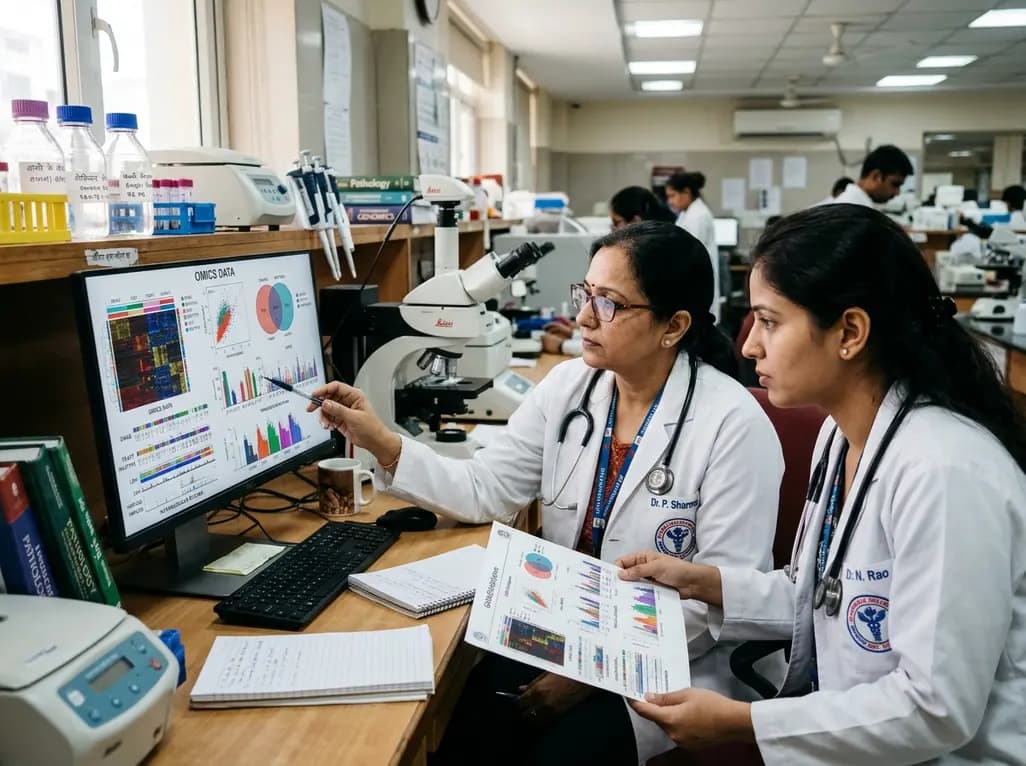
A multi-omic analysis reveals sporadic intramuscular myxoma comprises two molecularly distinct subtypes. GNAS-mutated lesions frequently carry TRAF7 mutations, whereas GNAS-wildtype tumors demonstrate striking genomic instability, loss of heterozygosity, and near-haploid features resembling DNHFN.
Today
Recent physiological findings demonstrate that myoglobin acts beyond oxygen transport, significantly regulating skeletal muscle glucose metabolism and mitochondrial bioenergetics. Understanding these intracellular metabolic shifts offers fresh insights into metabolic health and exercise physiology.
Today
