.webp&w=384&q=75)

Loading, please wait...
Loading, please wait...
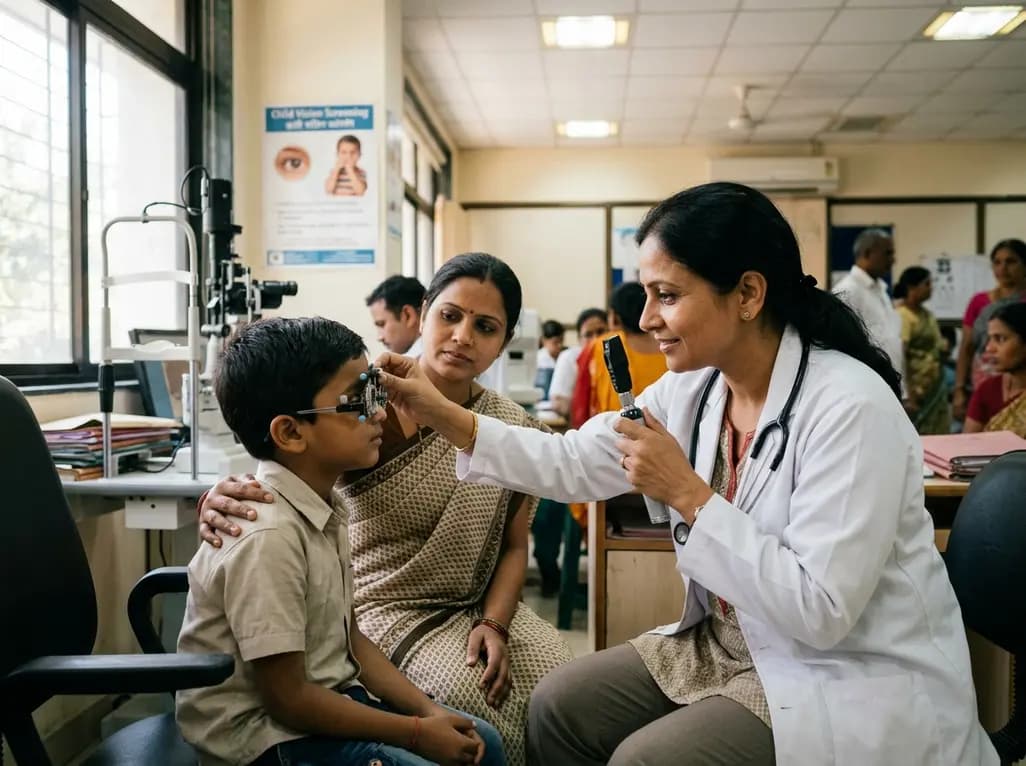
Advances in neonatal intensive care have markedly improved survival rates among extremely preterm infants born before 27 weeks of gestation. However, these fragile infants face substantial lifelong risks of sensory and neurodevelopmental morbidities. Visual system impairment represents one of the most prominent challenges in this vulnerable group. Ophthalmic issues frequently manifest as significant refractive errors, amblyopia, and ocular misalignment. Understanding the long-term development of refraction and strabismus in preterm children from early toddlerhood into adolescence is essential for timely intervention. The national Extremely Preterm Infants in Sweden Study (EXPRESS) cohort offers unique insights into these longitudinal trajectories. Researchers tracked infants born between 2004 and 2007, evaluating visual outcomes systematically at 2.5, 6.5, and 12 years of age. By comparing these children against term-born peers, the study highlights critical ocular developmental divergences. Consequently, clinicians must recognize that neonatal discharge does not mark the conclusion of ocular vulnerability. Continuous monitoring remains essential throughout schooling years to preserve functional binocular vision and optimize educational success.
During normal childhood development, the visual system undergoes emmetropization, a coordinated process aligning corneal curvature, lens power, and axial length. However, extreme prematurity disrupts this delicate balance significantly. In the EXPRESS cohort, children born extremely preterm exhibited substantially higher rates of refractive errors compared to full-term controls across all developmental milestones. Specifically, myopia, high hyperopia, astigmatism, and anisometropia occurred with greater frequency among preterm survivors. While full-term children typically maintain mild physiological hyperopia that gradually stabilizes, preterm infants often display altered anterior segment growth and abnormal axial elongation. Furthermore, treatment-requiring retinopathy of prematurity acts as a powerful catalyst for severe myopia and astigmatism. Cryotherapy or laser photocoagulation can arrest anterior chamber deepening, leading to steep corneal curvature and increased lens thickness. Nevertheless, even preterm infants without severe retinopathy demonstrate higher rates of refractive atypicality than term controls. Therefore, clinicians must conduct regular cycloplegic refractions to identify subtle refractive changes and prevent deprivation amblyopia.
The incidence of ocular misalignment is markedly elevated in children who survive extremely preterm birth. Evaluating the longitudinal presence of strabismus in preterm children reveals that esotropia and exotropia often emerge early and persist without spontaneous resolution. In the Swedish national cohort, manifest strabismus affected a significant proportion of preterm survivors, contrasting sharply with the low baseline prevalence in term-born children. Multiple perinatal and neurological factors contribute directly to this elevated vulnerability. In particular, intraventricular hemorrhage, periventricular leukomalacia, and bronchopulmonary dysplasia demonstrate strong associations with ocular motor dysfunction. Moreover, co-occurring neurodevelopmental disorders, such as cerebral palsy and cognitive delays, significantly increase the risk of strabismus. Disrupted cortical and subcortical pathways impair binocular fusion and ocular alignment control. In addition, severe anisometropia and high refractive errors frequently precipitate secondary accommodative or sensory strabismus. Consequently, clinicians must evaluate ocular alignment in every preterm child, paying special attention to those with underlying neurological morbidities.
A critical finding from the EXPRESS cohort relates to the prognostic reliability of early visual examinations. While preschool screenings at 2.5 years capture gross anatomical abnormalities and severe vision deficits, they often fail to identify subtle visual impairments that emerge later. In contrast, examinations conducted at 6.5 years demonstrate high predictive accuracy for definitive visual outcomes at 12 years of age. At 2.5 years, developmental uncooperativeness and ongoing neural maturation complicate precise visual acuity and alignment measurements. Furthermore, higher-order visual processing deficits and late-onset refractive shifts may remain undetected in early toddlerhood. As children reach early school age, formal testing becomes more reliable, allowing clinicians to detect amblyogenic risk factors effectively. Thus, normal findings during early toddler assessments should never offer false reassurance to parents or pediatricians. Structured re-evaluations during the transitional school-entry period are vital to ensure visual deficits receive appropriate optical or orthoptic correction before permanent amblyopia sets in.
The long-term findings from national preterm cohorts provide important guidance for clinical practice, particularly in health systems expanding neonatal intensive care capacity. Pediatricians, neonatologists, and pediatric ophthalmologists must establish integrated follow-up pathways that extend well beyond hospital discharge. Routine pediatric visits should incorporate systematic visual screening, covering red reflex assessment, fixation preference, and cover-uncover testing for ocular alignment. In addition, cycloplegic autorefraction remains the gold standard for uncovering hidden hyperopia, astigmatism, and anisometropia in young children. When refractive errors or strabismus appear, prompt treatment with corrective spectacles, occlusion therapy, or corrective strabismus surgery is imperative. Addressing these deficits preserves binocular single vision and stereoacuity during critical periods of visual plasticity. Moreover, optimizing visual acuity directly benefits cognitive, academic, and behavioral development. As preterm survivors progress into adolescence, clinicians must continue surveillance to manage progressive myopia, which frequently accelerates during pubertal growth spurts.
Optimizing long-term visual outcomes in extremely preterm survivors requires close collaboration across multiple medical disciplines. Neonatologists initiate this continuum through meticulous retinopathy screening and early bedside interventions. Subsequently, community pediatricians and pediatric neurologists must monitor developmental milestones while watching for early signs of visual dysfunction, such as head tilting, squinting, or clumsiness. When neurodevelopmental delays or cerebral palsy are present, direct referral to a pediatric ophthalmologist is mandatory. Furthermore, school health programs and optometrists play a vital role in identifying emerging refractive errors during primary education. Educational accommodations, including preferential classroom seating and enlarged print materials, should be implemented promptly for children with persistent visual limitations. Importantly, counseling parents regarding the chronic nature of refractive shifts empowers families to adhere to long-term follow-up schedules. By maintaining a coordinated multidisciplinary safety net, healthcare teams can ensure that preterm survivors achieve their full visual and developmental potential.
Extremely preterm birth disrupts the normal intrauterine development of ocular structures, leading to altered corneal curvature, lens power, and axial length emmetropization. In addition, complications such as retinopathy of prematurity, along with neonatal laser or cryotherapy treatments, significantly increase the risk of severe myopia, astigmatism, and anisometropia. Brain injury and systemic neonatal morbidity also interfere with normal ocular growth regulation throughout childhood.
Eye examinations at 2.5 years are valuable for identifying major structural anomalies and severe vision loss, but they lack high predictive value for final visual acuity. As demonstrated in longitudinal studies, assessments at 6.5 years provide significantly greater reliability in predicting visual status at 12 years. Consequently, normal early toddler evaluations must be followed by mandatory rescreening at school entry.
Persistent strabismus in preterm children is strongly associated with neonatal brain injuries, including moderate-to-severe intraventricular hemorrhage and periventricular leukomalacia. Furthermore, co-occurring neurodevelopmental disorders like cerebral palsy, cognitive impairments, high uncorrected refractive errors, and history of treatment-requiring retinopathy of prematurity markedly increase strabismus risk. Disrupted visual cortex pathways and binocular fusion centers prevent normal ocular alignment maintenance over time.
Disclaimer: This content is for informational and educational purposes only. It is not intended as medical advice, diagnosis, or treatment. Always consult a qualified healthcare professional regarding any medical condition or treatment. Refer to the latest local and national guidelines for clinical practice.
References

Read summarized clinical updates, watch expert medical content, and earn CME certifications right from your smartphone.
Open your smartphone camera to scan and install.





A longitudinal analysis from the EXPRESS study reveals persistent risks of refractive errors and strabismus in extremely preterm children from toddlerhood to 12 years. Early visual monitoring and school-age follow-ups are critical to prevent amblyopia and preserve binocular vision.
last month

A nationwide English cohort study shows that interstitial lung diseases are no longer rare, with incidence jumping 30% and 200,000 active cases. This analysis highlights clinical implications for diagnosis, multi-disciplinary management, and global health priorities across respiratory and internal medicine.
Today

A nationwide South Korean study shows underreporting of smoking among women dropped from 57.4% to 36.4% between 2008 and 2021. However, over one-third of female smokers still conceal their habit, highlighting the critical role of cotinine verification in clinical risk assessment.
Today

PepsiCo and Monster Beverage have challenged the FSSAI ban on the energy drink label in Indian courts. While companies highlight supply disruptions, regulatory actions spotlight severe cardiovascular and metabolic risks associated with excessive caffeine, sugar, and taurine consumption, especially in adolescents.
Today
A new study evaluates the rheological stability of decellularized peripheral nerve matrix hydrogels under varied storage conditions. Findings show -80°C storage and freeze-drying preserve gelation kinetics and mechanical stiffness, offering key insights for shipping and translational clinical applications.
Today

A Bayesian multilevel meta-analysis reveals that aerobic training combined with moderate carbohydrate restriction modestly lowers HbA1c in type 2 diabetes. However, sparse data and very low certainty leave incremental benefits over exercise or diet alone unproven, highlighting the need for individualized care.
Yesterday
