.webp&w=384&q=75)

Loading, please wait...
Loading, please wait...

Thyrotoxic crisis represents an acute, life-threatening endocrine emergency that requires immediate medical recognition. Recent nationwide data from inpatient databases highlight escalating hospital admissions and underscore critical clinical factors driving thyroid storm mortality. Understanding these epidemiological shifts and clinical predictors enables physicians to identify decompensating patients rapidly, mitigating catastrophic multiorgan failure.
Epidemiological investigations provide essential context regarding the burden of thyrotoxic crises across hospitalized populations. In a nationwide cohort study spanning 2017 to 2024, researchers analyzed over 4,400 admissions with thyrotoxicosis as the principal diagnosis. Notably, thyroid storm accounted for over 26% of all thyrotoxicosis hospitalizations. The overall average annual incidence was 0.22 cases per 100,000 person-years. However, researchers observed a significant temporal increase over the study period. Specifically, the annual incidence rose from 0.15 per 100,000 person-years in 2017 to 0.32 per 100,000 person-years by 2024. Consequently, acute care teams encounter these presentations with increasing frequency. Females represented the majority of hospitalized cases, reflecting known thyroid disease patterns. Nevertheless, older male patients and individuals with coexisting chronic diseases demonstrated heightened vulnerability. Thus, hospital-based surveillance remains vital to detect rising admission rates and allocate clinical resources effectively.
Delineating survival outcomes between uncomplicated thyrotoxicosis and fulminant crisis is crucial for risk stratification. National inpatient data demonstrate a dramatic divergence in hospital outcomes between these cohorts. While uncomplicated thyrotoxicosis carries minimal in-hospital mortality, thyroid storm mortality remains exceptionally elevated. The intense hypermetabolic state triggers profound circulatory collapse, malignant arrhythmias, and acute liver dysfunction. Statistical comparisons show that patients presenting with thyroid storm face exponentially higher odds of death during hospitalization. Furthermore, this clinical divergence extends to intensive care requirements and organ support utilization. Patients with thyroid crisis exhibit higher illness severity upon arrival, necessitating immediate critical care triage. Unfortunately, non-specific early signs like fever, agitation, and nausea often delay diagnostic recognition. Therefore, physicians must remember that mild thyrotoxicosis can swiftly transform into fatal crisis without prompt therapeutic intervention.
Multivariable regression models identify multiple independent predictors of in-hospital death among patients suffering from thyroid storm. Advanced chronological age consistently emerges as one of the strongest adverse prognostic determinants. In addition, pre-existing cardiovascular conditions, including congestive heart failure, coronary disease, and atrial fibrillation, dramatically heighten mortality risk. When severe thyrotoxicosis superimposes on compromised myocardium, high-output failure rapidly deteriorates into cardiogenic shock. Central nervous system dysfunction at presentation represents another crucial prognostic indicator. Patients exhibiting severe delirium, marked lethargy, or coma experience substantially worse survival outcomes. Moreover, coexisting systemic infections and sepsis frequently act as fatal precipitating triggers. The development of acute kidney injury and hepatic failure further elevates mortality odds. Consequently, clinicians must implement structured risk assessment tools, such as the Burch-Wartofsky Point Scale, immediately upon admission.
Thyroid storm imposes a substantial operational and financial burden on acute inpatient healthcare systems. Patients experiencing thyrotoxic crisis require significantly longer hospital stays than those hospitalized for uncomplicated thyrotoxicosis. This extended duration reflects the intensive management required to restore metabolic and hemodynamic equilibrium. A large proportion of these patients require admission to intensive care units for continuous invasive hemodynamic monitoring. Furthermore, acute respiratory compromise frequently necessitates endotracheal intubation and mechanical ventilation, prolonging recovery times. Severe cases accompanied by profound metabolic collapse often demand advanced therapies, including renal replacement therapy or therapeutic plasma exchange. Consequently, cumulative hospital expenditures escalate substantially. Identifying determinants of prolonged stay helps medical administrators optimize critical care bed allocation. Additionally, establishing standardized crisis pathways within emergency departments can streamline care and improve cost-effectiveness.
Managing a thyrotoxic crisis demands rapid execution of a multivalent pharmacological bundle targeting hormone synthesis, release, and peripheral action. Initially, high-dose thionamides, such as propylthiouracil or methimazole, must be administered promptly to inhibit new hormone synthesis. Propylthiouracil offers the additional advantage of blocking peripheral conversion of thyroxine to active triiodothyronine. Crucially, inorganic iodine solutions should only be initiated at least one hour after thionamide administration. This delay prevents exogenous iodine from serving as substrate for new hormone production. Concurrently, beta-adrenergic antagonists, particularly propranolol, are titrated to control tachyarrhythmias and suppress hyperadrenergic symptoms. Intravenous glucocorticoids are administered to manage potential relative adrenal insufficiency while reducing peripheral hormone conversion. In addition, supportive measures, including aggressive antipyresis, external cooling, fluid resuscitation, and treatment of underlying precipitating infections, are essential for stabilization.
The epidemiological insights derived from large inpatient databases offer valuable lessons for physicians practicing across India. In Indian healthcare settings, patients with underlying Graves' disease or toxic multinodular goiters often experience delayed presentation due to variable healthcare access or abrupt treatment cessation. Furthermore, common tropical infections, including dengue fever, malaria, and severe pneumonia, frequently precipitate acute thyrotoxic crises in vulnerable individuals. Therefore, emergency physicians and internists must maintain heightened diagnostic suspicion when encountering febrile patients with unexplained tachycardia or delirium. Establishing rapid diagnostic protocols across district and tertiary care hospitals will ensure timely therapy initiation. Hospitals must maintain accessible stockpiles of propylthiouracil, intravenous beta-blockers, and lugol iodine solution. Additionally, enhancing primary care education regarding thyroid disease compliance will prevent avoidable decompensations. Ultimately, bridging early detection with aggressive critical care will reduce crisis morbidity across India.
Diagnosis relies primarily on clinical evaluation using validated scoring systems like the Burch-Wartofsky Point Scale. These tools systematically assess thermoregulatory dysfunction, central nervous system involvement, gastrointestinal disturbances, and cardiovascular collapse. Although elevated free thyroid hormone levels confirm thyrotoxicosis, laboratory turnaround times must never delay urgent therapy. Consequently, clinicians should initiate immediate aggressive treatment based entirely on bedside clinical suspicion.
Inorganic iodine must be given at least sixty minutes after administering antithyroid thionamides like propylthiouracil. Administering iodine before blocking hormone organification provides excess substrate for thyroid hormone synthesis, potentially worsening thyrotoxicosis via the Jod-Basedow effect. Delaying iodine administration ensures that the thyroid gland is pharmacologically blocked, allowing subsequent iodine doses to effectively suppress hormone release through the acute Wolff-Chaikoff phenomenon.
The leading causes of mortality during a thyrotoxic crisis include refractory multiorgan failure, lethal ventricular arrhythmias, and cardiogenic shock. Furthermore, secondary complications such as severe sepsis, acute respiratory distress syndrome, disseminated intravascular coagulation, and acute hepatic failure frequently contribute to fatal outcomes. Older age, delayed diagnosis, and pre-existing cardiovascular comorbidities significantly increase the likelihood of death during inpatient hospitalization.
Disclaimer: This content is for informational and educational purposes only. It is not intended to be a substitute for professional medical advice, diagnosis, or treatment. Always seek the advice of your physician or other qualified health provider with any questions you may have regarding a medical condition. Never disregard professional medical advice or delay in seeking it because of something you have read here. Clinical decision-making should always be individualized and based on comprehensive clinical evaluation. Refer to the latest local and national guidelines for clinical practice.
References

Read summarized clinical updates, watch expert medical content, and earn CME certifications right from your smartphone.
Open your smartphone camera to scan and install.





A nationwide inpatient database analysis reveals rising thyroid storm incidence, significant in-hospital mortality compared to uncomplicated thyrotoxicosis, and key clinical predictors of adverse outcomes.
last month

A recent clinical case series highlights the synthetic polylactic acid matrix as an innovative local therapy for refractory pyoderma gangrenosum. The bioresorbable scaffold demonstrated complete ulcer closure and favorable scar quality across chronic wounds, presenting a viable regenerative modality.
Today

A nationwide South Korean study shows underreporting of smoking among women dropped from 57.4% to 36.4% between 2008 and 2021. However, over one-third of female smokers still conceal their habit, highlighting the critical role of cotinine verification in clinical risk assessment.
Today
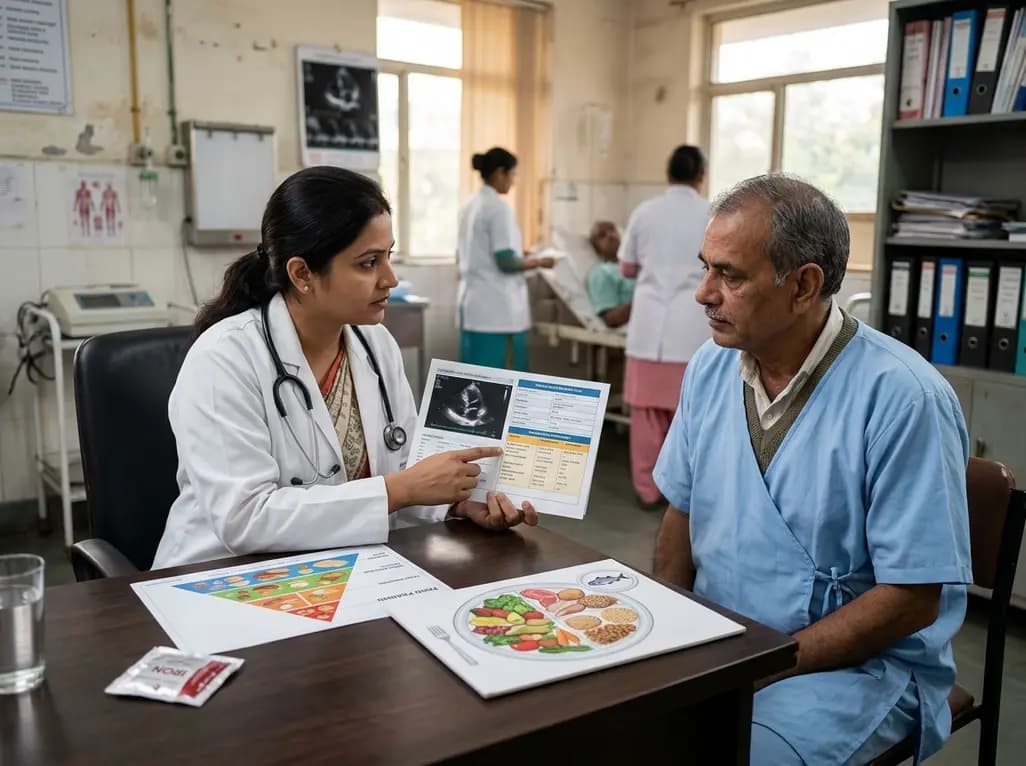
A scientific statement highlights the crucial role of nutrition in managing chronic heart failure. It emphasizes GLIM-based screening, individualized dietary patterns like the Mediterranean diet, appropriate protein and energy intake, avoiding unnecessary fluid restriction, and targeted iron supplementation.
Today

A new study evaluates the rheological stability of decellularized peripheral nerve matrix hydrogels under varied storage conditions. Findings show -80°C storage and freeze-drying preserve gelation kinetics and mechanical stiffness, offering key insights for shipping and translational clinical applications.
Today

A qualitative meta-synthesis highlights the complex interplay between gender dysphoria, minority stress, and eating disorders in transgender and gender-diverse individuals. Clinicians must recognize these distinct drivers to offer supportive, gender-affirming, and interdisciplinary eating disorder care.
Today
