.webp&w=384&q=75)

Loading, please wait...
Loading, please wait...

Transforaminal endoscopic lumbar discectomy (TELD) has rapidly gained recognition as an effective, minimally invasive procedure for patients suffering from far lateral lumbar disc herniations. Understanding the precise TELD recovery timeline is vital for orthopedic surgeons, neurosurgeons, and pain specialists who counsel patients regarding postoperative expectations. While traditional surgery involves extensive muscular dissection, TELD allows targeted decompression of neural elements while preserving native spinal architecture. Consequently, patient-reported outcome measures (PROMs) demonstrate rapid early improvements, yet kinetic recovery data remained limited. A clinical study published in Spine evaluated fifty-one patients undergoing primary single-level or two-level TELD to systematically outline postoperative recovery milestones. Operative parameters revealed an average surgical duration of 68.4 minutes and a mean hospital stay of 9.6 hours, underscoring the ambulatory nature of this technique. By tracking multidimensional pain scores and functional disability metrics across predefined intervals—including two weeks, six weeks, twelve weeks, and six months—researchers established crucial kinetic patterns. These findings offer healthcare clinicians empirical benchmarks to evaluate normal postoperative progression and optimize patient management effectively.
Postoperative pain trajectory represents a primary metric for assessing surgical success following endoscopic spinal decompression. In the investigated cohort, patients reported rapid and statistically significant reductions in visual analog scale (VAS) scores for both back and leg pain as early as two weeks postoperatively. Furthermore, these clinical improvements continued to progress until reaching six weeks after surgery. Beyond six weeks, pain scores demonstrated a clear plateau, with minimal incremental changes observed at twelve weeks and six months. Achieving early pain relief is clinically significant because radicular pain secondary to far lateral disc herniation severely impairs daily functioning. Data demonstrated that the minimally clinically important difference (MCID) for leg pain VAS peaked specifically at six weeks. Simultaneously, global rating of change (GRC) assessments mirrored this timeline, confirming that patient perception of recovery peaks during early postoperative weeks. Consequently, spine specialists can confidently assure patients that substantial pain reduction occurs within six weeks. Recognizing this early trajectory helps clinicians distinguish expected surgical recovery from recalcitrant symptoms, thereby avoiding unnecessary diagnostic imaging or premature interventions.
While pain relief occurs rapidly, functional improvement and physical capacity follow a distinct temporal pathway following transforaminal endoscopic procedures. Assessment tools such as the Oswestry Disability Index (ODI) and the 12-Item Short Form Survey Physical Component Score (SF-12 PCS) offer valuable insights into functional restoration. Unlike pain reduction, which manifested significantly at two weeks, functional disability metrics did not demonstrate statistically significant improvement until the six-week postoperative interval. Thereafter, both ODI and SF-12 PCS scores achieved a stable plateau, maintaining sustained improvements through six months of follow-up. This temporal disparity between pain alleviation and functional recovery highlights important physiological concepts in spine care. Nerve root decompression rapidly reduces acute nociceptive pain signals; however, tissue healing and neuromuscular re-education require additional time. Furthermore, around 75 percent of treated patients reported feeling significantly better at six months compared to their preoperative baseline status. Clinicians should reassure patients that while back and leg pain resolve early, physical endurance and disability scores gradually catch up by the six-week milestone.
A major advantage of minimally invasive spine surgery is the accelerated return to essential daily activities and rapid cessation of postoperative analgesics. Tracking practical recovery milestones provides tangible parameters for patients preparing for endoscopic discectomy. In the evaluated study, all fifty-one patients successfully returned to driving and completely discontinued prescription opioid medications. Specifically, the median duration required to discontinue opioid therapy was just one day postoperatively. This remarkably brief requirement for opioid analgesia highlights the minimal soft tissue trauma associated with the transforaminal endoscopic approach. In addition, the median time required for patients to safely resume driving was eight days. Return to professional employment also demonstrated favorable timelines, with the vast majority of patients returning to work at a median of 35 days postoperatively. These empirical timeframes provide clinicians with robust evidence when formulating return-to-work guidelines and activity restrictions. Additionally, rapid opioid cessation minimizes medication-related adverse effects, facilitating safer postoperative care pathways.
Historically, far lateral lumbar disc herniations presented technical challenges that frequently prompted surgeons to perform open decompression accompanied by lumbar fusion. However, fusion procedures inherently carry higher surgical risks, extended operative times, increased blood loss, and prolonged rehabilitation periods. The clinical evidence surrounding endoscopic recovery kinetics demonstrates that TELD offers a safe, highly effective alternative that preserves motion segment integrity. Because endoscopic techniques access the foraminal space via natural anatomical corridors, collateral damage to paraspinous muscles and facet joints is dramatically minimized. Consequently, patients experience substantially shorter hospital stays, averaging under ten hours, and achieve meaningful clinical improvement within six weeks. By avoiding structural stabilization and permanent lumbar fusion, TELD preserves natural spinal biomechanics and reduces the risk of adjacent segment degeneration over time. While lumbar fusion remains necessary for patients with significant mechanical instability, endoscopic discectomy effectively resolves symptoms in carefully selected candidates, sparing them from invasive fusion procedures initially.
Integrating structured recovery kinetic data into clinical practice enhances patient communication, surgical counseling, and rehabilitation planning across medical specialties in India. Surgeons and pain management consultants should utilize the six-week milestone as a core focal point during postoperative consultations. Educating patients that the majority of clinical improvement occurs within six weeks prevents unnecessary apprehension regarding subtle day-to-day pain fluctuations. Furthermore, establishing clear expectations regarding driving at one week and returning to work within five weeks fosters greater patient compliance with activity guidelines. Physical therapy protocols should also align with these temporal patterns; gentle mobilization is encouraged immediately, whereas structured functional rehabilitation can be intensified around four to six weeks as pain plateaus. Additionally, emphasizing the median one-day opioid requirement supports current stewardship initiatives aimed at minimizing prolonged opioid usage. Ultimately, clear kinetic benchmarks empower spine care professionals to deliver patient-centered, evidence-based care while achieving consistently favorable surgical outcomes.
Patients generally experience the majority of their postoperative improvement within six weeks following a transforaminal endoscopic lumbar discectomy. Pain relief in the back and leg improves significantly within two to six weeks, after which clinical outcomes tend to reach a stable plateau through six months of follow-up.
Clinical studies show that patients discontinue prescription opioids at a median of one day after surgery due to minimal tissue disruption. Additionally, the median time required to safely return to driving is eight days, while most patients resume professional work within five weeks postoperatively.
Transforaminal endoscopic discectomy serves as an effective, motion-preserving alternative to fusion for patients with far lateral disc herniation without gross mechanical instability. By achieving targeted neural decompression, TELD spares many patients from invasive fusion surgeries, offering rapid recovery and shorter hospital stays.
Disclaimer: This content is for informational and educational purposes only and should not be considered medical advice. It is intended for healthcare professionals and medical researchers. Refer to the latest local and national guidelines for clinical practice.
References

Read summarized clinical updates, watch expert medical content, and earn CME certifications right from your smartphone.
Open your smartphone camera to scan and install.





A study in Spine analyzes recovery kinetics following transforaminal endoscopic lumbar discectomy (TELD). Results show that pain and disability significantly improve within 6 weeks before plateauing, with median opioid cessation at 1 day and return to driving at 8 days, offering an alternative to fusion.
last month

A new PPMI cohort study demonstrates that combining blood microRNA-7-5p with CSF alpha-synuclein seed amplification assay significantly improves the prediction of Parkinson's disease phenoconversion, offering clinicians and researchers a powerful tool for patient risk stratification and clinical trial enrichment.
Today

A large retrospective study evaluates the screening accuracy, positive predictive value, and test failure rates of noninvasive prenatal testing (NIPT) in assisted reproductive technology (ART) pregnancies compared to spontaneous conceptions, highlighting key considerations for pretest counseling.
Today
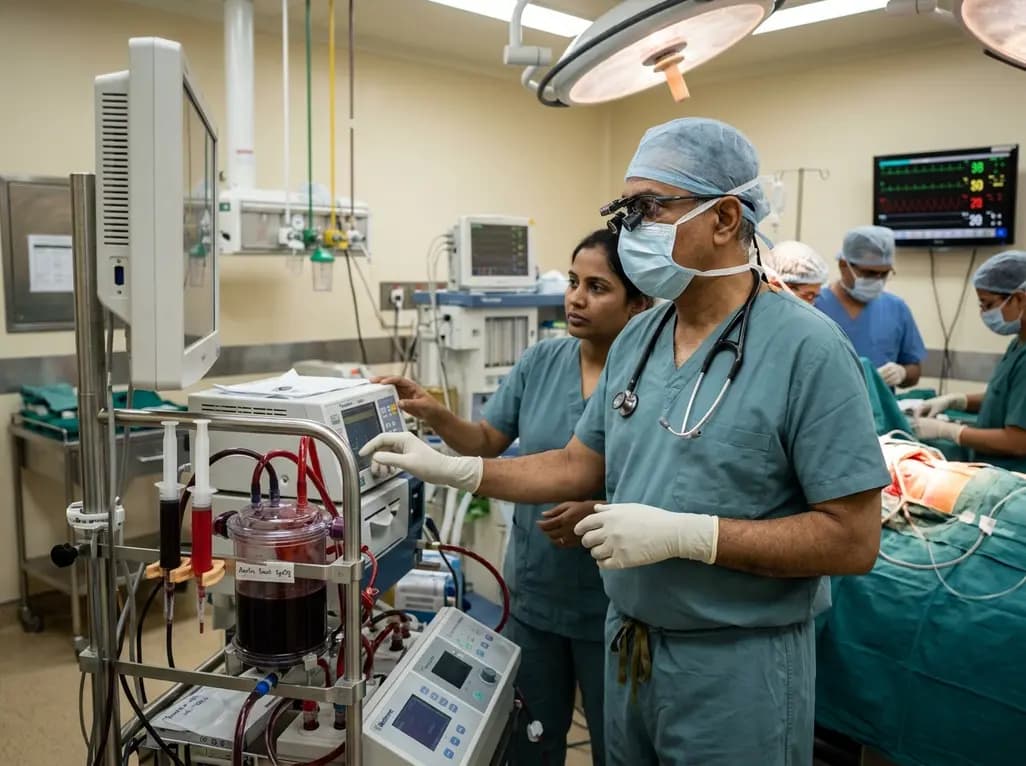
Differential oxygenation during peripheral TA-NRP can cause undetected coronary hypoxemia due to arch vessel clamping. A novel circuit with continuous aortic root monitoring detects desaturation early, facilitating left ventricular unloading and preventing allograft dysfunction and unnecessary heart discard.
Today

A randomized controlled trial compared ultrasound-guided intra-articular injections of PRP, hydrolyzed type I collagen, and hyaluronic acid in knee osteoarthritis. All therapies demonstrated significant improvements in WOMAC and pain scores at six months, supporting hydrolyzed collagen as a viable biological option.
Today

A scoping review evaluates 116 studies on AI in women's reproductive health, finding that 83.6% carry high risk of bias. While ensemble models show promise, disparities and lack of validation hinder LMIC deployment.
Today
