.webp&w=384&q=75)

Loading, please wait...
Loading, please wait...

Tuberculosis (TB) remains a primary cause of infectious disease mortality globally. The South-East Asia and Western Pacific regions currently bear nearly two-thirds of the total global burden. However, routine TB surveillance in pregnancy is surprisingly uncommon. This is concerning because TB significantly increases maternal mortality and leads to adverse neonatal outcomes. Consequently, a consensus on data collection is urgently needed to protect these populations effectively.
Researchers conducted a cross-sectional survey of national TB programs across 31 countries. They discovered that only seven countries, or 22.6%, routinely collect pregnancy data. Furthermore, most programs do not have a standardized method for recording specific maternal outcomes. Despite these gaps, respondents believe that data collection is highly important for policy change. Therefore, they recommend tracking pregnancy status at both the time of diagnosis and during treatment. Moreover, neonatal outcomes should become a priority indicator for all surveillance systems to improve infant survival.
Implementing effective TB surveillance in pregnancy faces several significant hurdles. Specifically, the absence of international guidelines prevents many countries from standardizing their reporting systems. Additionally, healthcare workers often lack the specialized training required to collect this data accurately. Resource constraints and limited health information systems also play a major role in limiting progress. To solve these problems, international health bodies should develop clear frameworks and provide technical support. Strengthening existing systems will finally allow for a true quantification of the TB burden among mothers and infants.
Many countries do not routinely screen for TB in pregnant women due to a lack of resources. Furthermore, the absence of international reporting standards means pregnancy status is often omitted from national databases.
Tuberculosis increases the risk of low birthweight, preterm birth, and stillbirth. In addition, it is a significant contributor to maternal mortality in high-burden settings like South-East Asia and India.
Disclaimer: This content is for informational and educational purposes only. It does not constitute medical advice or establish a doctor-patient relationship. Refer to the latest local and national guidelines for clinical practice.
References
Morton AJ et al. Pregnancy data in tuberculosis surveillance: Practices, priorities and perspectives from national TB programs in the Western Pacific and South-East Asia. Public Health. 2026 May 21. doi: undefined. PMID: 42166813.
World Health Organization. Global estimates of tuberculosis incidence during pregnancy and postpartum: a rapid review and modelling analysis. Geneva: WHO; 2024.
World Health Organization. WHO guidance on TB surveillance. Geneva: WHO; 2024.

Read summarized clinical updates, watch expert medical content, and earn CME certifications right from your smartphone.
Open your smartphone camera to scan and install.





A study across SEAR and WPR reveals that only 22.6% of countries routinely collect pregnancy data in TB surveillance, highlighting urgent gaps in maternal c...
5 months ago

Explore why official drug package inserts fail to reflect modern evidence for clozapine prescribing. Learn how legal standards of care, case law, slow titration, and vital adverse event monitoring empower clinicians to prioritize evidence-based medical practice over outdated manufacturer labeling.
Today
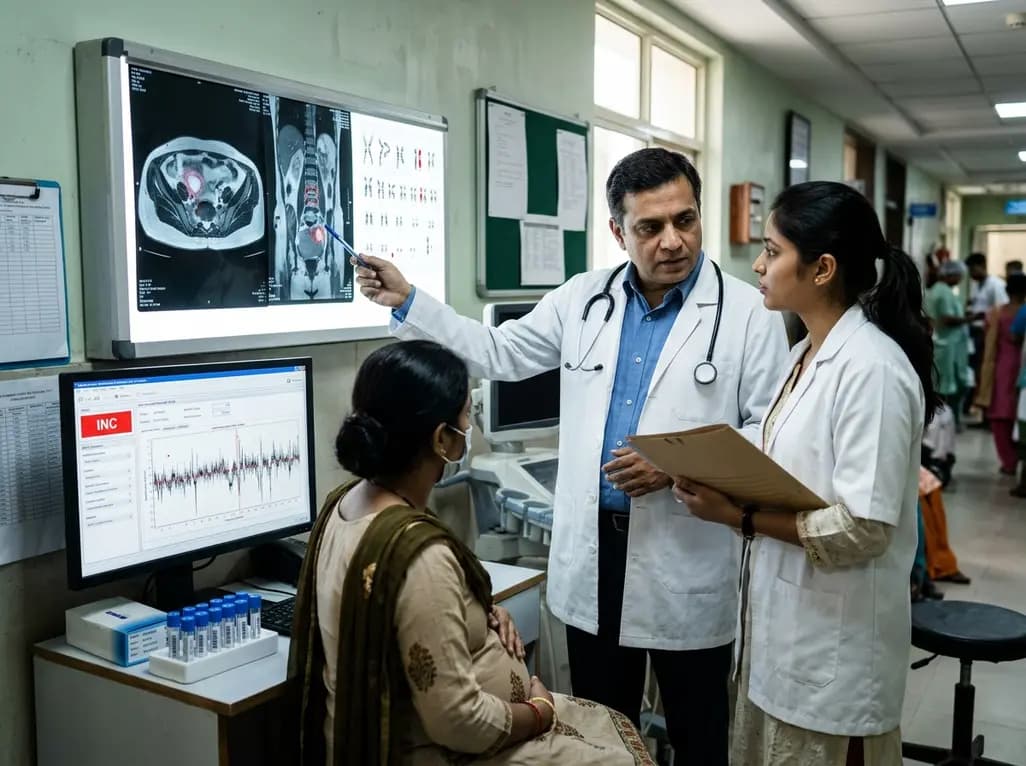
Occult maternal malignancy accounts for 3.82% of persistent unreportable NIPT results with genomic noise. Multiple chromosomal aberrations, notably on chromosome 18, warrant thorough oncological evaluation and whole-body MRI to ensure timely maternal diagnosis while preserving fetal care.
Today
This article reviews the forensic and clinical complexities of acute myocarditis arising on left ventricular hypertrophy in children, highlighting early diagnostic red flags and multidisciplinary postmortem autopsy protocols.
Today
A randomized controlled trial demonstrates that an eight-week dual-task training intervention significantly improves static and dynamic postural control over standard balance exercises in individuals with chronic ankle instability, addressing critical neurocognitive deficits during athletic and daily activities.
Today

A retrospective cohort study of 7,716 ICU patients from the MIMIC-IV database demonstrates that Gradient Boosting Decision Trees significantly outperform traditional SOFA scores in predicting in-hospital mortality among patients with sepsis and diabetes, with SHAP analysis providing clinical interpretability.
Today
