.webp&w=384&q=75)

Loading, please wait...
Loading, please wait...
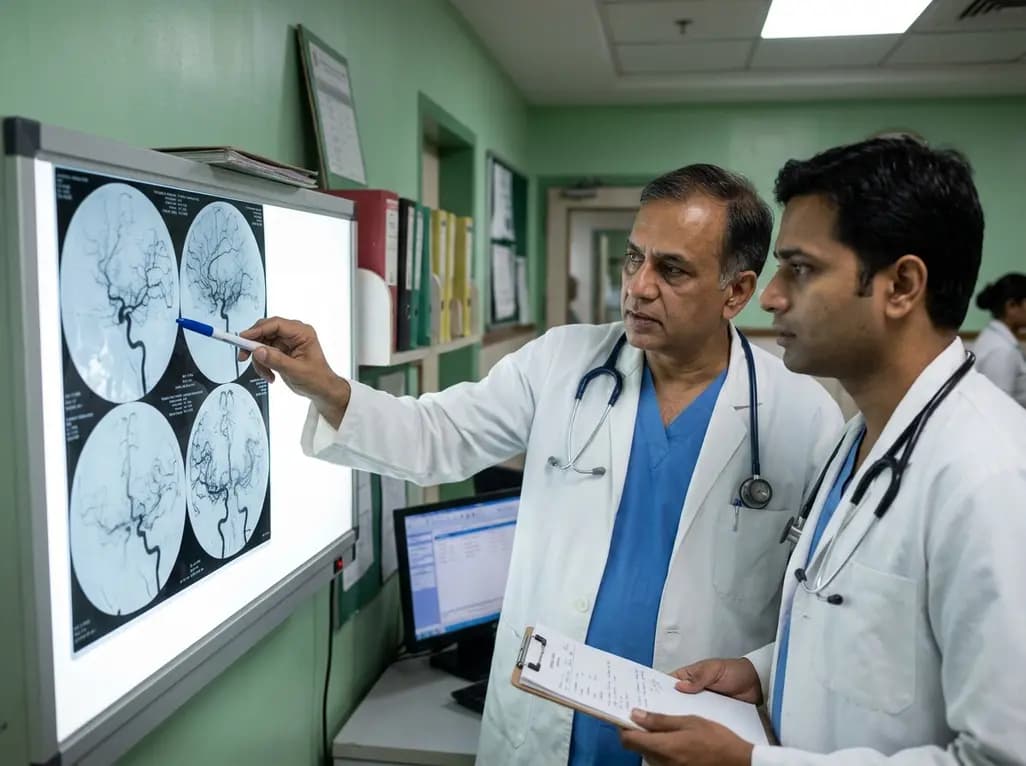
Adult Moyamoya disease is a progressive cerebrovascular arteriopathy characterized by bilateral steno-occlusive lesions at the terminal internal carotid arteries. Extracranial-intracranial (EC-IC) bypass surgery targeting the middle cerebral artery (MCA) remains the historical cornerstone of surgical management. However, many adult patients also demonstrate profound hemodynamic failure in the anterior cerebral artery (ACA) and posterior cerebral artery (PCA) territories. Standard single-territory surgery leaves these areas vulnerable to ongoing ischemia. Consequently, contemporary neurosurgical paradigms increasingly emphasize tailored Moyamoya revascularization to rescue all hypoperfused vascular regions. By expanding surgical revascularization beyond the traditional MCA boundaries, clinicians can address multi-territorial hemodynamic compromise and prevent devastating ischemic deficits.
Accurate patient selection forms the foundation of any multi-territorial surgical strategy. Surgeons identify ischemic territories that require intervention by using advanced quantitative imaging modalities. Specifically, clinicians utilize positron emission tomography (PET-CT) or carbon dioxide-triggered breath-hold functional magnetic resonance imaging (bh-fMRI) to measure cerebrovascular reserve capacity. Therefore, hemodynamic mapping reveals whether collateral pathways compensate sufficiently or if cerebral tissue faces chronic hemodynamic compromise. When diagnostic imaging confirms impaired autoregulation in non-MCA distributions, surgical teams formulate an individualized revascularization plan. Furthermore, pre-operative digital subtraction angiography (DSA) delineates available donor scalp arteries and suitable cortical recipient vessels. Thus, hemodynamic imaging prevents unnecessary interventions while precisely targeting regions at critical risk of ischemic infarction.
Revascularization of the anterior cerebral artery territory presents unique anatomical challenges. Because distal ACA branches are situated deeply within the interhemispheric fissure, direct microvascular anastomosis is technically demanding. Consequently, surgeons predominantly utilize indirect revascularization techniques to augment frontal perfusion. These indirect modalities include encephalo-duro-arterio-synangiosis (EDAS), encephalo-duro-synangiosis (EDS), and frontal bifrontal burr hole trepanations. In clinical practice, EDAS consistently demonstrates superior angiographic efficacy and collateral development across frontal lobes. Moreover, surgeons occasionally perform direct superficial temporal artery (STA) to anterior cerebral artery bypasses when robust cortical branches are accessible. By laying vascularized donor tissues across the ischemic cortex, surgical teams stimulate robust spontaneous neoangiogenesis that matures over several months.
In contrast to the anterior circulation, posterior cerebral artery insufficiency requires a balanced combination of direct and indirect revascularization strategies. Neurosurgeons frequently perform direct occipital artery (OA) to posterior cerebral artery (PCA) bypasses to restore immediate hemodynamic support to the occipital and temporal lobes. Alternatively, indirect procedures such as encephalo-myo-synangiosis (EMS) provide reliable long-term collateral ingrowth. In recent large-scale clinical cohorts evaluating tailored Moyamoya revascularization, direct bypasses achieved a 100% graft patency rate at 12-month follow-up. Concurrently, indirect revascularization procedures yielded robust neoangiographic collaterals in over 93% of treated territories. Therefore, tailored surgical planning provides reliable physiological revascularization across anterior, middle, and posterior territories alike.
Surgical morbidity remains a primary concern during multi-territorial intracranial interventions. However, specialized neurosurgical centers report low complication rates when following standardized perioperative protocols. Major surgical complications requiring reoperation occur in approximately 4% of procedures, primarily comprising wound healing disturbances or localized subdural collections. In addition, aggressive perioperative blood pressure management and normocapnic ventilation minimize the risk of cerebral hyperperfusion syndrome or transient ischemic episodes. Notably, long-term clinical follow-up confirms excellent neuroprotective efficacy, with zero recurrent ischemic strokes observed over mean follow-up periods exceeding 15 months. Consequently, multi-territorial revascularization provides substantial ischemic protection without exposing patients to excessive procedural risk.
The transition from isolated MCA bypasses to tailored multi-territorial revascularization represents a major advancement in Moyamoya management. Adult patients frequently present with complex cognitive and visual symptoms related to anterior and posterior cerebral ischemia. Addressing only the MCA territory leaves these fragile cognitive and visual pathways underperfused. Therefore, comprehensive hemodynamic screening should guide surgical decision-making for every adult with Moyamoya disease. When clinicians tailor revascularization techniques to each patient's specific vascular anatomy, long-term functional independence improves significantly. Ultimately, multi-territorial revascularization ensures durable cerebrovascular stability and sets a new benchmark for adult Moyamoya care.
Tailored multi-territorial revascularization restores blood flow to all hemodynamically compromised brain regions, including the ACA and PCA territories. Consequently, this approach prevents ischemic strokes and progressive cognitive deficits that standard single-territory MCA bypass surgery fails to treat.
Clinicians assess cerebrovascular reserve using advanced functional imaging modalities, such as PET-CT perfusion studies and CO2-triggered breath-hold functional MRI (bh-fMRI). These diagnostic scans accurately pinpoint specific cerebral territories with exhausted autoregulation that require surgical revascularization.
Surgeons predominantly utilize indirect revascularization techniques, especially encephalo-duro-arterio-synangiosis (EDAS), for the ACA territory. EDAS provides excellent neoangiographic collateral ingrowth across the frontal lobes while avoiding the technical difficulties associated with deep interhemispheric microvascular anastomoses.
Disclaimer: This content is for informational and educational purposes only. It does not constitute medical advice, clinical diagnosis, or treatment recommendations. Healthcare professionals must exercise independent clinical judgment and verify information with primary medical literature. Refer to the latest local and national guidelines for clinical practice.
References
Roder C et al. Multiterritorial tailored revascularization in adult Moyamoya patients: expanding revascularization approaches to ACA and PCA territories. Neurosurg Rev. 2026 Aug 28. doi: 10.1007/s10143-026-04455-y. PMID: 42661119.
Kuroda S, Houkin K. Moyamoya disease: current concepts and future perspectives. Lancet Neurol. 2008;7(11):1056-1066. doi: 10.1016/S1474-4422(08)70240-0.
Acker G, Fekonja L, Vajkoczy P. Surgical Management of Moyamoya Disease. Stroke. 2018;49(2):476-482. doi: 10.1161/STROKEAHA.117.018563.

Read summarized clinical updates, watch expert medical content, and earn CME certifications right from your smartphone.
Open your smartphone camera to scan and install.





Adult Moyamoya disease often impairs flow beyond the MCA. This clinical review evaluates tailored multi-territorial revascularization across ACA and PCA territories, demonstrating high graft patency, robust collateralization, low perioperative complications, and effective long-term stroke prevention.
4 weeks back

Chronic eosinophilic pneumonia can present with atypical bronchoalveolar lavage findings and an organizing pneumonia pattern, necessitating surgical lung biopsy.
Today

Discover the crucial distinctions between mesonephric and mesonephric-like proliferations of the female genital tract. Learn the key histomorphologic, immunohistochemical, and molecular differences essential for accurate diagnosis and clinical management.
Today
Kikuchi-Fujimoto disease rarely presents with refractory shock and sinus bradycardia in children. This case report highlights life-threatening hemodynamic instability requiring intensive care, preserved cardiac contractility, and the critical diagnostic role of early excisional lymph node biopsy.
Today
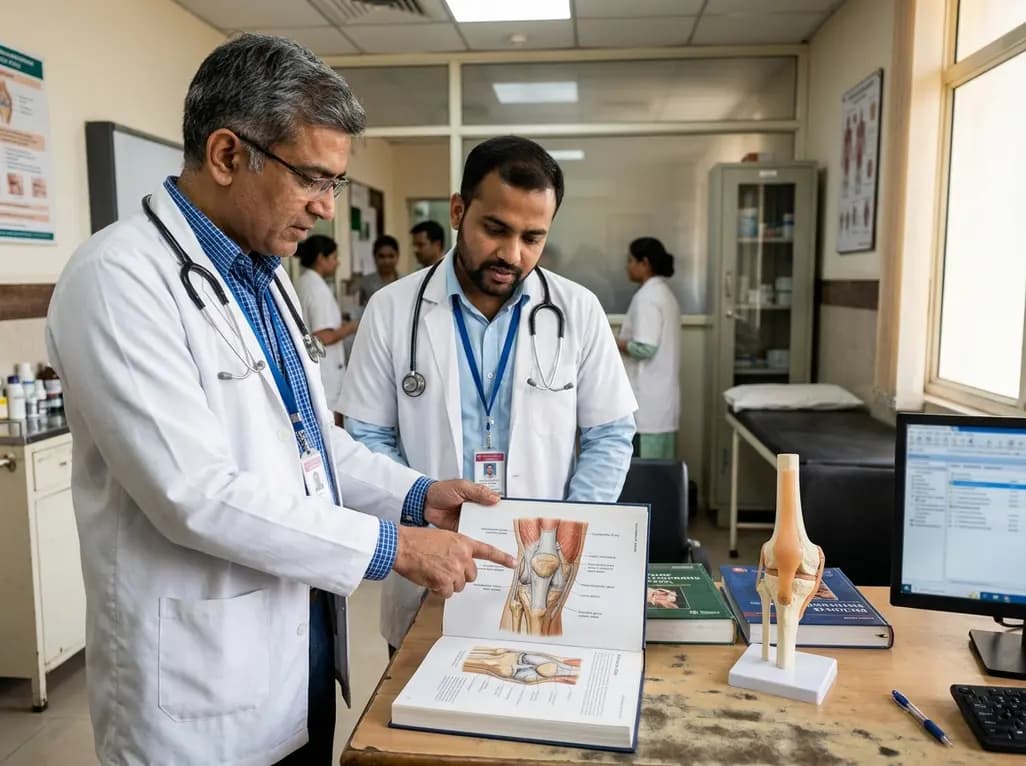
A narrative review investigates whether the articularis genus muscle functions as an independent anatomical entity or blends with the vastus intermedius. We evaluate its morphology, role in retracting the suprapatellar bursa, and direct clinical significance in anterior knee pain and arthroplasty.
Today

A Bayesian multilevel meta-analysis reveals that aerobic training combined with moderate carbohydrate restriction modestly lowers HbA1c in type 2 diabetes. However, sparse data and very low certainty leave incremental benefits over exercise or diet alone unproven, highlighting the need for individualized care.
Today
