.webp&w=384&q=75)

Loading, please wait...
Loading, please wait...
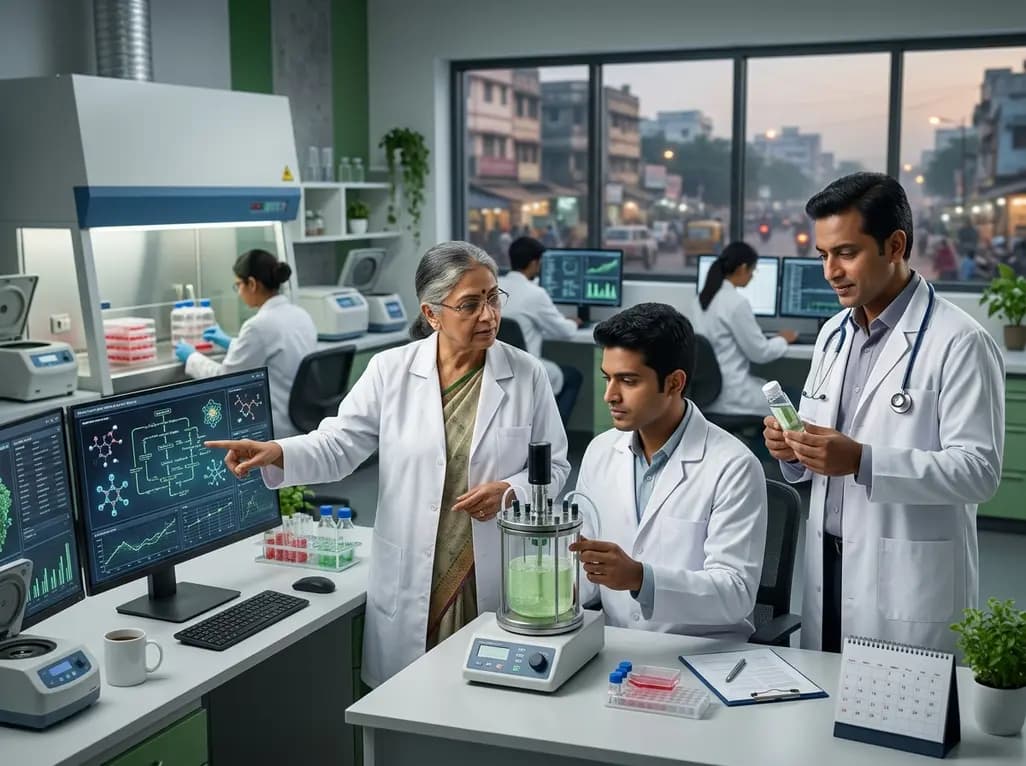
The global pharmaceutical industry is undergoing a significant paradigm shift toward eco-friendly production methods. Sustainable Biomanufacturing in Pharmacy represents a critical movement to replace traditional fossil-fuel-based chemical synthesis with renewable bioeconomies. This transition relies heavily on microbial cell factories, which serve as sophisticated platforms for producing fuels, complex chemicals, and high-value medicinal products. In India, this evolution is particularly relevant given the government's BioE3 policy, which focuses on Biotechnology for Economy, Environment, and Employment. By leveraging microorganisms like bacteria and yeast, manufacturers can synthesize active pharmaceutical ingredients with reduced environmental footprints. Furthermore, recent scientific advances have transitioned pathway engineering from a slow, empirical practice into a highly predictive and integrated discipline. This transformation allows for more efficient production of antibiotics, vaccines, and specialized proteins. Consequently, the integration of cutting-edge technologies is not merely a technical upgrade but a strategic necessity for the future of global health. As we move toward a greener pharmacy, the role of engineered biological systems becomes increasingly central to ensuring drug availability and environmental stewardship.
Artificial intelligence is revolutionizing how scientists design biosynthetic routes for complex molecules. Traditionally, identifying the correct sequence of enzymatic reactions to produce a specific drug was a process of trial and error. However, AI-assisted retrosynthesis now allows for the rapid expansion of biosynthetic route design by scanning vast biological datasets. These computational tools can predict the most efficient pathways for synthesizing target compounds that may not even exist in nature. In addition, machine learning algorithms evaluate thousands of potential enzymatic steps to minimize byproduct formation and maximize yield. This predictive capability significantly reduces the time required for early-stage research and development. Therefore, researchers can focus on the most promising candidates, accelerating the journey from concept to commercial production. Furthermore, these AI models continuously learn from experimental failures, refining their suggestions with each iteration. By integrating these digital tools into the manufacturing workflow, the pharmaceutical sector can achieve a level of precision that was previously unattainable through manual methods alone.
To build robust microbial production systems, one must understand the complex internal environment of the host cell. Genome-scale metabolic models and host-aware simulations have emerged as vital tools for improving pathway evaluation under real-world cellular constraints. These models allow scientists to visualize how a new biosynthetic pathway will interact with the cell’s native metabolism. For instance, introducing a high-demand pathway can drain the cell of essential energy and nutrients, leading to poor growth or low product titers. Through systems biology, engineers can identify these bottlenecks before physical experiments begin. Moreover, these simulations help in determining the optimal genetic modifications needed to redirect metabolic flux toward the desired pharmaceutical product. This holistic approach ensures that the microbial factory remains healthy and productive over long periods. Additionally, host-aware modeling facilitates the selection of the most suitable microbial chassis for specific production goals. Ultimately, this integration of computational modeling and biological reality provides a multiscale framework that speeds up the development of sustainable manufacturing platforms.
Sustainable Biomanufacturing in Pharmacy is also benefiting from the rapid maturation of enzyme engineering. Enzymes are the workhorses of biomanufacturing, yet natural enzymes often lack the stability or specificity required for industrial-scale drug production. Today, enzyme engineering is increasingly integrated with pathway design through machine learning and high-throughput screening. Machine learning models can predict how specific mutations will affect an enzyme's performance, allowing for the design of "super-enzymes" with enhanced catalytic properties. Furthermore, cell-free platforms have become instrumental in testing these engineered enzymes outside the restrictive environment of a living cell. This allows for faster prototyping and optimization of metabolic steps. Once an optimized enzyme is identified, it can be re-introduced into the microbial host for streamlined production. Significantly, this synergy between computational design and experimental verification ensures that every step of the biosynthetic pathway is as efficient as possible. As a result, the cost of producing complex biologics can be substantially lowered, making life-saving medications more accessible to a broader population.
One of the most exciting frontiers in metabolic engineering is the implementation of dynamic control systems. Static genetic modifications often lead to metabolic imbalances, where intermediate products accumulate to toxic levels. To solve this, researchers are developing biosensor-based feedback systems that allow cells to regulate their own metabolism in real time. These biosensors detect the concentration of specific metabolites and adjust the expression of pathway genes accordingly. This dynamic regulation ensures that the production process remains in a state of equilibrium, preventing cellular stress and maximizing output. For example, if a certain intermediate becomes too high, the biosensor can trigger a reduction in the upstream enzyme's activity. In addition to improving yields, these autonomous systems make the bioprocess more resilient to environmental fluctuations during large-scale fermentation. Furthermore, the use of automation and design-build-test-learn workflows further optimizes these feedback loops. Consequently, the transition to smart, self-regulating microbial factories represents a major milestone in achieving consistent and high-quality pharmaceutical manufacturing.
The convergence of AI, systems biology, and enzyme engineering is setting the stage for a new era in Indian pharmaceutical manufacturing. India’s strategic focus on the BioE3 policy highlights the national commitment to fostering high-performance biomanufacturing hubs. These hubs will likely serve as the breeding ground for innovative startups and established firms to adopt the multiscale frameworks discussed in recent research. By localizing the production of Active Pharmaceutical Ingredients through engineered microbes, India can reduce its dependence on imported raw materials. Moreover, the move toward sustainable biomanufacturing aligns with global carbon neutrality goals, positioning the Indian industry as a leader in green chemistry. The integration of digital twins and AI-driven process monitoring will further enhance the reliability of these biological systems. As these technologies mature, we can expect to see a surge in the domestic production of specialized medicines, including personalized biotherapeutics and rare disease treatments. Ultimately, the fusion of biological science and digital innovation will redefine the boundaries of what is possible in sustainable pharmacy.
AI improves sustainability by optimizing biosynthetic pathways to ensure maximum resource efficiency and minimal waste production. By using retrosynthesis tools, researchers can design routes that utilize renewable feedstocks instead of petroleum-based chemicals. Additionally, AI helps predict the most stable and efficient enzymes, reducing the energy required for chemical reactions. This lead to a significant decrease in the overall carbon footprint of drug production while maintaining high purity and yield standards for critical medications.
Biosensors act as internal monitors within microbial cell factories, detecting the levels of specific metabolites in real time. They provide a feedback mechanism that allows the cell to dynamically adjust its metabolic activity. This prevents the buildup of toxic intermediates that could hinder cell growth or reduce product quality. By ensuring a balanced metabolism, biosensors help maintain high productivity and process stability, which is essential for the commercial viability of sustainable biomanufacturing processes in the pharmaceutical sector.
The BioE3 policy is crucial because it provides the regulatory and financial framework for advancing high-performance biomanufacturing in India. For medical professionals, this means a more resilient supply chain and increased availability of essential drugs and innovative biotherapeutics. By fostering domestic innovation in synthetic biology and AI-driven manufacturing, the policy ensures that India remains a global leader in pharmacy. This initiative ultimately supports the development of affordable, high-quality, and environmentally friendly healthcare solutions for the Indian population.
Disclaimer: This content is for informational and educational purposes only. It is not intended to provide specific medical or regulatory advice. The field of biomanufacturing and pharmaceutical engineering is rapidly evolving. Refer to the latest local and national guidelines for clinical practice and industrial manufacturing standards.
References
Ogawa Y et al. Pathway engineering for sustainable biomanufacturing: integrating AI, systems biology, enzyme engineering, and dynamic control. Curr Opin Biotechnol. 2026 Jul 15. doi: undefined. PMID: 42456238.
Department of Biotechnology, Ministry of Science & Technology, Government of India. BioE3 Policy: Biotechnology for Economy, Environment, and Employment. 2024.
BIRAC-Biomanufacturing Initiative. Fostering High Performance Biomanufacturing in India. 2024.

Read summarized clinical updates, watch expert medical content, and earn CME certifications right from your smartphone.
Open your smartphone camera to scan and install.





This review explores advances in pathway engineering, integrating AI and systems biology to transform biomanufacturing into a predictive discipline for producing high-value pharmaceutical products. It highlights how these technologies align with India's BioE3 policy for a sustainable bioeconomy.
3 months ago

Explore why official drug package inserts fail to reflect modern evidence for clozapine prescribing. Learn how legal standards of care, case law, slow titration, and vital adverse event monitoring empower clinicians to prioritize evidence-based medical practice over outdated manufacturer labeling.
Today
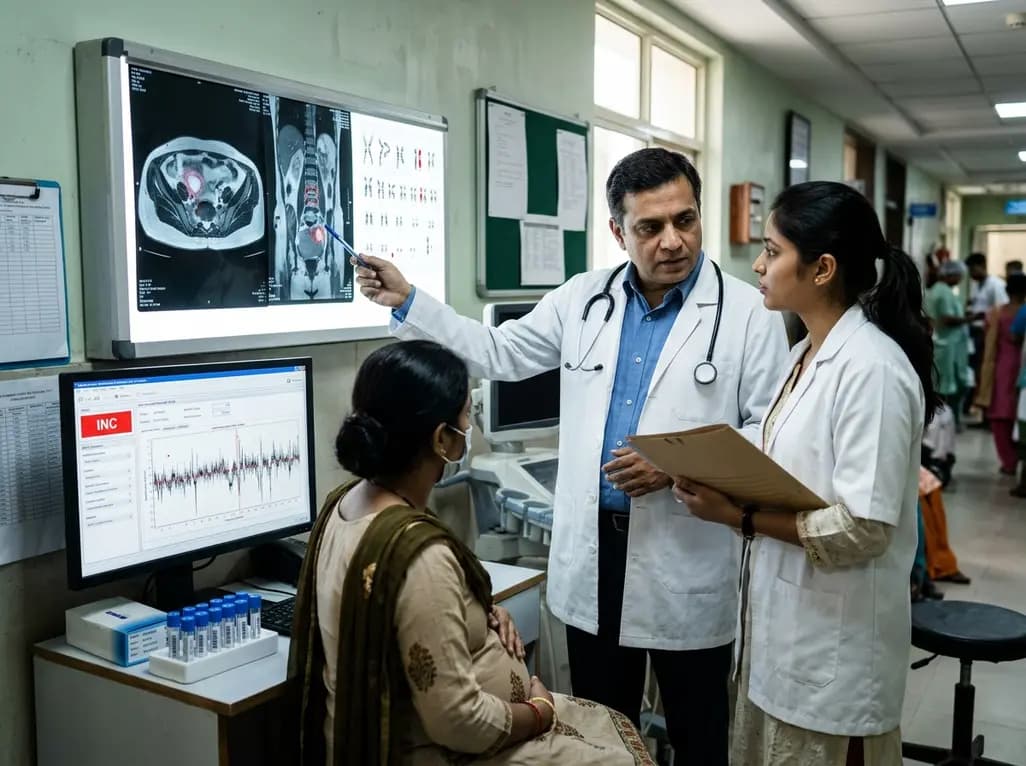
Occult maternal malignancy accounts for 3.82% of persistent unreportable NIPT results with genomic noise. Multiple chromosomal aberrations, notably on chromosome 18, warrant thorough oncological evaluation and whole-body MRI to ensure timely maternal diagnosis while preserving fetal care.
Today

This article reviews the forensic and clinical complexities of acute myocarditis arising on left ventricular hypertrophy in children, highlighting early diagnostic red flags and multidisciplinary postmortem autopsy protocols.
Today
A randomized controlled trial demonstrates that an eight-week dual-task training intervention significantly improves static and dynamic postural control over standard balance exercises in individuals with chronic ankle instability, addressing critical neurocognitive deficits during athletic and daily activities.
Today

A retrospective cohort study of 7,716 ICU patients from the MIMIC-IV database demonstrates that Gradient Boosting Decision Trees significantly outperform traditional SOFA scores in predicting in-hospital mortality among patients with sepsis and diabetes, with SHAP analysis providing clinical interpretability.
Today
