.webp&w=384&q=75)

Loading, please wait...
Loading, please wait...
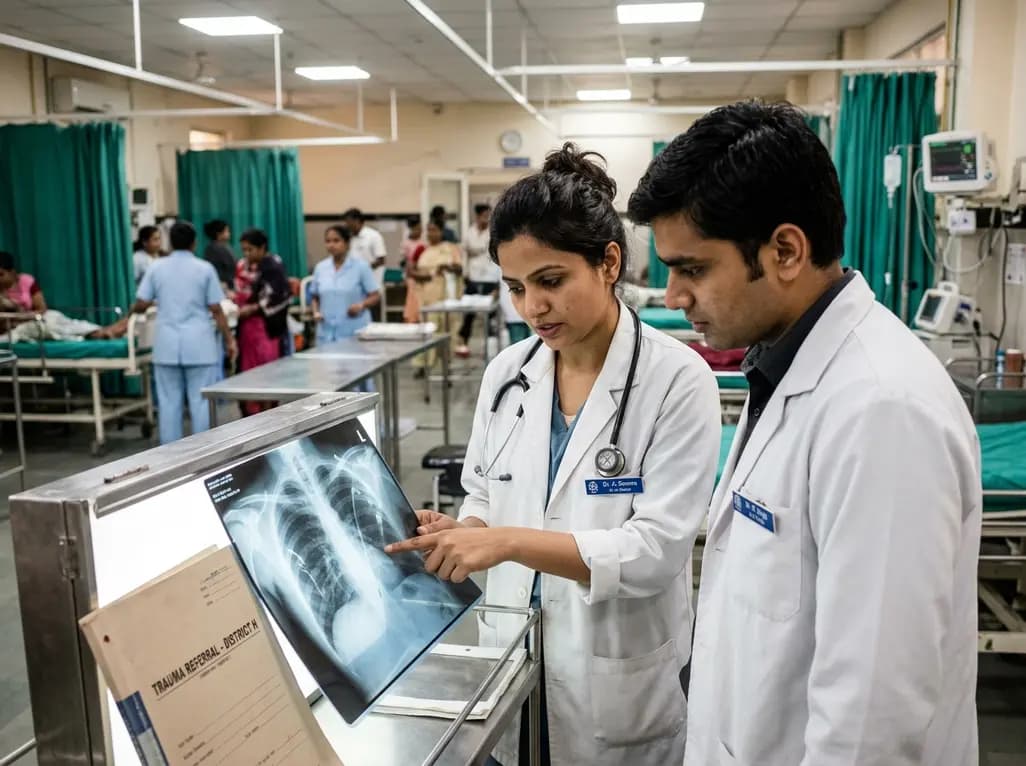
Severe blunt chest trauma represents a significant clinical challenge globally, often resulting in complex rib fractures, flail chest deformities, and substantial respiratory compromise. Historically, geographical distance and regional disparities have negatively influenced clinical outcomes following acute traumatic injury. In particular, rural trauma victims frequently experience delayed initial resuscitation and longer transit times to specialized tertiary medical centers. Consequently, clinicians have raised concerns regarding whether definitive surgical interventions, such as surgical rib fixation, suffer operational delays when patients require interfacility transfer. However, recent clinical evidence indicates that mature trauma networks can effectively mitigate these rural-urban disparities. When specialized chest wall stabilization protocols are integrated across regional health ecosystems, acute surgical care can proceed without harmful delay. Furthermore, prompt anatomical reconstruction of the thoracic cage stabilizes respiratory mechanics, decreases acute pain, and minimizes the duration of mechanical ventilation. Therefore, examining how regional triage pathways function provides critical insights for trauma surgeons and critical care teams striving to deliver equitable emergency surgical services.
A landmark ten-year retrospective cohort study conducted at a Level I trauma center evaluated 173 consecutive patients requiring chest wall reconstruction. The researchers stratified patients by rurality using validated Rural-Urban Commuting Area classifications to analyze operative timing. Interestingly, rural patients and urban patients experienced equivalent median times from initial presentation to surgery, recording 3.1 days and 3.4 days, respectively. Moreover, approximately half of both cohorts underwent operative repair within the recommended 72-hour window. This parity occurred despite rural patients presenting with significantly higher overall injury severity scores. Additionally, rural individuals required interfacility transfer nearly four times more often than their urban counterparts. Consequently, these results demonstrate that structured transfer protocols successfully prevent operative delays for critically injured rural patients. Thus, timely definitive chest wall care remains achievable regardless of initial geographic location. Ultimately, regionalized trauma systems ensure that complex transfers do not compromise surgical readiness or prolong pre-procedural timelines.
Trauma surgical teams must carefully evaluate anatomical and physiological parameters when considering surgical rib fixation in acute thoracic injury. Generally, operative stabilization is indicated for patients with flail chest, three or more severely displaced fractures, pulmonary herniation, or refractory pain failing conservative multimodal analgesia. Furthermore, clinical trials indicate that performing thoracic reconstruction within 48 to 72 hours of injury optimizes physiological benefits. Specifically, early internal fixation rapidly restores thoracic volume, diminishes chest wall compliance losses, and prevents progressive atelectasis. Consequently, early operative intervention substantially lowers the incidence of ventilator-associated pneumonia and reduces intensive care unit length of stay. In contrast, postponing operative repair beyond the acute physiological window often increases fibrous adhesions, complicating fracture reduction and anatomical alignment. Therefore, established trauma protocols prioritize rapid diagnostic computed tomography imaging and early surgical consultation. By acting quickly, multidisciplinary teams protect pulmonary reserves and significantly improve long-term functional recovery.
Transferring critically injured trauma patients across regional boundaries introduces numerous logistical challenges that require meticulous coordination. For instance, transferring facilities must execute initial airway stabilization, pleural decompression, and adequate fluid resuscitation before initiating transport. Meanwhile, receiving tertiary centers must maintain immediate operating room availability and specialized surgical instrumentation. Fortunately, standardized transfer agreements and direct physician-to-physician communication minimize interhospital transit intervals. Additionally, centralized telemedicine consultations enable trauma surgeons to review thoracic computed tomography scans before the patient arrives at the receiving hospital. Because of these proactive communication strategies, operative scheduling and pre-anesthetic clearance occur simultaneously during patient transport. Consequently, surgeons can proceed to the operating room shortly after secondary trauma surveys conclude. Thus, streamlined administrative and clinical workflows transform potential transfer delays into an organized continuum of advanced resuscitation and definitive surgical care.
The clinical insights gained from regional trauma registries provide valuable lessons for healthcare systems in developing nations and low-resource settings. In countries with expanding highway networks and developing regional trauma tiers, rural trauma patients often face formidable transport barriers. However, implementing structured chest wall triage pathways can overcome substantial geographical fragmentation. Specifically, peripheral community hospitals can rapidly identify severe flail chest patterns using point-of-care ultrasound and basic radiography. Subsequently, early contact with regional referral centers facilitates timely aeromedical or ground ambulance dispatch. Furthermore, establishing dedicated rib fracture pathways ensures that transferred patients receive prompt multimodal analgesia, including erector spinae plane blocks. Therefore, adopting standardized stabilization protocols allows emerging trauma systems to optimize outcomes and avoid catastrophic respiratory failure in isolated rural settings. Ultimately, continuous quality improvement and regional collaboration elevate the standard of emergency surgical care everywhere.
The evolution of thoracic trauma management continues to benefit from technological innovation, advanced surgical implant designs, and standardized multidisciplinary care pathways. Modern low-profile anatomical plates, minimally invasive thoracoscopic visualization techniques, and bioresorbable fixation devices have markedly reduced operative morbidity. Moreover, integrating regional nerve blocks into perioperative algorithms significantly reduces post-injury opioid dependence. However, expanding access to specialized chest wall stabilization requires continuous educational outreach across community medical centers. Clinicians at referral centers must regularly conduct trauma simulation workshops and provide remote consultative guidance to rural practitioners. Additionally, national trauma data registries must continue tracking long-term functional outcomes, pulmonary mechanics, and cost-effectiveness metrics across diverse demographics. Thus, the future of trauma care lies in harmonizing advanced surgical technology with robust regional transfer networks. By strengthening these clinical bonds, modern surgical systems ensure that every severely injured patient receives high-quality thoracic reconstruction.
Surgeons primarily perform surgical rib fixation for traumatic flail chest, multiple severely displaced rib fractures, and respiratory failure refractory to medical therapy. Additionally, persistent chest wall instability, severe mechanical deformity, open fractures, and uncontrollable chest wall pain warrant operative intervention. Prompt surgical stabilization restores structural thoracic integrity, optimizes respiratory biomechanics, and significantly reduces the overall risk of acute pulmonary complications.
When supported by coordinated regional trauma networks, interfacility transfer does not significantly delay surgical timing. Established referral protocols enable early communication, remote image review, and pre-arrival operating room preparation. Consequently, transferred rural patients achieve operative stabilization within seventy-two hours of injury at rates comparable to directly admitted urban patients, ensuring equitable clinical outcomes despite geographic distance.
Performing stabilization within forty-eight to seventy-two hours prevents progressive pulmonary contusion worsening, severe chest wall stiffness, and ventilator-associated pneumonia. Furthermore, early operative fixation dramatically reduces mechanical ventilation duration and intensive care unit length of stay. Conversely, delayed surgery increases soft-tissue inflammation, making anatomical fracture reduction more challenging while prolonging pain and hospital recovery times.
Disclaimer: This content is for informational and educational purposes only and should not be considered medical advice. Always consult a qualified healthcare professional regarding any medical condition or treatment. Refer to the latest local and national guidelines for clinical practice.
References
1. Hopper W et al. The Transfer Advantage: Regional Chest Wall Care Without Delay. Am Surg. 2026 Aug 24. doi: 10.1177/00031348261480839. PMID: 42637699.
2. Prins JTH, Wijffels MME, Pieracci FM. What is the optimal timing to perform surgical stabilization of rib fractures? J Thorac Dis. 2021;13(4):2704-2710.
3. Pieracci FM, Majercik S, Ali-Osman F, et al. Consensus statement: Surgical stabilization of rib fractures rib fracture collab. Eur J Trauma Emerg Surg. 2017;43(2):157-168.

Read summarized clinical updates, watch expert medical content, and earn CME certifications right from your smartphone.
Open your smartphone camera to scan and install.





A recent study highlights that regional trauma transfer networks successfully deliver timely surgical stabilization of rib fractures for rural patients, matching urban operative timelines despite higher initial injury severity.
last month

Chronic eosinophilic pneumonia can present with atypical bronchoalveolar lavage findings and an organizing pneumonia pattern, necessitating surgical lung biopsy.
Today

Discover the crucial distinctions between mesonephric and mesonephric-like proliferations of the female genital tract. Learn the key histomorphologic, immunohistochemical, and molecular differences essential for accurate diagnosis and clinical management.
Today
Kikuchi-Fujimoto disease rarely presents with refractory shock and sinus bradycardia in children. This case report highlights life-threatening hemodynamic instability requiring intensive care, preserved cardiac contractility, and the critical diagnostic role of early excisional lymph node biopsy.
Today
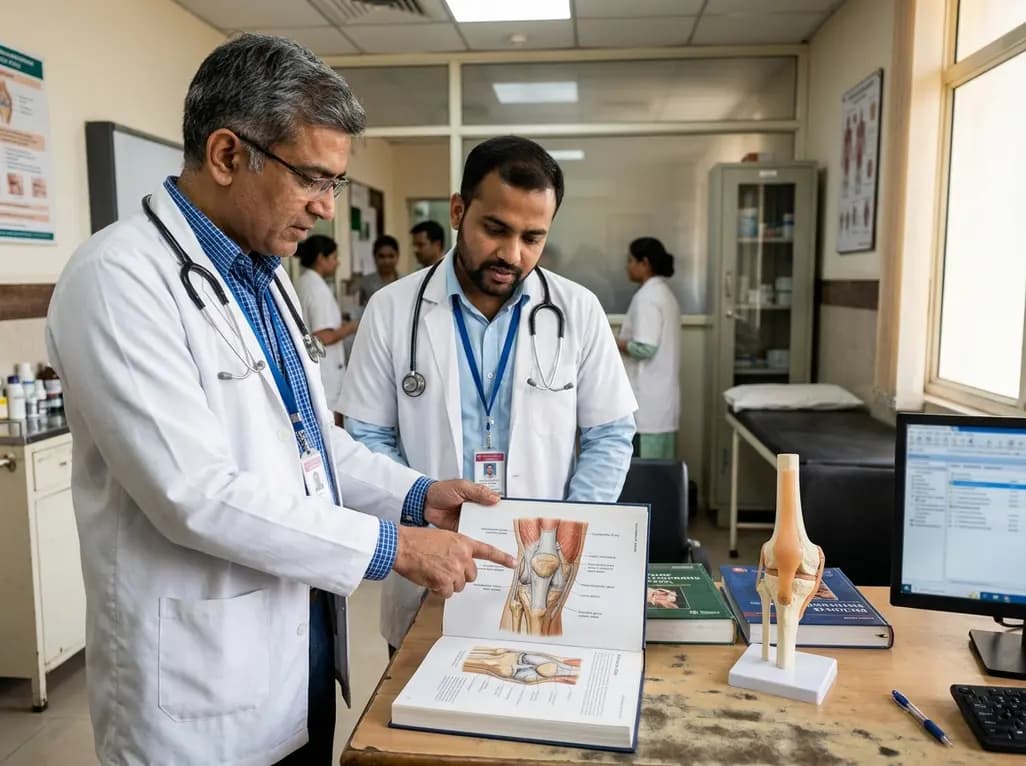
A narrative review investigates whether the articularis genus muscle functions as an independent anatomical entity or blends with the vastus intermedius. We evaluate its morphology, role in retracting the suprapatellar bursa, and direct clinical significance in anterior knee pain and arthroplasty.
Today

A Bayesian multilevel meta-analysis reveals that aerobic training combined with moderate carbohydrate restriction modestly lowers HbA1c in type 2 diabetes. However, sparse data and very low certainty leave incremental benefits over exercise or diet alone unproven, highlighting the need for individualized care.
Today
