

Loading, please wait...
Loading, please wait...

Accurate estimation of substance use disorder prevalence remains essential for guiding clinical care and allocating public health resources. Traditionally, health authorities have relied on large-scale self-report surveys, such as the National Survey on Drug Use and Health in the United States. However, these population-based surveys require lengthy data collection and analysis pipelines, which often introduces significant surveillance lag. Consequently, real-time public health interventions encounter major operational delays during rapidly evolving drug epidemics. Electronic health record registries now present a compelling alternative because they aggregate clinical diagnostic encounters continuously. By capturing clinical coding in real time, electronic systems can potentially monitor community addiction trends far faster than retrospective surveys.
Nevertheless, clinicians and epidemiologists must determine whether clinical diagnostic codes genuinely reflect true population prevalence. A recent benchmark study compared electronic health record data from the Minnesota Electronic Health Record Consortium with statewide survey findings to evaluate diagnostic concordance. The investigators assessed how closely health system records mirror population surveys across multiple drug classes. Their comparative analysis illuminates critical strengths and systemic blind spots inherent to clinical documentation, offering clinicians vital insights into patient surveillance.
When analyzing opioid use disorder, researchers observed remarkable concordance between electronic health record registries and population surveys. The Minnesota Electronic Health Record Consortium documented an opioid use disorder prevalence of 1.30%, whereas the national survey reported 1.76%. Similarly, psychostimulant surveillance demonstrated impressive alignment across data sources. Electronic health records identified a psychostimulant use prevalence of 0.83%, which closely paralleled the survey finding of 0.85% for methamphetamine use.
These close alignments occur because opioid and methamphetamine dependencies frequently trigger acute medical crises. Patients suffering from opioid toxicity or severe stimulant toxicity routinely seek emergency medical services or specialized addiction treatment. Consequently, physicians readily detect and code these severe clinical presentations in hospital charts. Furthermore, targeted prescription monitoring programs and clinical guidelines encourage healthcare teams to document opioid diagnoses meticulously. Therefore, electronic health records serve as a dependable, near real-time proxy for monitoring severe drug dependencies in community settings. Clinicians can confidently rely on hospital registries to track emerging stimulant and opioid surges within regional catchment areas. Moreover, this consistency validates electronic surveillance as a reliable clinical adjunct for urgent policy formulation.
In stark contrast to opioid findings, alcohol use disorder and cocaine documentation revealed substantial divergence between sources. The national survey estimated statewide alcohol use disorder prevalence at 11.40%, whereas electronic health records captured only 3.80%. Similarly, survey data identified a cocaine use prevalence of 1.56%, but health system records documented merely 0.32%. These profound discrepancies highlight persistent structural barriers in clinical practice.
Many individuals with mild or moderate alcohol use disorder do not disclose their drinking habits during routine ambulatory visits. Furthermore, busy outpatient physicians frequently overlook mild alcohol dependence unless patients develop overt end-organ complications such as cirrhosis or cardiomyopathy. Social stigma surrounding illicit cocaine use also discourages transparent communication during medical intake interviews. Additionally, physicians may hesitate to document illicit substance use codes in medical charts because they fear legal or social ramifications for patients. Consequently, electronic health records systematically underreport less severe or highly stigmatized substance use patterns. Healthcare providers must recognize that medical records predominantly capture severe addiction stages while missing earlier stages of harmful alcohol use. Thus, routine charting significantly underrepresents the true community burden of harmful alcohol consumption.
The investigation unveiled another critical contradiction regarding age distribution across surveillance modalities. The national survey documented the highest substance use prevalence among young adults aged 18 to 25 years, followed by a steady decline in individuals aged 26 and older. Conversely, electronic health record data demonstrated an opposite trajectory, showing increasing substance use disorder prevalence as patient age advanced.
This striking discrepancy stems primarily from distinct healthcare utilization patterns across age groups. Young adults generally experience low baseline rates of chronic illness and rarely visit hospital clinics for preventive care. Therefore, young individuals with substance use issues remain largely invisible to electronic health record systems until severe trauma or toxicity occurs. In contrast, older adults interact with health systems frequently to manage hypertension, diabetes, and cardiovascular diseases. These recurring clinical encounters give physicians repeated opportunities to assess lifestyle factors, detect substance misuse, and formalize diagnoses. Thus, age-related surveillance discrepancies reflect differential healthcare access rather than true biological disease dynamics. Clinicians must actively implement routine youth screening rather than assuming older demographics carry disproportionate addiction risks. Targeted adolescent outreach programs are therefore necessary to identify hidden vulnerabilities.
These comparative epidemiological findings carry profound implications for practicing physicians in primary care and hospital medicine. First, clinicians cannot assume that the absence of a diagnostic code signifies the absence of addiction. Because electronic health records underestimate conditions like alcohol misuse, doctors must integrate standardized screening tools, such as the AUDIT questionnaire, into daily practice. Second, health systems should leverage electronic registries for real-time surveillance of severe conditions like opioid dependency. By integrating automated clinical alerts, hospitals can deploy rapid overdose prevention protocols and initiate medication-assisted treatment promptly.
Third, medical centers must address documentation hesitancy by assuring patients of strict medical confidentiality. Creating a nonjudgmental clinical environment empowers individuals to disclose substance misuse before advanced complications arise. Furthermore, multidisciplinary collaboration between general practitioners, psychiatrists, and addiction specialists remains essential to bridge existing diagnostic gaps. In evolving digital healthcare environments, combining population surveys with real-time electronic health data provides the most balanced perspective. When clinicians document addiction actively and ethically, they transform routine medical charts into powerful public health surveillance tools. Consequently, health systems can achieve both comprehensive population oversight and swift clinical responsiveness.
Electronic health records frequently miss milder alcohol use disorders because routine clinical visits often omit structured screening. In addition, patients frequently underreport drinking due to pervasive social stigma. Consequently, medical documentation primarily captures severe addiction, whereas population-based surveys provide confidential self-reporting that reveals extensive mild and moderate alcohol dependence.
Electronic health records synthesize data continuously from health networks, eliminating the multi-year lag characteristic of national household surveys. Therefore, public health authorities and clinicians can track emerging drug surges rapidly. This timely surveillance facilitates prompt resource allocation, targeted naloxone distribution, and immediate implementation of localized addiction management strategies.
Older individuals utilize healthcare services significantly more often for chronic medical comorbidities. Consequently, frequent physician interactions provide multiple clinical opportunities to identify, diagnose, and document persistent substance use disorders. In contrast, younger adults seek routine care less frequently, causing electronic health record registries to underrepresent youth addiction patterns.
Disclaimer: This content is for informational and educational purposes only... Refer to the latest local and national guidelines for clinical practice.
References

Read summarized clinical updates, watch expert medical content, and earn CME certifications right from your smartphone.
Open your smartphone camera to scan and install.





A study comparing Minnesota EHR data with NSDUH survey estimates reveals strong concordance for opioid and stimulant use but notable underreporting of alcohol and cocaine disorders in clinical records, highlighting key age-related diagnostic patterns.
Today

The Food Safety and Standards Authority of India has issued an urgent advisory against food business operators violating mandatory labelling standards for nutraceuticals and botanicals. Regulators prohibited therapeutic claims while mandating clear advisory warnings to prevent patient toxicity and medical misuse.
Today

Biotechnology researchers in India are developing an automated liquid biopsy platform to detect cervical malignancy from blood samples. Supported by the MAHA MedTech Mission, this initiative applies nanopore sequencing and piRNA biomarker detection to eliminate invasive speculum exams and expand rural screening.
Today
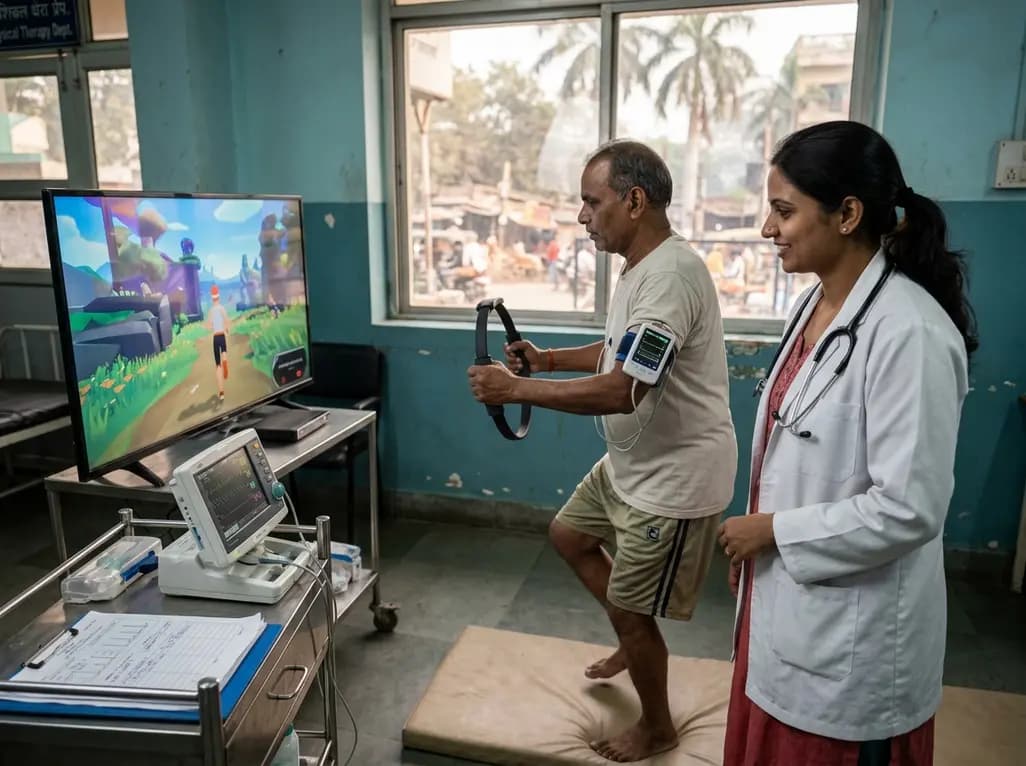
A clinical study evaluated Ring Fit Adventure in adults with chronic conditions, revealing that exergaming achieves moderate-to-vigorous exercise intensity while maintaining hemodynamic stability, high enjoyment, and zero adverse events.
Today

A retrospective cohort study reveals that selecting the touched vertebra as the lowest instrumented vertebra in thoracic adolescent idiopathic scoliosis yields a 20.8% distal add-on rate, driven by remnant motion segments and axial rotational discrepancies.
Today
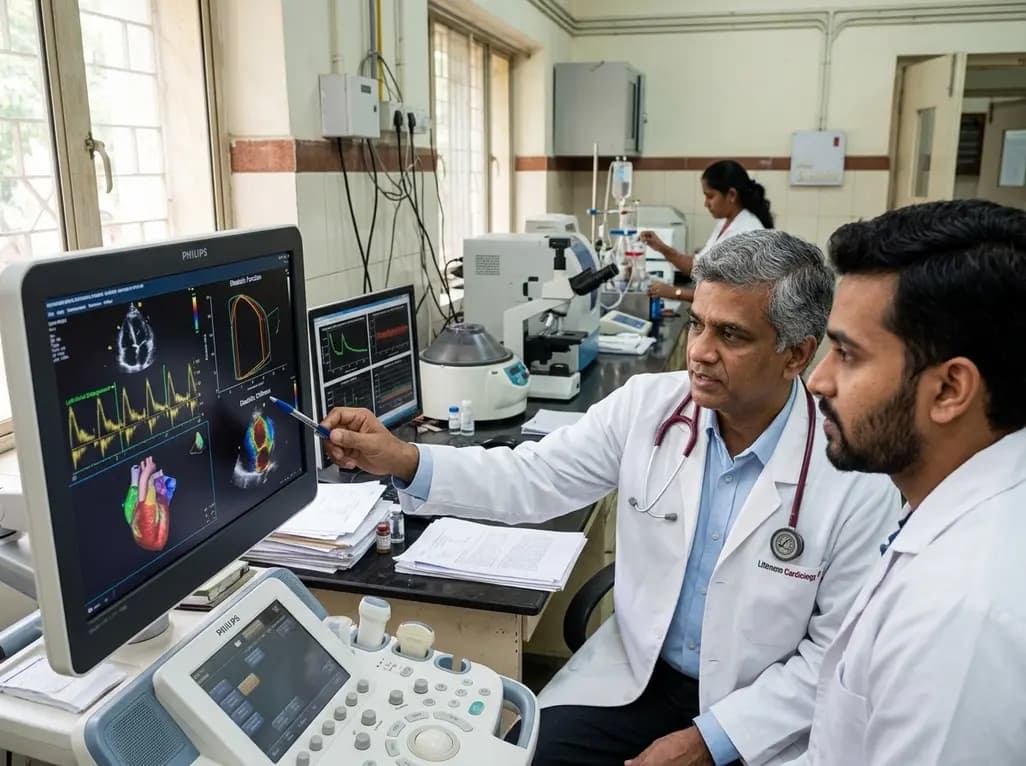
A study evaluates a cardiometabolic HFpEF model combining metabolic stress with chronic mineralocorticoid excess. The findings reveal profound diastolic stiffness, endothelial dysfunction, and pulmonary hypertension, illuminating key pathophysiological mechanisms for targeted cardiopulmonary therapies.
Today
