.webp&w=384&q=75)

Loading, please wait...
Loading, please wait...

Cerebrovascular events were historically considered conditions that primarily affected elderly individuals. However, recent registry data reveals a troubling epidemiological shift regarding stroke in young adults across India. Today, approximately one in seven stroke victims in the country is under forty-five years of age. Consequently, clinicians must re-evaluate standard risk profiles and screening protocols. Early recognition of predisposing vascular risk factors in younger demographics is becoming an urgent public health priority. Furthermore, proactive clinical interventions can prevent irreversible neurological deficits and reduce long-term disability.
Epidemiological surveillance from national registries indicates that 13.8 percent of all reported stroke cases in India occur in individuals under forty-five years old. Therefore, strokes are no longer confined to older populations with chronic vascular degeneration. Recent clinical evaluations demonstrate that younger working-age adults face an escalating burden of acute cerebrovascular disease. Moreover, this demographic shift carries immense socioeconomic consequences because stroke-induced disability affects individuals during their peak productive years. Historically, clinicians attributed strokes in young patients to rare genetic disorders or anatomical vascular anomalies. In contrast, modern epidemiological studies confirm that conventional vascular risk factors drive the vast majority of these acute events today. Consequently, public health experts emphasize the critical necessity of expanding routine cardiovascular screening to younger age groups nationwide. In addition, geographical variations show that both urban and rural healthcare centers experience rising stroke admissions among young adults. Specifically, urban areas report higher frequencies of metabolic conditions like diabetes, while rural regions witness significant rates of untreated hypertension. Thus, establishing robust surveillance systems remains essential for developing targeted clinical interventions across diverse healthcare settings.
Uncontrolled hypertension represents the single most dominant risk factor for cerebrovascular events among young individuals. Specifically, nearly one in four adults in certain states suffers from elevated blood pressure, yet many remain completely undiagnosed. Consequently, silent arterial damage accumulates over years before manifesting as an acute ischemic or hemorrhagic event. Furthermore, early-onset type 2 diabetes mellitus significantly accelerates atherogenesis and endothelial dysfunction in younger cohorts. As a result, diabetic patients experience a substantially elevated risk of arterial occlusion at an earlier age. In addition to metabolic disorders, obesity and physical inactivity play major roles in predisposing young adults to vascular disease. Modern sedentary office environments and poor dietary habits contribute heavily to metabolic syndrome. Similarly, widespread tobacco use exacerbates arterial stiffness and promotes systemic inflammation. Chronic sleep deprivation and psychological stress further aggravate neurovascular risk by promoting persistent sympathetic hyperactivity. Fortunately, medical experts emphasize that clinicians can prevent nearly eighty percent of strokes through aggressive management of these modifiable risk factors. Therefore, comprehensive risk stratification must begin during routine primary care consultations.
Recognizing stroke symptoms in younger patients presents unique diagnostic challenges for healthcare providers. For instance, young patients and their families often fail to recognize initial neurological deficits because they view stroke as an elderly disease. Consequently, treatment delays are frequent, with many individuals arriving at emergency departments past the standard thrombolytic therapeutic window. Early clinical presentation typically includes sudden unilateral weakness, facial asymmetry, acute speech difficulty, or severe thunderclap headaches. In addition, atypical symptoms such as sudden vertigo, ataxia, or transient confusion frequently lead to initial misdiagnosis in younger cohorts. Furthermore, emergency physicians might misattribute acute focal deficits to migraines, seizures, or functional neurological disorders. This diagnostic ambiguity can delay life-saving neuroimaging and acute reperfusion therapies. Therefore, clinical education must focus on reinforcing standard diagnostic protocols like the FAST assessment for all age groups. Additionally, emergency triage protocols should incorporate a high index of suspicion for acute cerebrovascular events when young patients present with sudden focal deficits. Ultimately, prompt recognition within the critical golden hour directly determines functional recovery and long-term prognosis.
When evaluating stroke in young adults, clinicians must conduct a thorough and systematic diagnostic investigation. Initially, emergency non-contrast computed tomography or magnetic resonance imaging is essential to differentiate between ischemic and hemorrhagic etiology. Subsequently, vascular imaging using computed tomography angiography or magnetic resonance angiography identifies large vessel occlusions, arterial dissections, or vascular malformations. Because young stroke etiologies are diverse, comprehensive blood investigations are indispensable. For example, clinicians must evaluate lipid profiles, glycated hemoglobin, hypercoagulable states, and markers for autoimmune vasculitis. Additionally, transthoracic or transesophageal echocardiography helps detect cardioembolic sources such as patent foramen ovale, valvular heart disease, or intracardiac thrombi. Furthermore, prolonged electrocardiographic monitoring is necessary to identify paroxysmal atrial fibrillation or occult arrhythmias. In contrast to older patients, young individuals require tailored diagnostic panels to exclude uncommon non-atherosclerotic conditions completely. Consequently, a multidisciplinary approach involving cardiologists, hematologists, and neurologists ensures an accurate diagnosis. Through comprehensive diagnostic evaluation, clinical teams can establish precise secondary prevention strategies tailored to affected individuals.
Managing acute stroke in young adults requires rapid medical intervention and long-term risk management. During the hyperacute phase, eligible patients with ischemic stroke must receive intravenous thrombolysis within four and a half hours of symptom onset. Moreover, mechanical thrombectomy represents the gold standard for candidates presenting with large vessel occlusion up to twenty-four hours. Following acute management, clinicians must institute individualized secondary prevention regimens immediately. For instance, aggressive antihypertensive therapy reduces recurrent stroke risk substantially in young hypertensive patients. In addition, optimal glycemic control and high-intensity statin therapy stabilize atherosclerotic plaques and prevent future vascular events. Pharmacological antiplatelet or anticoagulant therapy should also be tailored according to the underlying stroke mechanism. Furthermore, patient education regarding lifestyle modification plays a central role in long-term rehabilitation. Clinical teams must encourage complete smoking cessation, daily physical activity, and dietary adjustments like reduced sodium intake. Consequently, multidisciplinary rehabilitation programs, including physical, occupational, and speech therapy, optimize functional recovery. Ultimately, early intervention combined with lifelong risk-factor control offers young stroke survivors the highest chance of resuming active personal and professional lives.
Q1: Why are stroke rates increasing among young adults under 45 in India?
Stroke rates among young adults in India are rising primarily due to the increasing prevalence of uncontrolled metabolic risk factors. Elevated rates of early-onset hypertension, type 2 diabetes, obesity, and physical inactivity drive vascular damage at younger ages. In addition, chronic stress, irregular sleep patterns, unhealthy dietary habits, and tobacco use significantly elevate cerebrovascular risk. Consequently, young adults develop accelerated atherosclerosis, leading to acute ischemic or hemorrhagic strokes.
Q2: What are the primary warning signs of a stroke in a young person?
The primary warning signs of stroke in young adults mirror those seen in older populations, including sudden facial drooping, arm weakness, and speech difficulty. Additionally, young patients may experience sudden severe thunderclap headaches, vision changes, loss of balance, or unexplained vertigo. Because these symptoms are often unexpected in younger individuals, immediate recognition and rapid transportation to a comprehensive stroke center are essential for timely thrombolysis or thrombectomy.
Q3: How can young adults effectively prevent stroke and manage vascular risks?
Young adults can prevent stroke primarily by scheduling routine health screenings to detect elevated blood pressure, blood glucose, and cholesterol levels early. Maintaining a balanced diet low in processed foods and sodium, combined with at least 150 minutes of moderate exercise weekly, significantly improves cardiovascular health. Furthermore, complete cessation of tobacco products, limiting alcohol intake, and managing workplace stress effectively reduce long-term cerebrovascular risk.
Disclaimer: This content is for informational and educational purposes only. It does not constitute medical advice or replace professional judgment. Refer to the latest local and national guidelines for clinical practice.
References

Read summarized clinical updates, watch expert medical content, and earn CME certifications right from your smartphone.
Open your smartphone camera to scan and install.





Recent clinical findings highlight a concerning epidemiological shift as nearly 13.8 percent of stroke patients in India are under 45 years old. Uncontrolled hypertension, diabetes, obesity, and sedentary habits drive this alarming trend. Early screening and timely lifestyle intervention remain key to prevention.
last month

A comprehensive validation study using PPMI cohort data establishes the psychometric reliability, factor structure, and minimal detectable change of the SCOPA-AUT scale across prodromal and established Parkinson's disease, highlighting its longitudinal association with non-motor daily living experiences.
Today

The ClinGen Prenatal Gene Curation Expert Panel evaluated 63 disease relationships across 61 genes, establishing clinical validity for severe fetal phenotypes like hydrops and stillbirth to enhance prenatal genomic interpretation and clinical care.
Today

A cohort study demonstrates that the weight-adjusted waist index predicts all-cause and cardiovascular mortality more accurately than BMI and conventional adiposity metrics, offering clinicians a practical anthropometric tool for superior cardiometabolic risk stratification.
Today

New research reveals that HOXD13 regulates primary cilia signalling and genomic stability in distal synovial fibroblasts, uncovering why conditions like rheumatoid arthritis target specific joints.
Today
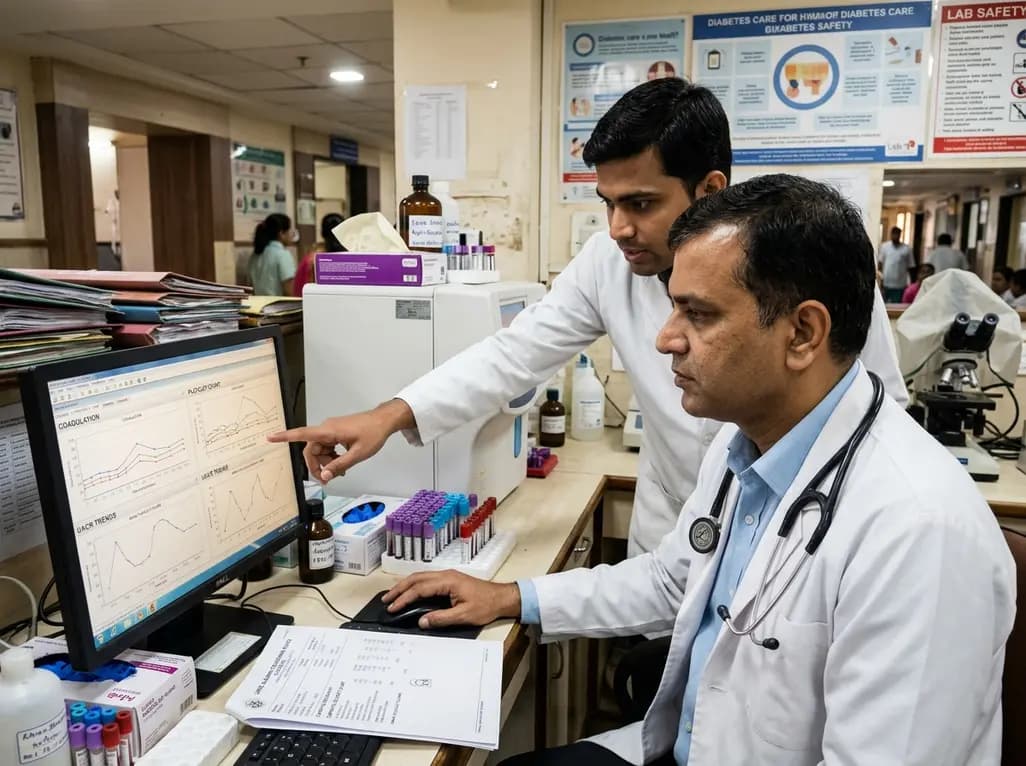
A western India study demonstrates that shortened coagulation times (PT, APTT), elevated mean platelet volume, and increased UACR strongly correlate with type 2 diabetes microvascular complications, highlighting the clinical value of combined hemostatic and renal profiling for early risk stratification.
Today
