.webp&w=384&q=75)

Loading, please wait...
Loading, please wait...
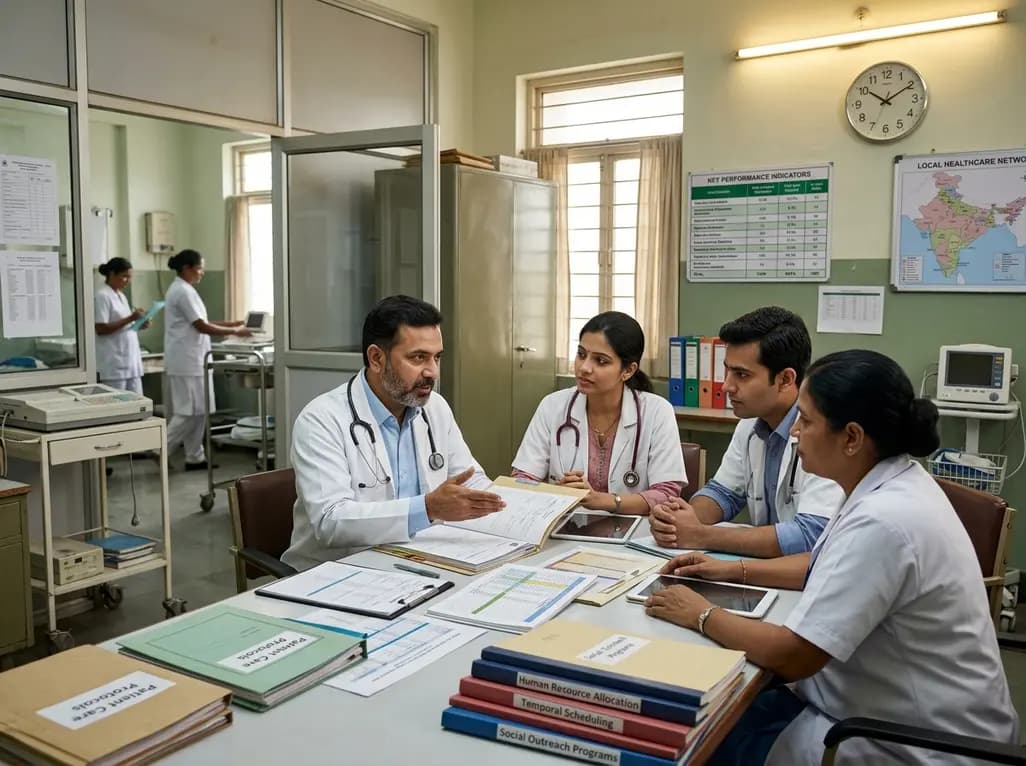
Healthcare systems worldwide face an ongoing crisis of clinician burnout, emotional exhaustion, and workforce attrition. In high-demand environments, hospitals often implement isolated wellness seminars or sporadic mental health days. However, recent evidence highlights that sustainable clinician wellness requires a systemic transformation rather than superficial perks. Developing an enduring healthcare wellbeing capability demands strategic resource bundling, robust administrative structures, and compassionate leadership. Consequently, clinical administrators and department heads must understand how organizational, human, and social capitals intersect to build authentic resilience across complex hospital networks.
Resource-Based Theory provides a compelling framework for understanding how medical centers achieve operational excellence under severe resource constraints. Traditionally, healthcare administrators viewed staff wellness as a personal coping responsibility. In contrast, modern organizational theory demonstrates that sustainable wellness functions as a core organizational capability. Therefore, institutions must combine distinct assets to create valuable, rare, and inimitable systems of care for their staff.
Specifically, dynamic resource bundling integrates tangible policies with intangible relational assets. Organizational capital provides fair rostering protocols, transparent workload thresholds, and equitable recognition channels. Concurrently, human capital involves leaders who actively notice early signs of cognitive strain and fatigue. Social capital fosters psychological safety through structured peer debriefing and collaborative problem-solving routines. Furthermore, temporal capital ensures these supportive practices occur consistently over time. When hospitals bundle these four dimensions effectively, they generate an enduring clinical advantage that protects staff from chronic occupational exhaustion.
Organizational capital forms the structural foundation of daily healthcare operations. Without reliable operational scaffolding, even the most dedicated clinical teams experience severe moral distress and physical fatigue. For example, unpredictable shift scheduling, unmanageable patient-to-provider ratios, and arbitrary administrative decisions rapidly erode staff trust. Therefore, healthcare leaders must establish transparent, predictable, and operationally realistic rostering systems.
In addition, hospitals must implement structured workload caps and equitable overtime distribution across departments. When healthcare workers perceive scheduling processes as genuinely fair and responsive, their occupational anxiety decreases significantly. Furthermore, formal recognition mechanisms must celebrate daily clinical contributions rather than merely rewarding excessive overtime. Structured administrative scaffolding also includes protected time for mandatory clinical governance, documentation, and handover processes. Consequently, sound organizational capital legitimizes boundaries, ensuring that operational demands do not overwhelm frontline medical professionals during high-census surges.
Human capital flourishes when clinical leaders actively translate institutional policies into compassionate bedside practices. While executive leadership may draft comprehensive wellness manifestos, frontline managers ultimately determine whether these ideals survive daily clinical pressure. Therefore, compassionate leadership serves as the vital translation mechanism between formal administrative intent and real-world clinical practice.
Specifically, compassionate leaders practice active listening, acknowledge team vulnerability, and openly notice early behavioral markers of burnout. Moreover, they regularly express genuine gratitude and legitimize reflective pauses during chaotic shifts. When department chairs model healthy work boundaries, junior doctors and nursing staff feel empowered to follow suit. In addition, empathetic supervisors create an atmosphere of psychological safety where staff can report near-misses and clinical fatigue without fear of punitive reprisal. Consequently, investing in leadership development equips clinical supervisors to safeguard their teams while maintaining rigorous standards of patient safety and clinical excellence.
Social capital represents the relational glue that binds multidisciplinary hospital teams together during clinical crises. In isolated practice environments, clinicians often internalize traumatic outcomes, which exacerbates acute emotional distress. However, institutionalizing relational routines creates strong mutual support networks that buffer against chronic workplace stressors.
Specifically, clinical units must establish routine, interdisciplinary debriefing sessions following adverse events, cardiac arrests, or stressful resuscitations. In addition, structured mentorship programs connect junior residents with experienced clinicians, facilitating bidirectional knowledge transfer and emotional validation. Shared problem-solving rituals also encourage collaborative care decisions, which significantly reduces the cognitive burden carried by individual physicians. Furthermore, spontaneous peer check-ins and informal social rituals cultivate strong reciprocal trust across clinical hierarchies. Ultimately, robust social capital transforms fragmented healthcare units into cohesive, supportive communities capable of navigating unexpected operational disruptions.
Temporality plays a pivotal role in determining whether wellbeing initiatives gain lasting organizational credibility. Surface-level interventions, such as one-off wellness lectures, fail because they lack longitudinal consistency. In contrast, supportive organizational routines must accumulate credibility through repeated execution over months and years. When healthcare workers observe leaders maintaining wellbeing practices during routine operations, they develop authentic confidence in institutional support.
Moreover, major crises, such as public health emergencies and sudden staffing deficits, serve as crucial stress tests for these routines. During high-stress disruptions, fragile or superficial programs collapse immediately. However, institutions with deeply embedded wellbeing capabilities adapt their resource bundles dynamically. They preserve debriefing cadences, adjust shift lengths, and reinforce peer support mechanisms despite escalating patient loads. Consequently, the temporal repetition of supportive routines creates institutional memory. As a result, healthcare systems emerge from crises with enhanced resilience, lower turnover rates, and sustained clinical capacity.
Traditional employee wellness programs focus primarily on individual coping behaviors, such as mindfulness apps, yoga sessions, or stress management seminars. In contrast, wellbeing capability represents an embedded, organization-wide capacity built through structural resource bundling. It combines fair rostering systems, compassionate leadership, peer debriefing routines, and sustainable workload policies. This systemic framework ensures psychological safety and operational support exist continuously during routine care and major crises.
Compassionate leadership bridges executive wellness policies and actual clinical ward realities. Although hospital executives may mandate wellbeing initiatives, frontline supervisors directly control daily working conditions. Compassionate leaders actively monitor cognitive fatigue, practice genuine appreciation, and legitimize essential recovery breaks. By role-modeling healthy boundaries and encouraging psychological safety, these leaders translate administrative intentions into protective everyday routines that shield clinicians from systemic burnout.
Temporality reflects the continuous accumulation of trust through repeated, predictable operational practices over extended periods. When supportive routines—such as structured handovers, fair scheduling, and multidisciplinary debriefings—persist during both calm and crisis conditions, they gain organizational credibility. This temporal consistency validates leadership commitment, builds deep psychological safety, and ensures that resilience mechanisms remain robust during unexpected clinical surges or severe public health emergencies.
Disclaimer: This content is for informational and educational purposes only and should not be considered medical, legal, or professional management advice. Healthcare institutions and clinical practitioners must adapt strategies according to their specific organizational policies, regulatory frameworks, and operational constraints. Refer to the latest local and national guidelines for clinical practice.
References
Rauf A et al. Strategic resource bundling for wellbeing capability in healthcare organizations: insights from resource-based theory. J Health Organ Manag. 2026 Aug 18. doi: 10.1108/JHOM-02-2026-0163. PMID: 42607285.
Bakker AB, Demerouti E. Job Demands-Resources theory: taking stock and looking forward. J Occup Health Psychol. 2017;22(3):273-285. doi:10.1037/ocp0000056.
Murthy VH. Confronting health worker burnout and well-being. N Engl J Med. 2022;387(7):577-579. doi:10.1056/NEJMp2207252.
West CP, Dyrbye LN, Erwin PJ, Shanafelt TD. Interventions to prevent and reduce physician burnout: a systematic review and meta-analysis. Lancet. 2016;388(10057):2272-2281. doi:10.1016/S0140-6736(16)31279-X.

Read summarized clinical updates, watch expert medical content, and earn CME certifications right from your smartphone.
Open your smartphone camera to scan and install.





Explore how public healthcare systems build sustainable wellbeing capability under resource constraints by strategically bundling organizational, human, social, and temporal resources.
last month

Chronic eosinophilic pneumonia can present with atypical bronchoalveolar lavage findings and an organizing pneumonia pattern, necessitating surgical lung biopsy.
Today

Discover the crucial distinctions between mesonephric and mesonephric-like proliferations of the female genital tract. Learn the key histomorphologic, immunohistochemical, and molecular differences essential for accurate diagnosis and clinical management.
Today
Kikuchi-Fujimoto disease rarely presents with refractory shock and sinus bradycardia in children. This case report highlights life-threatening hemodynamic instability requiring intensive care, preserved cardiac contractility, and the critical diagnostic role of early excisional lymph node biopsy.
Today
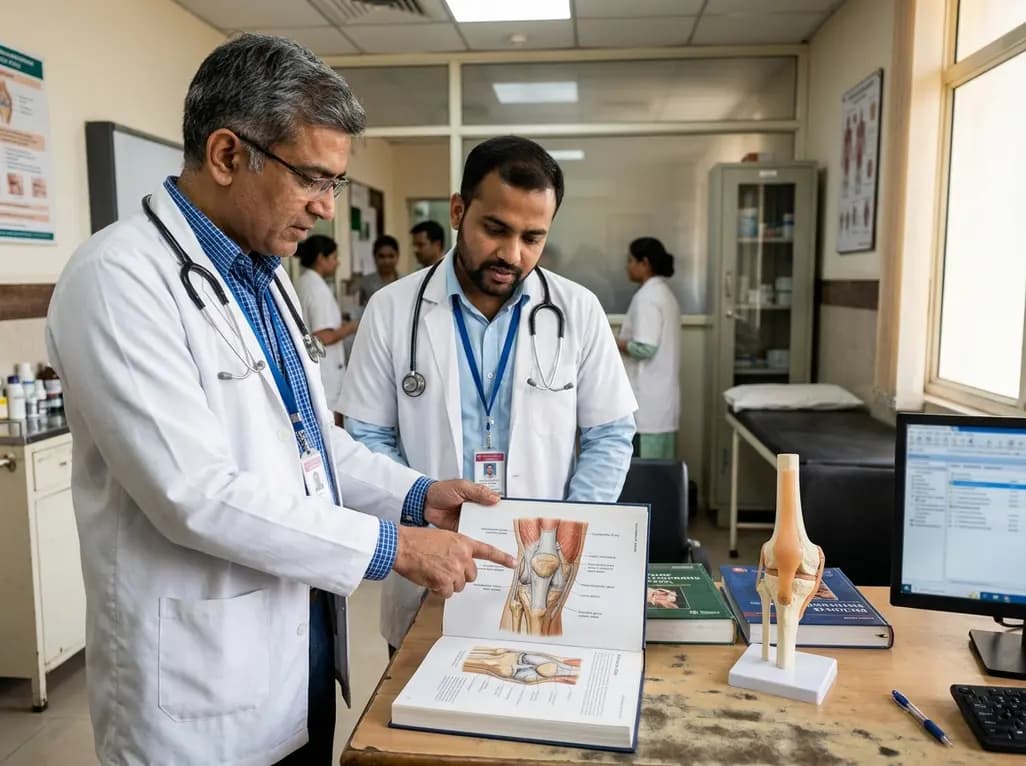
A narrative review investigates whether the articularis genus muscle functions as an independent anatomical entity or blends with the vastus intermedius. We evaluate its morphology, role in retracting the suprapatellar bursa, and direct clinical significance in anterior knee pain and arthroplasty.
Today
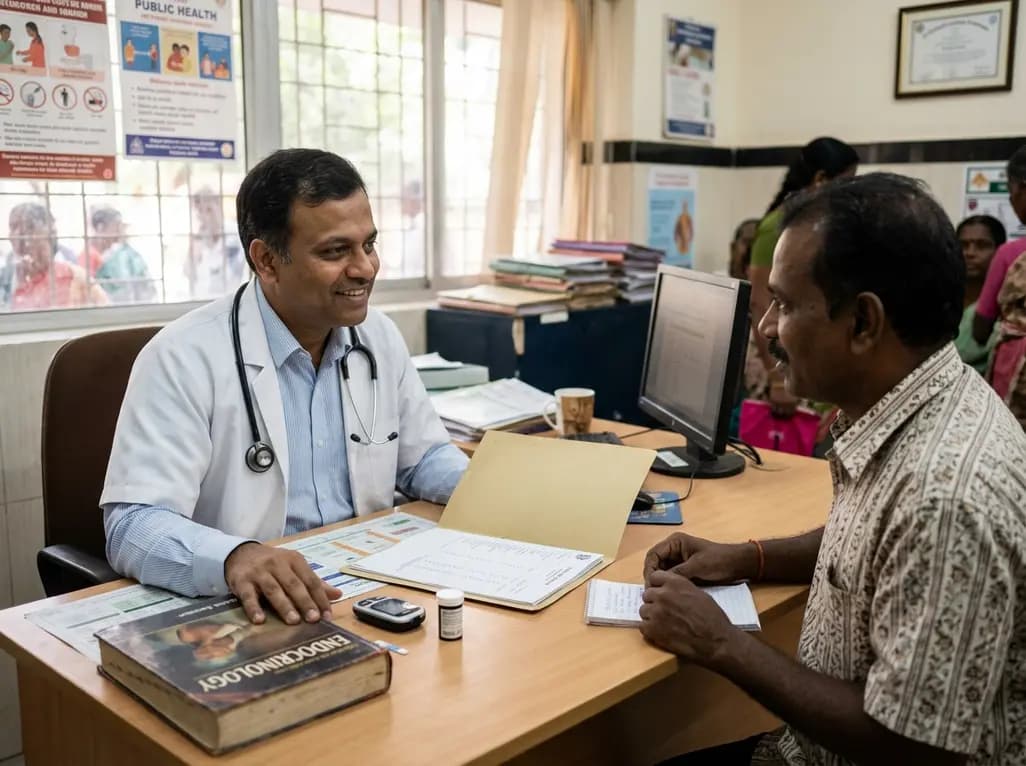
A Bayesian multilevel meta-analysis reveals that aerobic training combined with moderate carbohydrate restriction modestly lowers HbA1c in type 2 diabetes. However, sparse data and very low certainty leave incremental benefits over exercise or diet alone unproven, highlighting the need for individualized care.
Today
