.webp&w=384&q=75)

Loading, please wait...
Loading, please wait...
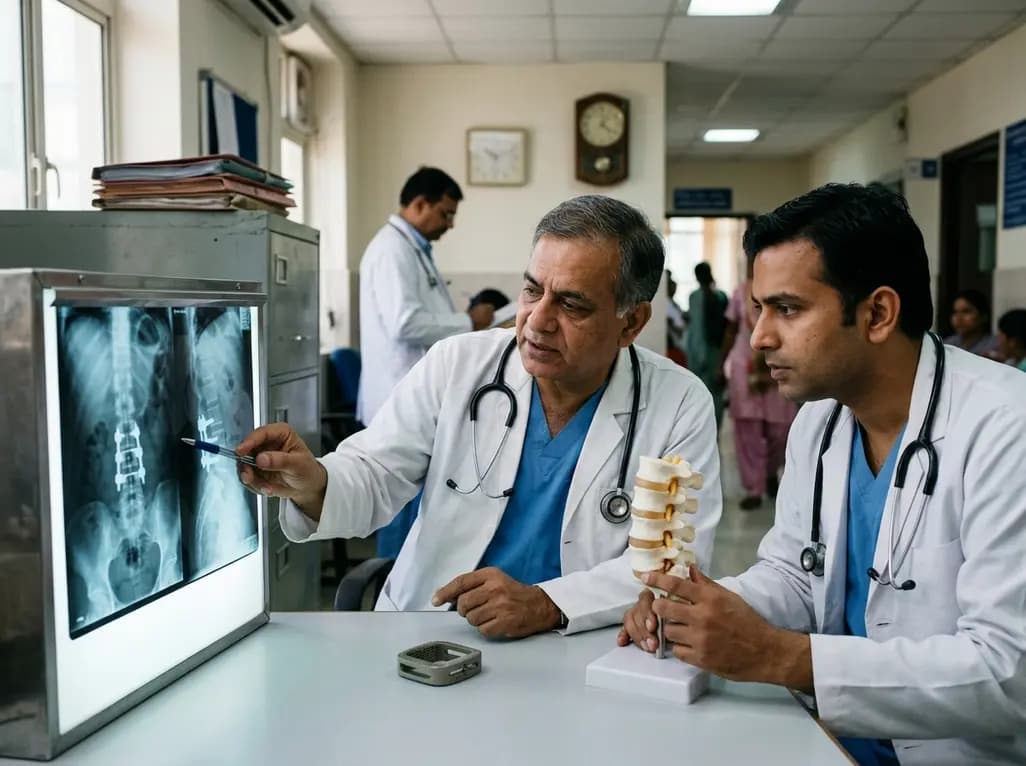
Degenerative lumbar disc disease remains one of the leading causes of chronic disability and low back pain worldwide. Anterior lumbar interbody fusion provides excellent mechanical restoration of disc height and sagittal balance while sparing posterior spinal musculature. However, surgeons frequently debate whether stand-alone ALIF provides sufficient biomechanical stability or if supplemental posterior pedicle screw fixation is mandatory. A rigorous meta-analysis now offers critical clarity on pseudarthrosis rates and secondary revision surgeries across these two surgical approaches.
Anterior lumbar interbody fusion allows direct access to the intervertebral disc space. Consequently, surgeons can place large interbody cages with substantial footprint coverage and generous bone graft volume. This anterior approach preserves posterior tension bands and avoids paraspinal muscle denervation. However, pure stand-alone ALIF constructs rely entirely on the tension of the anterior longitudinal ligament and integrated screw-plate mechanisms to maintain stability. Therefore, multidirectional forces during spinal movement can create micro-motion at the bone-implant interface. In contrast, supplemental posterior pedicle screw fixation provides rigid three-column stability. This posterior augmentation reduces segmental strain and enhances immobilisation during the crucial early fusion period. Although posterior instrumentation requires longer operative duration, greater blood loss, and possible position changes, it theoretically creates an optimal environment for solid arthrodesis. Consequently, spinal specialists continue to weigh the morbidity of additional posterior surgery against the long-term structural benefits of circumferential fusion.
The systematic review evaluated fourteen clinical studies encompassing 917 patients and over 1,000 operated spinal levels. Researchers pooled data across publications from 2013 to 2024 to compare radiographic and clinical outcomes with rigorous statistical modelling. The overall pooled prevalence of pseudarthrosis across all techniques was 8.17%. When comparing the two surgical cohorts directly, the pseudarthrosis rate was numerically higher in the stand-alone ALIF group at 8.95% compared to 6.76% in the supplemented cohort. However, this difference did not reach statistical significance. Both surgical strategies demonstrated robust clinical success, achieving an average reduction of 4.16 points on the Visual Analogue Scale for pain. Furthermore, patients achieved an impressive mean improvement of 24.46 points on the Oswestry Disability Index. Meta-regression models revealed no direct correlation between radiographic pseudarthrosis and final patient-reported functional scores, illustrating that nonunion does not universally cause clinical failure.
Although overall radiographic nonunion rates appeared statistically comparable between the two cohorts, clinical consequences diverged dramatically. The meta-analysis revealed that stand-alone ALIF carries a nearly seven-fold higher risk of reoperation for symptomatic pseudarthrosis compared to supplemented constructs. When a stand-alone cage fails to achieve solid osseous bridging, persistent micro-instability frequently produces disabling mechanical back pain and hardware loosening. Consequently, these symptomatic nonunions require secondary posterior instrumented fusion to achieve definitive stabilisation. In contrast, patients who receive supplemental posterior pedicle screws rarely require revision surgery even if anterior bridging remains incomplete. The posterior construct shields the anterior column from excessive motion, effectively preventing symptomatic instability. Therefore, while radiographic nonunion may appear benign on routine imaging, nonunion in an un-supplemented anterior cage is significantly more likely to require reoperation. This finding represents a crucial consideration for surgical planning and informed consent.
Surgeons must carefully tailor the decision between stand-alone ALIF and circumferential fusion to individual patient characteristics. Single-level pathology at the L5-S1 junction often presents the most favourable biomechanical environment for stand-alone constructs. The deep pelvic seated position and strong iliolumbar ligaments provide natural intrinsic stability at this level. Conversely, the L4-L5 level experiences substantial shear forces and mobility, increasing the risk of nonunion and cage subsidence. In addition, patient-specific metabolic risk factors strongly influence fusion success. Bone mineral density, chronic tobacco use, poorly controlled diabetes mellitus, and multi-level disease severely impair osteogenesis. Therefore, patients presenting with osteopenia or significant coronal and sagittal malalignment should generally receive supplemental posterior instrumentation. Active risk factor modification, including smoking cessation and perioperative bone optimisation, remains essential to protect both stand-alone and supplemented constructs from mechanical failure.
Modern spine care increasingly balances procedural invasiveness against structural durability. Stand-alone ALIF remains an appealing option because it minimizes operative time, reduces perioperative blood loss, and accelerates early post-surgical rehabilitation. Patients avoid the morbidity of prone positioning and posterior muscle dissection, which is especially advantageous in elderly or medically frail individuals. Nevertheless, surgeons must not overlook the heightened revision risk associated with stand-alone implants. Clear communication with patients regarding the balance between immediate surgical recovery and potential long-term revision risk is paramount. Furthermore, surgeons should utilize advanced interbody technology, such as 3D-printed porous titanium or bioactive composite cages, to maximize osteointegration. When anatomical or metabolic risk factors suggest compromised healing capacity, adopting single-position or minimally invasive posterior percutaneous screw fixation provides necessary biomechanical protection without excessive soft-tissue morbidity.
Stand-alone ALIF uses an anterior interbody cage secured only with integrated screws or small anterior plates. In contrast, supplemented ALIF combines the anterior cage with posterior pedicle screws and rods, providing rigid circumferential three-column spinal stability across the operated degenerative motion segment.
Stand-alone ALIF lacks posterior instrumentation. When bony bridging fails, the anterior cage experiences persistent micro-motion, leading to mechanical back pain, implant loosening, and symptomatic instability. Supplemented constructs remain mechanically rigid, preventing pain and eliminating the need for revision surgery even if fusion is incomplete.
Ideal candidates for stand-alone constructs typically present with single-level degenerative disease at L5-S1, preserved bone mineral density, non-smoking status, and minimal sagittal malalignment. Patients with multilevel pathology, osteoporosis, severe instability, or high shear stress at L4-L5 benefit substantially from supplemental posterior fixation.
Disclaimer: This content is for informational and educational purposes only. It is not intended to provide medical advice or replace professional medical judgment. Healthcare professionals must evaluate individual clinical circumstances before deciding on surgical interventions. Refer to the latest local and national guidelines for clinical practice.
References

Read summarized clinical updates, watch expert medical content, and earn CME certifications right from your smartphone.
Open your smartphone camera to scan and install.





A comprehensive meta-analysis evaluates stand-alone ALIF versus supplemented ALIF with posterior fixation, revealing comparable radiographic fusion rates but a significantly higher risk of revision surgery for symptomatic pseudarthrosis with stand-alone constructs.
last month

A nationwide English cohort study shows that interstitial lung diseases are no longer rare, with incidence jumping 30% and 200,000 active cases. This analysis highlights clinical implications for diagnosis, multi-disciplinary management, and global health priorities across respiratory and internal medicine.
Today

A nationwide South Korean study shows underreporting of smoking among women dropped from 57.4% to 36.4% between 2008 and 2021. However, over one-third of female smokers still conceal their habit, highlighting the critical role of cotinine verification in clinical risk assessment.
Today

PepsiCo and Monster Beverage have challenged the FSSAI ban on the energy drink label in Indian courts. While companies highlight supply disruptions, regulatory actions spotlight severe cardiovascular and metabolic risks associated with excessive caffeine, sugar, and taurine consumption, especially in adolescents.
Today

A new study evaluates the rheological stability of decellularized peripheral nerve matrix hydrogels under varied storage conditions. Findings show -80°C storage and freeze-drying preserve gelation kinetics and mechanical stiffness, offering key insights for shipping and translational clinical applications.
Today

A Bayesian multilevel meta-analysis reveals that aerobic training combined with moderate carbohydrate restriction modestly lowers HbA1c in type 2 diabetes. However, sparse data and very low certainty leave incremental benefits over exercise or diet alone unproven, highlighting the need for individualized care.
Yesterday
