.webp&w=384&q=75)

Loading, please wait...
Loading, please wait...

Socioeconomic disparities frequently hinder access to specialized oncologic care and worsen clinical outcomes across diverse patient populations. However, new clinical research shows that spine stereotactic body radiation delivers equivalent oncologic and clinical endpoints regardless of neighborhood socioeconomic deprivation or insurance coverage once patients reach a specialized tertiary center. This landmark investigation provides critical reassurance regarding the intrinsic biological and technical efficacy of ablative spinal irradiation across varied demographic strata.
Spine stereotactic body radiation has emerged as a cornerstone in the definitive and palliative management of spinal metastases. The technique delivers highly conformal, ablative radiation doses while sparing adjacent critical structures like the spinal cord. Despite its clinical success, questions persist regarding whether social determinants of health compromise post-treatment disease control or survival. Neighborhood deprivation indices often capture cumulative disadvantages in income, education, employment, and housing quality that could affect general health status.
To evaluate these concerns, researchers conducted a comprehensive longitudinal analysis of patients treated at a high-volume quaternary referral center over two decades. The research team examined whether adverse socioeconomic status, measured by validated deprivation metrics, correlated with reduced local tumor control, decreased overall survival, or increased treatment toxicities. Notably, previous population-based studies observed that lower socioeconomic status frequently correlates with inferior cancer survival across various solid tumors. Therefore, determining whether advanced radiosurgery maintains its efficacy in disadvantaged cohorts remains essential for equitable cancer care delivery. The findings offer vital insights into modern neuro-oncology workflows and highlight the technical consistency of modern stereotactic radiotherapy across diverse populations.
The investigators analyzed a prospectively maintained database spanning from 2001 to 2024, evaluating consecutive patients who underwent stereotactic spinal irradiation. Researchers linked each patient address to the validated 2020 Area Deprivation Index (ADI), which quantifies socioeconomic disadvantage at the neighborhood level. The cohort was subsequently dichotomized into the most advantaged group (ADI score 50 or below, comprising 140 patients and 227 metastases) and the least advantaged group (ADI score greater than 50, comprising 357 patients and 553 metastases).
Statistical analyses evaluated differences in baseline demographic, clinical, and dosimetric characteristics between these cohorts. The least advantaged cohort contained a significantly higher proportion of Black or African American patients and relied more heavily on public insurance coverage. However, both cohorts remained remarkably well matched across vital clinical and oncologic parameters. Baseline age, sex distribution, Karnofsky Performance Status, systemic disease burden, and tumor histologies showed no statistically significant differences. Furthermore, key oncologic features—such as the Spinal Instability Neoplastic Score, Bilsky grade of epidural compression, gross tumor volume, radiation fractionation schedule, and biologically effective dose—demonstrated comparable distributions across both groups. This baseline similarity allowed researchers to isolate the specific impact of socioeconomic status on treatment endpoints.
A primary objective of the study was assessing whether social vulnerability compromised local tumor control or patient survival following radiation delivery. The primary analysis revealed that socioeconomic deprivation did not significantly impair local tumor control rates. At 6 months, 1 year, 2 years, and 3 years post-treatment, local control rates in the most advantaged cohort were 96%, 88%, 85%, and 79%, respectively. In comparison, the least advantaged cohort achieved local control rates of 91%, 83%, 76%, and 73%. These differences did not reach statistical significance on multivariable testing.
Similarly, overall survival rates followed nearly identical trajectories across both cohorts over extended follow-up intervals. Cumulative survival rates for the most advantaged group stood at 72% at 6 months, 56% at 1 year, 37% at 2 years, and 28% at 3 years. Correspondingly, the least advantaged group exhibited survival rates of 70%, 55%, 36%, and 28% across the same timeframes. Multivariable Cox proportional hazards regression models confirmed that neither neighborhood deprivation index, race, ethnicity, nor insurance status functioned as independent predictors of tumor progression or mortality. Consequently, the data clearly demonstrate that the inherent biological efficacy of stereotactic radiation remains unaffected by adverse social exposomes.
Effective palliation and preservation of functional independence represent primary goals when treating metastatic spinal disease. The investigators assessed whether socioeconomic barriers influenced symptom control or post-procedural complication rates. Complete or partial pain relief occurred at similar frequencies across both cohorts, reaching 44% in the most advantaged cohort and 41% in the least advantaged group. Thus, patients derived meaningful analgesic benefits regardless of their neighborhood deprivation level.
Safety outcomes and adverse events also exhibited parity between the two cohorts. Radiation-induced toxicities occurred in exactly 12% of patients in both the advantaged and disadvantaged groups. Furthermore, the incidence of subsequent vertebral compression fractures—a recognized structural complication of spinal stereotactic ablation—remained low and comparable across cohorts (11% versus 10%). Multivariable adjustments demonstrated that adverse neighborhood factors do not heighten the risk of severe radiation complications. These findings underscore that standard safety protocols, precise image guidance, and rigid immobilization successfully protect vulnerable patients from disproportionate toxicity. Therefore, clinicians can confidently recommend stereotactic spinal ablation without fearing elevated complication rates in economically disadvantaged individuals.
Although the clinical outcomes after receiving treatment proved equitable, significant hurdles persist regarding access to advanced stereotactic platforms. Disadvantaged patients frequently face logistical, financial, and institutional barriers that delay timely referral to specialized centers. Public insurance authorization processes often involve substantial administrative delays compared to private commercial insurance plans. Moreover, transportation burdens and limited regional availability of stereotactic technology disproportionately disadvantage patients residing in rural or low-income urban communities.
Because therapeutic efficacy remains preserved once patients reach quaternary treatment centers, health systems must actively dismantle structural barriers upstream. Multidisciplinary care teams should optimize referral pathways from community hospitals to specialized radiation oncology centers. In addition, health systems must streamline pre-authorization protocols for complex radiation modalities to minimize treatment delays. Clinicians and patient navigators can proactively address social determinants by providing transportation support, financial counseling, and decentralized multidisciplinary evaluations. By addressing these access disparities, oncology networks can ensure that all patients with spinal metastases benefit from precision radiotherapy regardless of socioeconomic status or geographical origin. Broadening access will close the gap between potential clinical benefit and actual population-level delivery.
The findings provide reassuring evidence for radiation oncologists, spine surgeons, and medical oncologists managing patients with spinal metastases. Clinicians should not hesitate to recommend ablative stereotactic radiation to socioeconomically vulnerable patients when clinically indicated. The data demonstrate that high-precision radiation techniques overcome many baseline social vulnerabilities through standardized dosimetric planning and rigorous delivery protocols. When delivered with strict quality assurance, stereotactic body radiation achieves reliable tumor ablation, robust pain relief, and favorable safety profiles across diverse patient groups.
Moving forward, clinical efforts should prioritize inclusive clinical trial design and equitable resource allocation in radiation oncology. Expanding high-precision radiation capabilities to safety-net hospitals and developing regional hubs will reduce the need for onerous patient travel. Furthermore, integrating social workers, nurse navigators, and financial counselors into spine oncology clinics helps vulnerable patients successfully complete complex treatment courses. Ultimately, eliminating disparities in spinal oncology requires a concerted focus on early identification, swift referral, and streamlined access to state-of-the-art radiation technologies for all affected populations.
No, neighborhood deprivation and socioeconomic status do not significantly affect local tumor control rates. Patients achieve durable tumor control when receiving spine stereotactic body radiation according to standard protocols, irrespective of their Area Deprivation Index score or public insurance status.
Clinical data show identical toxicity rates between socioeconomically advantaged and disadvantaged cohorts. Rates of radiation toxicity and post-treatment vertebral compression fractures remain statistically indistinguishable, confirming the safety of precision stereotactic spinal ablation across all patient demographics.
The main barriers involve upstream access issues, including referral delays, complex insurance authorizations, lack of specialized local infrastructure, and transportation difficulties. Streamlining referral pathways and patient navigation helps ensure timely access to advanced stereotactic radiotherapy.
Disclaimer: This content is for informational and educational purposes only. It is not intended to be a substitute for professional medical advice, diagnosis, or treatment. Always seek the advice of your physician or another qualified healthcare provider with any questions you may have regarding a medical condition. Refer to the latest local and national guidelines for clinical practice.
References

Read summarized clinical updates, watch expert medical content, and earn CME certifications right from your smartphone.
Open your smartphone camera to scan and install.





A comprehensive study evaluates spine stereotactic body radiation therapy outcomes across socioeconomic cohorts, showing equitable tumor control, survival, and safety regardless of neighborhood deprivation or insurance type once patients access specialized tertiary care.
last month

Abdominal aortic aneurysm rupture remains a catastrophic vascular emergency. Groundbreaking research reveals that USP53 accelerates aneurysm progression by reprogramming smooth muscle cell metabolism toward aerobic glycolysis, highlighting a promising target beyond conventional diameter-based surveillance.
Today

A pharmacometric and machine learning study reveals that specific vaginal bacteria alter cervical antiretroviral exposure, highlighting the need for precision HIV PrEP strategies.
Today

A nationwide Swedish cohort study shows oral glucocorticoid exposure over 1-2 years strongly predicts overall organ damage in SLE, while cardiovascular risk reflects cumulative doses across 3 years. These findings reinforce early steroid minimization and cautious long-term maintenance.
Today

A scoping review highlights neural mobilization as a promising adjunct in managing cervicogenic headache. Integrating neurodynamics into multimodal physical therapy improves pain, range of motion, and posture, though standardized protocols and larger clinical trials are still needed.
Today
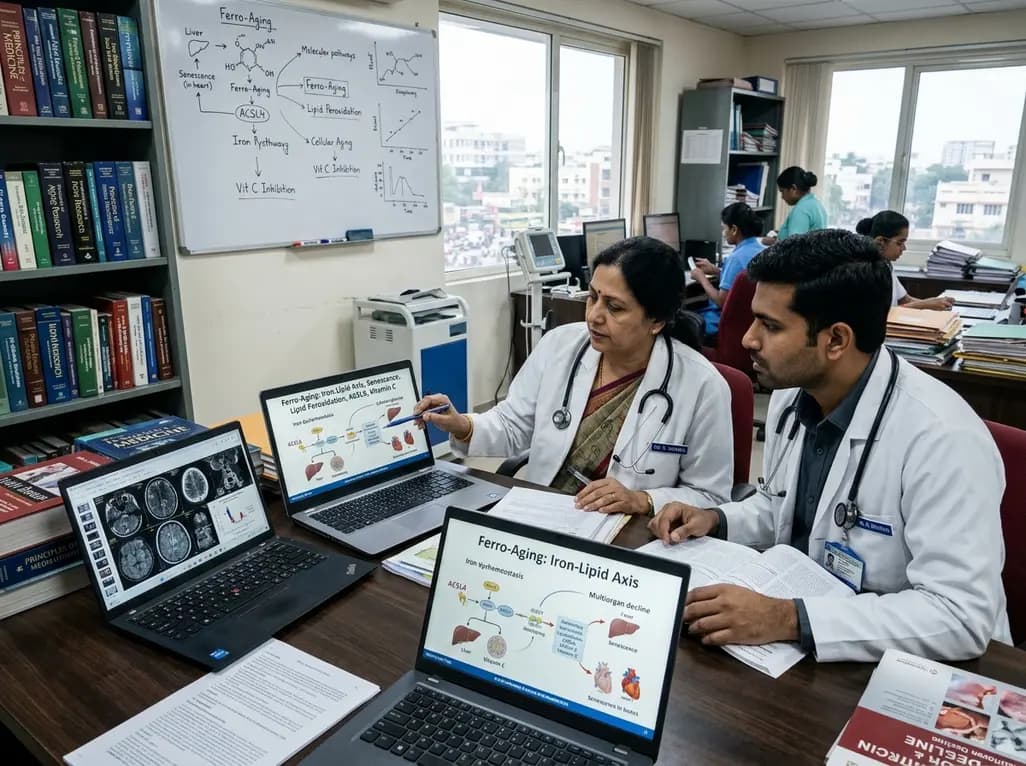
Recent research defines ferro-aging as a conserved iron-lipid axis driving organ decline across primates. Age-related iron dyshomeostasis stimulates ACSL4-mediated lipid peroxidation, promoting cellular senescence. Notably, vitamin C directly inhibits ACSL4, suppressing phospholipid oxidation and multi-organ decay.
Today
