

Loading, please wait...
Loading, please wait...

Modern oncology care increasingly confronts complex decisions in managing geriatric spinal metastases. Historically, clinicians hesitated to offer aggressive local treatments to geriatric cohorts due to concerns regarding baseline medical comorbidities and frailty. However, recent evidence underscores the expanding role of spine SBRT in elderly individuals with metastatic spine disease. Stereotactic body radiation therapy delivers highly conformal, ablative radiation doses while sparing adjacent radiosensitive neural tissues. Consequently, this targeted modality achieves profound tumor cytoreduction without the substantial systemic toxicity associated with prolonged conventional radiotherapy. Furthermore, as systemic treatments extend overall survival across varied primary malignancies, durable spinal disease control has become vital for preserving functional independence. Older patients frequently present with mechanically painful or radiographically advanced vertebral lesions. Therefore, establishing the clinical safety and therapeutic value of advanced radiosurgery in older populations addresses a pressing clinical necessity. Recent clinical evaluations reveal that advanced chronological age alone should never serve as an automatic barrier to definitive local intervention. Instead, multidisciplinary teams should evaluate individual tumor anatomy, spinal stability, and functional goals to optimize clinical outcomes effectively.
To establish definitive evidence, investigators evaluated consecutive patients aged 70 years and older at a quaternary referral center. Specifically, researchers analyzed 208 metastatic spinal lesions across 161 older adults with a median age of 75 years. Notably, several individuals within the study cohort exceeded 85 and 90 years of age. A remarkable 72% of the targeted vertebral metastases had undergone prior conventional external beam radiation, establishing this cohort as predominantly receiving reirradiation. Furthermore, the radiation oncology teams delivered single-fraction spine SBRT in 76% of treated cases. For single-session treatments, the median prescribed dose reached 16 Gy, with doses ranging between 12 Gy and 18 Gy. Meanwhile, patients receiving multi-fraction regimens underwent regimens delivering 18 Gy to 35 Gy across two to five fractions. Clinicians successfully administered these highly focused ablative treatments either as definitive standalone therapy or alongside surgical decompression and stabilization. Thus, the treatment protocol proved feasible and practical for geriatric patients facing recurrent or challenging spinal disease.
The radiographic outcomes from this landmark investigation demonstrate robust and durable tumor suppression. Specifically, the cumulative incidence rates of local failure remained remarkably low at 6% at 6 months, 9% at 12 months, 9% at 24 months, and only 10% at 36 months. Therefore, an overwhelming 90% of irradiated metastases achieved long-term local tumor control through three full years of clinical follow-up. Furthermore, chronological age did not show any statistically significant correlation with local tumor progression. Investigators observed consistent control across continuous age variables, as well as when comparing patients above and below thresholds of 75 or 80 years. In addition to radiographic stabilization, the treatment yielded meaningful symptomatic relief for symptomatic individuals. In fact, 41% of evaluable metastatic treatments achieved complete or partial pain responses following radiation delivery. Moreover, acute treatment-related toxicity remained minimal, with only 18% of patients reporting mild grade 1 or 2 adverse effects. Consequently, these robust data confirm that elderly patients derive significant and lasting oncologic benefit from stereotactic spinal reirradiation.
Vertebral compression fracture represents an essential clinical consideration following high-dose spinal radiosurgery. In this geriatric population, the cumulative incidence rates of post-treatment compression fracture measured 4% at 6 months, 7% at 12 months, 8% at 24 months, and 9% at 36 months. Consequently, fewer than one in ten treated spinal segments developed de novo fracture or progression of existing deformity over three years. When fractures occurred, spine specialists managed them promptly with targeted interventions. In particular, 11 of the 17 identified fracture events required percutaneous cement augmentation, including vertebroplasty, or surgical stabilization. Furthermore, advanced age did not escalate fracture vulnerability across multivariable models. Patients older than 80 years demonstrated fracture rates comparable to those observed in younger counterparts. Additionally, early imaging surveillance allows interventional radiologists to stabilize emerging fractures rapidly before neurological complications arise. Accordingly, structural preservation remains attainable even in frail bone beds. Thus, while underlying osteoporosis warrants proactive vigilance, the therapeutic benefits of precise tumor ablation decisively outweigh structural risks when clinical teams monitor structural integrity carefully.
Multivariable statistical modeling provided critical insights regarding the true drivers of adverse spinal outcomes. Notably, tumor anatomy and mechanical stability strongly influenced long-term success rather than chronological age. Specifically, gross tumor volume exceeding 37 cubic centimeters independently correlated with elevated local recurrence, conferring a more than sixfold increase in risk. In addition, the baseline Spinal Instability Neoplastic Score emerged as a decisive determinant of treatment outcome. Each single-point increase in the baseline score independently heightened the risk of local tumor recurrence by 23%. Moreover, the instability score represented the sole independent predictor of post-radiotherapy vertebral compression fractures, increasing fracture hazard by 19% per point. In contrast, chronological patient age demonstrated no statistically significant association with either local failure or fracture progression. However, age did associate with overall survival, reflecting anticipated non-oncologic life expectancy. Consequently, clinicians can safely prioritize biological criteria over patient age during pretreatment assessments. Therefore, comprehensive biomechanical scoring and accurate target volumetric planning must guide patient selection rather than arbitrary age thresholds.
These clinical findings challenge conventional treatment paradigms that historically restricted advanced radiosurgery to younger cancer patients. Because stereotactic techniques limit radiation exposure to adjacent normal tissues, elderly patients tolerate modern ablative doses exceptionally well. In clinical practice, multidisciplinary tumor boards should integrate spine SBRT proactively for both treatment-naive and previously irradiated vertebrae. Furthermore, radiation oncologists must collaborate closely with spine surgeons to evaluate mechanical instability using standardized scoring systems prior to delivering ablative therapy. When baseline imaging reveals intermediate or severe biomechanical instability, prophylactic cement augmentation or minimally invasive fixation may prevent subsequent vertebral collapse. Additionally, clinicians should consider anti-resorptive medications, including bisphosphonates or denosumab, to optimize systemic bone health during cancer therapy. Similarly, routine follow-up protocols ensure timely identification and successful remediation of any late local recurrence or mechanical failure. Therefore, geriatric oncology care can confidently embrace radiosurgical precision to optimize patient quality of life. Ultimately, personalized clinical risk stratification empowers clinicians to deliver definitive local control, alleviate intractable pain, and preserve functional independence across all stages of older adulthood.
Spine SBRT achieves exceptional local tumor control in older adults, demonstrating cumulative local failure rates of only 9% at one year and 10% at three years. Furthermore, over 40% of treated elderly patients experience significant pain reduction, confirming that chronological age does not diminish the therapeutic antitumor efficacy of radiosurgical ablation.
The primary independent predictors of local treatment failure are tumor burden and spinal mechanical stability. Specifically, gross tumor volume exceeding 37 cubic centimeters increases local recurrence risk over sixfold. Additionally, each one-point increase in the Spinal Instability Neoplastic Score elevates failure risk by 23%, whereas patient age shows no association.
Vertebral compression fracture occurs in roughly 9% of elderly patients by three years post-treatment, with baseline spinal instability serving as the sole independent predictor. Most fractures remain clinically manageable, and approximately two-thirds of affected patients successfully undergo percutaneous cement augmentation or surgical stabilization to restore mechanical stability and relieve discomfort.
Disclaimer: This content is for informational and educational purposes only... Refer to the latest local and national guidelines for clinical practice.
References

Read summarized clinical updates, watch expert medical content, and earn CME certifications right from your smartphone.
Open your smartphone camera to scan and install.





A landmark study reveals that spine SBRT provides durable local tumor control and low fracture risk in elderly patients, showing age alone should not limit ablative radiotherapy.
Today

The Food Safety and Standards Authority of India has issued an urgent advisory against food business operators violating mandatory labelling standards for nutraceuticals and botanicals. Regulators prohibited therapeutic claims while mandating clear advisory warnings to prevent patient toxicity and medical misuse.
Today

Biotechnology researchers in India are developing an automated liquid biopsy platform to detect cervical malignancy from blood samples. Supported by the MAHA MedTech Mission, this initiative applies nanopore sequencing and piRNA biomarker detection to eliminate invasive speculum exams and expand rural screening.
Today
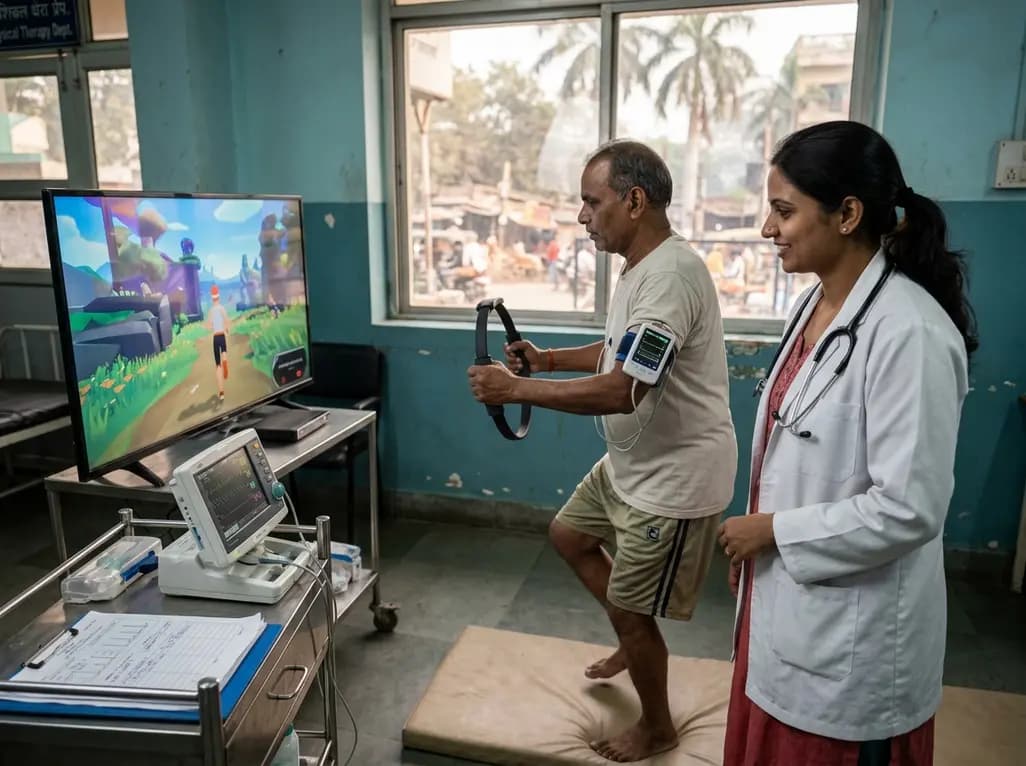
A clinical study evaluated Ring Fit Adventure in adults with chronic conditions, revealing that exergaming achieves moderate-to-vigorous exercise intensity while maintaining hemodynamic stability, high enjoyment, and zero adverse events.
Today

A retrospective cohort study reveals that selecting the touched vertebra as the lowest instrumented vertebra in thoracic adolescent idiopathic scoliosis yields a 20.8% distal add-on rate, driven by remnant motion segments and axial rotational discrepancies.
Today
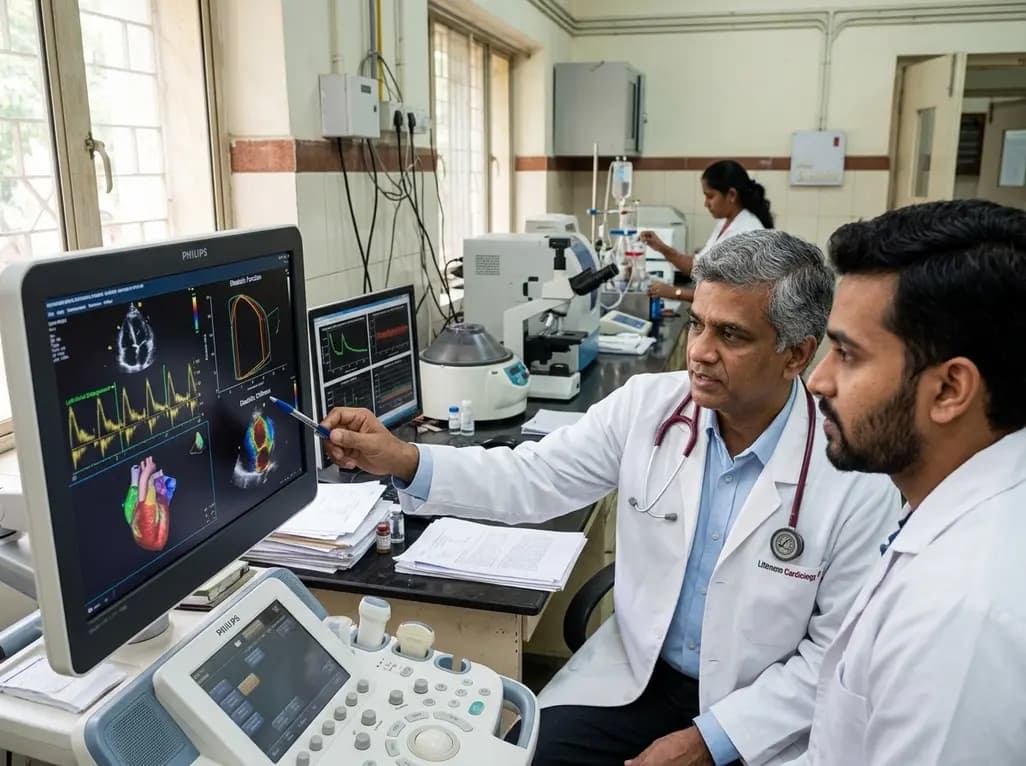
A study evaluates a cardiometabolic HFpEF model combining metabolic stress with chronic mineralocorticoid excess. The findings reveal profound diastolic stiffness, endothelial dysfunction, and pulmonary hypertension, illuminating key pathophysiological mechanisms for targeted cardiopulmonary therapies.
Today
