.webp&w=384&q=75)

Loading, please wait...
Loading, please wait...
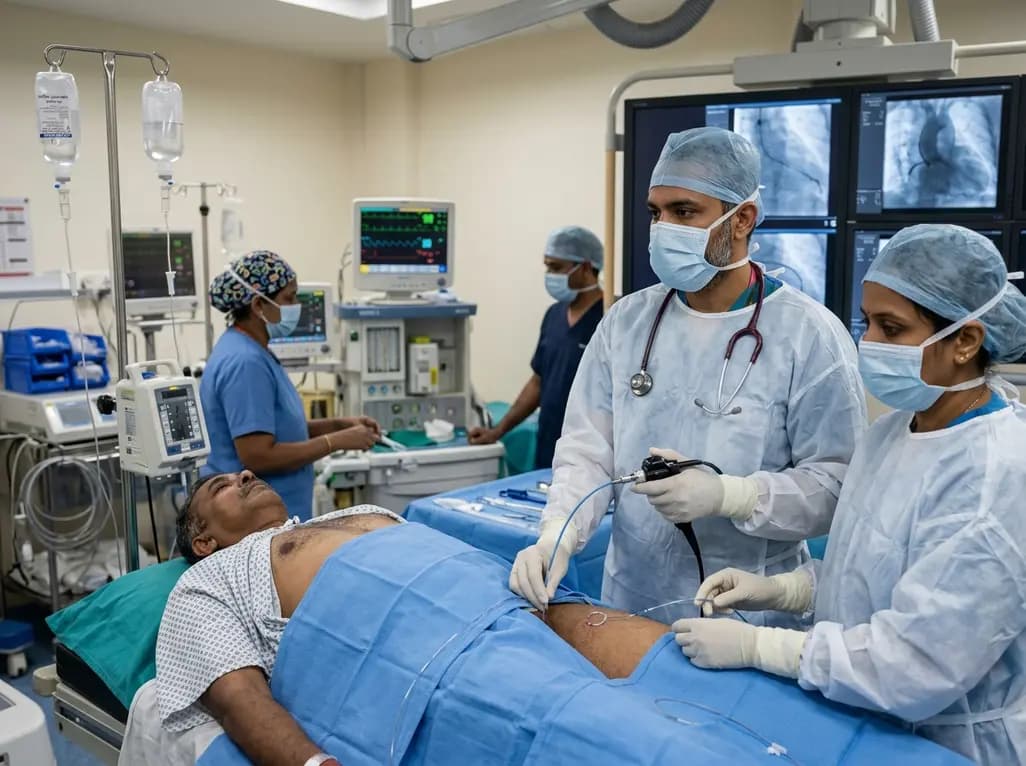
Transcatheter aortic valve replacement has fundamentally transformed the management of severe aortic stenosis across diverse surgical risk categories. While transfemoral delivery represents the primary pathway, severe peripheral artery disease, severe vascular tortuosity, and aortic calcification frequently preclude standard retrograde arterial access. In such complex clinical scenarios, interventional cardiologists must explore innovative alternative access routes to deliver life-saving therapy. Transseptal antegrade TAVR represents a foundational technique that first enabled human transcatheter valve deployment, yet contemporary structural developments have revitalized interest in this approach for no-option patients. When standard antegrade delivery encounters anatomical resistance across the mitral apparatus or the left ventricular outflow tract, operators require sophisticated procedural maneuvers. Incorporating retrograde snare assistance provides essential coaxial traction, enabling precise navigation and secure valve seating. This strategy illustrates how combining transseptal access with modern snaring techniques expands transcatheter possibilities for patients with hostile vascular anatomy.
Managing elderly patients with severe symptomatic aortic stenosis frequently involves overcoming extensive systemic comorbidities. In clinical practice, severe peripheral artery disease, hostile iliofemoral anatomy, and heavily calcified porcelain aortas present formidable barriers to conventional retrograde transfemoral delivery. Furthermore, severe chest wall deformities, previous sternotomies from coronary artery bypass grafting, or diseased subclavian vessels often eliminate transapical, transaxillary, or transcaval alternatives. Under these challenging circumstances, patients face prohibitive procedural risks if operators attempt standard arterial pathways. Extensive vascular calcification markedly elevates the danger of catastrophic vascular rupture, retroperitoneal hemorrhage, and acute dissection. Consequently, the Heart Team must thoroughly evaluate non-traditional vascular routes to avoid devastating complications while ensuring therapeutic delivery. Antegrade access via the venous system bypasses the hostile arterial tree entirely, offering a protective conduit for structural intervention. By traversing the inferior vena cava and entering the right atrium, operators effectively circumvent diseased peripheral arterial segments. Thus, recognizing the clinical indications for non-arterial access remains critical for structural heart teams managing high-risk elderly populations.
The procedural execution of transseptal antegrade TAVR begins with achieving femoral venous access and executing a precise transseptal puncture. Operators must puncture the fossa ovalis in an inferoposterior orientation to provide adequate height and clearance above the mitral valve plane. Following successful atrial septal crossing, the operator navigates a guidewire across the left atrium, through the mitral valve orifice, and into the left ventricle. Subsequently, the wire crosses the native stenotic aortic valve in an antegrade direction, entering the ascending aorta. Although this pathway eliminates the need for large-bore arterial sheaths, it introduces unique mechanical hurdles. The delivery system must negotiate acute anatomical angles, including the sharp turn from the interatrial septum toward the mitral apparatus. Additionally, traversing the subvalvular mitral apparatus requires extreme vigilance to avoid chordal entrapment or leaflet laceration. Once inside the left ventricle, steering a rigid balloon-expandable valve catheter toward the aortic annulus often meets significant resistance. Therefore, multidisciplinary teams must maintain meticulous transesophageal echocardiographic and fluoroscopic guidance throughout every stage of device advancement.
During antegrade valve delivery, operators frequently encounter difficulty directing the bulky prosthetic valve system into the left ventricular outflow tract and across the aortic annulus. Because the system pushes forward against complex cardiac curvature, it can buckle within the left atrium rather than advancing coaxially. To overcome this critical impasse, interventionalists can establish a complementary retrograde arterial pathway to facilitate device passage. Specifically, inserting a low-profile snare catheter through a small peripheral arterial sheath allows operators to capture the nose cone of the antegrade delivery catheter in the ascending aorta. Once captured, gentle retrograde traction stabilizes the catheter tip, creating an integrated rail that aligns the prosthetic valve coaxially with the aortic annulus. Consequently, this snare-assisted traction eliminates device deflection and ensures smooth navigation across the calcified aortic valve leaflets. Furthermore, retrograde tension provides active counter-force during balloon expansion, preventing premature ventricular or aortic displacement. As a result, this synergistic hybrid technique transforms an otherwise impassable anatomical trajectory into a controlled, highly predictable valve deployment.
While antegrade transseptal delivery provides an indispensable solution for patients without arterial access, operators must actively mitigate potential anatomical risks. The primary concern during antegrade navigation involves interaction with the mitral valve apparatus. Crossing the mitral valve with a large delivery sheath carries an inherent risk of chordal rupture, papillary muscle disruption, or acute mitral regurgitation. To minimize these hazards, operators must use continuous three-dimensional transesophageal echocardiography to verify that the guidewire crosses the central mitral orifice cleanly. Furthermore, the creation of an iatrogenic atrial septal defect represents an inevitable consequence of transseptal large-bore passage. In most adult patients, small residual atrial septal defects remain clinically silent; however, significant left-to-right or right-to-left shunting may warrant percutaneous closure device deployment following valve implantation. Post-deployment assessment must thoroughly examine mitral valve competence, paravalvular aortic regurgitation, and cardiac conduction stability. By strictly adhering to structured imaging protocols, structural heart teams can achieve optimal hemodynamic outcomes while safeguarding surrounding intracardiac structures.
The successful execution of snare-assisted transseptal antegrade TAVR underscores the enduring importance of historical catheter techniques in modern interventional cardiology. As structural heart interventions continue to mature, device profiles become smaller, yet patient complexity simultaneously increases due to aging demographics and extensive vascular disease. Therefore, mastering hybrid delivery strategies ensures that no patient is deemed untreatable purely based on unfavorable vascular access. This innovative strategy highlights the critical necessity of comprehensive pre-procedural computed tomography angiography to evaluate total vascular anatomy, chamber geometries, and landing zones. Moreover, robust communication within the Heart Team facilitates swift adaptation when first-line maneuvers encounter anatomical resistance. Ultimately, integrating modern balloon-expandable bioprostheses with retrograde snare techniques provides a versatile, life-saving alternative for prohibitive-risk patients. Future engineering refinements may introduce dedicated steerable antegrade delivery catheters, further simplifying this valuable therapeutic approach.
Transfemoral retrograde access remains the standard approach because it offers a direct, predictable anatomical route with minimal intracardiac manipulation. Conversely, antegrade transseptal delivery requires crossing the interatrial septum, navigating through the mitral valve apparatus, and making acute directional turns within the left ventricle. Consequently, operators reserve this complex technique for patients with severe peripheral artery disease or hostile aortas who lack all conventional access options.
Retrograde snaring involves capturing the nose cone of the antegrade delivery system using an endovascular snare introduced via a small arterial catheter. This maneuver creates controlled antegrade-retrograde rail tension, which pulls the valve catheter directly into coaxial alignment with the aortic annulus. Therefore, snaring overcomes anatomical resistance, prevents device buckling in the left atrium, and ensures stable, precise positioning during balloon deployment.
The primary procedural risks include mechanical trauma to the mitral valve apparatus, chordal rupture, and acute mitral regurgitation during catheter transit. Additionally, the large-bore transseptal puncture leaves an iatrogenic atrial septal defect that might require device closure if significant shunting develops. Furthermore, operators must monitor closely for cardiac conduction disturbances, pericardial effusion, and vascular complications at the venous and arterial puncture sites.
Disclaimer: This content is for informational and educational purposes only and is not intended as medical advice. Always consult a qualified healthcare provider for specific clinical questions and decisions. Refer to the latest local and national guidelines for clinical practice.
References

Read summarized clinical updates, watch expert medical content, and earn CME certifications right from your smartphone.
Open your smartphone camera to scan and install.





When severe peripheral artery disease and hostile anatomy preclude standard access, transseptal antegrade TAVR with retrograde snare assistance provides a reliable, life-saving alternative for high-risk patients with severe aortic stenosis.
last month

Chronic eosinophilic pneumonia can present with atypical bronchoalveolar lavage findings and an organizing pneumonia pattern, necessitating surgical lung biopsy.
Today

Discover the crucial distinctions between mesonephric and mesonephric-like proliferations of the female genital tract. Learn the key histomorphologic, immunohistochemical, and molecular differences essential for accurate diagnosis and clinical management.
Today
Kikuchi-Fujimoto disease rarely presents with refractory shock and sinus bradycardia in children. This case report highlights life-threatening hemodynamic instability requiring intensive care, preserved cardiac contractility, and the critical diagnostic role of early excisional lymph node biopsy.
Today

A narrative review investigates whether the articularis genus muscle functions as an independent anatomical entity or blends with the vastus intermedius. We evaluate its morphology, role in retracting the suprapatellar bursa, and direct clinical significance in anterior knee pain and arthroplasty.
Today

A Bayesian multilevel meta-analysis reveals that aerobic training combined with moderate carbohydrate restriction modestly lowers HbA1c in type 2 diabetes. However, sparse data and very low certainty leave incremental benefits over exercise or diet alone unproven, highlighting the need for individualized care.
Today
