.webp&w=384&q=75)

Loading, please wait...
Loading, please wait...

Smart delivery systems protect curcumin from being broken down in the stomach and small intestine. Consequently, the drug reaches the colon in much higher concentrations, which significantly boosts its anti-cancer activity.
These systems respond to the unique environment of a tumor. For instance, they might react to the specific acidic pH of cancer cells or to enzymes that are only present in the colon's microenvironment.
Disclaimer: This content is for informational and educational purposes only. It does not constitute professional medical advice, diagnosis, or treatment. Always seek the advice of your physician or another qualified healthcare provider with any questions you may have regarding a medical condition. Refer to the latest local and national guidelines for clinical practice.
References
Zhu Y et al. Smart oral delivery of curcumin nanoparticulate systems for targeted colorectal cancer therapy: strategies, applications, and future perspectives. Nanomedicine (Lond). 2026 Mar 28. doi: 10.1080/17435889.2026.2650486. PMID: 41902604.
Wang T et al. Targeted and intelligent nano-drug delivery systems for colorectal cancer treatment. Front Pharmacol. 2025 Apr 24. doi: 10.3389/fphar.2025.1384725.
Li X et al. Smart nanoparticle delivery systems for curcumin: a targeted strategy to enhance anticancer efficacy and bioavailability. J Mater Sci Mater Med. 2026 Feb 9. doi: 10.1007/s10856-026-07012-7.

Read summarized clinical updates, watch expert medical content, and earn CME certifications right from your smartphone.
Open your smartphone camera to scan and install.





A review of smart, stimuli-responsive curcumin nanoformulations that leverage the CRC microenvironment for targeted, precision drug delivery and therapy....
6 months ago

Explore why official drug package inserts fail to reflect modern evidence for clozapine prescribing. Learn how legal standards of care, case law, slow titration, and vital adverse event monitoring empower clinicians to prioritize evidence-based medical practice over outdated manufacturer labeling.
Today
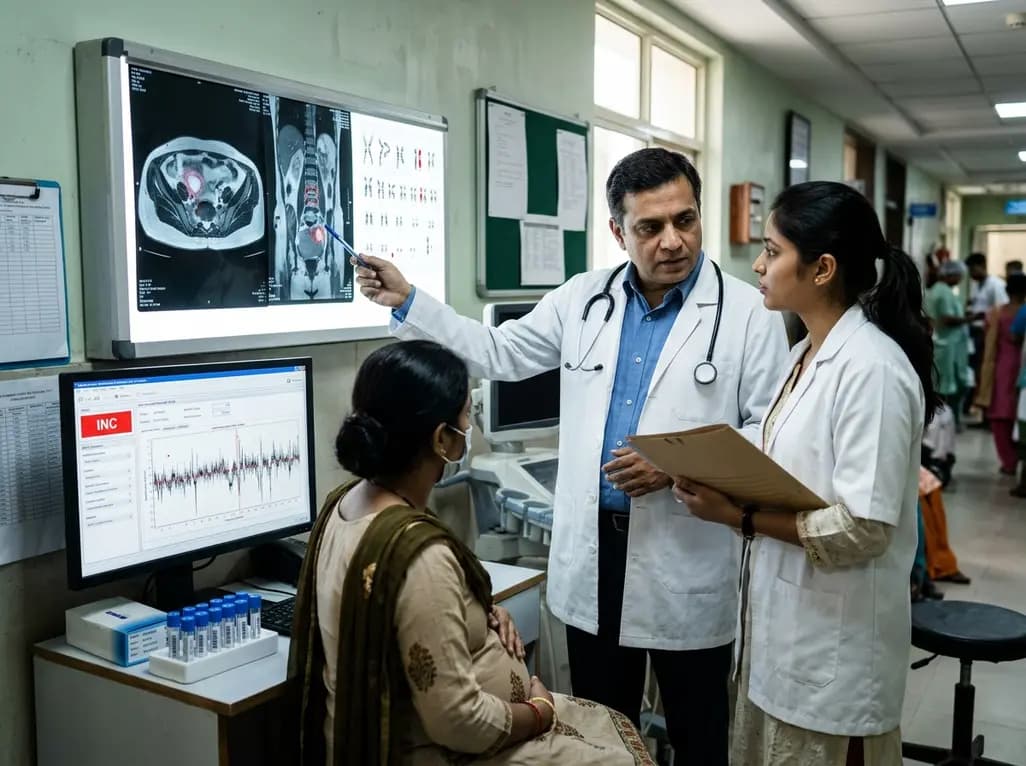
Occult maternal malignancy accounts for 3.82% of persistent unreportable NIPT results with genomic noise. Multiple chromosomal aberrations, notably on chromosome 18, warrant thorough oncological evaluation and whole-body MRI to ensure timely maternal diagnosis while preserving fetal care.
Today

This article reviews the forensic and clinical complexities of acute myocarditis arising on left ventricular hypertrophy in children, highlighting early diagnostic red flags and multidisciplinary postmortem autopsy protocols.
Today
A randomized controlled trial demonstrates that an eight-week dual-task training intervention significantly improves static and dynamic postural control over standard balance exercises in individuals with chronic ankle instability, addressing critical neurocognitive deficits during athletic and daily activities.
Today

A retrospective cohort study of 7,716 ICU patients from the MIMIC-IV database demonstrates that Gradient Boosting Decision Trees significantly outperform traditional SOFA scores in predicting in-hospital mortality among patients with sepsis and diabetes, with SHAP analysis providing clinical interpretability.
Today
