.webp&w=384&q=75)

Loading, please wait...
Loading, please wait...

Modern spinal surgery increasingly emphasizes value-based clinical care, rapid recovery protocols, and efficient resource allocation. Performing short-segment lumbar fusion requires precise operative technique, effective pain management, and coordinated multidisciplinary post-surgical care. Historically, academic tertiary medical centers handled the vast majority of instrumented spine interventions. However, the rise of specialized orthopedic centers and community-based surgical programs has fundamentally transformed this care delivery landscape. Clinicians must understand how institutional infrastructure impacts patient outcomes, length of stay, and readmission patterns. Recent comparative data offer compelling insights into the performance of different hospital settings, helping surgical teams optimize referral pathways and improve postoperative recovery.
Spine care delivery varies widely depending on facility type and administrative workflows. Conventional community hospitals and hybrid community institutions have increasingly adopted standardized recovery pathways. Meanwhile, dedicated orthopedic specialty hospitals focus their resources strictly on musculoskeletal pathology, streamlining operating room turnover and clinical care. Conversely, large urban tertiary care hospitals manage high patient volumes across multiple complex medical specialties. Because tertiary referral centers maintain extensive trauma, critical care, and transplant services, their operational priorities differ significantly from focused specialty institutions. Consequently, elective spine patients in tertiary centers often navigate busy hospital wards with competing administrative demands. In contrast, focused orthopedic units utilize dedicated spine nursing staff, specialized physiotherapists, and standardized discharge coordinators. Therefore, procedural teams in specialty environments can expedite mobilization while minimizing administrative bottlenecks during inpatient recovery.
Evaluating hospital performance requires robust methodological adjustment to eliminate selection bias. Sicker patients with severe cardiopulmonary pathology traditionally undergo surgery at tertiary institutions. To address this confounding variable, investigators evaluated 1,435 elective patients undergoing one- or two-level fusion procedures between 2017 and 2022. Specifically, researchers utilized rigorous propensity score matching across four clinical settings: urban tertiary centers, orthopedic specialty hospitals, hybrid community hospitals, and conventional community hospitals. The statistical matching accounted for patient age, body mass index, Charlson Comorbidity Index scores, specific surgical approaches, and the total number of fused spinal segments. By establishing equivalent baseline clinical profiles across all four cohorts, the investigators isolated the true institutional effect on perioperative outcomes. As a result, observed variances in hospitalization duration and discharge disposition reflect actual facility workflows rather than underlying baseline disparities in patient health.
The analysis revealed substantial differences in hospitalization length across the studied healthcare institutions. Patients treated at tertiary care centers remained hospitalized significantly longer than those treated in nontertiary settings. Specifically, tertiary care stays exceeded those at orthopedic specialty hospitals, hybrid community hospitals, and conventional community hospitals by an average of one to two days. Furthermore, statistical analysis demonstrated that this extended length of stay was highly significant. In addition to prolonged hospitalization, tertiary care patients experienced notably lower rates of direct discharge to home. Instead, tertiary facilities more frequently transferred patients to inpatient rehabilitation units or skilled nursing facilities. Conversely, patients treated at orthopedic specialty hospitals and hybrid community centers achieved discharge home far more frequently. These striking findings highlight how focused institutional protocols promote early functional independence, enabling safe and prompt post-surgical transitions to the domestic environment.
Surgical teams often express valid concerns that rapid discharge might elevate readmission frequencies or surgical complications. However, the propensity-matched findings decisively refute this assumption. Patients treated at orthopedic specialty hospitals exhibited significantly lower 90-day readmission rates compared to those treated at tertiary facilities. Moreover, the evaluation demonstrated equivalent safety profiles regarding long-term surgical durability. Across all four hospital models, investigators noted no statistically significant differences in one-year reoperation rates. Therefore, shorter inpatient stays and expedited home discharges did not compromise technical quality or clinical safety. Rather, specialized care teams minimized hospital-acquired risks while maintaining exceptional procedural efficacy. Because orthopedic specialty centers focus exclusively on musculoskeletal rehabilitation, they avoid many secondary nosocomial complications that frequently affect larger, multi-service tertiary environments. Consequently, streamlined institutional care pathways effectively protect patients from avoidable readmissions.
These comparative findings provide valuable practical insights for spine surgeons and healthcare system leaders. Elective short-segment lumbar surgery does not inherently demand the extensive multidisciplinary resources of an urban tertiary hospital. For appropriately screened candidates with low to moderate medical comorbidity, nontertiary facilities offer superior recovery efficiency and greater convenience. Furthermore, directing routine elective cases toward community and specialty hospitals preserves tertiary hospital beds for complex revisions, oncologic reconstructions, and high-acuity polytrauma cases. In countries like India, where tertiary healthcare institutions face severe bed shortages and heavy clinical burdens, regionalizing elective spine surgery into dedicated specialty and community centers could substantially improve overall system throughput. In addition, reducing inpatient duration by up to two days yields immense cost savings for both patients and healthcare payers. Thus, adopting targeted surgical models supports sustainable, patient-centered musculoskeletal care delivery.
To reproduce the outstanding efficiencies observed in specialty hospitals, healthcare institutions must implement comprehensive perioperative strategies. First, surgical teams should establish structured prehabilitation programs that educate patients regarding postoperative mobility milestones and discharge goals. Second, multidisciplinary teams must institute multimodal, opioid-sparing analgesia protocols that facilitate immediate ambulation on the day of surgery. Furthermore, nursing and physiotherapy staff require dedicated training in spine-specific functional assessments to avoid unnecessary discharge delays. Tertiary care hospitals can also adopt these specialized clinical pathways by creating dedicated spine care units within their larger medical facilities. By isolating elective orthopedic patients from high-acuity medical wards, tertiary centers can streamline discharge planning and lower readmission rates. Ultimately, continuous quality improvement initiatives, coordinated clinical pathways, and transparent institutional benchmarks will ensure consistent, high-value surgical care across diverse hospital settings.
Institutional infrastructure directly shapes clinical recovery pathways and patient mobilization timelines. Orthopedic specialty centers and community facilities frequently implement dedicated care pathways that accelerate ambulation and reduce procedural delays. In contrast, tertiary care hospitals often manage higher overall facility congestion, which can prolong stay duration without necessarily improving surgical outcomes.
Evidence indicates that shorter hospitalization does not compromise essential clinical safety benchmarks. Propensity-matched data demonstrate comparable one-year reoperation rates across tertiary and specialty facilities. Consequently, well-selected surgical candidates who achieve discharge readiness can safely return home earlier when supported by structured rehabilitation pathways and attentive post-discharge follow-up.
Carefully screened individuals undergoing elective short-segment procedures benefit significantly from community and specialty hospital settings. Patients without unstable cardiopulmonary disorders or severe multisystem comorbidities achieve efficient mobilization, fewer unexpected readmissions, and higher rates of direct home discharge. Therefore, clinicians can safely direct elective one- or two-level cases to non-tertiary surgical facilities.
Disclaimer: This content is for informational and educational purposes only... Refer to the latest local and national guidelines for clinical practice.
References

Read summarized clinical updates, watch expert medical content, and earn CME certifications right from your smartphone.
Open your smartphone camera to scan and install.





A propensity-matched study evaluated 1,435 short-segment lumbar fusion patients across tertiary, specialty, and community hospitals. Tertiary hospital stays were 1 to 2 days longer with fewer home discharges, while reoperation rates remained identical, highlighting the clinical efficiency of nontertiary settings.
Today

Chronic eosinophilic pneumonia can present with atypical bronchoalveolar lavage findings and an organizing pneumonia pattern, necessitating surgical lung biopsy.
Today

Discover the crucial distinctions between mesonephric and mesonephric-like proliferations of the female genital tract. Learn the key histomorphologic, immunohistochemical, and molecular differences essential for accurate diagnosis and clinical management.
Today
Kikuchi-Fujimoto disease rarely presents with refractory shock and sinus bradycardia in children. This case report highlights life-threatening hemodynamic instability requiring intensive care, preserved cardiac contractility, and the critical diagnostic role of early excisional lymph node biopsy.
Today
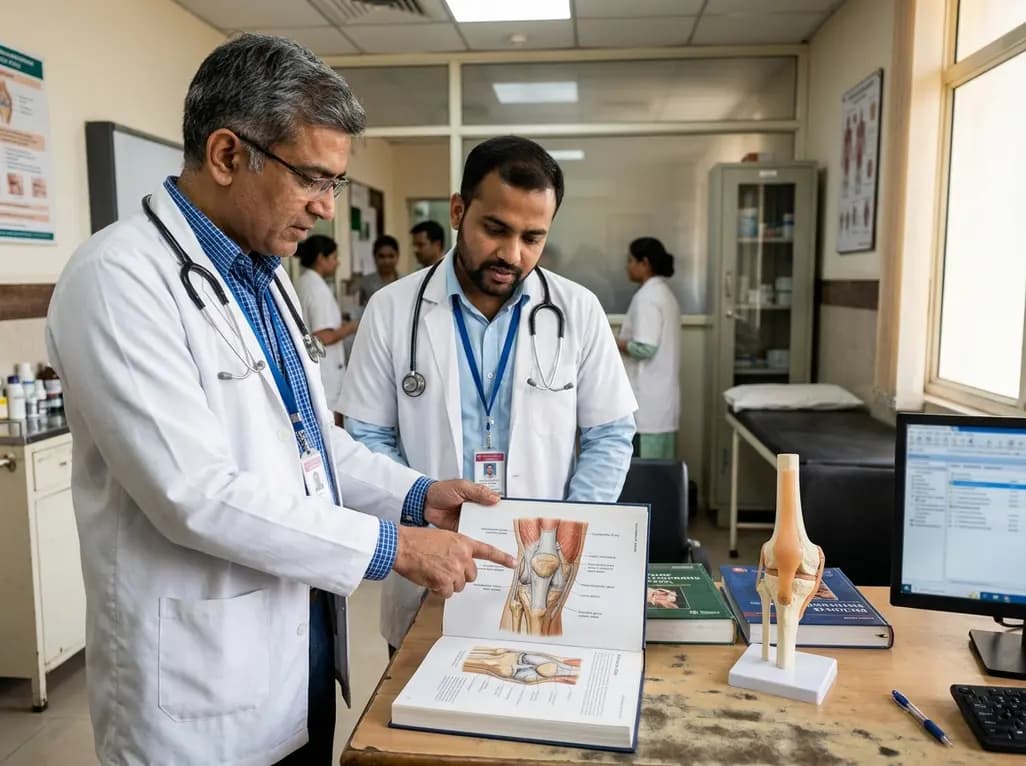
A narrative review investigates whether the articularis genus muscle functions as an independent anatomical entity or blends with the vastus intermedius. We evaluate its morphology, role in retracting the suprapatellar bursa, and direct clinical significance in anterior knee pain and arthroplasty.
Today

A Bayesian multilevel meta-analysis reveals that aerobic training combined with moderate carbohydrate restriction modestly lowers HbA1c in type 2 diabetes. However, sparse data and very low certainty leave incremental benefits over exercise or diet alone unproven, highlighting the need for individualized care.
Today
