.webp&w=384&q=75)

Loading, please wait...
Loading, please wait...

Widespread immunization campaigns have significantly reduced morbidity and mortality throughout the coronavirus disease 2019 pandemic. However, clinicians continue to encounter vulnerable individuals who experience severe COVID-19 outcomes despite completing primary immunization regimens. Population-level surveillance remains essential to quantify lingering risks and identify patients who require targeted clinical safeguards. A comprehensive retrospective cohort study conducted in Alberta, Canada, examined real-world health data across millions of vaccinated adults. The researchers evaluated clinical determinants linked to breakthrough hospitalizations and death. By examining these prognostic indicators, healthcare providers can better stratify clinical risk, personalize booster schedules, and initiate early therapeutic interventions to preserve long-term health outcomes among high-risk populations.
The large-scale Canadian investigation analyzed administrative healthcare datasets encompassing over 2.6 million adults who completed at least a primary COVID-19 vaccination series. Overall, the absolute incidence of critical disease remained remarkably low within this heavily vaccinated cohort. Specifically, only 0.2 percent of individuals experienced a COVID-19-related hospitalization or mortality event during the follow-up period. This baseline finding highlights the enduring effectiveness of primary vaccination against catastrophic infectious outcomes.
Nevertheless, certain clinical subsets demonstrated a disproportionate share of severe complications. The researchers applied multivariable Cox proportional hazard models to isolate distinct demographic and clinical contributors to breakthrough events. Consequently, the analysis established that baseline vulnerability persists along well-defined prognostic boundaries. While the absolute overall risk remains minimal for most vaccinated community members, specific physiological deficits dramatically alter patient trajectory following viral exposure. Understanding these specific risks empowers primary care physicians and specialists to deliver timely prophylactic care and prioritized outpatient treatment.
Advanced age emerged as one of the most prominent predictors of poor prognosis following breakthrough infection. When compared with younger adults, individuals aged 65 years and older exhibited an unadjusted hazard ratio approaching ninefold for severe complications. Age-related immune senescence significantly weakens both humoral and cellular vaccine-induced responses over time. Therefore, older individuals mount lower antibody titers and experience faster waning of immune memory.
In addition to advanced age, patient sex contributed meaningfully to relative vulnerability. Male participants demonstrated a small but statistically significant elevation in risk compared to female peers. Hormonal differences, behavioral patterns, and differential immune gene expression on the X chromosome likely explain this divergence in clinical outcomes. Furthermore, socioeconomic disparities and geographic factors also influenced acute healthcare utilization during the study window. Recognizing these baseline demographic vulnerabilities helps clinicians maintain elevated vigilance when managing older male patients who present with acute respiratory symptoms.
Underlying multimorbidity dramatically amplifies the likelihood of adverse events following viral infection. The study revealed that patients carrying a severe comorbid burden faced more than a thirtyfold increase in unadjusted risk compared to individuals without baseline chronic conditions. Chronic cardiovascular disease represented one of the most prevalent high-risk comorbidities across the analyzed population, significantly multiplying the hazard of inpatient admission.
Moreover, neurological conditions like dementia conferred an extraordinary vulnerability, multiplying severe outcome risks nearly fourteenfold. Patients suffering from chronic kidney disease, severe liver dysfunction, active malignancy, and immunosuppressive conditions similarly exhibited heightened vulnerability. These underlying physiological impairments compromise tissue reserves and limit systemic compensation during acute systemic inflammation. Consequently, chronic organ dysfunction impairs rapid viral clearance, fostering progressive tissue injury and secondary cardiopulmonary failure. Healthcare professionals must recognize that multiple co-occurring chronic diseases compound overall clinical risk exponentially rather than additively.
The administration of additional booster doses provided substantial added protection against adverse clinical outcomes across all patient subsets. Among individuals who received one or more booster immunizations, baseline event rates declined markedly compared to those with primary series alone. Booster doses restore neutralizing antibody concentrations and broaden epitope recognition against circulating immune-evasive variants.
However, even after receiving booster doses, the relative gradient of risk across demographic and comorbid categories remained consistent. Older adults and severely immunocompromised individuals continued to face higher relative risks than younger, healthy vaccine recipients. Therefore, while booster administration offers indispensable individual protection, vaccination alone cannot entirely eliminate breakthrough risk in exceptionally frail cohorts. Clinicians must view vaccine boosters as a foundational layer of defense rather than an absolute barrier against disease progression. As a result, maintaining layered protection remains paramount for complex medical patients living in high-transmission environments.
These population-level insights provide actionable guidance for routine clinical encounters in outpatient and inpatient settings. First, healthcare teams should systematically identify vaccinated patients who possess multiple high-risk clinical markers. Clinicians can maintain updated registries of patients with advanced age, cardiovascular disorders, and cognitive decline to streamline proactive clinical outreach during community surges.
Furthermore, early diagnosis remains critical when treating breakthrough infections in vulnerable cohorts. Physicians should encourage immediate diagnostic testing upon the appearance of mild upper respiratory symptoms in high-risk patients. Because oral antiviral therapies and monoclonal treatments demonstrate maximum efficacy when clinicians initiate them early in the disease course, rapid triage is essential. In addition, providers should ensure that all patients with complex chronic disease receive timely booster immunizations according to updated public health schedules. Integrating routine comorbidity management with structured infection control protocols optimizes long-term patient survival and diminishes preventable hospitalizations.
Public health policymakers must utilize robust real-world evidence to tailor ongoing vaccination campaigns and resource allocation. By focusing protective interventions on highly vulnerable subsets, health systems can efficiently alleviate strain on critical care facilities during subsequent infection waves. Transparent communication regarding residual risks also encourages vulnerable individuals to seek early medical consultation rather than assuming total immunity from primary vaccination alone. Continuous epidemiological monitoring will ensure that preventative strategies adapt to emerging viral variants and waning population immunity.
Advanced age, particularly 65 years and older, represents the strongest demographic predictor. Additionally, a high comorbid burden significantly elevates risk. Conditions such as cardiovascular disease, dementia, chronic renal failure, and active immunosuppression substantially increase the likelihood of hospitalization and death despite prior vaccination.
Additional booster doses substantially decrease the absolute rate of severe complications by enhancing antibody titers and cellular immunity. However, the relative risk hierarchy persists, meaning elderly and multimorbid patients still require heightened surveillance and early antiviral intervention during acute breakthrough infections.
Clinicians should closely monitor patients with pre-existing cardiovascular disease, dementia, moderate-to-severe renal impairment, chronic pulmonary conditions, and diabetes mellitus. These disorders impair physiological compensation during systemic viral stress, dramatically accelerating clinical deterioration following breakthrough SARS-CoV-2 infection.
Disclaimer: This content is for informational and educational purposes only and is intended for healthcare professionals. It should not be used as a substitute for professional medical advice, diagnosis, or treatment. Refer to the latest local and national guidelines for clinical practice.
References

Read summarized clinical updates, watch expert medical content, and earn CME certifications right from your smartphone.
Open your smartphone camera to scan and install.





A large-scale retrospective study from Alberta highlights that older age and severe comorbid burden significantly increase the risk of severe COVID-19 outcomes among vaccinated adults, underscoring the need for targeted boosters and prompt clinical management.
last month
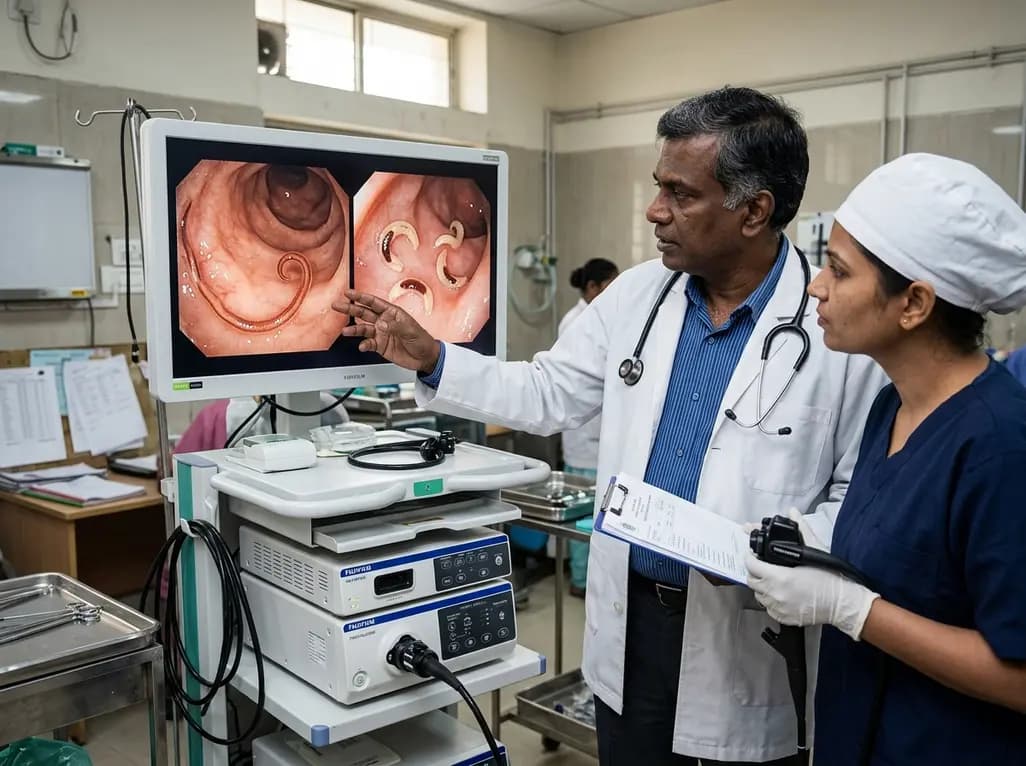
A review of incidental intestinal parasitic infections detected during colonoscopy, highlighting diagnostic morphology, the absence of peripheral eosinophilia, and tailored antihelminthic treatment.
Today

A nationwide South Korean study shows underreporting of smoking among women dropped from 57.4% to 36.4% between 2008 and 2021. However, over one-third of female smokers still conceal their habit, highlighting the critical role of cotinine verification in clinical risk assessment.
Today

PepsiCo and Monster Beverage have challenged the FSSAI ban on the energy drink label in Indian courts. While companies highlight supply disruptions, regulatory actions spotlight severe cardiovascular and metabolic risks associated with excessive caffeine, sugar, and taurine consumption, especially in adolescents.
Today

A new study evaluates the rheological stability of decellularized peripheral nerve matrix hydrogels under varied storage conditions. Findings show -80°C storage and freeze-drying preserve gelation kinetics and mechanical stiffness, offering key insights for shipping and translational clinical applications.
Today

A Bayesian multilevel meta-analysis reveals that aerobic training combined with moderate carbohydrate restriction modestly lowers HbA1c in type 2 diabetes. However, sparse data and very low certainty leave incremental benefits over exercise or diet alone unproven, highlighting the need for individualized care.
Yesterday
