.webp&w=384&q=75)

Loading, please wait...
Loading, please wait...
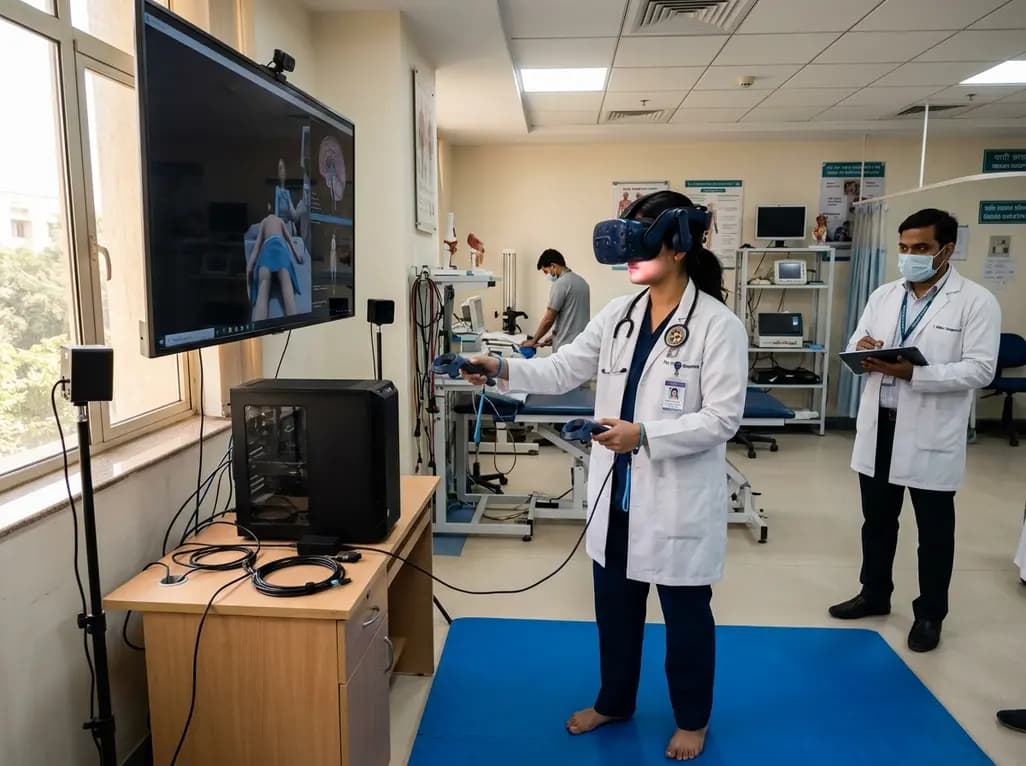
Immersive virtual reality training offers powerful interactive environments for cognitive rehabilitation and functional task practice. Clinicians increasingly explore these digital platforms to evaluate neurocognitive capacity and daily living skills. However, effective clinical translation requires a precise understanding of how sensory and mental complexities influence user behavior and physiology. When individuals navigate complex simulated spaces, cognitive overload can impair executive execution. Recent experimental evidence reveals how varying levels of visual clutter, auditory distractions, and working memory demands distinctly impact mental effort, gaze fixation, and task performance during goal-directed activities.
Virtual grocery shopping tasks represent realistic activities of daily living that demand high-level executive function and spatial navigation. Researchers evaluated healthy young adults performing structured shopping trials under varied environmental and mental loads. The experimental conditions systematically altered visual distractors, ambient auditory inputs, and concurrent working memory challenges such as 0-back and 2-back tasks. Investigators captured subjective mental demand and effort alongside objective physiological metrics, including heart rate from electrocardiography. Additionally, integrated eye-tracking systems recorded gaze duration on relevant shelves, while motion sensors tracked head stillness. Consequently, this multi-tiered assessment provided comprehensive insight into human cognitive architecture during interactive digital challenges. The findings demonstrate that adding a high mental load significantly increases subjective strain compared to baseline. In contrast, low visual or auditory stimuli imposed minimal subjective burden. Therefore, clinicians designing digital rehabilitation protocols must recognize that internal cognitive load taxes neural resources far more heavily than basic ambient distractions.
Physiological and behavioral measurements offer critical objective indicators of user engagement and neurological fatigue. During high cognitive load scenarios, participants exhibited notable alterations in autonomic arousal and spatial scanning behaviors. Specifically, mean heart rate showed significant shifts when individuals managed complex working memory requirements. Furthermore, integrated eye-tracking data revealed profound modifications in visual attention allocation. Under intense mental demands, participants spent considerably less time fixating on target grocery items. Instead, their gaze patterns became scattered, indicating disrupted selective attention and visual search efficiency. Meanwhile, head stillness durations varied systematically across different experimental conditions. High working memory loads constrained motor exploration, reflecting the trade-off between cognitive processing and active environmental scanning. These physiological changes demonstrate that cognitive overload actively interferes with sensory-motor coordination in virtual environments. Because digital neurorehabilitation relies on motor-cognitive coupling, understanding these autonomic and oculomotor markers helps clinicians identify cognitive exhaustion effectively.
Goal-directed task performance relies heavily on maintaining a clear focus while filtering irrelevant background stimuli. In the experimental grocery task, researchers measured performance by the number of correct items successfully collected within timed intervals. Interestingly, background visual characters and ambient store sounds produced only modest decreases in retrieval efficiency. Participants effectively filtered these peripheral sensory inputs without substantial degradation in overall performance. However, concurrent working memory tasks caused an immediate and pronounced drop in item retrieval rates. The high mental load condition severely restricted the participants' ability to identify, select, and cart target products. This marked performance decline highlights the distinct neurobiological mechanisms governing sensory filtering versus working memory capacity. While healthy sensory gating mechanisms suppress background noise, working memory resources remain strictly finite. Consequently, dual-task paradigms rapidly consume the executive bandwidth required for motor planning and object recognition.
The differential effects of sensory and cognitive demands carry profound implications for contemporary neurorehabilitation practice. Virtual reality platforms provide clinicians with unmatched opportunities to simulate complex, everyday scenarios within a safe, controlled clinical environment. However, uncalibrated virtual challenges can provoke cognitive fatigue, anxiety, or learned helplessness in patients recovering from neurological trauma. Clinicians should systematically adjust visual clutter, auditory complexity, and executive demands to match individual recovery stages. For instance, early-stage stroke rehabilitation might require quiet virtual settings with minimal distractors to foster basic visuomotor coordination. As executive recovery progresses, therapists can deliberately introduce ambient sounds and peripheral visual movements to enhance real-world adaptability. Furthermore, dual-task cognitive demands should be introduced gradually, allowing patients to build cognitive endurance without compromising functional task completion. Integrating objective physiological biomarkers enables clinicians to identify overload before overt task failure occurs.
Implementing advanced digital health technologies requires strategic planning, particularly in diverse and resource-conscious healthcare settings like India. As immersive digital therapies gain traction across tertiary neurorehabilitation centers, structured protocols must ensure clinical efficacy and cost-effectiveness. Clinicians must select adaptive software that allows granular control over sensory and cognitive parameters. By starting with standardized baseline assessments, therapists can establish precise patient thresholds before advancing task complexity. Moreover, training multidisciplinary teams—including neurologists, physiotherapists, occupational therapists, and neuropsychologists—ensures coordinated delivery of virtual reality interventions. Combining subjective feedback scales with lightweight wearable sensors provides a practical framework for monitoring cognitive load during rehabilitation sessions. In addition, digital platforms enable scalable telerehabilitation models, potentially expanding access to specialized cognitive care beyond major urban medical centers.
Emerging innovations in artificial intelligence and biosensing promise to transform immersive virtual reality training into dynamically adaptive therapeutic systems. Closed-loop platforms can continuously analyze real-time data streams from embedded eye-trackers, motion sensors, and cardiac monitors. When algorithms detect physiological indicators of cognitive strain or visual disorganization, the virtual environment can automatically reduce background distractors or simplify task instructions. Conversely, when a patient demonstrates effortless mastery, the system can introduce progressive cognitive challenges to drive neuroplasticity. Furthermore, future clinical trials must investigate these adaptive mechanisms across diverse clinical cohorts, including individuals with mild cognitive impairment, Parkinson's disease, and post-concussion syndrome. Standardizing task protocols will also facilitate multi-center collaborative research and comparative effectiveness studies, maximizing functional recovery.
Mental load involves active working memory and executive processing, which rapidly consume finite cognitive resources during goal-directed activities. In contrast, sensory distraction involves ambient visual or auditory stimuli that healthy neural gating mechanisms can often filter out effectively. Consequently, high mental load produces far greater subjective exhaustion, physiological arousal, and task performance impairment than background environmental noise during virtual rehabilitation tasks.
Eye-tracking metrics provide objective real-time indicators of visual attention allocation and cognitive processing efficiency. When users experience high mental strain, their gaze duration on target objects decreases and visual search becomes disorganized. Clinicians use these oculomotor patterns alongside head-tracking data to assess cognitive fatigue, identify perceptual difficulties, and adjust task complexity before overt performance breakdown occurs during therapeutic sessions.
Clinicians can incorporate wearable biosensors, such as heart rate monitors and electrodermal sensors, directly into virtual reality sessions. These devices measure autonomic nervous system responses to varying task difficulties in real time. By tracking physiological fluctuations alongside subjective effort ratings, therapists can detect cognitive overload early, customize training intensity, and optimize therapeutic engagement for patients undergoing specialized neurorehabilitation.
Disclaimer: This content is for informational and educational purposes only and should not be considered medical advice. Always consult a qualified healthcare professional for diagnosis, treatment, and medical concerns. Refer to the latest local and national guidelines for clinical practice.
References

Read summarized clinical updates, watch expert medical content, and earn CME certifications right from your smartphone.
Open your smartphone camera to scan and install.





A study evaluates behavioral, physiological, and gaze responses to varying sensory and cognitive demands during virtual reality tasks, offering vital insights for designing personalized neurorehabilitation protocols.
4 weeks back

A nationwide English cohort study shows that interstitial lung diseases are no longer rare, with incidence jumping 30% and 200,000 active cases. This analysis highlights clinical implications for diagnosis, multi-disciplinary management, and global health priorities across respiratory and internal medicine.
Today

A nationwide South Korean study shows underreporting of smoking among women dropped from 57.4% to 36.4% between 2008 and 2021. However, over one-third of female smokers still conceal their habit, highlighting the critical role of cotinine verification in clinical risk assessment.
Today

PepsiCo and Monster Beverage have challenged the FSSAI ban on the energy drink label in Indian courts. While companies highlight supply disruptions, regulatory actions spotlight severe cardiovascular and metabolic risks associated with excessive caffeine, sugar, and taurine consumption, especially in adolescents.
Today

A new study evaluates the rheological stability of decellularized peripheral nerve matrix hydrogels under varied storage conditions. Findings show -80°C storage and freeze-drying preserve gelation kinetics and mechanical stiffness, offering key insights for shipping and translational clinical applications.
Today

A Bayesian multilevel meta-analysis reveals that aerobic training combined with moderate carbohydrate restriction modestly lowers HbA1c in type 2 diabetes. However, sparse data and very low certainty leave incremental benefits over exercise or diet alone unproven, highlighting the need for individualized care.
Yesterday
