.webp&w=384&q=75)

Loading, please wait...
Loading, please wait...

Sciatic nerve trauma and entrapment neuropathies cause profound functional impairment, chronic neuropathic pain, and lower-extremity disability. Historically, peripheral nerve surgeons reported diverse and inconsistent endpoints, creating challenges for evidence synthesis. To address these persistent discrepancies, an international expert panel developed the COS-SINE framework. This consensus establishes a standardized benchmark for sciatic nerve injury evaluation across clinical trials and institutional registries. By defining essential measurement domains, this initiative aligns surgical reporting with rigorous clinical practice standards.
Surgeons frequently manage traumatic lacerations, traction injuries, pelvic fractures, and compression syndromes involving the sciatic trunk. In published literature, investigators employ heterogeneous metrics to define procedural success. For instance, some publications record basic motor power, while others report subjective pain relief or nerve conduction velocity. Consequently, systematic reviews fail to pool quantitative data or compare neurolysis, direct suturing, and autologous grafting. This lack of uniformity weakens clinical practice guidelines and impairs clinical decision-making.
Furthermore, selective outcome reporting introduces substantial bias into peripheral nerve research. When investigators record arbitrary parameters, they often omit critical complications or persistent sensory deficits. Patients suffering from sciatic neuropathy experience complex functional problems, such as foot drop, gait instability, and severe causalgia. Without standardized metrics, clinicians cannot determine whether specific interventions restore functional ambulation or relieve neuropathic pain. Therefore, establishing universally accepted standards is crucial to elevate surgical evidence. Ultimately, this approach enhances comparative clinical research, minimizes reporting bias, and supports high-quality patient care worldwide.
To resolve these methodological deficiencies, the Core Outcomes in Nerve Surgery (COINS) Consortium developed a rigorous consensus initiative. The steering committee adhered to the Core Outcome Set-STAndards for Development (COS-STAD) recommendations. They assembled an expert international panel consisting of 23 neurological surgeons representing 13 countries. Three participants were excluded according to predefined protocol rules, leaving a committed expert panel.
Additionally, the consortium implemented a structured five-stage developmental process. First, the investigators conducted a comprehensive systematic review of international literature spanning more than two decades. This search identified all previously reported sciatic outcome measures. Next, the steering committee synthesized candidate metrics and administered consecutive electronic Delphi survey rounds to achieve consensus. During these iterative stages, panel members independently scored candidate items for clinical relevance and practical feasibility. Subsequently, a dedicated Delphi round established precise standardized definitions for every endorsed parameter. Finally, a consensus conference brought the international experts together to resolve discrepancies and finalize the framework. This multi-stage approach ensured high scientific credibility and eliminated individual investigator bias.
The finalized consensus instrument comprises 36 essential data points categorized across five primary clinical domains. Specifically, these domains include patient demographics, diagnostic investigations, patient-reported outcome measures, objective motor and sensory outcomes, and postoperative complications. By structuring data collection across these specific categories, the tool guarantees a comprehensive assessment of neural regeneration and functional restoration.
Within the demographic and diagnostic categories, the framework mandates recording specific injury mechanisms, anatomical lesion locations, and preoperative electrodiagnostic tests. Moreover, the consensus emphasizes patient-reported outcome measures (PROMs). These instruments evaluate subjective pain severity, neuropathic symptoms, and health-related quality of life. In addition, physical examination parameters require structured manual muscle testing of sciatic-innervated muscle groups, such as the tibialis anterior, gastrocnemius, and hamstrings. Sensory recovery requires formal assessments of protective sensation, two-point discrimination, and pain thresholds along the lower extremity. Finally, the tool tracks adverse events, including donor site morbidity, neuroma recurrence, wound breakdown, and trophic ulceration. Consequently, this multi-faceted system provides a holistic appraisal of patient recovery, preventing the omission of critical clinical indicators.
Axonal regeneration proceeds at an approximate rate of one millimeter per day under favorable biological conditions. Because the sciatic nerve traverses long anatomical distances, reinnervation of distal foot musculature requires extended recovery periods. Therefore, early postoperative evaluations cannot accurately confirm permanent functional restoration or procedural success. Recognizing these biological constraints, the COINS Consortium agreed that minimum follow-up must extend to at least 24 months.
In addition to defining overall study duration, the consensus panel identified specific optimal time points for serial assessments. Specifically, the framework recommends structured evaluations preoperatively, followed by postoperative assessments at 3, 6, 12, 24, and 36 months. Preoperative baseline testing provides an indispensable benchmark against which future neurological recovery is measured. Furthermore, early follow-up visits at 3 and 6 months monitor wound healing, track initial pain reduction, and detect trophic ulceration. Subsequent evaluations at 12, 24, and 36 months capture progressive axonal regeneration, muscle reinnervation, sensory re-education, and long-term functional stability. By standardizing these intervals, surgical teams can generate longitudinal recovery curves that are directly comparable across international multicenter trials.
Implementing this core outcome set provides substantial advantages for clinical researchers, institutional registries, and practicing surgeons worldwide. In many high-volume surgical centers across India, high-energy road traffic accidents and pelvic trauma cause devastating sciatic nerve injuries. However, inconsistent documentation across departments frequently impairs the translation of surgical experience into reliable evidence. Incorporating these standardized parameters enables surgical units to benchmark their clinical results against international datasets effortlessly.
Additionally, adopting standardized outcome sets eliminates publication bias and selective outcome reporting. In conventional surgical literature, investigators occasionally emphasize isolated successes, such as modest sensory improvement, while ignoring persistent foot drop or disabling pain. The mandatory collection of all 36 data points ensures complete transparency, compelling investigators to publish comprehensive functional profiles. Furthermore, this framework aligns surgical research with modern evidence-based standards, facilitating high-quality meta-analyses and prospective registries. As diagnostic technologies advance, high-resolution ultrasound and magnetic resonance neurography will complement these clinical domains. Ultimately, systematic utilization of this standardized tool elevates surgical decision-making, promotes international collaboration, and improves long-term functional outcomes for patients with sciatic nerve injuries.
The primary purpose of the COS-SINE consensus is to establish a standardized minimum set of data points for reporting sciatic nerve studies. By defining mandatory clinical domains, this framework eliminates outcome-reporting bias, improves data synthesis across institutions, and facilitates meaningful comparisons between surgical interventions globally.
A 24-month follow-up is necessary because sciatic nerve regeneration occurs slowly, typically at one millimeter per day. Due to the long anatomical path to distal foot targets, complete motor reinnervation, sensory recovery, and permanent functional adaptation require substantial time, rendering premature postoperative assessments incomplete and misleading.
The COS-SINE framework incorporates 36 standardized parameters categorized across five fundamental domains. These encompass patient demographics, baseline diagnostic evaluations, patient-reported outcome measures including pain and quality of life, objective motor and sensory assessments, and procedural complications, ensuring a balanced and thorough evaluation of nerve recovery.
Disclaimer: This content is for informational and educational purposes only. It is not intended to be a substitute for professional medical advice, diagnosis, or treatment. Always seek the advice of your physician or other qualified healthcare provider with any questions you may have regarding a medical condition or treatment. Never disregard professional medical advice or delay in seeking it because of something you have read here. Refer to the latest local and national guidelines for clinical practice.
References

Read summarized clinical updates, watch expert medical content, and earn CME certifications right from your smartphone.
Open your smartphone camera to scan and install.





The COINS Consortium developed the COS-SINE consensus, establishing 36 standardized outcomes across five domains for sciatic nerve injury evaluation. The framework mandates a 24-month minimum follow-up with structured assessments to eliminate reporting bias and enhance multicenter surgical research.
Today

An Australian cohort of 34,449 adults in an unsubsidized tirzepatide digital weight loss service showed that peer-referred patients achieved significantly higher 6-month adherence (48% vs 42%) and greater weight loss (16.16% vs 14.06%) than matched non-referred peers, highlighting social support in obesity care.
Today
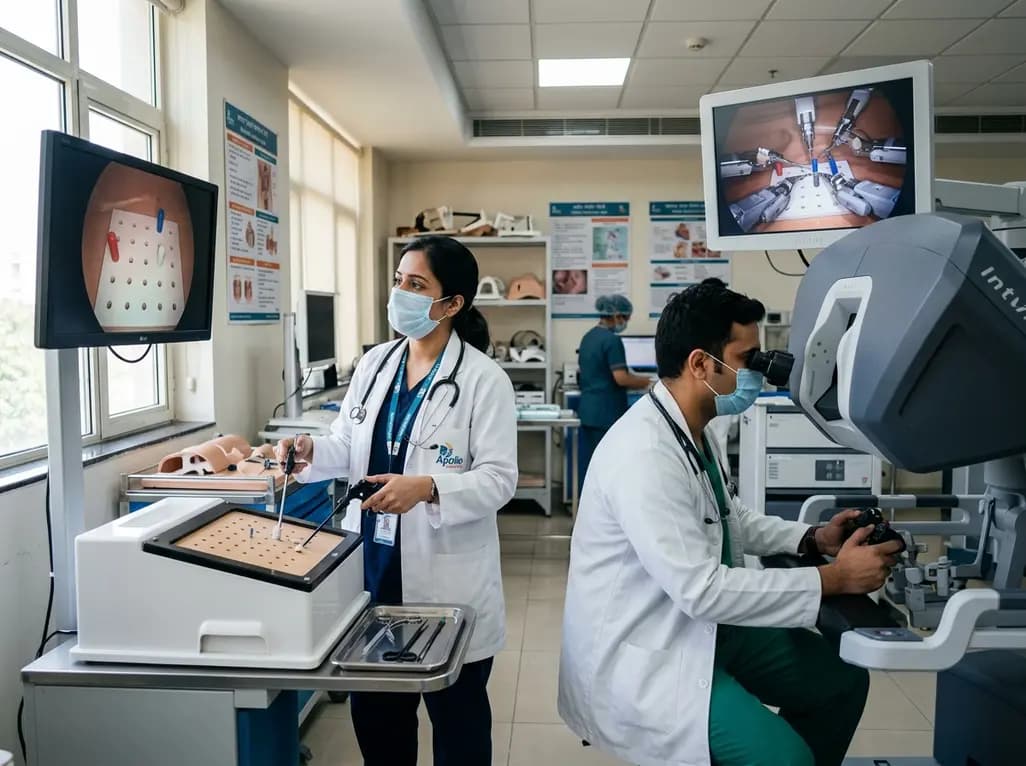
A randomized crossover study demonstrates that conventional and robotic laparoscopy require distinct neuropsychological and psychomotor skills. While trainees master conventional laparoscopy faster, robotic proficiency demands individualized, adaptive curricula tailored to specific learner profiles.
Today
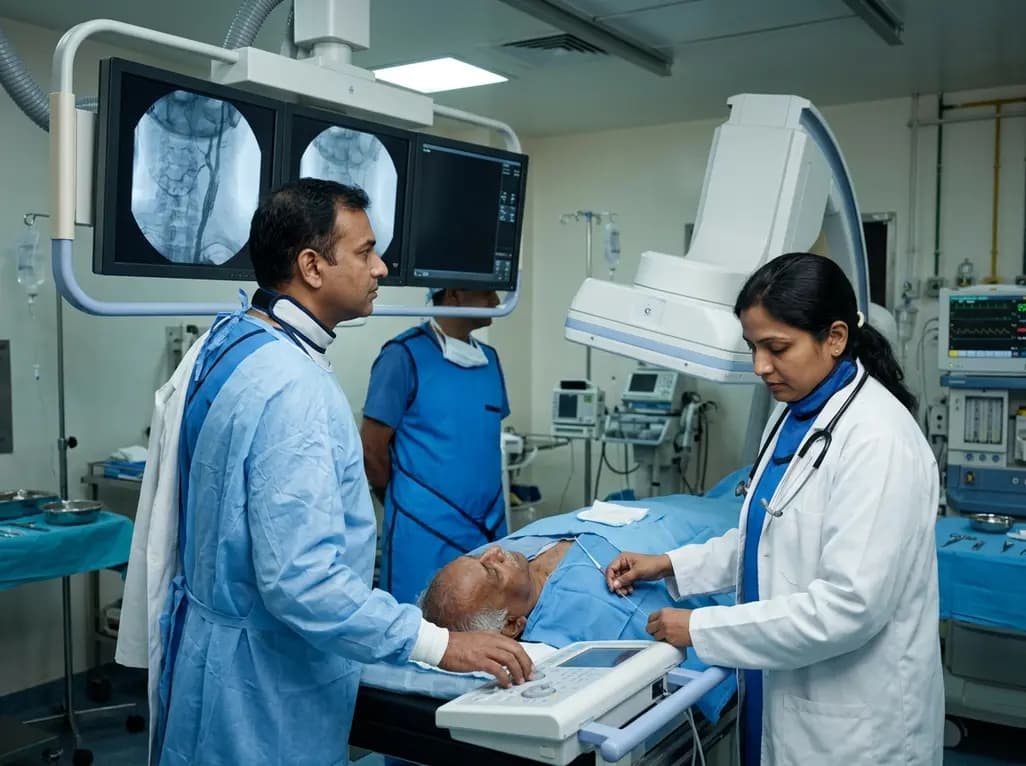
A retrospective study of 109 patients undergoing elective carotid artery stenting evaluated radiation exposure on biplane flat-panel systems. Standardized workflows and dedicated low-dose protocols provide crucial baseline data to establish neurointerventional diagnostic reference levels and optimize patient safety.
Today

A scoping review of 51 studies reveals that spinal manual therapy on the lumbo-pelvic area is commonly used for isolated lower extremity pain, predominantly knee conditions. While thrust manipulation is frequent, reporting deficits highlight the need for standardized technique descriptions to guide practice.
Today

The Supreme Court has reserved its judgment on FSSAI's proposed front-of-pack nutritional warning labels for packaged foods. With debates over compliance timelines, added versus total sugars, and ultra-processed food definitions, this landmark decision carries profound public health implications for India.
Today
