

Loading, please wait...
Loading, please wait...
The Supreme Court of India recently directed the National Medical Commission to examine mandatory rural service for graduating doctors. A bench comprising Justices P. S. Narasimha and Alok Aradhe issued this directive during ongoing hearings on medical regulations. Specifically, the court addressed critical petitions challenging state-level service bonds imposed as prerequisites for permanent medical registration. Consequently, the bench emphasized an urgent need for national clarity regarding post-graduation community commitments. Therefore, regulatory authorities must evaluate how compulsory postings influence medical training trajectories and public healthcare delivery. Divergent state statutes currently generate substantial uncertainty and distress among young physicians across India.
In May 2024, the top court agreed to review petitions filed by graduating MBBS candidates in Karnataka. The student petitioners sought immediate relief against state health authorities who demanded compulsory service affidavits. Furthermore, the bench recognized that piecemeal state litigation cannot resolve systemic challenges facing Indian healthcare delivery. Accordingly, the court instructed regulatory authorities to evaluate whether uniform national guidelines should govern rural clinical postings. Meanwhile, the bench posted the matter for further hearing on December 8 to review regulatory findings and stakeholder recommendations.
The dispute stems from specific legislation enacted by the state of Karnataka over a decade ago. In 2012, the Karnataka legislature passed the Compulsory Service Training by Candidates Completed Medical Courses Act. Subsequently, the state government notified the Karnataka Compulsory Service Training Rules in 2015. Under this combined framework, every MBBS graduate must complete one year of public rural service. Furthermore, candidates completing postgraduate diplomas, master degrees, and super-specialty training must fulfill identical service obligations. State authorities mandate this service before granting candidates permanent registration with the Karnataka Medical Council.
Initially, this statutory obligation applied exclusively to candidates pursuing studies in government institutions or holding government-sponsored seats. Thus, policymakers expected subsidized students to give back to public healthcare systems after graduation. However, an administrative notification issued on July 28, 2023, drastically expanded the operational scope. Consequently, health authorities included candidates enrolled in private seats within private and deemed universities. The petitioners argue that this sudden expansion exceeded statutory authority. Moreover, they asserted that administrative notices cannot override core legislative definitions without formal statutory amendments. In response, affected graduates petitioned the judiciary to secure unconditional registration certificates.
The petition raises critical constitutional questions regarding fairness, equal protection, and arbitrary administrative classification. Specifically, students admitted to private seats pay substantial tuition fees without receiving state financial subsidies. Therefore, petitioners argue that treating private candidates identically to government-subsidized students violates Article 14 of the Constitution. This constitutional guarantee ensures equal treatment and prohibits treating distinct classes of individuals as identical. Additionally, deemed universities function under autonomous national regulations rather than state university control. Imposing regional service obligations on these non-subsidized graduates creates profound financial distress. Accordingly, judicial scrutiny must determine whether financial self-funding warrants exemption from compulsory community service.
Many private medical graduates incur massive educational debts to complete their rigorous training. Consequently, a mandatory, low-paying rural posting severely impedes their ability to manage loan repayment schedules. Furthermore, withholding permanent medical registration prevents these young doctors from pursuing immediate postgraduate entrance examinations. In contrast, state authorities argue that community healthcare infrastructure urgently needs qualified clinical professionals. Government representatives maintain that all medical trainees benefit from clinical exposure provided by public patient populations. Nevertheless, the petitioners insist that public healthcare shortages cannot justify unlawful administrative burdens on private students.
During court proceedings, Supreme Court justices highlighted a glaring policy deficit in medical bond governance across India. Currently, state governments devise isolated, highly variable service conditions without adhering to any coherent national policy. For example, some states impose exorbitant financial penalty bonds running into several million rupees. Meanwhile, other states require brief community rotations or entirely exempt undergraduate doctors from mandatory postings. Consequently, graduating physicians face arbitrary career barriers depending entirely upon geographical location rather than uniform professional standards. Furthermore, the Union government confirmed that undergraduate guidelines lack formal national codification.
In contrast, postgraduate residency curricula incorporate structured district health rotations under standardized national regulations. Therefore, Justice Narasimha observed that healthcare workforce planning requires comprehensive constitutional principles rather than sporadic state rules. The bench noted that ad-hoc state litigation cannot resolve widespread shortages of medical personnel in rural areas. Instead, uncoordinated state policies disrupt postgraduate entrance timelines and create severe professional friction. Hence, the top court urged the National Medical Commission to formulate an evidence-based, nationwide regulatory position. Ultimately, transparent national standards would provide predictability for healthcare professionals and improve public healthcare delivery.
India undoubtedly confronts significant challenges in delivering equitable healthcare to rural and remote populations. Primary health centers and community clinics frequently struggle to recruit and retain skilled medical practitioners. Naturally, state administrators view mandatory service bonds as practical mechanisms to deploy clinicians where care is needed most. However, compelling reluctant, inexperienced medical graduates rarely translates into high-quality clinical care for rural patients. Young MBBS doctors often encounter rural clinics that lack essential diagnostic equipment, functional operating spaces, and basic medications. Furthermore, poor residential accommodations and inadequate security measures discourage young physicians from serving in remote settings.
Consequently, punitive administrative mandates often generate professional burnout rather than meaningful dedication to rural health. In addition, junior doctors frequently practice without necessary senior supervision, increasing clinical vulnerability. Therefore, medical education experts recommend replacing coercive bonds with attractive professional and financial incentives. Providing competitive compensation packages, comfortable family housing, and dedicated postgraduate quota seats motivates young doctors far more effectively. Similarly, upgrading rural clinical infrastructure ensures that assigned medical officers can deliver safe, dignified patient care. Ultimately, sustainable rural healthcare depends upon empowering physicians rather than enforcing restrictive administrative penalties.
As the December 8 court hearing approaches, the National Medical Commission faces a transformative policy opportunity. The regulatory body must design a balanced framework that harmonizes public healthcare requirements with professional educational freedoms. To accomplish this, the commission must actively consult state health departments, university vice-chancellors, and resident doctor associations. Additionally, healthcare policy analysts urge the commission to standardize bond durations, service conditions, and penalty structures nationwide. A consistent national framework would eliminate arbitrary jurisdictional differences that currently destabilize early medical careers. Furthermore, regulatory guidelines must clearly distinguish between government-funded scholars and fully private candidates.
Imposing identical service mandates on private students without explicit statutory backing will inevitably trigger ongoing constitutional litigation. In contrast, establishing voluntary rural clinical fellowships equipped with attractive educational stipends could draw capable physicians naturally. Moreover, integrating structured clinical mentorship during community postings would transform rural service into an enriching educational experience. Consequently, standardized policies will safeguard educational equity across all medical institutions. In conclusion, the medical community eagerly awaits the commission's comprehensive recommendations before the Supreme Court. Therefore, by adopting balanced, forward-looking regulations, Indian healthcare leadership can simultaneously strengthen rural health delivery and support professional growth.
Q1: Why did the Supreme Court direct the NMC to examine rural service rules?
The Supreme Court issued this directive because significant inconsistencies exist across state-level medical service policies. A judicial bench led by Justice P. S. Narasimha observed a prominent policy deficit in national medical regulations. Consequently, the court instructed the National Medical Commission to evaluate undergraduate compulsory postings comprehensively. This review aims to establish uniform, equitable national principles before the bench resumes formal judicial proceedings in December.
Q2: Why are private seat medical graduates challenging the Karnataka rural bond?
Private seat graduates contend that they pay full tuition fees without receiving any financial subsidies from the government. Under Karnataka's 2012 Act and 2015 Rules, service bonds originally targeted government-subsidized scholars. However, an administrative notification issued in July 2023 extended these compulsory bonds to private candidates in deemed universities. Therefore, petitioners argue this extension violates Article 14, unfairly blocking their permanent medical registration without clear statutory authorization.
Q3: How does compulsory rural service affect early medical career progression?
Mandatory rural postings significantly influence early medical careers by delaying permanent registration with state medical councils. Furthermore, completing a compulsory service year can postpone a graduate's eligibility to participate in postgraduate entrance examinations. Additionally, non-subsidized doctors who shoulder heavy educational loans struggle financially when compulsory rural postings offer inadequate remuneration. Consequently, young clinicians advocate for structured, voluntary incentives and transparent national regulations instead of punitive service bonds.
Disclaimer: This content is for informational and educational purposes only. It does not constitute medical advice or replace professional judgment. Refer to the latest local and national guidelines for clinical practice.
References

Read summarized clinical updates, watch expert medical content, and earn CME certifications right from your smartphone.
Open your smartphone camera to scan and install.





The Supreme Court of India has instructed the National Medical Commission to thoroughly analyze compulsory rural medical postings for graduating physicians. This crucial judicial intervention addresses existing discrepancies between government and private seat bond obligations, seeking national uniformity.
Today
India's food safety authority is taking aggressive action against major beverage companies for marketing high-caffeine products as energy drinks. This clinical analysis examines the cardiovascular complications, metabolic risks, and pediatric concerns behind the regulator's push for truthful beverage standards.
Today

A preclinical study reveals that cinnamic acid counters D-galactose-induced premature ovarian failure in mice. By enhancing total antioxidant capacity and upregulating protective genes like Nrf2 and Foxo3a, cinnamic acid improved estrous cyclicity and follicular reserve, offering new insights into ovarian health.
Today

A systematic review of 18 studies reveals very low certainty evidence for cardiac autonomic modulation following intermittent normobaric hypoxia, showing insufficient data to confirm reproducible changes in heart rate variability or baroreflex sensitivity.
Today

An 8-week functional restoration program provides sustained psychological benefits at six-month follow-up for workers' compensation patients. The multidisciplinary intervention significantly improved pain self-efficacy, reduced anxiety and depression, and progressively resolved chronic insomnia severity.
Today
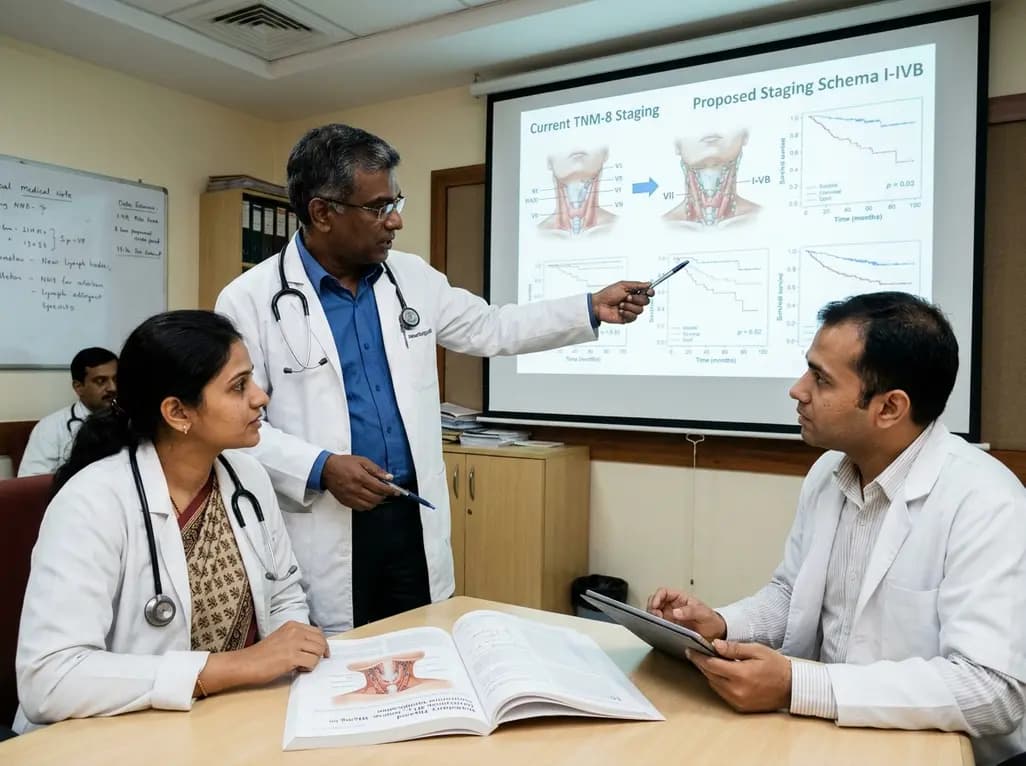
A multinational study of 2,573 medullary thyroid cancer patients refines AJCC TNM-8 staging, proposing N1c for level VII nodes and a new I-IVB schema for better survival stratification.
Today
