.webp&w=384&q=75)

Loading, please wait...
Loading, please wait...
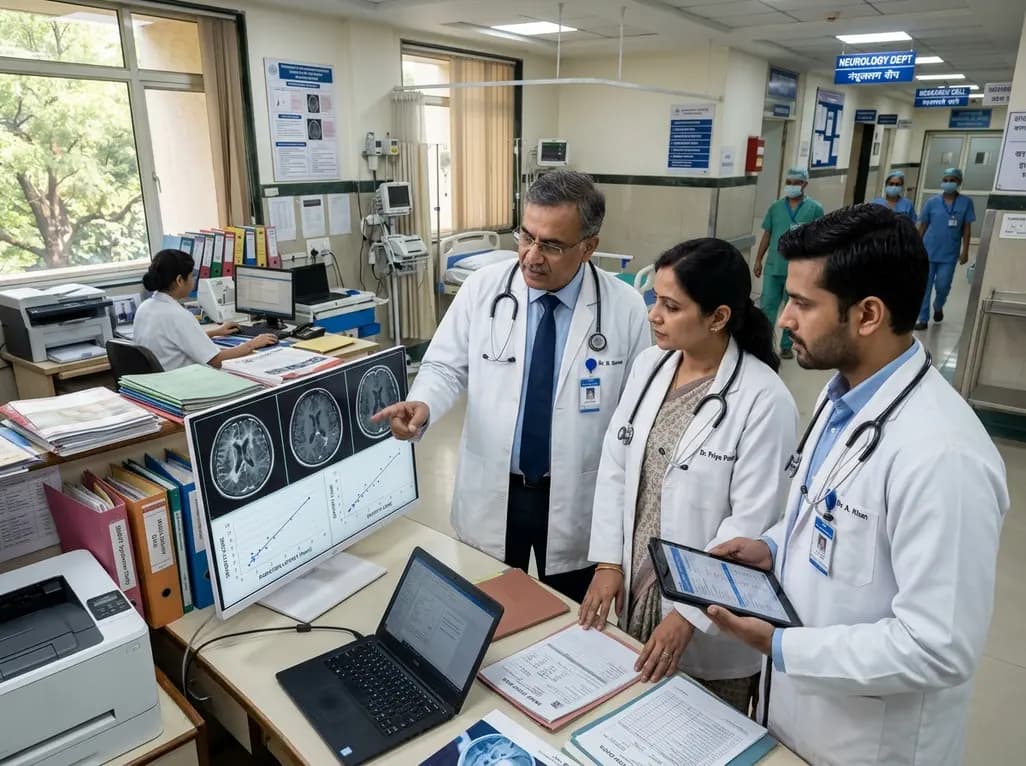
Cranial radiotherapy serves as an essential therapeutic modality for primary and metastatic intracranial malignancies. However, radiation exposure can cause delayed neurological sequelae that manifest years or decades after completion of treatment. Stroke-like migraine attacks after radiotherapy, widely termed SMART syndrome, represents a rare, late-onset clinical entity characterized by transient neurological deficits accompanied by severe migraine-type headaches. Patients frequently present with acute hemiparesis, dysphasia, visual field defects, and encephalopathy. Consequently, these episodes mimic acute ischemic cerebrovascular events or tumor progression. Recent multicenter investigations have provided valuable clarity regarding the clinical trajectory, risk factors for severe attacks, and long-term recurrence patterns of this intricate condition.
SMART syndrome typically arises after a prolonged symptom-free latency period following therapeutic cranial irradiation. Multicenter clinical data indicate that the median interval from radiation therapy to the onset of the initial episode is approximately thirteen years, though cases can emerge up to several decades later. The majority of affected individuals have a history of primary brain neoplasms, such as gliomas or medulloblastomas. In addition, patients who receive focal radiation, whole-brain radiotherapy, or combinations of both modalities remain susceptible to this complication. During an acute episode, individuals commonly experience prominent headache, focal motor or sensory weakness, aphasia, cognitive impairment, and epileptic seizures. Although classical descriptions emphasize full reversibility, severe manifestations frequently occur, necessitating structured critical evaluation.
Recent multicenter research highlights that a substantial proportion of patients experience severe initial presentations. Clinicians define episode severity through markers such as status epilepticus, the requirement for intensive care unit admission, and prolonged symptom duration. Notably, multivariate analyses reveal that male sex is independently associated with an elevated risk of severe attacks, demonstrating an odds ratio exceeding sixfold. Furthermore, a longer latency interval between cranial radiotherapy and symptom onset significantly increases the likelihood of a complicated course. Clinicians must therefore maintain heightened vigilance when evaluating male cancer survivors presenting with acute neurological deficits many years after their initial radiation exposure.
Magnetic resonance imaging plays an indispensable role in establishing the diagnosis of SMART syndrome and ruling out alternative life-threatening pathologies. Classical neuroimaging reveals distinctive unilateral, transient cortical gyral swelling and intense gyriform gadolinium enhancement, typically sparing the underlying white matter. Moreover, these abnormalities do not conform to specific arterial vascular territories, distinguishing the condition from acute arterial thromboembolic infarction. Many patients also demonstrate transient cortical hyperintensity on fluid-attenuated inversion recovery sequences and restricted diffusion during ictal phases. Importantly, the neuroimaging abnormalities resolve over weeks to months, parallel to clinical improvement, which helps differentiate this entity from tumor recurrence, leptomeningeal carcinomatosis, and radiation necrosis.
Although historical reports categorized SMART syndrome as a monophasic disorder, contemporary evidence demonstrates that nearly half of diagnosed patients experience recurrent episodes. Recurrences can occur months or years after the initial event, leading to cumulative neurological morbidity in select cases. Interestingly, neuroimaging and clinical markers during the index attack provide prognostic clues regarding recurrence. Investigations show that the presence of ictal cortical hyperintensity on fluid-attenuated inversion recovery sequences and a longer duration of the first episode correlate with a lower probability of future attacks. Conversely, concurrent status epilepticus during presentation signifies higher acute complexity and warrants aggressive secondary prevention strategies.
Because prospective randomized clinical trials are lacking, therapeutic management relies primarily on empirical medical regimens and expert consensus. High-dose intravenous corticosteroid pulse therapy is frequently administered during acute attacks to reduce cerebral edema and suppress underlying neurovascular inflammation. Additionally, aggressive seizure control using second-generation antiseizure medications remains critical, particularly for patients presenting with focal status epilepticus. Clinicians should also consider prophylactic antimigraine and antiplatelet therapies in selected recurrent cases. Ultimately, coordinated collaboration among neuro-oncologists, neurologists, and neuroradiologists ensures prompt diagnosis, prevents unnecessary invasive surgical procedures, and optimizes long-term neurocognitive recovery for cancer survivors.
The exact pathophysiology involves delayed radiation-induced microvascular injury and impaired cerebrovascular autoregulation. Radiation causes chronic endothelial cell dysfunction, leading to transient cortical hyperemia, breakdown of the blood-brain barrier, and secondary neuronal hyperexcitability that triggers migraine-like and stroke-like neurological deficits.
Clinicians differentiate SMART syndrome using magnetic resonance imaging, which shows unilateral cortical gyral enhancement and swelling that crosses standard arterial distributions. In contrast to acute arterial ischemic stroke, these cortical imaging abnormalities and associated neurological deficits typically resolve completely over several weeks.
Management involves supportive hospital care, high-dose intravenous corticosteroid therapy to mitigate cortical swelling, and prompt initiation of antiseizure medications for seizure activity. Clinicians must thoroughly exclude acute vascular occlusion, infectious meningoencephalitis, and tumor recurrence through neuroimaging and cerebrospinal fluid analysis.
Disclaimer: This content is for informational and educational purposes only. It is not intended to be a substitute for professional medical advice, diagnosis, or treatment. Always seek the advice of your physician or other qualified health provider with any questions you may have regarding a medical condition or treatment. Never disregard professional medical advice or delay in seeking it because of something you have read. The mentions of specific medications, treatments, or procedures do not constitute an endorsement or recommendation. Practitioners must follow standard institutional guidelines, regulatory frameworks, and product insert instructions. Refer to the latest local and national guidelines for clinical practice.
References
Bea Sintes M et al. Risk factors and long-term outcomes in smart syndrome: a multicenter study. J Neurooncol. 2026 Jun 08. doi: 10.1007/s11060-026-05634-z. PMID: 42257762.
Patel UK, Patel K, Malik P, Elkady A, Patel N, Lunagariya A. Stroke-like migraine attacks after radiation therapy (SMART) syndrome—a case series and review. Neurol Sci. 2020;41(11):3123-3134.
Jia W, Saito R, Kanamori M, Iwabuchi N, Iwasaki M, Tominaga T. SMART (stroke-like migraine attacks after radiation therapy) syndrome responded to steroid pulse therapy: report of a case and review of the literature. eNeurologicalSci. 2018;12:1-4.

Read summarized clinical updates, watch expert medical content, and earn CME certifications right from your smartphone.
Open your smartphone camera to scan and install.





A multicenter study investigates SMART syndrome, identifying male sex and prolonged radiation latency as key predictors of severe episodes and analyzing long-term recurrence risks.
last month

Chronic eosinophilic pneumonia can present with atypical bronchoalveolar lavage findings and an organizing pneumonia pattern, necessitating surgical lung biopsy.
Today

Discover the crucial distinctions between mesonephric and mesonephric-like proliferations of the female genital tract. Learn the key histomorphologic, immunohistochemical, and molecular differences essential for accurate diagnosis and clinical management.
Today
Kikuchi-Fujimoto disease rarely presents with refractory shock and sinus bradycardia in children. This case report highlights life-threatening hemodynamic instability requiring intensive care, preserved cardiac contractility, and the critical diagnostic role of early excisional lymph node biopsy.
Today

A narrative review investigates whether the articularis genus muscle functions as an independent anatomical entity or blends with the vastus intermedius. We evaluate its morphology, role in retracting the suprapatellar bursa, and direct clinical significance in anterior knee pain and arthroplasty.
Today

A Bayesian multilevel meta-analysis reveals that aerobic training combined with moderate carbohydrate restriction modestly lowers HbA1c in type 2 diabetes. However, sparse data and very low certainty leave incremental benefits over exercise or diet alone unproven, highlighting the need for individualized care.
Today
