.webp&w=384&q=75)

Loading, please wait...
Loading, please wait...
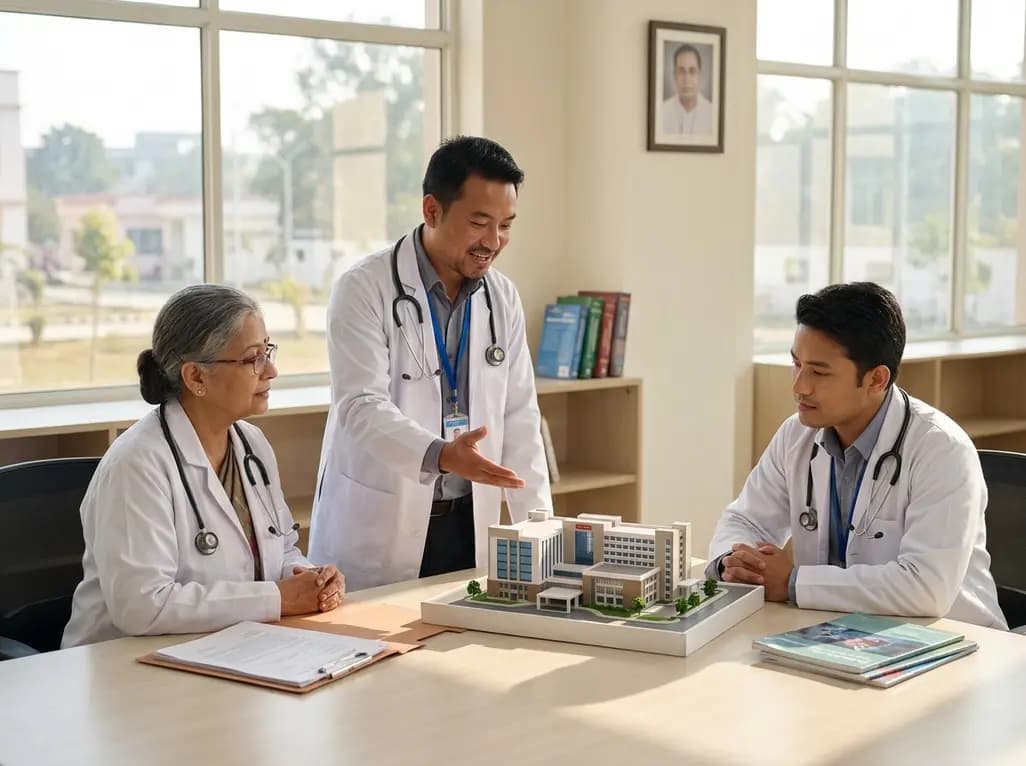
Union Health Minister JP Nadda has formally agreed to the RIMS Imphal AIIMS upgrade, marking a monumental advancement for healthcare infrastructure in Manipur and Northeast India. Manipur Chief Minister Yumnam Khemchand Singh announced this historic milestone following high-level bilateral discussions in New Delhi. Consequently, this decisive policy approval fulfills a long-standing aspiration of the regional medical community and the general public. For decades, the Regional Institute of Medical Sciences (RIMS) in Imphal has operated as a premier regional medical hub. However, upgrading this premier institute to an All India Institute of Medical Sciences (AIIMS) benchmark elevates its administrative autonomy, budgetary allocation, and clinical capabilities. Moreover, this transition ensures that patients across Manipur and neighboring hill states gain unhindered access to state-of-the-art diagnostic and therapeutic modalities. The Union Health Ministry highlighted that modernizing regional institutions remains central to the national healthcare vision. Furthermore, this structural enhancement will curb the burden of medical out-migration, where critically ill patients previously traveled long distances to metropolitan cities. Therefore, the strategic transformation will redefine regional tertiary healthcare delivery and clinical excellence across eastern India.
Elevating RIMS to an AIIMS-level institution will dramatically enhance tertiary care infrastructure throughout the state of Manipur. Currently, existing tertiary care facilities face substantial patient loads from both valley and remote hill districts. Therefore, the enhanced institutional status will facilitate massive investments in advanced medical technologies, including modern robotic surgery suites, digital imaging, and catheterization laboratories. Additionally, specialized super-specialty departments such as surgical oncology, interventional cardiology, nephrology, and neurosurgery will expand their capacity substantially. Clinicians will benefit from modern intensive care units, high-dependency beds, and specialized trauma wings designed to manage complex medical emergencies. Furthermore, administrative leaders expect a significant influx of federal funding to upgrade existing operating theatres and central pathology laboratories. Consequently, local healthcare delivery will achieve world-class parity, allowing doctors to deliver timely interventions for complex clinical cases. Moreover, multidisciplinary clinical collaboration will flourish as super-specialists join various newly created departments. Ultimately, this structural investment ensures comprehensive patient-centered care within state borders, minimizing treatment delays and financial hardship for vulnerable families.
In addition to the premier institute upgrade, the Union Health Ministry agreed to establish a brand-new medical college in Senapati district. Notably, this decisive move decentralizes medical training and secondary clinical services away from the capital city of Imphal. Senapati district serves as a vital geographical corridor connecting numerous hill communities. Consequently, establishing a full-fledged teaching hospital in this hilly terrain will bridge critical rural-urban healthcare disparities. Union Home Minister Amit Shah is scheduled to lay the foundational stone for Senapati Medical College during his upcoming state visit. Furthermore, this peripheral academic institution will house hundreds of inpatient beds, dedicated emergency departments, and modern maternal-child healthcare facilities. Therefore, residents of remote hill districts will no longer endure arduous journeys to urban centers for routine surgeries or diagnostic evaluations. Moreover, the presence of resident doctors and specialist faculty will bolster disease surveillance, emergency response, and community health programs. Thus, the district medical college represents an essential pillar for equitable health distribution across the state.
The elevation of RIMS Imphal into an autonomous AIIMS institution will transform medical education and academic research standards. Historically, RIMS has trained thousands of undergraduate and postgraduate medical professionals across the entire northeastern region. However, obtaining national institute status introduces standardized national curricula, advanced simulation centers, and expanded postgraduate residency seats. Furthermore, academic departments can introduce specialized postdoctoral fellowship programs in subspecialty medicine and advanced surgical fields. This structural development will retain premier medical talent within the state, directly countering the historic regional brain drain. In addition, the central government will provide substantial intramural research grants, fostering robust epidemiological and translational clinical trials. Faculty members and resident physicians can collaborate with national and international research networks to address unique local disease burdens. Consequently, clinicians will lead cutting-edge investigations into infectious diseases, oncological epidemiology, and non-communicable disorders. Therefore, the institution will evolve into a premier academic powerhouse driving innovation and evidence-based clinical practices throughout the region.
Geographical challenges and historical infrastructural deficits have long created disparities in healthcare accessibility across northeastern India. Fortunately, upgrading RIMS Imphal to AIIMS status directly tackles these systemic barriers by establishing a centralized center of clinical excellence. Consequently, patients from neighboring states like Nagaland, Mizoram, and Assam can access world-class tertiary care without facing steep travel expenses. Moreover, this upgraded hub will deploy advanced telemedicine networks, connecting district hospitals and rural health centers directly to specialist consultants. Therefore, primary care doctors in remote border villages can receive real-time clinical guidance for complex patient management. Additionally, the expanded public healthcare network will enhance state-level disaster preparedness, trauma management, and epidemic response protocols. As federal investments strengthen physical infrastructure and medical supplies, public trust in local government health systems will grow significantly. In conclusion, this strategic central healthcare initiative represents a transformative leap forward, promoting universal health coverage, clinical quality, and equity across the northeastern region.
Q1: What does the AIIMS status upgrade mean for RIMS Imphal?
Upgrading RIMS Imphal to AIIMS status elevates the institution to an Institute of National Importance. Consequently, the medical college receives substantial central funding, administrative autonomy, and expanded infrastructure. This transformation enables the establishment of advanced super-specialty departments, modern diagnostic laboratories, cutting-edge surgical suites, and specialized residency training programs. As a result, patients gain access to high-quality tertiary healthcare, reducing the necessity of traveling outside Manipur for complex medical procedures.
Q2: Where will the new medical college in Manipur be established?
The Union Health Ministry has officially approved the establishment of a new government medical college in the Senapati district of Manipur. This strategic facility decentralizes medical education and tertiary healthcare delivery away from the capital city of Imphal. Consequently, it provides direct, timely medical access to diverse communities residing in the surrounding hill districts, thereby bridging rural-urban healthcare disparities and improving overall emergency medical response in the region.
Q3: How will these health infrastructure projects benefit medical professionals in the region?
These transformative projects create extensive career, training, and research opportunities for healthcare professionals across the Northeast. Upgraded AIIMS facilities introduce advanced fellowship programs, specialized post-graduate seats, and cutting-edge simulation laboratories. Furthermore, physicians gain access to intramural research grants and state-of-the-art clinical technology. Consequently, doctors can practice complex subspecialties locally, significantly curbing regional brain drain and fostering an environment of academic excellence and continuous medical education.
Disclaimer: This content is for informational and educational purposes only. It does not constitute medical advice or replace professional judgment. Refer to the latest local and national guidelines for clinical practice.
References

Read summarized clinical updates, watch expert medical content, and earn CME certifications right from your smartphone.
Open your smartphone camera to scan and install.





The Union Health Ministry has agreed to upgrade RIMS Imphal to AIIMS status and approved a new medical college in Senapati district. This historic initiative aims to significantly enhance tertiary healthcare infrastructure, medical education, and clinical research capabilities across Manipur and the Northeast region.
4 weeks back

Chronic eosinophilic pneumonia can present with atypical bronchoalveolar lavage findings and an organizing pneumonia pattern, necessitating surgical lung biopsy.
Today

Discover the crucial distinctions between mesonephric and mesonephric-like proliferations of the female genital tract. Learn the key histomorphologic, immunohistochemical, and molecular differences essential for accurate diagnosis and clinical management.
Today
Kikuchi-Fujimoto disease rarely presents with refractory shock and sinus bradycardia in children. This case report highlights life-threatening hemodynamic instability requiring intensive care, preserved cardiac contractility, and the critical diagnostic role of early excisional lymph node biopsy.
Today
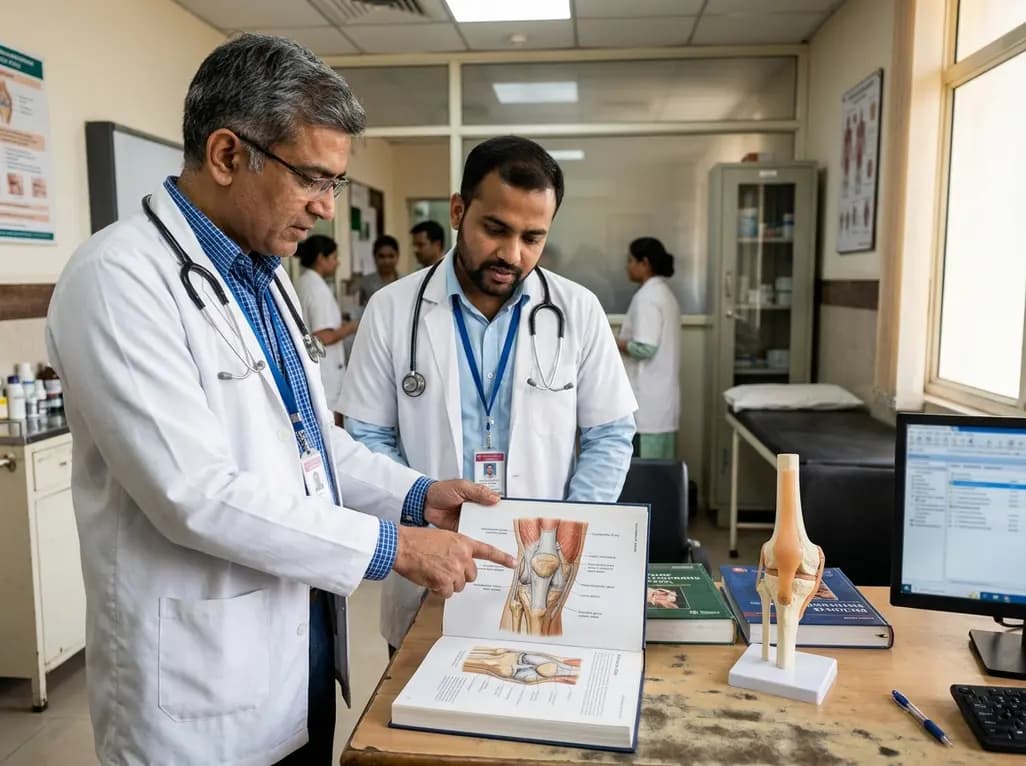
A narrative review investigates whether the articularis genus muscle functions as an independent anatomical entity or blends with the vastus intermedius. We evaluate its morphology, role in retracting the suprapatellar bursa, and direct clinical significance in anterior knee pain and arthroplasty.
Today

A Bayesian multilevel meta-analysis reveals that aerobic training combined with moderate carbohydrate restriction modestly lowers HbA1c in type 2 diabetes. However, sparse data and very low certainty leave incremental benefits over exercise or diet alone unproven, highlighting the need for individualized care.
Today
