.webp&w=384&q=75)

Loading, please wait...
Loading, please wait...

Integrating quality improvement in residency curricula is an indispensable pillar of modern medical education. Post-graduate trainees must develop robust competencies to direct system-level changes, minimize medical errors, and deliver high-value clinical care. However, healthcare institutions frequently struggle to implement standardized training metrics across diverse residency specialties. A nationwide survey of family medicine program directors evaluates current pedagogical practices, project logistics, and factors that drive graduate mastery. By analyzing institutional structures, medical educators can better align educational goals with frontline clinical delivery.
Contemporary graduate medical education increasingly relies on structured system-based practice milestones. Consequently, quality improvement in residency has transitioned from an elective exercise into a mandatory competency for emerging clinicians. The 2025 Council of Academic Family Medicine Educational Research Alliance survey gathered key data from 321 residency programs across the United States. Therefore, the findings deliver an expansive perspective on current training paradigms. While most institutions recognize the necessity of quality improvement, instructional methods vary widely across individual academic centers.
Specifically, approximately 38.8% of programs utilize curricula developed entirely in-house. In contrast, 46.8% of departments adopt hybrid curricula that integrate external educational modules with local clinical initiatives. Furthermore, only a small fraction of residency programs rely solely on standardized external training tools. This divergence demonstrates that academic programs prefer adaptable curricula that address specific community and institutional priorities. However, lack of uniform national benchmarks complicates the objective assessment of educational outcomes across different institutions.
Effective faculty guidance serves as a critical foundation for productive resident research. According to recent survey data, core faculty members oversee quality improvement projects in 54.2% of programs. In addition, specialized clinical quality directors or designated quality officers supervise the remaining resident cohorts. When experienced clinicians actively guide trainees, residents gain deeper insights into workflow design, patient safety initiatives, and systems biology. Consequently, direct mentorship transforms complex theoretical didactic sessions into actionable quality initiatives.
Moreover, team structure plays a decisive role in the ultimate success of residency projects. The national survey reveals that 45.2% of programs organize their trainees into collaborative resident teams. Working in interdisciplinary teams mirrors authentic healthcare systems where doctors, nurses, and administrators solve operational bottlenecks together. Furthermore, group collaboration alleviates individual resident workload during demanding clinical rotations. Trainees share data collection tasks, coordinate patient safety audits, and distribute presentation responsibilities. Thus, team-based initiatives foster essential leadership, communication, and peer accountability skills that clinicians utilize throughout their professional careers.
Health systems collect massive volumes of clinical metrics, yet resident access to electronic medical record registries remains fraught with obstacles. Notably, the study revealed that 44.6% of family medicine residency programs report limited data access for their residents. Meanwhile, only 27.6% of academic centers grant full, transparent registry access to trainees. When administrative firewalls or cumbersome analytical protocols restrict data extraction, resident engagement rapidly declines. Residents lose significant time navigating bureaucratic red tape rather than interpreting clinical patterns.
Therefore, academic health centers must actively streamline data governance policies for post-graduate learners. Providing timely access to electronic health records enables residents to monitor disease metrics, clinical audits, and preventive screening frequencies directly. Additionally, institutional analysts can assist trainees by generating user-friendly dashboards for real-time patient feedback. When healthcare systems eliminate data access barriers, residents complete iterative Plan-Do-Study-Act cycles far more efficiently. Consequently, eliminating information silos directly elevates both educational satisfaction and the statistical accuracy of resident quality initiatives.
Assessing true educational mastery represents an ongoing challenge for academic program directors. In the national survey, 63.5% of program directors classified their graduating residents as possessing intermediate quality improvement proficiency. Interestingly, only a select minority achieved advanced mastery upon completion of their residency training. Statistical analyses revealed that program design directly predicts these clinical outcomes. Specifically, residencies adopting hybrid curricula produced significantly higher graduate proficiency compared to those relying exclusively on home-grown teaching modules.
Furthermore, several institutional factors directly correlated with advanced learner competence. Programs that removed digital data bottlenecks observed greater trainee independence and analytical skill. Similarly, longitudinal continuity of projects across successive resident classes significantly enhanced educational outcomes. When incoming trainees build upon prior interventions rather than starting isolated projects from scratch, clinical impact accelerates. As a result, residents witness sustained organizational change, which solidifies their confidence to lead quality initiatives in future independent practices.
Quality improvement efforts must eventually yield measurable enhancements in patient care to justify institutional investment. Academic programs reporting the highest levels of graduate proficiency consistently demonstrated robust dissemination and clinical implementation of resident projects. When departments actively translate project conclusions into standard clinic workflows, hospital units achieve demonstrable reductions in hospital readmissions and medication discrepancies. Moreover, disseminating results through peer-reviewed publications and national conferences validates resident contributions within the wider scientific community.
Similarly, healthcare institutions in developing settings can adapt these structural insights to strengthen quality training. Aligning residency clinical audits with national accreditation mandates accelerates systemic healthcare modernization. When clinical educators link trainee projects directly to hospital safety objectives, academic institutions eliminate wasteful administrative exercises. Therefore, embedding durable, data-driven improvement methodologies into postgraduate training equips future physicians to champion value-based care and patient safety across all clinical settings.
Hybrid curricula combine standardized national learning modules with customized, clinic-specific experiential projects. Consequently, residents receive structured foundational instruction while applying methodology directly to local clinical challenges. This balanced educational strategy ensures rigorous theoretical understanding and practical problem-solving capability, which significantly elevates graduate proficiency compared to isolated didactic programs.
Timely electronic medical record data access allows residents to measure baseline performance, identify clinical care gaps, and monitor iterative interventions accurately. When data access is restricted, projects stall due to administrative delays. Seamless digital access empowers trainees to run rigorous Plan-Do-Study-Act cycles and observe real-time impacts on patient outcomes.
Longitudinal project continuity allows incoming residents to expand upon established interventions rather than initiating unverified single-year projects. This continuous framework supports multiple testing cycles, fosters sustainable institutional change, and enhances patient safety outcomes. Furthermore, it teaches incoming trainees how to sustain long-term operational quality in healthcare systems.
Disclaimer: This content is for informational and educational purposes only... Refer to the latest local and national guidelines for clinical practice.
References
1. Harriett LE et al. Quality Improvement in Residency: Training, Projects, and Outcomes. Ann Fam Med. 2026 Sep 21. doi: 10.1370/afm.250717. PMID: 42767956.
2. Massagli TL, Zumsteg JM, Osorio MB. Quality Improvement Education in Residency Training: A Review. Am J Phys Med Rehabil. 2018 Sep;97(9):673-678. doi: 10.1097/PHM.0000000000000947. PMID: 29642078.
3. National Medical Commission. Competency Based Medical Education Curriculum for Postgraduate Training. New Delhi: NMC; 2024.

Read summarized clinical updates, watch expert medical content, and earn CME certifications right from your smartphone.
Open your smartphone camera to scan and install.





Quality improvement in residency shapes physician capability in value-based healthcare. Discover recent survey insights on curricula, faculty oversight, and data access.
Today
A study verifies the quantitative risk assessment model using EC1.6 values from LLNA: BrdU-ELISA to predict skin sensitization from medical devices. Comparing FreeStyle Libre and Libre 2, researchers confirmed how reducing isobornyl acrylate below acceptable levels prevents allergic contact dermatitis.
Today

A recent longitudinal study evaluated the link between prenatal loss of control eating and cardiovascular health using Life's Essential 8 frameworks. While direct associations across pregnancy were non-significant, the high prevalence of dysregulated eating highlights critical implications for obstetric practice.
Today
Explore modern perioperative management protocols for clinical xenotransplantation. Learn how costimulation blockade, anti-inflammatory perfusion, and coagulopathy rescue overcome interspecies hurdles.
Today
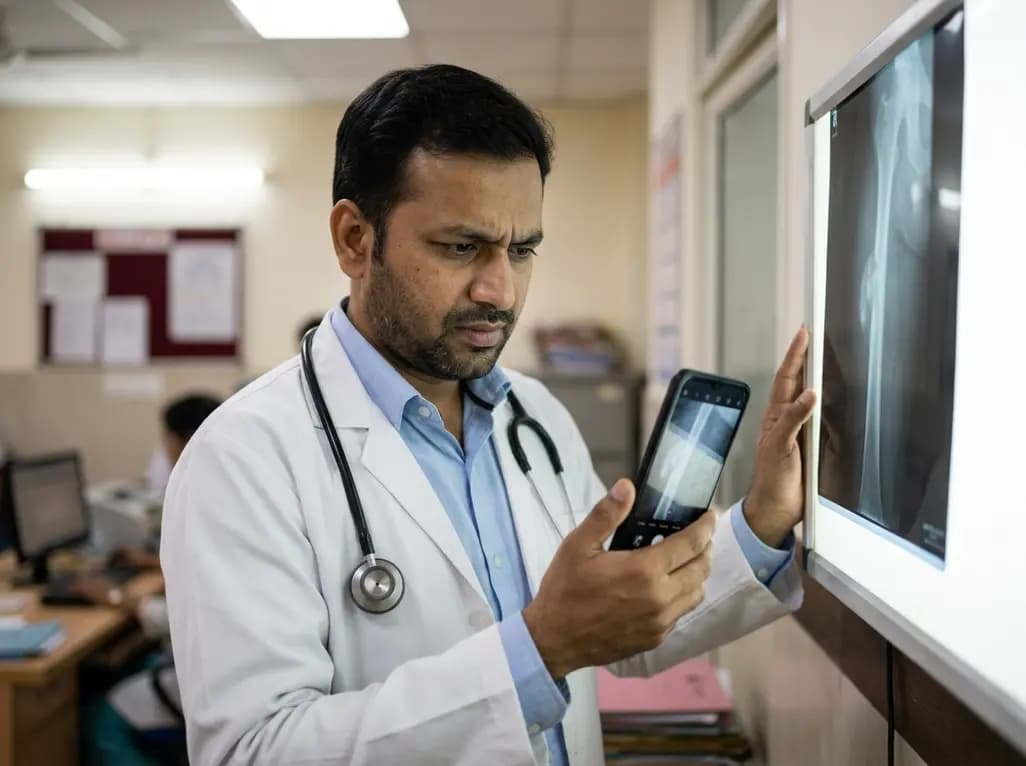
A retrospective study evaluating a locally deployed vision language model (Qwen3-VL) reveals that smartphone-captured radiographs and retrieval-augmented generation can paradoxically reduce diagnostic accuracy in bone tumor referrals due to optical noise and textual hallucinations.
Today
A real-world quasi-experimental study reveals that web-based apps fostering healthy habit formation significantly boost physical activity and dietary quality in adults. Discover key clinical insights on digital adherence, dose-response effects, and patient-specific modifiers in preventive medicine.
Today
