.webp&w=384&q=75)

Loading, please wait...
Loading, please wait...
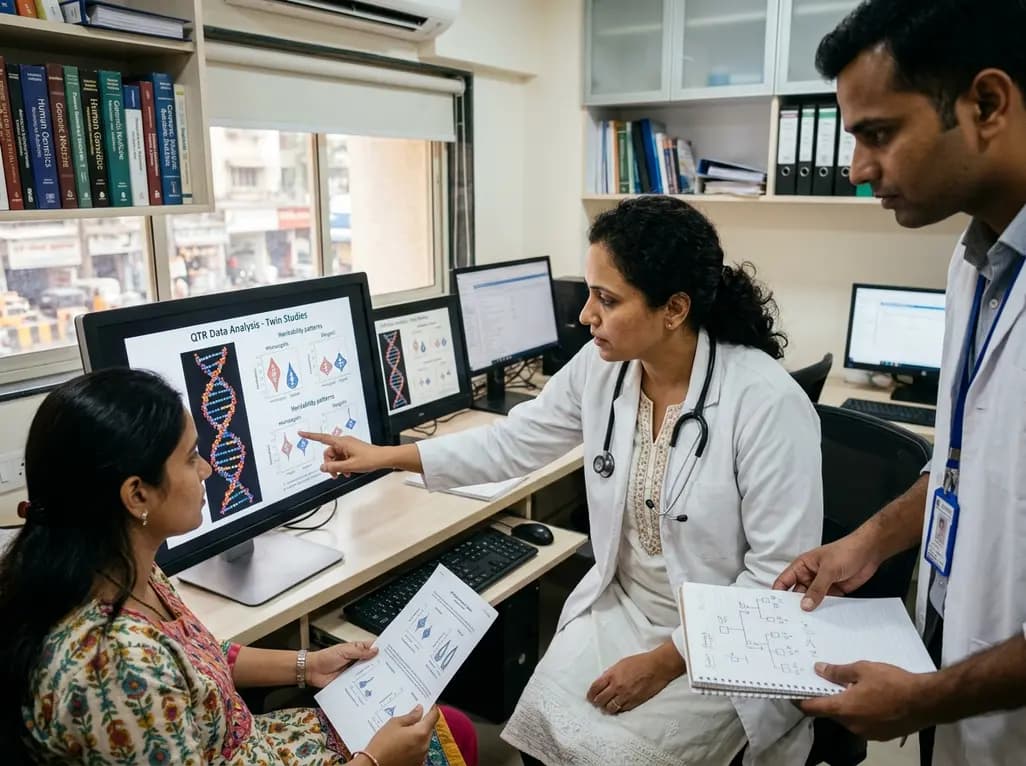
The establishment of the Qatar Twin Registry represents a major advancement in global genomic research and epidemiological modeling. Historically, populations of Arab ancestry have remained significantly underrepresented in international twin cohorts and genetic databases. Consequently, existing heritability estimates often lack precision when applied to Middle Eastern populations. To bridge this critical knowledge gap, Qatar University collaborated with the Qatar Precision Health Institute to launch the Qatar Twin Registry. This pioneer initiative serves as the first twin registry in the Arab world and the second across the Middle East and North Africa region. By establishing a prospective and retrospective cohort, researchers can now systematically evaluate genetic and environmental contributions to complex human traits. Furthermore, this cohort provides a unique platform to investigate population-specific genomic architecture, expanding global understanding of human health. Through biobanking and longitudinal data collection, clinicians gain unprecedented opportunities to unravel disease mechanisms affecting Arab communities.
Global genetic research has long suffered from ethnic bias, with most genome-wide association studies focusing on European populations. However, Arab populations possess unique genetic features shaped by historical demography, geographical isolation, and high consanguinity. Therefore, applying diagnostic algorithms developed in Western cohorts to Arab individuals can lead to inaccurate risk stratification. The launch of national twin cohorts specifically addresses these disparities by documenting regional genetic variation within a controlled framework. Twin models isolate genetic inheritance from shared environmental exposures, allowing investigators to quantify true heritability across diverse clinical traits. Consequently, evaluating monozygotic and dizygotic twin pairs within this population yields indispensable baseline data for regional healthcare planning. Additionally, these efforts contribute valuable missing data to international consortia, ensuring that global precision medicine initiatives become genuinely inclusive and broadly applicable across diverse populations.
The operational infrastructure of the registry relies heavily on integration with Qatar's national biobank and whole-genome sequencing facilities. Researchers gather rich phenotypic, clinical, developmental, and psychosocial data through clinic assessments and structured home visits. Concurrently, biological samples including blood and tissue specimens are stored under strict biobanking protocols. High-depth whole-genome sequencing is performed on participating twin pairs to identify single nucleotide variants and rare structural alterations. Furthermore, longitudinal tracking allows investigators to observe how clinical traits evolve in response to environmental exposures over time. Consequently, combining high-resolution genomic data with deep phenotypic profiling creates a powerful engine for discovery. This integrated strategy enables researchers to distinguish epigenetic modifications from inherited genetic sequence variations. Ultimately, this comprehensive methodology establishes a gold-standard model for future registry development in emerging healthcare systems worldwide.
Consanguinity is a prominent demographic feature in many Arab societies, significantly influencing genomic structure through increased homozygosity. While consanguinity presents challenges for conventional genetic analysis, it offers unique advantages for twin research and locus discovery. Specifically, high background autozygosity facilitates the identification of rare recessive mutations and novel disease-causing variants. However, traditional twin study assumptions must be adapted to account for higher baseline genetic similarity among family members. By combining classical twin methodologies with advanced genomic mapping, scientists can accurately model complex gene-environment interactions. Furthermore, this dual approach clarifies how environmental stressors interact with predisposing genetic factors to drive disease onset. As a result, clinicians gain a clearer understanding of how inherited risks manifest within specific cultural environments, paving the way for targeted preventive interventions.
The clinical benefits of population-specific twin research extend directly into daily medical practice and disease prevention. Complex non-communicable conditions, including type 2 diabetes, cardiovascular disease, and metabolic disorders, exhibit high prevalence rates throughout the Arab world. By dissecting the relative contributions of genetic predisposition and environmental triggers, the registry helps identify novel biomarkers for early disease detection. Moreover, pharmacogenomic insights derived from twin pairs can inform personalized drug dosing and reduce adverse drug reactions among Arab patients. Understanding heritability patterns also enhances genetic counseling for families affected by hereditary conditions, allowing clinicians to deliver precise risk predictions. In addition, findings from this cohort will guide public health policies by pinpointing modifiable environmental factors that reduce overall disease burden. Ultimately, integrating twin-derived evidence into clinical workflows enhances diagnostic accuracy and optimizes therapeutic selection.
Looking toward the future, the Qatar Twin Registry sets a transformative precedent for regional scientific collaboration and translational medicine. By creating a secure framework for data sharing, the registry fosters interdisciplinary partnerships between clinicians, geneticists, epidemiologists, and bioinformaticians worldwide. Furthermore, longitudinal follow-up of registered twin pairs will yield invaluable insights into age-related disease progression and healthy aging phenotypes. Educational institutions can also leverage this platform to train the next generation of precision medicine specialists in the region. Additionally, cross-registry comparisons with established international twin databases will reveal universal biological mechanisms versus population-specific risk factors. Consequently, this initiative elevates regional research capacity while directly contributing to global biomedical innovation. As data collection expands, the registry will remain a pivotal asset for transforming genomic discoveries into actionable clinical therapies and preventive health strategies.
The Qatar Twin Registry provides population-specific genetic and environmental data for underrepresented Arab communities. By comparing monozygotic and dizygotic twin pairs using high-depth whole-genome sequencing, researchers can accurately differentiate inherited genetic heritability from shared lifestyle factors. Consequently, this enables medical clinicians to develop tailored risk assessment tools, precise diagnostic markers, and targeted therapeutic interventions that accurately reflect the unique genomic architecture and health profiles of Arab patients.
High background consanguinity increases genetic homozygosity, which often complicates standard genome-wide association studies. However, twin cohorts established within consanguineous populations offer an exceptional research framework to dissect complex medical traits. By combining classical twin methodology with advanced genomic sequencing, researchers can successfully isolate rare recessive genetic mutations and clarify complex gene-environment interactions. Ultimately, this approach enhances the discovery of novel disease mechanisms while minimizing confounding environmental noise.
The registry systematically collects comprehensive prospective and retrospective clinical data, including physical development metrics, established diagnoses, psychosocial evaluations, and detailed lifestyle habits. Clinical information is gathered through specialized hospital visits and structured home assessments. Furthermore, biological samples such as blood and saliva are fully integrated into Qatar's national biobank for high-throughput whole-genome sequencing, enabling comprehensive epigenetic and multi-specialty translational research projects.
Disclaimer: This content is for informational and educational purposes only and does not constitute medical advice, diagnosis, or treatment. Refer to the latest local and national guidelines for clinical practice.
References

Read summarized clinical updates, watch expert medical content, and earn CME certifications right from your smartphone.
Open your smartphone camera to scan and install.





The Qatar Twin Registry (QTR) is the Arab world's first national twin registry. By integrating whole-genome sequencing with Qatar's biobank, QTR evaluates heritability, consanguinity, and gene-environment interactions to advance precision medicine for complex diseases in Middle Eastern populations.
last month
A multicenter clinical study evaluates fucosylated alpha-1-acid glycoprotein (P-AGP-FR) as an accurate noninvasive fibrosis marker in chronic hepatitis B and C, demonstrating strong correlation with histological staging and superior specificity compared to conventional surrogate indices.
Today
The ClinGen Prenatal Gene Curation Expert Panel evaluated 63 disease relationships across 61 genes, establishing clinical validity for severe fetal phenotypes like hydrops and stillbirth to enhance prenatal genomic interpretation and clinical care.
Yesterday
A cohort study demonstrates that the weight-adjusted waist index predicts all-cause and cardiovascular mortality more accurately than BMI and conventional adiposity metrics, offering clinicians a practical anthropometric tool for superior cardiometabolic risk stratification.
Today

New research reveals that HOXD13 regulates primary cilia signalling and genomic stability in distal synovial fibroblasts, uncovering why conditions like rheumatoid arthritis target specific joints.
Today
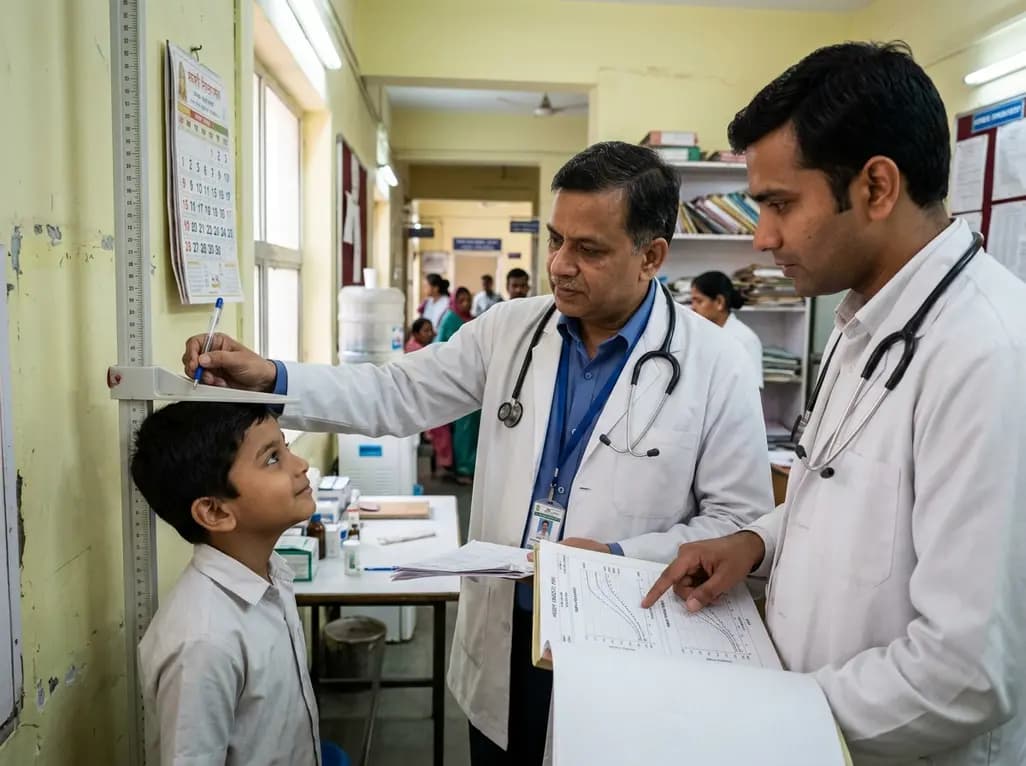
A real-world observational study evaluates pediatric isolated growth hormone deficiency patients transitioning to once-weekly somatrogon, showing sustained height velocity, early IGF-1 shifts, and stabilized BMI.
Today
