.webp&w=384&q=75)

Loading, please wait...
Loading, please wait...
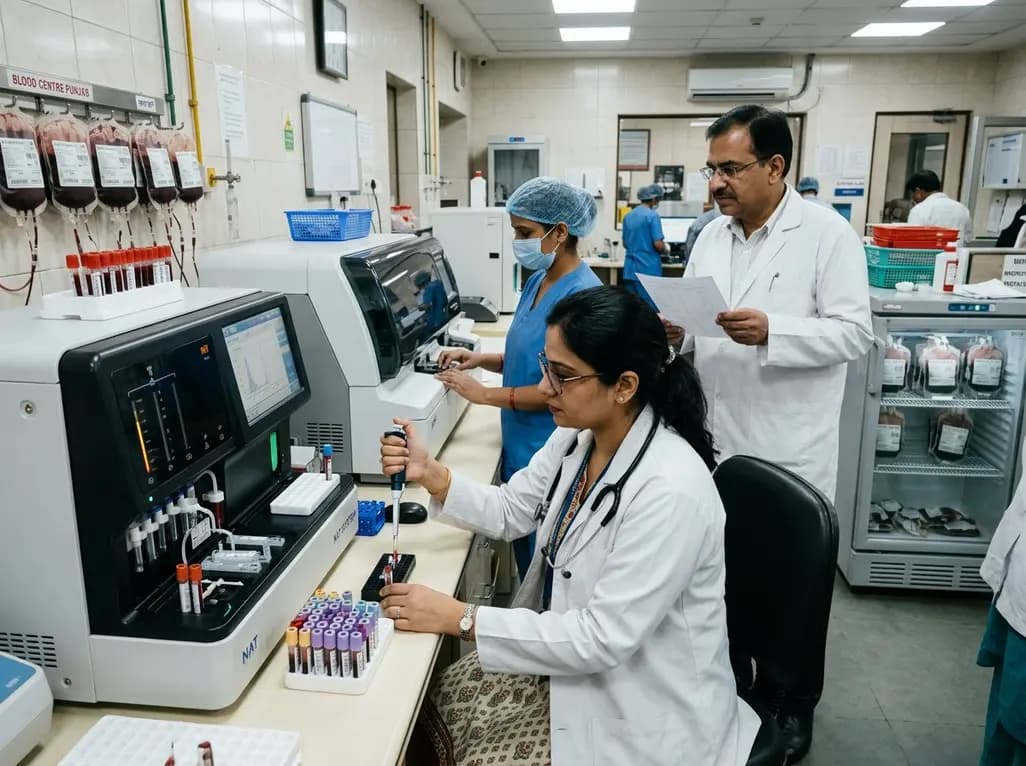
Modern transfusion medicine requires stringent analytical standards to safeguard recipients from transfusion-transmitted infections. To establish a more resilient healthcare infrastructure, the state of Punjab is upgrading its screening protocols by integrating Nucleic Acid Testing and Chemiluminescence Immunoassay. This systemic adoption modernizes blood safety testing across state-run, military, and private facilities. By identifying viral pathogens at minimal concentrations, these advanced methodologies drastically shorten diagnostic window periods. Consequently, clinical teams can significantly reduce the residual risk of transmitting Human Immunodeficiency Virus, Hepatitis B Virus, and Hepatitis C Virus during life-saving transfusions.
Historically, blood transfusion services in many regions relied on rapid diagnostic tests and enzyme-linked immunosorbent assays for donor screening. Although conventional assays identify circulating antibodies or surface antigens, they exhibit lower sensitivity during early-stage infections. Therefore, state health authorities have prioritized the statewide adoption of Chemiluminescence Immunoassay and Nucleic Acid Testing. Chemiluminescence Immunoassay utilizes chemical luminescence to quantify antigens and antibodies with superior analytical specificity. As a result, laboratory technicians achieve reproducible results with substantially lower background interference than traditional colorimetric methods.
Nucleic Acid Testing complements serological platforms by directly amplifying and detecting viral genomic material, including viral RNA and DNA. Because this molecular method targets the nucleic acids of HIV-1, HIV-2, HBV, and HCV, it detects pathogens before the donor's immune system mounts a detectable serological response. Furthermore, blood transfusion councils are establishing centralized operational frameworks to streamline testing throughput. These technological enhancements enable blood centres to maintain uniform diagnostic precision, ensuring that both whole blood and derived components meet rigorous safety criteria prior to clinical release.
The primary vulnerability in transfusion microbiology remains the infectious window period. This critical interval represents the phase between initial viral exposure and the biological emergence of measurable serological markers. During this silent window, an asymptomatic donor may harbor infectious virions while testing negative on conventional antibody assays. Consequently, undetected units pose severe transmission hazards to vulnerable recipients, including neonatal patients, surgical candidates, and individuals requiring repeated transfusions for hemoglobinopathies.
Advanced molecular screening effectively bridges this diagnostic gap. Specifically, individual-donor or mini-pool Nucleic Acid Testing reduces the diagnostic window of HIV to approximately five days. Similarly, it shortens the window period for Hepatitis C to mere days and significantly diminishes the detection latency for Hepatitis B. In addition, molecular testing identifies occult Hepatitis B infections where surface antigens remain undetectable despite active viral replication. Thus, integrating molecular diagnostics with high-throughput chemiluminescence immunoassay screening delivers multi-layered protection that systematically eliminates high-risk units from the active transfusion inventory.
Technological acquisition alone cannot guarantee transfusion safety without robust process standardization and regulatory oversight. To address this necessity, health authorities have released comprehensive guidelines governing blood collection, component preparation, cross-matching, and uniform bag labelling. Standardized barcoding and automated digital tracking maintain end-to-end traceability from donor venipuncture to final bedside administration. Consequently, clinical teams can eliminate clerical errors, misidentified samples, and mismatched cross-match verifications.
Currently, the regional transfusion network encompasses 201 licensed blood centres, comprising 51 government facilities, seven military establishments, and 143 private or trust-operated centres. Moreover, specialized apheresis infrastructure is operating in 17 major blood centres across 13 administrative districts, with phased expansions underway for the remaining regions. Apheresis technology enables targeted collection of specific blood components, such as single-donor platelets, while minimizing recipient exposure to multiple donor antigens. Standard operating procedures across these licensed centres ensure consistent quality assurance, strict cold-chain maintenance, and rigorous hemovigilance reporting across the entire healthcare ecosystem.
Safe blood transfusion services rely fundamentally on an altruistic, non-remunerated donor base. Epidemiological data consistently demonstrate that voluntary repeat donors exhibit substantially lower rates of transfusion-transmitted infections compared to replacement donors. Notably, Punjab collected 544,167 units of blood during the 2025–26 cycle. Furthermore, between April and July 2026 alone, mobile collection teams obtained 184,194 units across 2,065 voluntary blood donation camps, achieving an exceptional 96.04% voluntary donation rate.
To sustain this vital supply, the health department actively felicitates non-governmental organizations that organize community collection drives. Additionally, health authorities are establishing comprehensive, city-wise digital donor directories. These digital registries coordinate emergency callouts efficiently, preventing donor fatigue and reducing logistical delays during acute trauma or surgical emergencies. Consequently, clinicians gain prompt access to compatible, screened blood units during critical resuscitations, ensuring patient stability without compromising microbial screening vigilance.
The institutional evolution of transfusion safety closely aligns with advances in complex surgical procedures and solid organ transplantation. Advanced tertiary facilities, including the Punjab Institute of Liver and Biliary Sciences, require reliable, highly screened blood components to support major operative interventions. PILBS recently completed three successful liver transplantations within a fifteen-day span in the public sector at subsidized costs and is preparing to launch kidney transplantation services. These intricate procedures demand substantial volumes of pathogen-free packed red blood cells, fresh frozen plasma, and platelets.
Concurrently, public health campaigns are encouraging voluntary blood donors to register as organ donors. Proactive organ pledging allows critical organs, such as kidneys, liver, and corneas, to save lives in cases of brain death. Meanwhile, healthcare agencies are addressing underlying nutritional vulnerabilities by implementing dietary advisories alongside academic agricultural institutions. Because high rates of nutritional anemia persist among young women and prospective mothers, targeted educational initiatives and dietary modifications aim to reduce avoidable transfusion dependency, optimizing community hematological health over the long term.
Q1: What are the primary clinical advantages of Nucleic Acid Testing over conventional serological screening?
Nucleic Acid Testing directly amplifies viral genetic material rather than relying on host antibody or antigen production. Consequently, it detects viral pathogens such as HIV, HBV, and HCV substantially earlier during the initial infection phase. This molecular capability dramatically shortens the diagnostic window period, identifying occult or low-viremia infections that standard serological tests frequently miss.
Q2: How does Chemiluminescence Immunoassay improve blood safety compared to standard ELISA?
Chemiluminescence Immunoassay utilizes chemiluminescent chemical labels that emit high-intensity light signals during antigen-antibody reactions. This technique offers superior analytical sensitivity, a wider dynamic detection range, and enhanced specificity compared to traditional colorimetric ELISA methods. Therefore, automated CLIA platforms reduce indeterminate test results, improve laboratory throughput, and minimize false-negative donor screenings.
Q3: Why are digital voluntary donor directories vital for regional blood transfusion networks?
Digital voluntary donor registries centralize real-time donor availability and geographical distribution data across administrative districts. By organizing verified, non-remunerated voluntary donors digitally, blood transfusion services can respond rapidly to surgical emergencies and rare blood group shortages. Furthermore, digital tracking prevents frequent repeat phlebotomies in regular donors, ensuring ethical donor management and consistent supply stability.
Disclaimer: This content is for informational and educational purposes only. It does not constitute medical advice or replace professional judgment. Refer to the latest local and national guidelines for clinical practice.
References

Read summarized clinical updates, watch expert medical content, and earn CME certifications right from your smartphone.
Open your smartphone camera to scan and install.





Punjab has initiated a major transition toward advanced blood safety testing by integrating Nucleic Acid Testing and Chemiluminescence Immunoassay statewide. This clinical initiative cuts diagnostic window periods for viral infections, standardizes transfusion protocols, and promotes voluntary donor networks.
last month

Chronic eosinophilic pneumonia can present with atypical bronchoalveolar lavage findings and an organizing pneumonia pattern, necessitating surgical lung biopsy.
Today

Discover the crucial distinctions between mesonephric and mesonephric-like proliferations of the female genital tract. Learn the key histomorphologic, immunohistochemical, and molecular differences essential for accurate diagnosis and clinical management.
Today
Kikuchi-Fujimoto disease rarely presents with refractory shock and sinus bradycardia in children. This case report highlights life-threatening hemodynamic instability requiring intensive care, preserved cardiac contractility, and the critical diagnostic role of early excisional lymph node biopsy.
Today
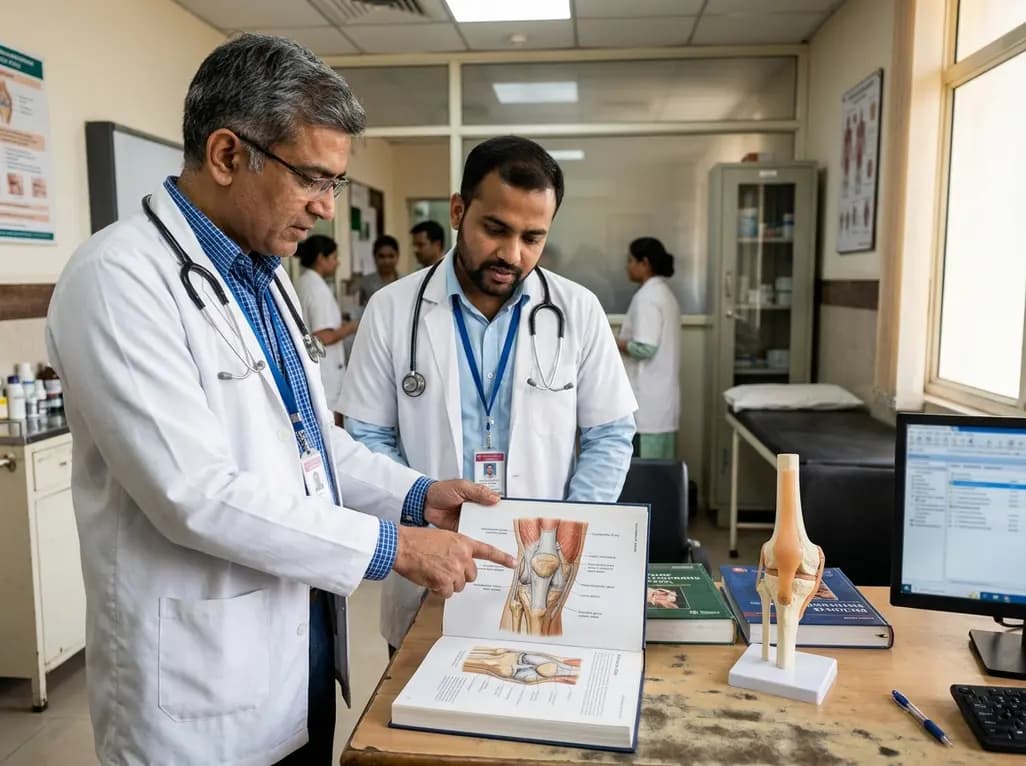
A narrative review investigates whether the articularis genus muscle functions as an independent anatomical entity or blends with the vastus intermedius. We evaluate its morphology, role in retracting the suprapatellar bursa, and direct clinical significance in anterior knee pain and arthroplasty.
Today
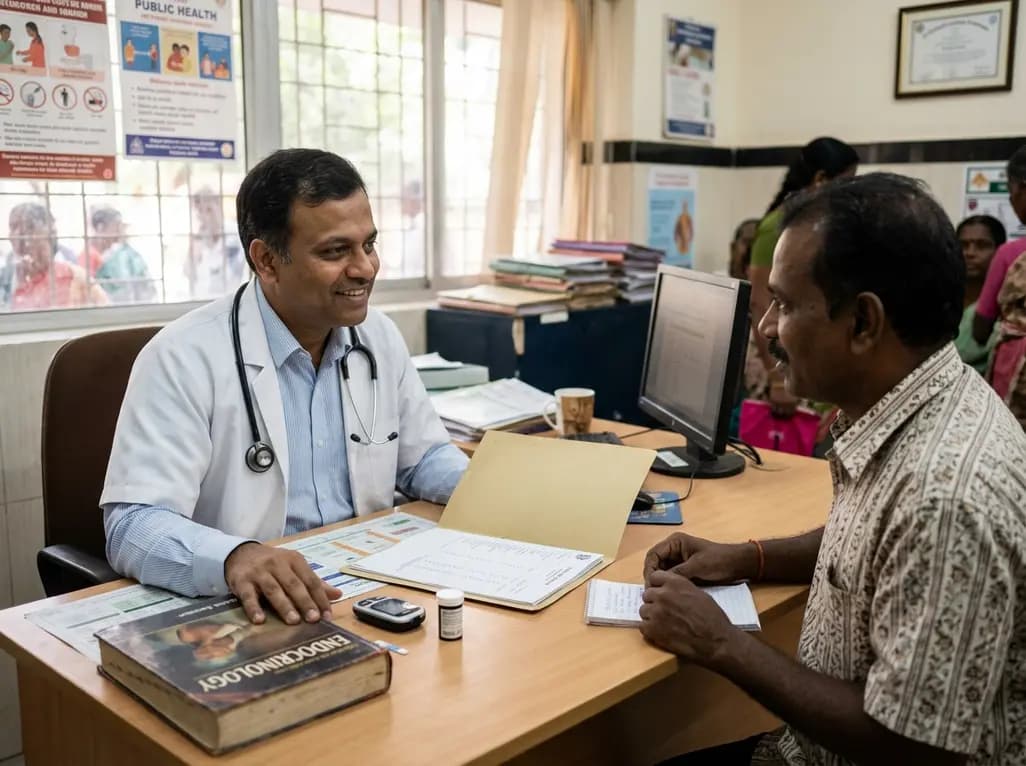
A Bayesian multilevel meta-analysis reveals that aerobic training combined with moderate carbohydrate restriction modestly lowers HbA1c in type 2 diabetes. However, sparse data and very low certainty leave incremental benefits over exercise or diet alone unproven, highlighting the need for individualized care.
Today
