.webp&w=384&q=75)

Loading, please wait...
Loading, please wait...

Managing glioblastoma presents formidable clinical challenges due to extensive intratumoral heterogeneity and treatment resistance. Tumor treating fields provide an established non-invasive modality that improves overall survival in newly diagnosed glioblastoma, isocitrate dehydrogenase wildtype. However, clinicians still lack validated biomarkers to reliably distinguish prospective responders from non-responders. Groundbreaking genomic research indicates that PTEN homozygous deletion serves as an independent negative prognostic indicator in patients receiving this biophysical therapy. Consequently, understanding this molecular marker can substantially refine patient stratification, optimize therapeutic resource allocation, and foster tailored multimodal intervention protocols.
Tumor treating fields employ low-intensity, intermediate-frequency alternating electric fields to disrupt cellular division in rapidly proliferating malignant cells. Specifically, these electric fields exert physical forces on polar molecules, which arrests mitotic spindle assembly during metaphase and telophase. Furthermore, standard neuro-oncology guidelines recommend adding this modality to concurrent temozolomide following surgical resection and radiotherapy. Large randomized clinical trials have conclusively demonstrated meaningful extensions in progression-free and overall survival for patient cohorts using this technology.
Nevertheless, neuro-oncologists frequently encounter divergent therapeutic responses across identical demographic and histopathological profiles. Currently, clinical teams select candidates primarily based on Karnofsky Performance Scale scores, age, and resection extent. Unfortunately, physiological functional metrics alone fail to capture underlying tumor biology. In addition, existing molecular markers such as MGMT promoter methylation predict alkylating agent sensitivity rather than biophysical response. Therefore, investigators continue to pursue genomic and epigenomic biomarkers to guide therapeutic initiation. Identifying precise molecular determinants helps clinicians set realistic prognostic expectations, prevent unnecessary financial and physical burdens, and tailor personalized therapeutic sequences for aggressive intracranial malignancies.
To address the critical deficit in predictive markers, investigators performed comprehensive molecular evaluations on patients with newly diagnosed glioblastoma, IDH wildtype. The study cohort comprised eighty adult patients who underwent maximal safe surgical resection, standard chemoradiotherapy, and adjuvant tumor treating fields. Researchers subsequently performed high-resolution DNA methylation profiling alongside comprehensive targeted DNA and RNA sequencing panels. This stringent reassessment definitively established a core cohort of sixty-four patients displaying characteristic IDH-wildtype molecular hallmarks.
Additionally, researchers examined recurring alterations that appeared in five or more independent cases to ensure statistical power. Investigators identified twenty-four recurrent genomic alterations across the primary cohort. To validate whether observed effects remained specific to electric field treatment, the researchers analyzed two independent treatment-naïve control cohorts encompassing 175 glioblastoma patients. Furthermore, surgical teams obtained matched longitudinal tissue specimens from second resections in eighteen patients after disease recurrence. This longitudinal profiling allowed researchers to determine whether exposure to alternating electric fields induced hypermutation or selected novel genetic drivers. Consequently, this rigorous methodological design provided an unprecedented molecular window into how distinct genetic lesions dictate clinical durability under field therapy.
Statistical analyses revealed striking correlations between specific genomic configurations and patient survival during field exposure. Univariate analyses demonstrated that preserved Karnofsky Performance Scale scores and MGMT promoter methylation conferred significant survival benefits. In contrast, epidermal growth factor receptor amplifications, CDKN2A/B deletions, and PTEN homozygous deletion correlated with significantly poorer survival trajectories. When investigators executed multivariate Cox proportional hazards modeling, homozygous deletion of the PTEN locus persisted as a robust independent risk factor.
Specifically, patients harboring homozygous PTEN deletions achieved a median overall survival of only 368 days, compared to 603 days in patients retaining functional PTEN alleles. This difference represented a formidable hazard ratio of 3.86, demonstrating profound clinical divergence. Interestingly, analysis of the treatment-naïve control cohorts revealed no association between this specific deletion and survival outcomes. The baseline incidence of homozygous deletion remained comparable between groups, occurring in eleven percent of the treated cohort and seven percent of controls. Therefore, the deleterious impact appeared intimately linked to field therapy exposure rather than representing generalized prognostic deterioration. These results clearly establish that complete genomic loss of PTEN dampens the therapeutic benefit anticipated from alternating electric fields.
Phosphatase and tensin homolog functions as a premier tumor suppressor that negatively regulates the downstream PI3K-AKT-mTOR intracellular signaling cascade. When tumors undergo complete biallelic inactivation through homozygous deletion, uninhibited AKT phosphorylation stimulates cell cycle progression, enhances invasive motility, and suppresses intrinsic apoptotic pathways. Furthermore, altered cytoskeletal remodeling directly influences cellular susceptibility to external biophysical forces. Because alternating electric fields disrupt dipole alignment during cytokinesis, dysregulated cytoskeletal architecture may fundamentally undermine mitotic catastrophe.
Moreover, complete PTEN absence exacerbates chromosomal instability and dysregulates DNA damage repair mechanisms. Consequently, malignant astrocytoma cells can rapidly adapt to physical shear stresses and dielectric perturbations generated by continuous electric field exposure. Crucially, the longitudinal analysis of eighteen recurrent tumor specimens revealed no evidence of therapy-induced hypermutation. Similarly, recurrent tissues did not acquire de novo mutations or novel driver rearrangements following prolonged electric field exposure. This finding underscores that treatment resistance does not stem from secondary genetic mutagenesis under field pressure. Instead, primary pre-existing genomic architecture dictates intrinsic therapeutic refractoriness, emphasizing the critical necessity of profiling primary resection specimens prior to initiating prolonged maintenance device protocols.
These findings offer immediate clinical relevance for multidisciplinary neuro-oncology teams managing high-grade glioma cases. Currently, clinicians evaluate tumor treating fields as an all-inclusive adjunctive option for patients maintaining favorable performance status. However, identifying complete PTEN loss should prompt clinicians to engage in nuanced discussions regarding therapeutic expectations and device adherence demands. Because the device requires daily wear exceeding eighteen hours to achieve efficacy, patients and caregivers endure significant lifestyle adjustments and economic commitments.
Furthermore, integrating comprehensive genomic profiling into initial diagnostic workflows enables proactive treatment personalization. When pathology panels identify biallelic PTEN deletion alongside CDKN2A/B loss, neuro-oncologists might consider early enrollment into clinical trials evaluating synthetic lethality approaches. Specifically, combining alternating electric fields with concurrent PI3K or mTOR pathway inhibitors might overcome innate biophysical resistance mechanisms. Meanwhile, patients with intact PTEN expression and methylated MGMT promoters should receive reinforced support to maximize device adherence, given their substantial prospective survival gains. Ultimately, integrating molecular stratification into clinical pathways ensures optimal resource utilization, enhances patient autonomy, and guides rational combinations of pharmacological and device-based interventions in aggressive brain cancers.
Homozygous deletion of PTEN represents an independent negative prognostic indicator in patients receiving alternating electric field therapy for glioblastoma. In clinical trials, patients with this genomic alteration experienced a median overall survival of only 368 days compared to 603 days for non-deleted cases. Thus, identifying this molecular loss helps clinicians stratify prospective survival outcomes and discuss realistic device expectations with patients and families.
Interestingly, the negative prognostic influence of homozygous PTEN deletion appears restricted to patients receiving alternating electric field therapy. In treatment-naïve control cohorts, the deletion occurred at similar frequencies but did not significantly alter survival trajectories. This striking divergence indicates that complete PTEN loss may mediate specific resistance to electric field-induced mitotic disruption rather than simply reflecting an intrinsically aggressive baseline natural tumor history.
Longitudinal genomic analysis of recurrent glioblastoma following field therapy shows that tumors do not acquire hypermutation or novel driver mutations under electric field exposure. Therefore, clinicians do not need to anticipate secondary device-induced genetic resistance patterns. Instead, salvage management should address the original molecular alterations identified at primary resection, focusing on active pathway inhibitors, repeat resection, re-irradiation, or clinical trial options.
Disclaimer: This content is for informational and educational purposes only. It is not intended to be a substitute for professional medical advice, diagnosis, or treatment. Always seek the advice of your physician or another qualified healthcare provider with any questions you may have regarding a medical condition. Do not disregard professional medical advice or delay in seeking it because of something you have read here. Refer to the latest local and national guidelines for clinical practice.
References

Read summarized clinical updates, watch expert medical content, and earn CME certifications right from your smartphone.
Open your smartphone camera to scan and install.





A recent study reveals that PTEN homozygous deletion independently predicts poorer survival in IDH-wildtype glioblastoma patients treated with tumor treating fields, highlighting the urgent need for genomic patient selection.
last month
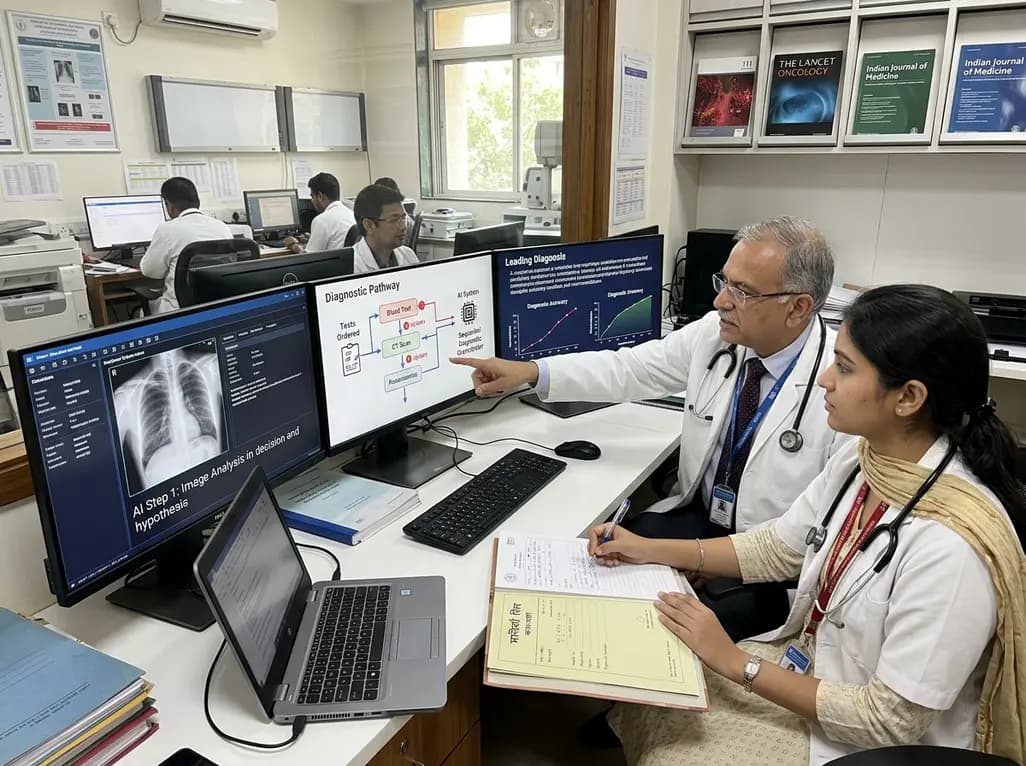
A breakthrough peer-reviewed study demonstrates that a sequential AI diagnosis system can mirror real-world clinical reasoning. By ordering stepwise tests and updating hypotheses dynamically, this multi-agent orchestrator achieved superior diagnostic accuracy while reducing investigative costs.
Today

A prenatal case highlights severe glutaric acidemia type II presenting as bilateral hyperechoic cystic kidneys at 18 weeks. Whole-exome sequencing revealed a novel homozygous ETFDH frameshift variant, demonstrating the power of rapid genetic testing in fetal renal anomalies.
Today

Review how tailored exercise programs benefit frail older patients with heart failure. Explore pathophysiological mechanisms, individualized training prescriptions, and strategies to overcome adherence barriers in clinical practice.
Yesterday

This comparative study evaluates posterior labral tears with and without glenohumeral instability, highlighting distinct demographic patterns, MRI underestimation in stable shoulders, and successful arthroscopic repair outcomes.
Yesterday

A clinical study demonstrates that early intervention with tocilizumab, either as monotherapy or bridged with corticosteroids, achieves significant proptosis reduction and resolves active inflammation in treatment-naive thyroid eye disease.
Yesterday
