.webp&w=384&q=75)

Loading, please wait...
Loading, please wait...

The rapid rise of private equity in healthcare has transformed hospital networks across India. Many clinicians and healthcare administrators worry that institutional capital might compromise patient welfare. However, commercial investment does not automatically alter a medical institution's core mission. Speaking at the ETHealthWorld Healthcare Leaders Summit, Manipal Hospitals Managing Director Dilip Jose emphasized that financial viability and compassionate clinical care can comfortably coexist. Rather than causing direct conflict, financial sustainability supports clinical excellence when leaders align their foundational principles early. Therefore, healthcare leaders must understand how capital models function to protect patient trust. Furthermore, modern medicine requires extensive capital to acquire advanced technology and expand critical services. Consequently, the true challenge lies in selecting investors who genuinely respect clinical realities.
Many healthcare professionals believe that private capital inevitably clashes with patient care. However, experienced hospital executives argue that this perceived friction is largely overstated. Healthcare operates firmly within the social sector because clinicians treat vulnerable human beings during critical moments. Consequently, medical leaders must never treat patients merely as revenue opportunities. Instead, hospital governance should view capital as a tool that enables superior medical outcomes.
When healthcare organisations maintain stable balance sheets, they can reinvest earnings into state-of-the-art facilities. Therefore, financial sustainability directly empowers physicians to deliver advanced therapies and safer surgical procedures. Moreover, robust financial health shields hospitals from sudden economic downturns. It also protects essential clinical programs that serve complex patient populations.
Ultimately, true tension only arises when short-term financial targets override medical ethics. If organizational leadership treats margin expansion as an outcome rather than a primary starting goal, the hospital retains its moral compass. Furthermore, maintaining high ethical standards actually creates strong community goodwill. Patients naturally gravitate toward healthcare providers who consistently prioritize clinical integrity and compassionate communication. Thus, commercial viability and social purpose can mutually reinforce institutional success over the long term.
Hospitals often encounter severe friction when investor expectations diverge from clinical reality. Specifically, healthcare transformation demands patience, rigorous clinical vetting, and long-term planning. Unlike consumer software or quick-service retail, medical institutions cannot scale their operations overnight without compromising safety. Therefore, executive management must evaluate potential partners based on shared philosophy rather than chasing the highest initial valuation.
Furthermore, responsible healthcare leadership requires transparent communication before signing financial contracts. Founders and medical directors must set realistic growth projections from the outset. Hospital leaders must also adopt an honest approach by under-promising and over-delivering on operational benchmarks. Consequently, investors enter the transaction with a clear grasp of hospital gestation periods and capital expenditure needs.
In addition, knowledgeable private investors recognize that clinical excellence cannot yield immediate, windfall quarterly margins. When investors understand medical timelines, they offer constructive operational support instead of exerting destructive cost-cutting pressure. Conversely, misaligned partnerships frequently trigger counterproductive measures, such as reducing nursing ratios or rushing patient consultations. By proactively filtering capital partners, hospital administrators safeguard physician autonomy. Ultimately, mutual alignment ensures that external investment elevates clinical standards rather than eroding fundamental bedside care.
Regardless of corporate ownership structure, every hospital must maintain consistent performance benchmarks. Whether a hospital is family-owned, private equity-backed, or publicly listed, clinical outcomes must remain its decisive metric. Specifically, hospital boards should measure success through infection rates, surgical recovery times, and clinical complication registries. When medical leadership concentrates strictly on these parameters, procedural volume and community trust naturally increase.
Moreover, operational efficiency should focus on streamlining patient pathways rather than cutting essential staff. For example, optimizing operating room turnaround times reduces delays and lowers per-patient expenses. Similarly, modern digital records decrease paperwork burdens for nurses and resident doctors. Consequently, staff members can devote more focused attention to compassionate bedside care.
Furthermore, financial margins should always represent the natural outcome of outstanding clinical delivery. When hospitals deliver dependable care, patient retention increases significantly. In contrast, managing an institution purely through quarterly revenue targets alienates clinicians and damages patient trust. Doctors feel demoralized when administrative pressures dictate diagnostic decisions or treatment timelines. Therefore, healthcare management must establish transparent clinical governance committees that insulate clinical pathways from commercial influence. By placing patient safety first, hospitals achieve enduring operational resilience.
Expanding tertiary medical services beyond major metropolitan centres remains a critical priority for India. Private capital readily provides the funding required to construct modern hospital facilities in smaller cities. However, physical infrastructure alone cannot solve regional healthcare disparities. The principal bottleneck across Tier 2 and Tier 3 regions is assembling and retaining skilled healthcare talent.
Doctors, specialized surgical teams, and experienced critical care nurses frequently prefer living in larger urban hubs. These professionals seek advanced educational facilities for their children, established peer networks, and continuous academic opportunities. Consequently, hospital networks struggle to staff specialized intensive care units and super-specialty departments in non-metro locations. Therefore, strategic investment must direct resources toward human capital development alongside brick-and-mortar infrastructure.
To resolve this imbalance, hospital networks must introduce structured rural incentives and robust professional development pathways. For instance, creating academic affiliations, research grants, and rotatory clinical fellowships encourages young specialists to relocate. Additionally, competitive compensation packages and clear leadership tracks help build stable clinical teams. Ultimately, physical bed capacity remains ineffective without dedicated bedside practitioners. By prioritizing talent acquisition and physician welfare, expanding healthcare systems can bridge the regional divide effectively.
Establishing robust clinical governance is essential to prevent corporate interests from undermining patient care. Healthcare organizations must construct explicit boundaries between corporate management and clinical decision-making. Specifically, physician-led medical advisory boards should maintain absolute authority over clinical protocols, credentialing, and treatment pathways. This operational firewall guarantees that clinical necessity always supersedes financial considerations.
Furthermore, continuous clinician engagement fosters a collaborative organizational culture. When senior doctors participate in strategic board discussions, they provide indispensable practical perspectives. Clinicians understand patient vulnerability and operational hospital workflows far better than external spreadsheets show. Consequently, their insights prevent unrealistic productivity quotas that cause provider burnout and clinical errors.
Moreover, hospital networks should adopt transparent quality reporting systems that publish clinical outcomes openly. Public accountability reinforces institutional integrity and reassures patients regarding treatment quality. When private capital supports comprehensive quality initiatives, clinical teams gain access to superior diagnostic equipment and robotic surgical platforms. Therefore, institutional investment can accelerate medical innovation while preserving physician empathy. Ultimately, sustainable healthcare governance balances capital efficiency with an uncompromising commitment to human dignity and equitable healing.
Q1: Does private equity investment necessarily compromise patient care in private hospitals?
Private equity investment does not automatically compromise patient care if hospital leadership establishes strict clinical governance. When investors understand the long-term nature of healthcare, capital enables modernization, advanced surgical technologies, and improved infrastructure. However, conflicts arise when financial margins override clinical priorities. By maintaining clinical autonomy and viewing returns as an outcome of quality care, hospitals preserve their fundamental patient-first ethos.
Q2: Why is attracting medical talent to smaller cities a major challenge for expanding hospital networks?
While capital can finance modern hospital buildings in Tier 2 and Tier 3 cities, attracting qualified specialists remains difficult. Doctors and senior nursing staff often prefer metropolitan areas due to superior lifestyle amenities and established peer networks. Consequently, hospital chains must invest in retention strategies, academic opportunities, and competitive compensation. Without addressing workforce distribution and quality of life constraints, physical infrastructure cannot deliver sustainable clinical services.
Q3: How can hospital management maintain a healthy balance between investor returns and clinical ethics?
Hospital management balances investor returns and ethics by aligning expectations prior to finalizing investments. Leaders must choose investors who appreciate realistic healthcare gestation periods rather than chasing the highest valuation. Furthermore, executive teams should establish independent medical boards that safeguard clinical decisions from commercial influence. By focusing on patient outcomes and operational efficiency, hospitals generate sustainable financial returns without sacrificing ethical responsibilities toward vulnerable patients.
Disclaimer: This content is for informational and educational purposes only. It does not constitute medical advice or replace professional judgment. Refer to the latest local and national guidelines for clinical practice.
References

Read summarized clinical updates, watch expert medical content, and earn CME certifications right from your smartphone.
Open your smartphone camera to scan and install.





Institutional investment in hospitals is expanding rapidly across India. However, hospital character and ethics need not erode under private equity ownership if clinical outcomes remain the guiding metric. Discover how strategic alignment and healthcare workforce retention sustain long-term patient welfare.
last month
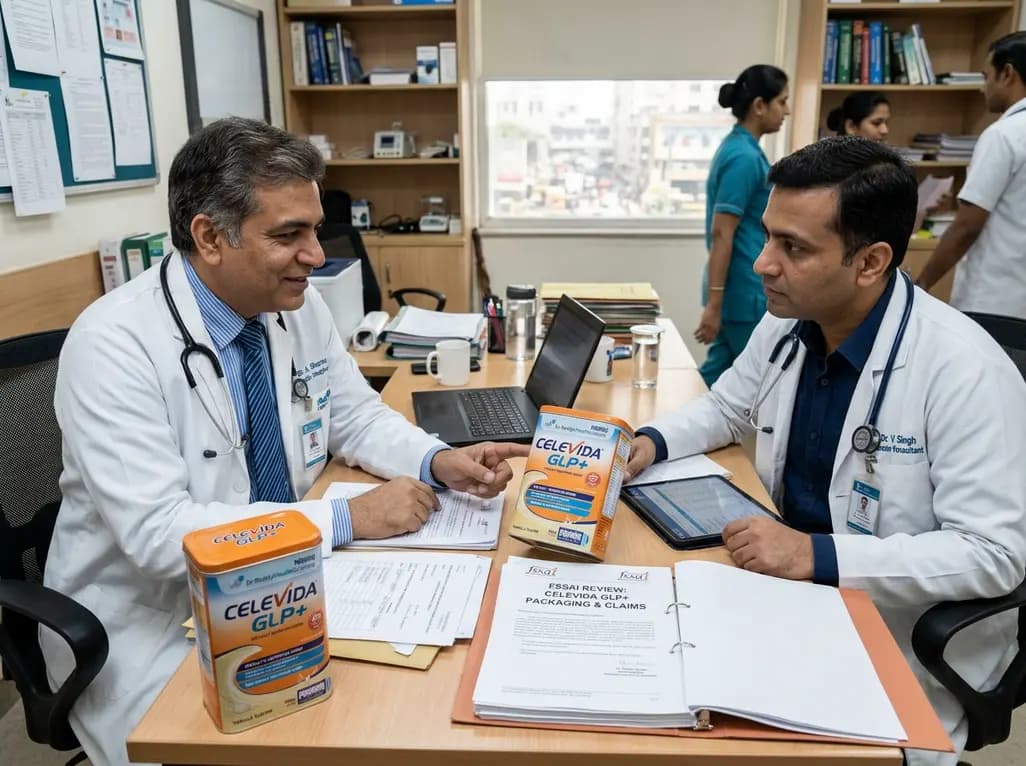
Following regulatory scrutiny from FSSAI regarding promotional representations and lean muscle preservation claims, Dr. Reddy's Laboratories and Nestlé Health Science are currently reviewing the branding and marketing strategy for their joint nutritional supplement Celevida GLP+.
Today
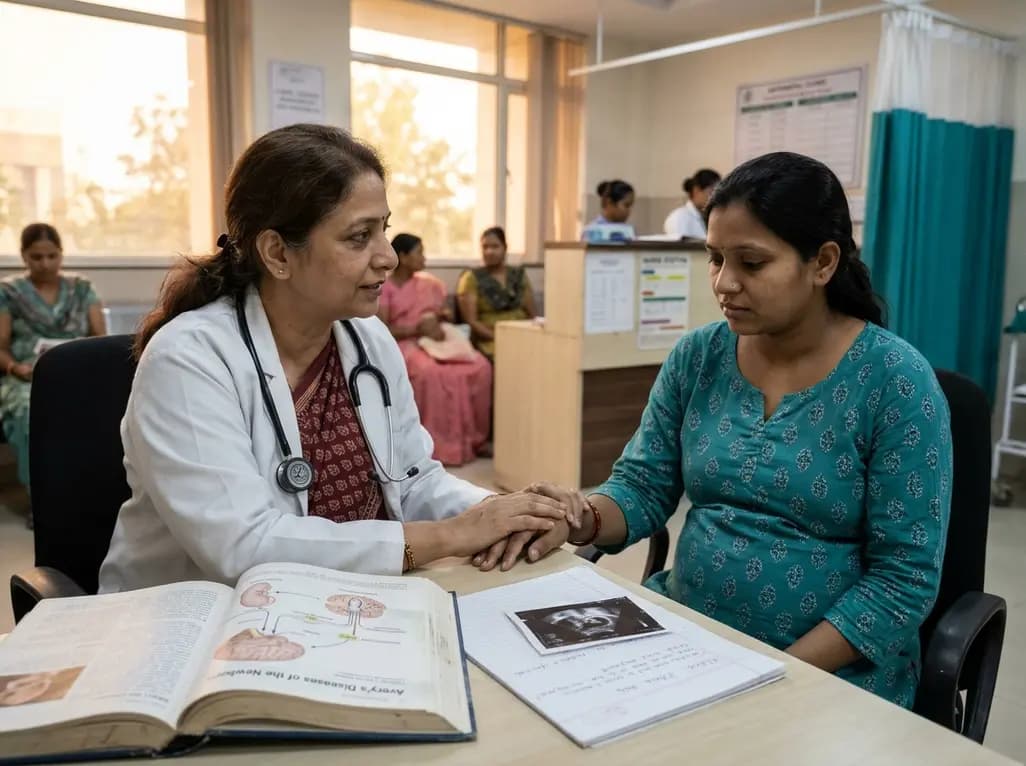
A comprehensive scoping review synthesises evidence linking prenatal maternal mental health to long-term offspring neurodevelopment, evaluating neuroendocrine, inflammatory, and epigenetic pathways while highlighting clinical screening and future research priorities.
Today

The Directorate General of Health Services directs Indian states to halt the hazardous reuse and reprocessing of single-use medical devices. Discover regulatory implications under the Drugs and Cosmetics Act, critical infection risks, legal liabilities, and operational changes required across clinical specialties.
Today

A 25-year multi-institutional cohort reveals high recurrence rates in pediatric giant cell tumor of bone, particularly in patients with open physes and bone marrow edema on preoperative MRI. Early surveillance and careful balance between growth plate preservation and tumor clearance are essential.
Today

India is advancing preventive healthcare by integrating genomics, artificial intelligence, and quantum technologies. With the SANGAM programme sequencing one million Indian genomes, clinicians can unlock personalized therapies, detect cardiometabolic risks early, and curb the burden of diabetes and heart disease.
Today
