

Loading, please wait...
Loading, please wait...

Pre-exposure prophylaxis remains one of the most effective biomedical tools to prevent HIV transmission across vulnerable populations worldwide. However, conventional facility-based dispensing often introduces formidable barriers, including geographical distance, operational inflexibility, and pervasive societal stigma. Consequently, innovative decentralized models such as PrEP home delivery have emerged as vital strategies to expand healthcare access. A recent qualitative investigation from Mexico examined how frontline clinicians and community-based organizations navigate decentralized medication distribution. Providers demonstrated remarkable adaptability by establishing remote distribution channels before formal national policy guidelines existed. By evaluating provider perspectives, healthcare practitioners and public health authorities can identify practical solutions to improve adherence, protect user privacy, and sustain comprehensive HIV prevention frameworks.
Community-based organizations have spearheaded decentralized healthcare delivery across Latin America, often responding directly to structural gaps in conventional public health systems. In Mexico, several community centers proactively established PrEP home delivery workflows to ensure continuous access for individuals confronting substantial logistical hurdles. Interestingly, providers adopted these measures despite the complete absence of explicit operational instructions in official national PrEP guidelines. Clinicians and outreach teams recognized that mandatory in-person consultations frequently discouraged high-risk individuals from maintaining prophylaxis. Therefore, frontline advocates organized decentralized networks to bring protective medication directly to users. Although public sector clinics hesitated because of rigid regulatory requirements, non-governmental groups bridged the gap effectively. In doing so, these community providers demonstrated that grassroots initiatives can quickly adapt to client priorities. They successfully maintained medication access when centralized infrastructure presented significant impediments to timely healthcare engagement.
To execute medication distribution safely, community providers integrated modern digital platforms with flexible transportation networks. For instance, staff members coordinated shipments through commercial courier services and urban ridesharing applications. Most programs required clients to cover nominal delivery fees, which allowed non-profit organizations to preserve their limited operational budgets. In addition, providers recognized that medication distribution alone could not guarantee clinical safety. Consequently, they bundled pharmaceutical delivery with structured telecounseling sessions and validated HIV self-testing kits. Clinicians utilized encrypted mobile messaging and secure video appointments to offer comprehensive adherence counseling. Clients received instructions on baseline testing, proper dosing schedules, and management of minor adverse reactions. Hence, this hybrid model merged physical convenience with rigorous clinical oversight. By combining digital consultations with courier logistics, healthcare providers maintained vital patient-provider relationships without requiring repetitive, burdensome travel to distant healthcare facilities.
Despite the clear advantages of remote delivery, service providers encountered substantial operational hurdles during program execution. First, financial constraints posed continuous difficulties, especially when clients could not afford supplementary courier fees. Additionally, providers expressed serious apprehensions regarding package tracking, transit delays, and accidental medication damage. Regulatory ambiguities also created unease, as national drug distribution laws did not explicitly protect lay providers distributing antiretrovirals offsite. More importantly, client privacy emerged as a paramount ethical concern. In regions where HIV-related stigma persists, receiving medical parcels at home or workplaces poses substantial social risks. Providers worried that unvetted delivery personnel or nosy neighbors might deduce package contents. Therefore, facilities utilized discreet, unmarked packaging to shield client confidentiality. Furthermore, the absence of formal programmatic evaluation limited systematic quality assurance. Addressing these logistical vulnerabilities remains essential before institutionalizing decentralized medication programs within mainstream public health infrastructure.
The Mexican qualitative findings offer crucial lessons for global HIV prevention strategies, including low- and middle-income nations like India. Differentiated service delivery models acknowledge that standardized, clinic-centered approaches fail to reach marginalized key populations. For example, men who have sex with men, transgender persons, and female sex workers often avoid government health centers due to acute fear of social judgment. When programs offer flexible alternatives, retention rates and client satisfaction improve noticeably. Moreover, shifting routine refills away from crowded tertiary centers alleviates overwhelming burdens on public healthcare personnel. Providers in this qualitative study stressed that client autonomy improves when individuals choose their preferred dispensing channel. Nevertheless, decentralized care must not compromise clinical quality. Policymakers must establish standardized protocols for remote laboratory monitoring, adverse event reporting, and verified medication receipt. Differentiated frameworks thrive best when supportive legal guidelines actively reinforce community innovation.
Expanding biomedical prevention requires clinicians to look beyond conventional hospital walls and rethink routine clinical workflows. Physicians caring for individuals at elevated risk of HIV infection must recognize that access barriers frequently derail persistence. When daily travel or rigid appointment times disrupt care, patients discontinue therapy and remain susceptible to transmission. In contrast, remote engagement strategies encourage long-term adherence by removing unnecessary procedural friction. Integrating telemedicine check-ins allows physicians to evaluate renal function, discuss sexual health changes, and assess risk behavior comfortably. Furthermore, incorporating validated rapid self-tests empowers users to monitor their serostatus securely at home. As global health authorities encourage differentiated models, practitioners should advocate for policy changes that legitimize remote distribution. Ultimately, embracing decentralized delivery models helps bridge clinical efficacy and real-world adherence, ensuring that highly effective preventive therapies achieve their full public health impact.
Providers preserve user privacy by utilizing completely discreet, unbranded exterior packaging without medical labels or clinic identifiers. Additionally, programs coordinate drop-offs directly through secure communication channels, allowing clients to specify safe delivery locations or convenient pickup times. Clinicians also conduct all accompanying risk assessments and counseling sessions via encrypted telehealth platforms. These multi-layered confidentiality precautions effectively shield clients from community stigma while maintaining reliable, uninterrupted access to essential HIV prevention medications.
HIV self-testing serves as a foundational safety mechanism in decentralized prevention pathways before initiating or renewing antiretroviral prophylaxis. Delivering approved diagnostic test kits alongside prophylactic medication enables individuals to confirm their negative serostatus reliably in private settings. Furthermore, providers reinforce diagnostic accuracy by supervising testing procedures remotely through real-time video consultations. This integrated testing protocol guarantees patient safety, prevents drug resistance, and ensures appropriate clinical oversight without requiring repetitive visits to health facilities.
Public healthcare programs can successfully scale decentralized distribution by establishing supportive regulatory frameworks, public-private partnerships, and standardized operating guidelines. Incorporating postal logistics and community pharmacies reduces clinic overcrowding while expanding coverage for underserved populations. However, health authorities must allocate sufficient funding for delivery logistics, subsidized diagnostic kits, and secure digital management software. Routine program monitoring and systematic clinical evaluations are equally crucial to maintain treatment efficacy and high retention across varied demographic groups.
Disclaimer: This content is for informational and educational purposes only and does not constitute medical advice, diagnosis, or treatment. It is intended to support, not replace, the relationship between patients and their healthcare providers. Always consult a qualified physician or healthcare professional regarding any medical condition or before making healthcare decisions. The views expressed are those of the authors and do not necessarily reflect the official policy or position of any affiliated organizations. Refer to the latest local and national guidelines for clinical practice.
References:

Read summarized clinical updates, watch expert medical content, and earn CME certifications right from your smartphone.
Open your smartphone camera to scan and install.





A qualitative study in Mexico highlights how community providers operationalized PrEP home delivery using couriers, telecounseling, and HIV self-testing to overcome stigma and clinical barriers. Healthcare systems can adapt these decentralized models to expand HIV prevention access and long-term user retention.
Today

A single-center study evaluates fetal shunt placement in twin gestations with severe lung lesions or bladder outlet obstruction. Findings demonstrate an 85.7% 30-day survival rate in treated fetuses and 100% survival among unaffected co-twins, showing that experienced centers can perform the procedure safely.
Today

A new scoping review and expert consensus establish a concise 16-measure performance bundle for hospital cardiology services. Covering clinical processes, outcomes, patient-reported experiences, and structural factors, this framework advances value-based cardiovascular care under universal health coverage.
Today

A paired cadaveric study compared triple and quintuple percutaneous Achilles tendon lengthening. While quintuple hemisection showed numerically greater elongation, differences were not statistically significant.
Today
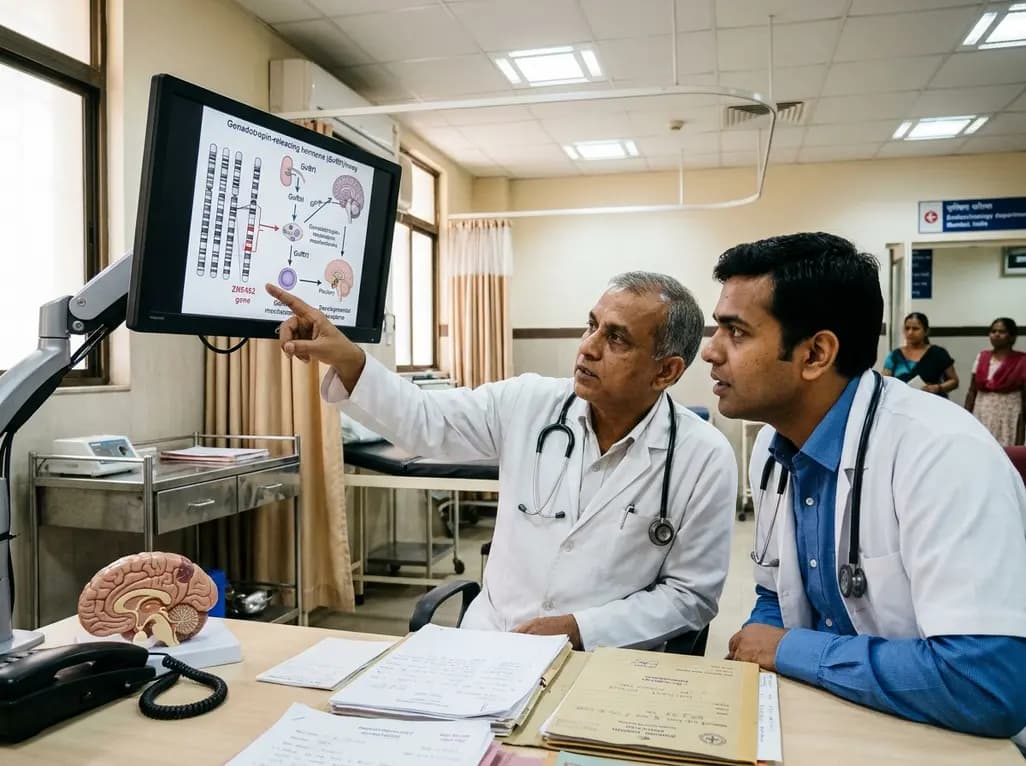
New research links de novo truncating variants in ZNF462 to congenital hypogonadotropic hypogonadism and Kallmann syndrome in Weiss-Kruszka syndrome. These findings reveal critical neurodevelopmental and epigenetic mechanisms governing GnRH neuron deficiency, offering new diagnostic clarity for clinicians.
Today
