.webp&w=384&q=75)

Loading, please wait...
Loading, please wait...

On World Preeclampsia Day, medical experts from AIIMS Delhi raised urgent alarms regarding preeclampsia in pregnancy. This severe hypertensive disorder continues to impact thousands of families in India. Although India has reduced maternal deaths, preeclampsia still contributes significantly to newborn complications.
Indeed, AIIMS specialists estimate that nearly two to four lakh Indian women suffer from preeclampsia every year. Consequently, it ranks as a leading cause of maternal mortality, right after hemorrhage and infection. Globally, this silent disease affects approximately 5% to 8% of all pregnancies. Furthermore, it claims more than 70,000 maternal lives and nearly five lakh infant lives annually. Unfortunately, many families ignore the early symptoms or dismiss them as normal pregnancy stress.
Doctors diagnose the condition when a pregnant woman develops high blood pressure and protein in her urine. Usually, this issue develops silently after the 20th week of gestation. Therefore, regular blood pressure monitoring remains the most critical screening tool. Fortunately, a first-trimester screening can help identify high-risk patients. For instance, women with diabetes, obesity, twin pregnancies, IVF, or chronic hypertension face elevated risks. After identifying these high-risk mothers, clinicians can start low-dose aspirin early in pregnancy. Ultimately, this simple intervention significantly reduces the chances of developing severe preeclampsia.
Ignored symptoms can lead to severe complications, such as seizures, kidney failure, and brain hemorrhage. Therefore, pregnant women must never consider high blood pressure as normal. Specifically, patients should watch for persistent headaches, sudden swelling, and blurred vision. Additionally, breathlessness, severe abdominal pain, and reduced baby movements require immediate medical attention. Community health workers, including ASHAs and ANMs, play a vital role in spreading this awareness. Thus, early education can save lives before severe complications develop.
Q1: What are the main warning signs of preeclampsia?
Key warning signs include a severe headache, facial swelling, blurred vision, breathlessness, abdominal pain, and reduced baby movements.
Q2: How can doctors prevent preeclampsia in high-risk pregnancies?
First-trimester screening helps identify high-risk individuals. Additionally, starting low-dose aspirin therapy early can significantly lower preeclampsia risk.
Q3: Is high blood pressure normal during pregnancy?
No, high blood pressure is never normal during pregnancy. Instead, it is a serious symptom that requires immediate medical evaluation.
Disclaimer: This content is for informational and educational purposes only. It does not constitute medical advice or replace professional judgment. Refer to the latest local and national guidelines for clinical practice.
References

Read summarized clinical updates, watch expert medical content, and earn CME certifications right from your smartphone.
Open your smartphone camera to scan and install.





AIIMS Delhi doctors warn that preeclampsia is a leading cause of maternal and neonatal mortality in India, urging early screening and preventative measures....
4 months ago

Explore why official drug package inserts fail to reflect modern evidence for clozapine prescribing. Learn how legal standards of care, case law, slow titration, and vital adverse event monitoring empower clinicians to prioritize evidence-based medical practice over outdated manufacturer labeling.
Today
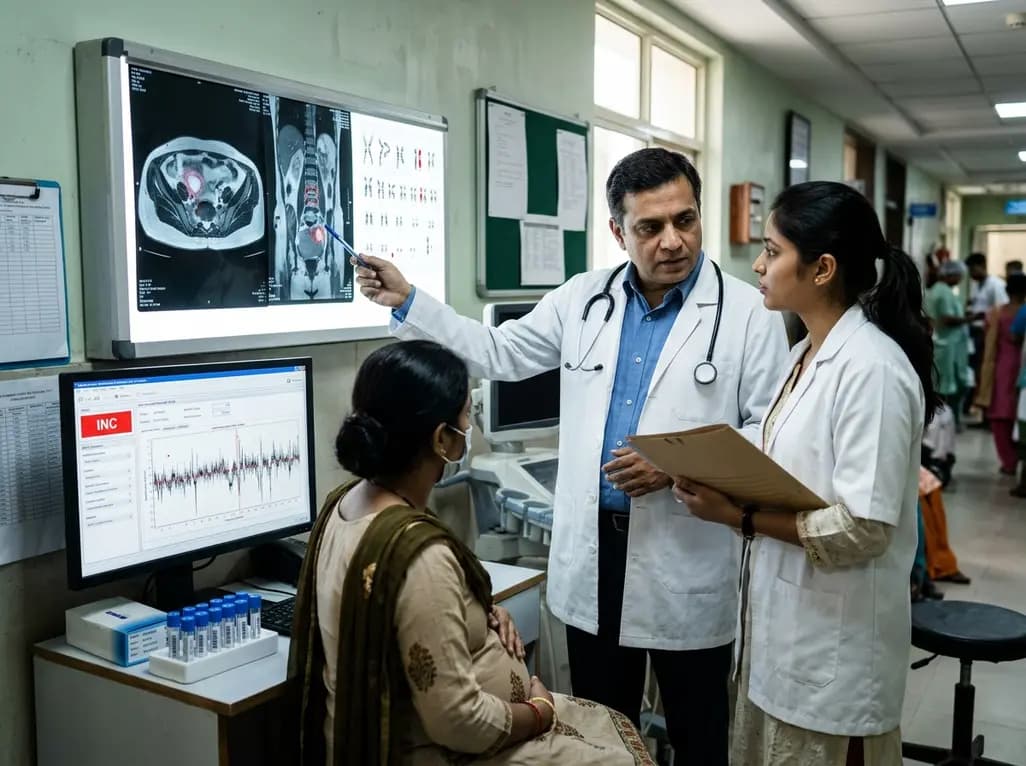
Occult maternal malignancy accounts for 3.82% of persistent unreportable NIPT results with genomic noise. Multiple chromosomal aberrations, notably on chromosome 18, warrant thorough oncological evaluation and whole-body MRI to ensure timely maternal diagnosis while preserving fetal care.
Today
This article reviews the forensic and clinical complexities of acute myocarditis arising on left ventricular hypertrophy in children, highlighting early diagnostic red flags and multidisciplinary postmortem autopsy protocols.
Today
A randomized controlled trial demonstrates that an eight-week dual-task training intervention significantly improves static and dynamic postural control over standard balance exercises in individuals with chronic ankle instability, addressing critical neurocognitive deficits during athletic and daily activities.
Today

A retrospective cohort study of 7,716 ICU patients from the MIMIC-IV database demonstrates that Gradient Boosting Decision Trees significantly outperform traditional SOFA scores in predicting in-hospital mortality among patients with sepsis and diabetes, with SHAP analysis providing clinical interpretability.
Today
