.webp&w=384&q=75)

Loading, please wait...
Loading, please wait...

Endoscopic transsphenoidal surgery has established itself as an essential approach for managing complex suprasellar tumors. However, craniopharyngioma resection remains exceptionally demanding because these lesions adhere intimately to critical neurovascular structures and frequently breach the arachnoid cisterns. Consequently, avoiding a postoperative CSF leak stands as a primary determinant of operative success and patient recovery. A pivotal multicenter study by Palit and colleagues evaluates the real-world incidence of dural breakdown across twenty academic institutions, while simultaneously uncovering a striking divergence between surgeon intuition and clinical data.
The investigators examined clinical records from 416 patients undergoing endoscopic transsphenoidal surgery for craniopharyngioma across twenty major tertiary centers. Overall, an institutional cohort of this magnitude provides rare statistical power for a notoriously heterogeneous skull base pathology. The researchers recorded an overall postoperative CSF leak rate of 13.5%, reflecting 56 affected patients. Because craniopharyngiomas frequently extend into the third ventricle, establishing an watertight barrier presents formidable anatomical hurdles. To capture the historical trajectory of skull base reconstruction, the team stratified cases into two distinct chronological eras: an Early Epoch spanning 2007 through 2015, and a Late Epoch spanning 2016 through 2025. Furthermore, the authors administered a standardized survey to 19 experienced skull base neurosurgeons to benchmark clinical realities against specialist beliefs. This dual methodology allowed the team to systematically compare empirical complications with expert risk estimation, revealing where traditional assumptions align with or stray from documented outcomes.
Univariate statistical evaluations identified specific tumor characteristics that significantly altered defect repair integrity. Specifically, predominantly cystic craniopharyngiomas demonstrated a significantly higher association with postoperative CSF leak compared to solid or mixed lesions (34% versus 21%, p = 0.034). Cystic lesions often expand rapidly, thinning the diaphragma sellae and arachnoid membranes, which compromises tissue planes during debulking. In contrast, several traditional prognostic variables failed to show statistical relevance. For example, elevated body mass index did not correlate with failure (p = 0.587), nor did previous surgical intervention (p = 0.576) or maximum tumor dimension (p = 0.363). Many skull base teams assume that larger lesions inherently increase fistulous complications; however, these multicenter data challenge that presumption. Therefore, clinicians must look beyond mere tumor size when estimating reconstruction vulnerability. Surgical teams should instead maintain heightened vigilance when encountering thin-walled, predominantly cystic suprasellar tumors that disrupt baseline dural borders.
Perhaps the most provocative revelation involved the selective application of intraoperative cerebrospinal fluid diversion. Univariate testing showed a statistically significant link between intraoperative lumbar drain placement and subsequent postoperative CSF leak (p < 0.028). Moreover, multivariable regression confirmed that lumbar drain utilization independently predicted an elevated risk of dural repair failure (odds ratio 1.91, 95% confidence interval 1.06–3.46; p = 0.030). Historically, operators inserted lumbar drains prophylactically to lower intracranial pressure and safeguard fragile dural closures. However, these observational findings suggest that surgeons preferentially placed drains in subjects exhibiting extensive arachnoid tearing or high-flow intraoperative leaks. Alternatively, continuous spinal drainage might promote negative intracranial pressure gradients, potentially displacing multilayered grafts or mucosal flaps before biological adhesion solidifies. Because routine drain placement failed to confer clinical protection, teams must critically re-evaluate whether prophylactic diversion benefits every patient or inadvertently signals heightened reconstructive risk.
Reconstructive strategies underwent profound refinement across the studied timeframes, mirroring the global standardization of vascularized tissue repair. During the Early Epoch, operating teams harvested a vascularized nasoseptal flap in 70.7% of cases, whereas utilization surged to 87.6% during the Late Epoch (p < 0.001). In the Early Epoch, vascularized flap coverage demonstrated a potent, statistically robust protective benefit against repair failure (odds ratio 0.28, 95% confidence interval 0.07–0.92; p = 0.037). Vascularized flaps supplied resilient mucosal barriers that expedited local healing over wide sphenoid openings. Interestingly, in the Late Epoch, flap usage became nearly ubiquitous; consequently, no single reconstructive factor retained independent statistical significance. As rigid multilayering techniques, rigid buttresses, and vascularized pedicles became routine standard-of-care, the overall technical baseline elevated. Nevertheless, despite near-universal vascularized coverage, persistent leaks continue to occur in approximately one-tenth of patients, emphasizing that flap placement alone cannot completely eliminate dural repair failure.
The companion survey of 19 skull base neurosurgeons highlighted a noticeable disconnect between clinician perception and retrospective cohort outcomes. When queried about risk stratification, the surveyed experts identified prior surgical intervention and high-flow intraoperative egress as the primary determinants of surgical repair compromise. Yet, the empirical clinical dataset showed that prior surgery did not significantly increase dural failure rates. Similarly, surgeons reported divergent individual protocols regarding the indications, duration, and volume targets for lumbar drainage. While many practitioners still view cerebrospinal fluid diversion as a reliable safety net, the clinical findings associate drain deployment with higher complication rates. Recognizing this perceptual discrepancy is essential for advancing evidence-based skull base surgery. Surgeons must integrate rigorous multicenter registries into everyday decision-making rather than relying exclusively on personal habit. Ultimately, refining patient selection for lumbar drainage and tailoring multilayer closure to tumor architecture will minimize avoidable postoperative complications.
The overall postoperative leak rate was 13.5% across 416 patients treated at twenty institutions. This frequency demonstrates that despite significant surgical advancements, reconstructing large suprasellar dural defects remains an ongoing challenge during endoscopic endonasal surgery for craniopharyngioma.
Surgeons frequently placed lumbar drains in the most challenging, high-flow defect scenarios, creating selection bias. Additionally, continuous spinal drainage may induce pressure differentials that displace delicate mucosal grafts before biological sealing occurs, thereby paradoxically increasing repair failure.
Surprisingly, neither maximum tumor diameter nor elevated body mass index demonstrated a statistically significant association with repair failure. Instead, predominantly cystic tumor architecture and reconstructive choices showed far greater correlation with dural breakdown than classic patient or dimensional metrics.
Disclaimer: This content is for informational and educational purposes only. It is not intended to substitute for professional medical advice, diagnosis, or treatment. Always seek the advice of your physician or another qualified healthcare provider with any questions you may have regarding a medical condition or treatment. Never disregard professional medical advice or delay in seeking it because of something you have read here. The findings discussed reflect recent research and may not yet be universally integrated into standard clinical protocols. Refer to the latest local and national guidelines for clinical practice.
References
Palit SR et al. Risk factors for postoperative cerebrospinal fluid leak following endoscopic transsphenoidal surgery for craniopharyngioma: a multicenter cohort study with a contemporary surgeon practice survey. J Neurooncol. 2026 May 21. doi: 10.1007/s11060-026-05627-y. PMID: 42165967.
Cong Z, Zhao C, Wang H, et al. Risk factors for cerebrospinal fluid leak after extended endoscopic endonasal surgery for adult patients with craniopharyngiomas: a multivariate analysis of 364 cases. J Neurosurg. 2023;140(3):728-736. doi:10.3171/2023.5.JNS23485.
Zhao J, Wang S, Zhao X, Cui H, Zou C. Risk factors of cerebrospinal fluid leakage after neuroendoscopic transsphenoidal pituitary adenoma resection: a systematic review and meta-analysis. Front Endocrinol (Lausanne). 2024;14:1263308. doi:10.3389/fendo.2023.1263308.

Read summarized clinical updates, watch expert medical content, and earn CME certifications right from your smartphone.
Open your smartphone camera to scan and install.





A multicenter study of 416 patients reveals key risk factors for postoperative CSF leak after endoscopic transsphenoidal surgery for craniopharyngioma. Findings highlight the protective role of nasoseptal flaps, unexpected outcomes with lumbar drains, and a notable perception gap among skull base surgeons.
Today
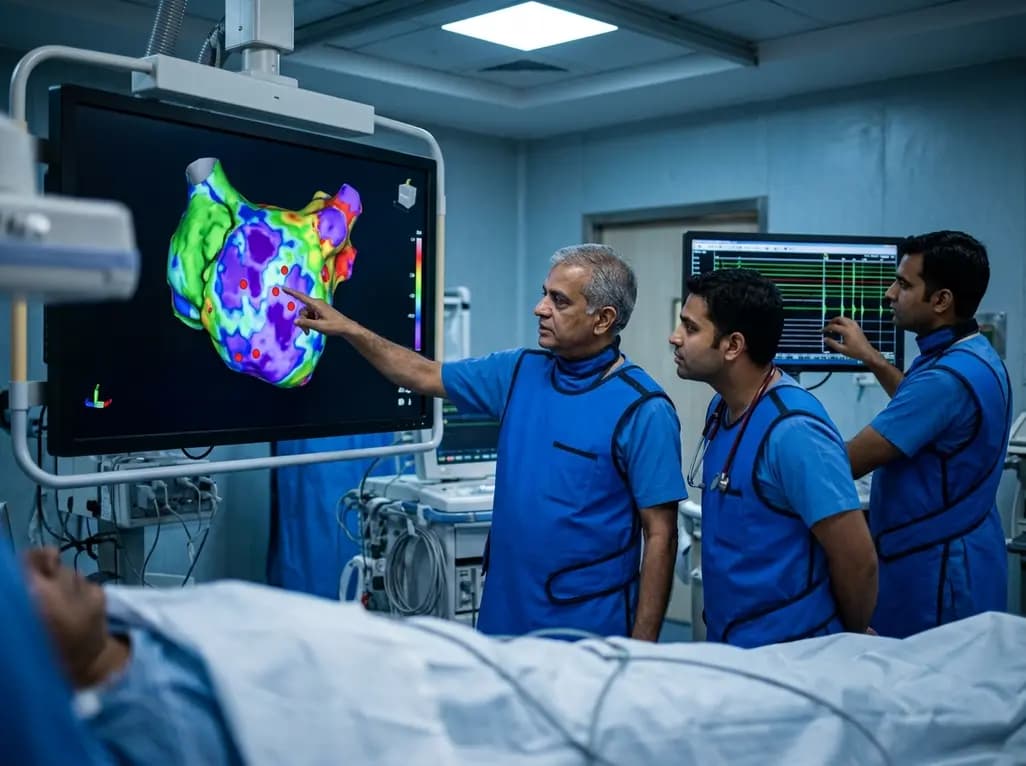
A study of 1,428 AF ablation patients reveals that over 60% of left atrial non-PV triggers arise within low-voltage areas, with anterior and roof triggers colocalizing entirely within fibrotic substrate. Identifying and ablating these sites is critical for long-term arrhythmia freedom.
Today

A comprehensive meta-analysis of over 278,000 women demonstrates that maternal atopic dermatitis significantly increases risks of premature rupture of membranes and low birth weight. Discover essential clinical insights on disease mechanisms, serial antenatal growth monitoring, and safe therapeutic interventions.
Today

A pioneering study highlights the first United States experience using the FARAPOINT focal pulsed-field ablation catheter for refractory ventricular tachycardia. The catheter achieved complete acute non-inducibility across tested patients without procedural complications, marking a milestone in ventricular ablation.
Today

A biomechanical study shows that augmenting thin fascia lata grafts with a reinforced polyester patch doubles ultimate tensile strength and stiffness, matching the performance of thick grafts for superior capsule reconstruction while reducing donor-site morbidity.
Today

A cross-sectional study reveals that elevated METS-IR is independently associated with higher myopia odds in adolescents, showing biological synergy with obesity and highlighting the need for metabolic screening in pediatric eye care.
Today
