.webp&w=384&q=75)

Loading, please wait...
Loading, please wait...

Orthopaedic surgeons in India are raising alarms over a silent bone crisis. Consequently, experts report a significant surge in post-Covid hip damage across the country. Specifically, patients in their 30s and 40s are increasingly presenting with severe joint complications. Therefore, clinical awareness of this trend is vital for early diagnosis.
Avascular necrosis (AVN) of the femoral head represents the core pathological issue. Ultimately, this condition occurs when the blood supply to the bone fails. Consequently, the bone tissue dies, causing the joint surface to collapse. Moreover, many clinicians associate this crisis with high-dose steroid therapies during pandemic management. Indiscriminate steroid usage has accelerated early degenerative arthritis in younger cohorts.
Unfortunately, patients frequently ignore initial symptoms, mistaking them for simple muscular pain. Typical early indicators include deep groin discomfort, persistent stiffness, and progressive limping. However, delaying professional consultation leads to irreversible joint destruction. Therefore, physicians must recommend an immediate MRI evaluation for persistent hip pain. An early diagnosis remains crucial because joint-preserving therapies are still viable during early stages.
Indeed, when conservative management fails, total hip replacement (THR) becomes the primary solution. Orthopaedic experts report a 40 percent rise in THR among young adults in India. Fortunately, advancements in implant design and robotic assistance have dramatically improved surgical outcomes. Furthermore, precision-based techniques significantly reduce recovery times. Thus, young patients can return to active lifestyles much earlier than before.
Q1: Why has post-Covid hip damage risen among younger Indians?
The prolonged use of high-dose steroids during COVID-19 treatment primarily drives this rise. Consequently, this therapy disrupts the blood supply to the femoral head, triggering avascular necrosis and early arthritis.
Q2: What is the most reliable diagnostic tool for early-stage avascular necrosis?
An MRI scan serves as the gold standard for detecting early-stage avascular necrosis. Specifically, conventional X-rays often fail to identify early bone changes, making MRI essential for timely intervention.
Q3: Can joint-preserving therapies prevent total hip replacement?
Yes, early detection allows clinicians to utilize joint-preserving options. However, if patients delay diagnosis, the joint eventually collapses, which makes total hip replacement surgery necessary.
Disclaimer: This content is for informational and educational purposes only. It does not constitute medical advice or replace professional judgment. Refer to the latest local and national guidelines for clinical practice.
References

Read summarized clinical updates, watch expert medical content, and earn CME certifications right from your smartphone.
Open your smartphone camera to scan and install.





Orthopaedic experts highlight a 40% rise in total hip replacements among young Indians due to post-COVID avascular necrosis linked to corticosteroid use....
4 months ago

A retrospective cohort study of 7,716 ICU patients from the MIMIC-IV database demonstrates that Gradient Boosting Decision Trees significantly outperform traditional SOFA scores in predicting in-hospital mortality among patients with sepsis and diabetes, with SHAP analysis providing clinical interpretability.
Today
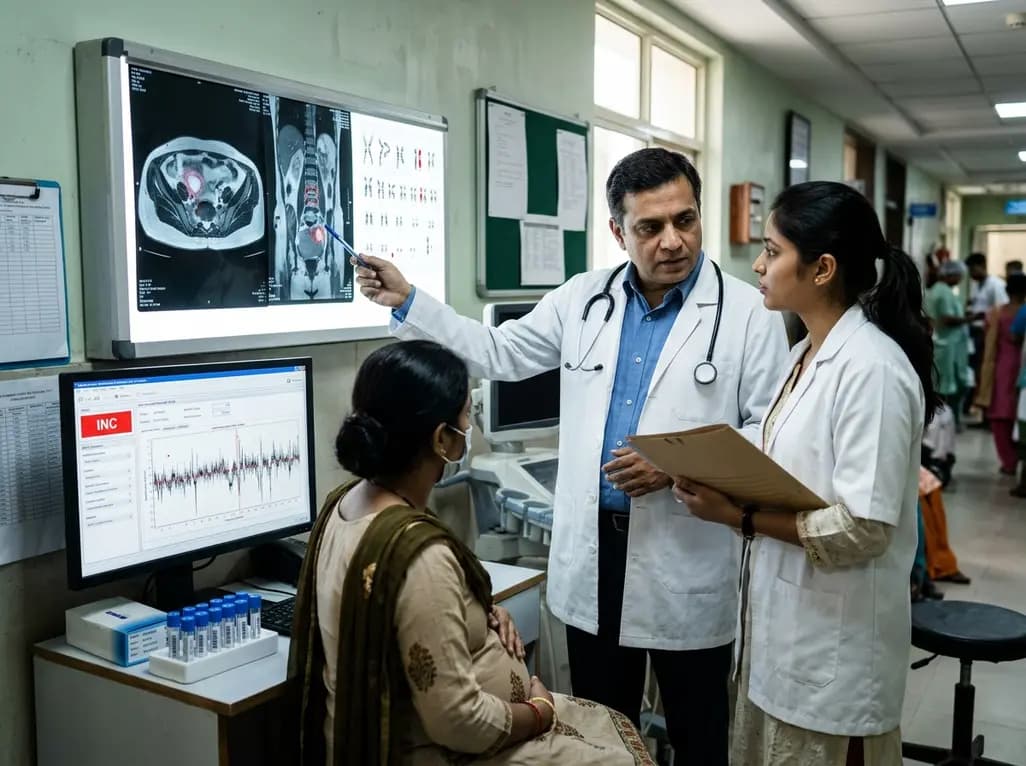
Occult maternal malignancy accounts for 3.82% of persistent unreportable NIPT results with genomic noise. Multiple chromosomal aberrations, notably on chromosome 18, warrant thorough oncological evaluation and whole-body MRI to ensure timely maternal diagnosis while preserving fetal care.
Today

This article reviews the forensic and clinical complexities of acute myocarditis arising on left ventricular hypertrophy in children, highlighting early diagnostic red flags and multidisciplinary postmortem autopsy protocols.
Today

A randomized controlled trial demonstrates that an eight-week dual-task training intervention significantly improves static and dynamic postural control over standard balance exercises in individuals with chronic ankle instability, addressing critical neurocognitive deficits during athletic and daily activities.
Today

A clinical study demonstrates that early intervention with tocilizumab, either as monotherapy or bridged with corticosteroids, achieves significant proptosis reduction and resolves active inflammation in treatment-naive thyroid eye disease.
Yesterday
