.webp&w=384&q=75)

Loading, please wait...
Loading, please wait...
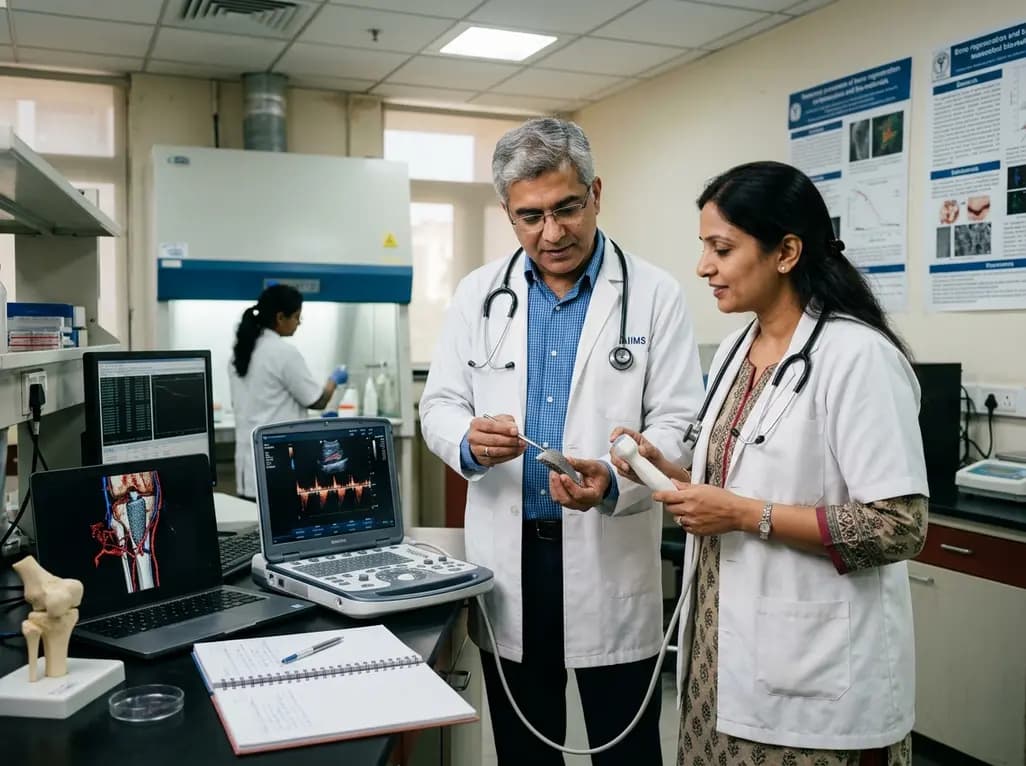
Conventional load-bearing orthopedic prostheses primarily function as static structural frameworks. Consequently, these traditional hardware constructs fail to replicate the complex biomechanical and bioelectrical microenvironment of native bone. Natural skeletal repair requires dynamic spatial coordination among multiple cellular lineages. Standard metallic implants often face significant clinical hurdles, such as aseptic loosening, poor vascular ingrowth, and chronic foreign-body inflammation. Therefore, modern reconstructive orthopedic surgery demands dynamic biomaterials capable of active biofunctional signaling. Recent developments have introduced the piezoelectric tantalum implant as an innovative therapeutic platform. By converting external mechanical stimuli into local electrical cues, this novel biomaterial bridges the gap between passive mechanical support and active cellular regeneration. As a result, researchers can now orchestrate osteogenic differentiation and tissue repair with remarkable temporal precision. Furthermore, this dynamic strategy provides a versatile framework for complex skeletal reconstructive procedures in high-demand load-bearing anatomical sites.
To establish dynamic force-electric responsiveness, bioengineers engineered lithium tantalate nanotentacles directly onto metallic tantalum substrates. Specifically, researchers combined precision laser nanofabrication with a lithium-induced in situ chemical reaction. This dual process yielded a durable, surface-nanostructured coating with high electromechanical coupling efficiency. Consequently, the biomimetic nanotentacles respond sensitively to low-intensity pulsed ultrasound stimulation. When mechanical acoustic waves strike the implant interface, the crystalline lattice shifts and generates controllable microampere electrical potentials. Moreover, this external ultrasound actuation allows clinicians to regulate bioelectric fields non-invasively through overlying soft tissue. In addition, the underlying tantalum core provides high fatigue strength, optimal porosity, and fracture resistance. Thus, the engineered interface maintains robust mechanical stability under physiological loading. Ultimately, the surface nanotopography and electromechanical responsiveness act synergistically to guide progenitor cell attachment and down-stream tissue remodeling.
The local electrical cues generated by mechanical stimulation directly modulate the biophysical behavior of bone marrow mesenchymal stem cells. When activated by ultrasound, the piezoelectric nanotentacles induce rapid calcium ion influx across the cell membrane. Consequently, this elevated intracellular calcium concentration stimulates mitochondrial respiration and accelerates adenosine triphosphate synthesis. Furthermore, the energetic surge fuels downstream enzymatic processes vital for mineralized matrix deposition. Mechanistically, the bioelectric microenvironment triggers the canonical phosphatidylinositol 3-kinase and protein kinase B signaling axis. As a result, key osteogenic transcription factors, including runt-related transcription factor 2 and osteocalcin, exhibit marked upregulation. In addition, bone marrow stem cells demonstrate accelerated alkaline phosphatase expression and robust hydroxyapatite nodule formation. Therefore, the force-electric interface revitalizes cellular bioenergetics to drive rapid, mature osseous matrix synthesis.
Implant success depends heavily on the host immune response during early post-implantation phases. Unfavorable immune activation typically leads to persistent fibrous encapsulation and eventual implant failure. In contrast, the force-electric tantalum surface actively sculpts a pro-regenerative immune niche. Specifically, the dynamic electric fields guide host macrophages away from the pro-inflammatory M1 phenotype toward the anti-inflammatory M2 phenotype. Consequently, these polarized M2 macrophages secrete high levels of interleukin-10, transforming growth factor-beta, and bone morphogenetic proteins. Furthermore, the nanotopographical interface facilitates extracellular matrix-integrin-focal adhesion kinase signaling cascades. This molecular crosstalk bridges the localized immune response with adjacent osteoprogenitor recruitment. Additionally, in vivo tests show marked reductions in inflammatory cell infiltration and capsule thickness within subcutaneous tissue. Thus, favorable immunomodulation ensures a welcoming biological bed for rapid osteointegration.
Vascularization represents an absolute prerequisite for long-term load-bearing bone integration. The force-electric tantalum architecture dramatically accelerates endothelial tube formation and capillary sprouting. Specifically, electrical stimulation activates calcium-dependent endothelial nitric oxide synthase, leading to elevated nitric oxide generation. Consequently, local endothelial cells exhibit enhanced metabolic activity, migration, and lumen assembly. In animal models with critical-sized femoral defects, the activated implants demonstrated superior functional integration compared to inert controls. Furthermore, micro-computed tomography and histological evaluations revealed dense trabecular ingrowth intertwining with the porous tantalum matrix. In addition, fluorescent vascular perfusion confirmed high microvascular density throughout the regenerated osseous margins. Therefore, by concurrently driving angiogenesis and osteogenesis, the piezoelectric system achieves robust structural stabilization within complex skeletal voids.
The convergence of non-invasive ultrasound therapy and smart piezoelectric biomaterials opens new clinical avenues in orthopedics, spine surgery, and dental reconstruction. Patients suffering from massive bone defects, non-union fractures, or compromised healing due to metabolic disease stand to benefit immensely. Moreover, clinicians can customize ultrasound stimulation protocols based on real-time healing milestones, adjusting signal intensity and frequency as tissue matures. Consequently, postoperative rehabilitation regimens can incorporate targeted therapeutic acoustic sessions to accelerate bone consolidation. In addition, the high biocompatibility of tantalum reduces long-term cytotoxicity and corrosion concerns. As manufacturing processes scale, patient-specific 3D-printed prostheses with force-electric coatings will likely enter clinical trials. Ultimately, this smart nanotechnological approach redefines load-bearing arthroplasty from a passive mechanical replacement into an active biological regenerative cure.
The implant incorporates lithium tantalate nanotentacles on its surface via laser nanofabrication and chemical synthesis. When external low-intensity pulsed ultrasound waves strike this nanostructured piezoelectric layer, the crystalline matrix undergoes microscopic deformation. This mechanical stress alters internal electrical polarization, converting acoustic energy into localized, real-time electric fields that stimulate adjacent cells.
The generated microcurrents stimulate voltage-gated calcium channels, promoting an influx of calcium ions into bone marrow mesenchymal stem cells. This calcium influx significantly enhances mitochondrial adenosine triphosphate production to meet cellular metabolic needs. Additionally, it activates the PI3K-AKT intracellular signaling pathway, driving the expression of crucial osteogenic genes and accelerating mineralization.
M2 macrophages secrete anti-inflammatory cytokines, angiogenic factors, and pro-osteogenic mediators that resolve post-surgical tissue inflammation. By switching the immune response from a chronic inflammatory M1 state to a pro-healing M2 state, the implant prevents adverse fibrous encapsulation, recruits osteoprogenitor cells, and creates an optimal biochemical microenvironment for vascularized bone formation.
Disclaimer: This content is for informational and educational purposes only and does not substitute for professional medical judgment. Refer to the latest local and national guidelines for clinical practice.
References

Read summarized clinical updates, watch expert medical content, and earn CME certifications right from your smartphone.
Open your smartphone camera to scan and install.





Novel force-electric responsive tantalum implants with surface-nanostructured LiTaO3 nanotentacles leverage ultrasound to stimulate cellular energy metabolism, favorable immunomodulation, angiogenesis, and rapid vascularized bone regeneration in load-bearing defects.
4 weeks back

Chronic eosinophilic pneumonia can present with atypical bronchoalveolar lavage findings and an organizing pneumonia pattern, necessitating surgical lung biopsy.
Today

Discover the crucial distinctions between mesonephric and mesonephric-like proliferations of the female genital tract. Learn the key histomorphologic, immunohistochemical, and molecular differences essential for accurate diagnosis and clinical management.
Today
Kikuchi-Fujimoto disease rarely presents with refractory shock and sinus bradycardia in children. This case report highlights life-threatening hemodynamic instability requiring intensive care, preserved cardiac contractility, and the critical diagnostic role of early excisional lymph node biopsy.
Today

A narrative review investigates whether the articularis genus muscle functions as an independent anatomical entity or blends with the vastus intermedius. We evaluate its morphology, role in retracting the suprapatellar bursa, and direct clinical significance in anterior knee pain and arthroplasty.
Today

A Bayesian multilevel meta-analysis reveals that aerobic training combined with moderate carbohydrate restriction modestly lowers HbA1c in type 2 diabetes. However, sparse data and very low certainty leave incremental benefits over exercise or diet alone unproven, highlighting the need for individualized care.
Today
