.webp&w=384&q=75)

Loading, please wait...
Loading, please wait...
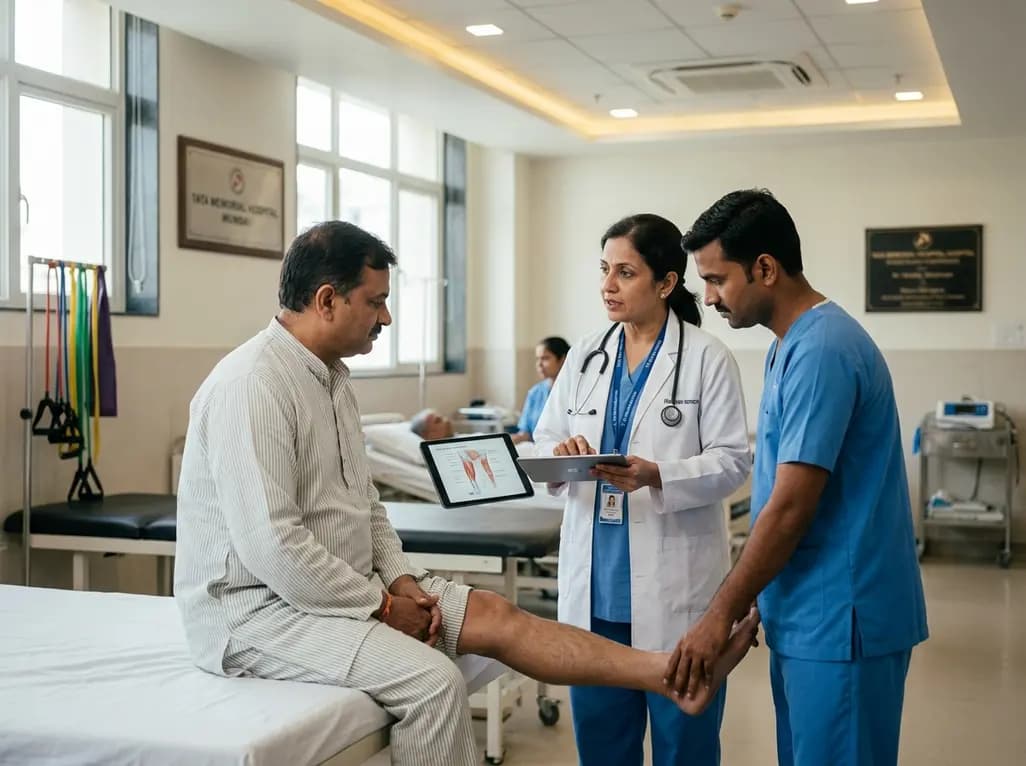
Surgical resection remains a cornerstone in the curative management of locally advanced cutaneous malignancies. However, extensive nodal dissections and complex tissue excisions frequently cause significant functional impairment, chronic lymphedema, and reduced quality of life. Furthermore, modern oncology paradigms increasingly integrate neoadjuvant immunotherapy before operative intervention. Consequently, integrating structured perioperative rehabilitation in melanoma provides a timely opportunity to preserve physical capacity and accelerate postoperative recovery.
Historically, cancer rehabilitation programs have operated predominantly in the late post-treatment or survivorship phases. Unfortunately, this delayed timing often means clinicians address established physical limitations and joint contractures rather than preventing them. In contrast, prehabilitation optimizes functional reserve before surgical stress occurs. When patients receive neoadjuvant immunotherapy, they experience a predefined window prior to surgery. Clinicians can actively utilize this treatment interval to enhance systemic physiological resilience.
Moreover, melanoma surgeries involving axillary, inguinal, or cervical lymphadenectomies carry substantial risks of restricted range of motion, neuropathic pain, and soft tissue fibrosis. Therefore, early physical therapy guidance helps patients maintain musculoskeletal mobility and prevent limb deconditioning. In addition, structured physical activity during systemic therapy can reduce cancer-related fatigue and improve treatment tolerance. By establishing therapeutic exercise habits early, oncology teams empower patients to navigate major surgical trauma with greater physical and psychological confidence.
To rigorously evaluate this supportive care strategy, researchers designed the CARE-Melanoma pilot randomized controlled trial. This single-centre Canadian study investigates the feasibility and preliminary clinical effects of a structured perioperative rehabilitation protocol. The trial recruits adult patients with confirmed melanoma scheduled for surgical resection following neoadjuvant immunotherapy. Eligible participants undergo 1:1 randomization into either a specialized rehabilitation intervention arm or a standard care control arm.
Specifically, the study aims to establish whether delivering coordinated pre- and postoperative physical therapy is viable within standard surgical timelines. Because neoadjuvant protocols operate on strict oncology schedules, physical therapy sessions must integrate seamlessly without causing surgical delays. Consequently, the trial primary endpoints focus directly on recruitment rates, participant retention, and intervention adherence. Demonstrating high feasibility will establish the foundation for larger, multicentre phase III randomized trials.
The active intervention comprises four dedicated sessions delivered by trained physiotherapists or kinesiologists. Crucially, clinicians conduct two sessions prior to surgery and two sessions in the early postoperative period. During preoperative consultations, clinicians educate patients regarding safe physical activity and demonstrate tailored exercises designed to optimize baseline mobility and muscular strength. Patients actively set individualized rehabilitation goals and create realistic daily action plans.
Subsequently, the postoperative sessions reinforce appropriate movement mechanics, progressive scar mobilization, and functional limb recovery. Practitioners adjust exercise intensity according to surgical site healing and individual symptom burden. By combining targeted resistance training with range of motion maintenance, the protocol addresses common postoperative sequelae before chronic dysfunction develops. Additionally, structured therapist check-ins ensure that patients perform home-based exercises safely and consistently throughout the entire surgical trajectory.
Beyond feasibility metrics, the CARE-Melanoma trial assesses a robust battery of secondary functional and quality-of-life outcomes before and after the intervention. Objective physical evaluations include goniometric range of motion assessments and handheld dynamometry for grip strength. Furthermore, clinicians administer functional capacity tests, specifically the 6-minute walk test and the 30-second sit-to-stand test, to capture systemic endurance and lower-body strength.
Concurrently, the investigators capture critical patient-reported outcomes to quantify symptomatic burden and psychological well-being. The trial utilizes the Edmonton Symptom Assessment System to monitor general impairment, alongside the Functional Assessment of Cancer Therapy-Melanoma instrument for disease-specific health status. In addition, the Godin Leisure-Time Exercise Questionnaire and EQ-5D-3L measure overall physical activity and general health perceptions. These comprehensive assessments will generate preliminary effect sizes to refine future trial designs.
Integrating structured physical rehabilitation into standard surgical oncology workflows represents a vital paradigm shift toward comprehensive supportive care. Traditionally, surgical teams focus primarily on oncological margins and acute wound complications. However, proactive functional optimization directly influences long-term survivorship outcomes and patient independence. As neoadjuvant immunotherapy becomes standard practice for advanced melanoma, multidisciplinary collaboration between surgical oncologists and physiotherapists becomes essential.
Furthermore, early evidence indicates that maintaining physical activity throughout systemic cancer therapy improves immune responsiveness and reduces treatment toxicity. Structured exercise programs may also decrease hospital length of stay and prevent unplanned readmissions. Therefore, establishing accessible perioperative rehabilitation pathways enables oncology centres to deliver holistic, patient-centred care that addresses both oncological survival and long-term functional recovery.
The primary goal of the CARE-Melanoma trial is to evaluate the feasibility of delivering a structured perioperative rehabilitation program to melanoma patients undergoing surgery after neoadjuvant immunotherapy. Feasibility is measured through participant recruitment, retention, and adherence rates. Additionally, the trial calculates preliminary effect sizes for functional mobility, physical activity levels, range of motion, and health-related quality of life to inform larger definitive studies.
The intervention includes four tailored sessions led by a trained physiotherapist or kinesiologist. Participants complete two sessions before surgery to build functional reserve and two sessions after surgery to guide safe recovery. The program combines education on safe exercise, progressive mobility techniques, and strength training. Additionally, therapists assist patients in establishing personalized goals and daily action plans to promote sustained home adherence.
The neoadjuvant treatment window creates a valuable opportunity to optimize a patient physiological reserve before operative trauma occurs. Immunotherapy and cancer diagnosis frequently induce physical fatigue and psychological distress. Proactive prehabilitation preserves baseline functional capacity, enhances joint range of motion, and improves treatment tolerance. Consequently, patients enter surgical resection in a stronger physical condition, facilitating faster postoperative recovery and fewer complications.
Disclaimer: This content is for informational and educational purposes only. It is not intended to provide medical advice or substitute for professional medical judgement. Refer to the latest local and national guidelines for clinical practice.
References
1. Smith-Turchyn J et al. A Coordinated Approach to Perioperative Rehabilitation to Enhance Outcomes in Melanoma: Protocol for the CARE-Melanoma Pilot Randomized Controlled Trial. JMIR Res Protoc. 2026 Aug 21. doi: 10.2196/90946. PMID: 42628027.
2. Patel SP et al. Neoadjuvant-Adjuvant or Adjuvant-Only Pembrolizumab in Advanced Melanoma. N Engl J Med. 2023;388(9):813-823.
3. Sebio-García R et al. Prehabilitation for patients undergoing neoadjuvant therapy prior to cancer resection: a systematic review and meta-analysis. Support Care Cancer. 2024;32(11):732.

Read summarized clinical updates, watch expert medical content, and earn CME certifications right from your smartphone.
Open your smartphone camera to scan and install.





The CARE-Melanoma pilot trial investigates the feasibility and functional impact of structured perioperative rehabilitation delivered before and after surgery in patients undergoing neoadjuvant immunotherapy for melanoma.
last month

PZL-26, a selective small-molecule inhibitor of LONP1, reveals essential roles of this mitochondrial protease in complex I biogenesis, translation, and oxidative phosphorylation. These findings provide critical mechanistic insights for developing targeted anticancer therapies against proteostasis-dependent tumors.
Today
A nationwide South Korean study shows underreporting of smoking among women dropped from 57.4% to 36.4% between 2008 and 2021. However, over one-third of female smokers still conceal their habit, highlighting the critical role of cotinine verification in clinical risk assessment.
Today

PepsiCo and Monster Beverage have challenged the FSSAI ban on the energy drink label in Indian courts. While companies highlight supply disruptions, regulatory actions spotlight severe cardiovascular and metabolic risks associated with excessive caffeine, sugar, and taurine consumption, especially in adolescents.
Today
A recent investigation analyzes whether cervical disc arthroplasty effectively restores or merely preserves physiological range of motion, providing critical biomechanical insights for treating hypomobile cervical segments.
Today

A Bayesian multilevel meta-analysis reveals that aerobic training combined with moderate carbohydrate restriction modestly lowers HbA1c in type 2 diabetes. However, sparse data and very low certainty leave incremental benefits over exercise or diet alone unproven, highlighting the need for individualized care.
Yesterday
