.webp&w=384&q=75)

Loading, please wait...
Loading, please wait...

Spinal fusion procedures aim to stabilize the lumbar spine and alleviate severe axial back pain. However, successful arthrodesis depends on complex biological bone healing processes. Approximately one-quarter of patients scheduled for major spine surgery routinely take antidepressant medications. Recent clinical investigations indicate that continuous exposure to selective serotonin reuptake inhibitors and serotonin-norepinephrine reuptake inhibitors may impair bone metabolism. Consequently, clinicians are evaluating whether perioperative antidepressant usage contributes directly to nonunion and symptomatic lumbar pseudarthrosis. Understanding these pharmacological interactions allows surgeons to optimize perioperative care strategies effectively.
Bone healing relies heavily on balanced osteoblast and osteoclast activity during the postoperative recovery phase. Serotonergic pathways play an unexpected role in regulating bone remodeling and cell turnover. Animal models previously demonstrated that serotonergic agents attenuate osteoblast differentiation, thereby delaying structural fracture repair. Furthermore, systematic reviews suggest that persistent use of antidepressants correlates with higher rates of bone density loss and fragility fractures. Therefore, evaluating perioperative medication profiles becomes essential when preparing high-risk surgical candidates for elective lumbar stabilization procedures.
To evaluate the direct correlation between antidepressant usage and surgical nonunion, researchers conducted a rigorous retrospective cohort investigation. The single-institution study specifically identified patients who developed symptomatic lumbar pseudarthrosis requiring formal revision surgery between 2017 and 2022. Researchers confirmed the diagnosis through operative records, surgical indication documentation, and preoperative computed tomography imaging. Patients were categorized into the active medication cohort if they continuously maintained antidepressant therapy during both preoperative and initial postoperative clinical encounters.
To isolate the independent impact of antidepressants, investigators established a carefully matched control group. Control participants demonstrated complete radiographic evidence of successful fusion without nonunion at their final follow-up visits. Researchers matched controls to pseudarthrosis cases in a 3:1 ratio based on key surgical parameters. Matching criteria included active tobacco smoking status, total fusion levels, decompressed segments, and specific operative approaches. Consequently, this strict methodological design effectively minimized baseline confounding factors between comparison groups.
The statistical findings demonstrated significant differences in psychiatric comorbidities and medication utilization between surgical cohorts. Thirty-six patients required revision surgery due to confirmed symptomatic lumbar pseudarthrosis. Investigators compared this primary cohort with 108 matched control patients who achieved successful spinal fusion. Patients affected by symptomatic nonunion exhibited statistically higher baseline rates of diagnosed depression and anxiety disorders. More importantly, overall antidepressant administration was significantly higher among individuals experiencing symptomatic lumbar pseudarthrosis.
Multivariate logistic regression analysis provided critical insights into independent surgical risk factors. After controlling for clinical variables, SSRI and SNRI use emerged as a powerful independent predictor of fusion failure. Specifically, patients taking these medications experienced nearly a fourfold increase in the odds of requiring revision surgery (OR=3.95, 95% CI=1.66-9.45, P=0.002). Consequently, these empirical results confirm that serotonergic psychotropic agents significantly hinder solid osseous bridging following primary elective lumbar procedures.
The pathophysiological relationship between serotonergic agents and bone healing involves complex cellular pathways. Functional serotonin receptors exist directly on human osteoblasts, osteocytes, and osteoclasts. Continuous inhibition of serotonin reuptake elevates extracellular serotonin concentrations, which suppresses osteoblast proliferation and differentiation. Furthermore, altered serotonergic signalling accelerates osteoclastogenesis, resulting in unbalanced bone resorption during critical postoperative repair phases. As a result, structural bone mineralization decreases across the interbody fusion bed.
Additionally, chronic clinical depression and anxiety trigger systemic inflammatory responses. Elevated circulating inflammatory cytokines, such as interleukin-6 and tumor necrosis factor-alpha, disrupt normal bone remodeling cascades. While psychiatric distress itself impacts recovery, regression models confirm that SSRI/SNRI exposure acts independently of baseline mental health diagnoses. Therefore, clinicians must recognize that the chemical property of the drug directly contributes to pseudoarthrosis risk alongside underlying psychological stress.
These compelling clinical findings mandate a shift in preoperative assessment protocols for elective spine surgery. Spine specialists must thoroughly review complete medication logs, paying close attention to psychotropic prescriptions. Identifying perioperative antidepressant therapy enables surgeons to counsel patients accurately regarding heightened nonunion risks. Furthermore, spine care providers should collaborate with treating psychiatrists to determine whether temporary medication tapering or alternative pharmacological management is feasible prior to elective lumbar procedures.
Moreover, surgical teams can implement tailored perioperative strategies to mitigate nonunion risks in patients who cannot discontinue antidepressants. Utilizing aggressive bone grafting techniques, recombinant bone morphogenetic proteins, or rigid structural fixation may counteract pharmacologically induced bone healing deficits. Additionally, optimizing metabolic bone health through preoperative vitamin D supplementation and teriparatide therapy might enhance osteogenic capacity. Ultimately, personalized risk mitigation strategies improve long-term fusion success and patient satisfaction.
Although this study provides robust single-institution evidence, future prospective research remains essential. Large-scale multicenter prospective trials should evaluate whether specific antidepressant dosages or durations disproportionately impair spinal fusion biology. Furthermore, researchers must investigate whether temporarily discontinuing serotonergic agents during the perioperative window improves radiographic fusion rates. Investigating alternative non-serotonergic psychiatric medications may also yield safer clinical options for patients requiring concurrent mood stabilization during spinal reconstruction.
In summary, perioperative SSRI and SNRI use represents a significant, modifiable risk factor for lumbar nonunion. Clinicians should incorporate routine drug screening into comprehensive preoperative pathways to optimize patient selection. By combining rigorous biological research with patient-centered risk stratification, spine specialists can effectively reduce revision rates and enhance functional recovery outcomes for individuals undergoing complex lumbar fusion.
Symptomatic lumbar pseudarthrosis occurs when the operated spinal bones fail to fuse properly, leading to persistent mechanical instability, chronic back pain, and potential nerve irritation. Patients often require secondary revision surgery to restore spinal stability and achieve successful long-term osseous union.
SSRIs and SNRIs alter systemic serotonin levels, which directly affects bone cell receptors. Increased extracellular serotonin downregulates osteoblast differentiation and activity while promoting osteoclast-mediated bone resorption. This cellular imbalance impairs new bone matrix formation across the surgical fusion site.
Patients should never abruptly discontinue antidepressant medications due to withdrawal risks and mood relapse. Instead, surgical teams and psychiatrists should jointly review medication regimens during preoperative planning. They can evaluate potential dose adjustments, temporary tapering, or advanced bone-healing adjuncts.
Disclaimer: This content is for informational and educational purposes only. It does not constitute medical advice, diagnosis, or treatment. Always seek the advice of a qualified healthcare provider regarding any medical condition or surgical plan. Refer to the latest local and national guidelines for clinical practice.
References
1. McCurdy MA et al. Perioperative Antidepressant Use is Associated With Symptomatic Pseudarthrosis After Lumbar Fusion. Spine (Phila Pa 1976). 2025 Aug 15. doi: 10.1097/BRS.0000000000005235. PMID: 39618155.
2. McCurdy MA et al. Impact of Antidepressant Use on Intraoperative Blood Loss and Transfusion Rates in Lumbar Fusion Surgery. World Neurosurg. 2025 Feb;194:123413.

Read summarized clinical updates, watch expert medical content, and earn CME certifications right from your smartphone.
Open your smartphone camera to scan and install.





A single-institution matched cohort study reveals that perioperative SSRI/SNRI use independently increases the risk of symptomatic lumbar pseudarthrosis requiring revision surgery nearly fourfold. Surgeons must evaluate psychiatric drug histories during preoperative risk stratification.
last month

Wearable sleep health technology provides continuous biometric monitoring to augment cardiovascular risk assessment. By tracking autonomic proxies and sleep architecture, these digital tools empower clinicians to guide cardiometabolic interventions, despite persistent challenges in wake detection specificity.
Today

The ClinGen Prenatal Gene Curation Expert Panel evaluated 63 disease relationships across 61 genes, establishing clinical validity for severe fetal phenotypes like hydrops and stillbirth to enhance prenatal genomic interpretation and clinical care.
Yesterday
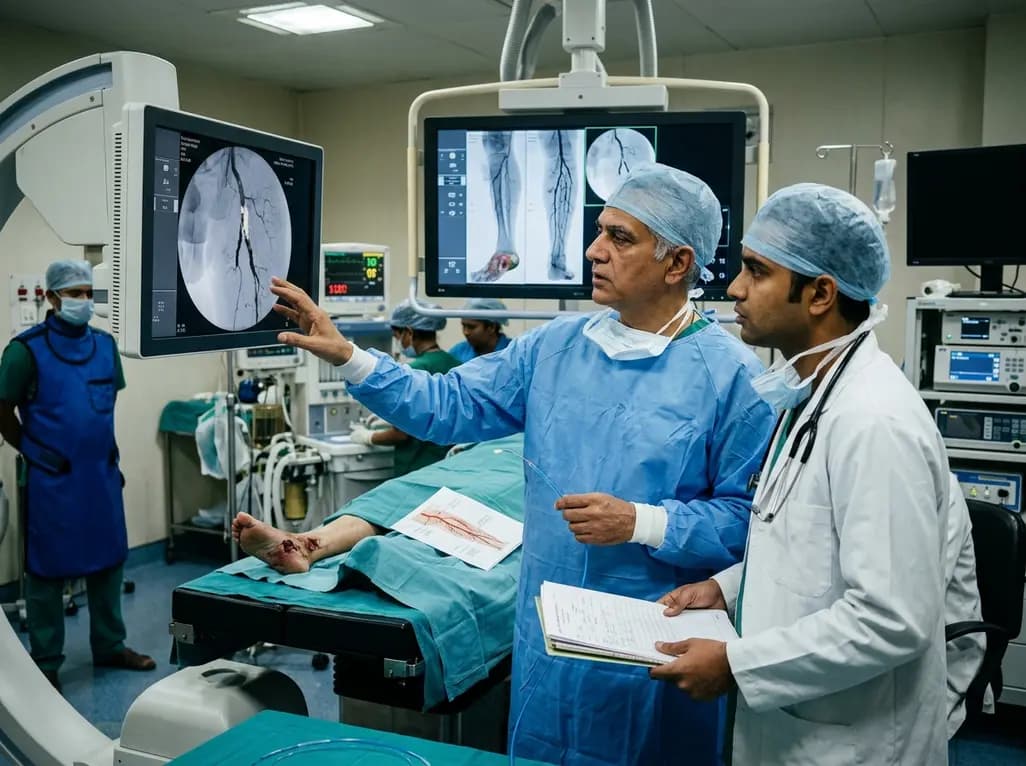
SWEDEPAD-1 trial insights show paclitaxel-coated devices do not improve long-term limb salvage in patients with chronic limb-threatening ischemia and tissue loss. While one-year reinterventions decreased, the devices were linked to a higher risk of major amputation at three months.
Today

A prospective study reveals that piriformis syndrome coexists in nearly 85% of patients diagnosed with lumbosacral radiculopathy. Ultrasound-guided diagnostic injections achieve significant pain reduction, highlighting the necessity of assessing peripheral entrapments alongside spinal pathologies.
Today

A real-world observational study evaluates pediatric isolated growth hormone deficiency patients transitioning to once-weekly somatrogon, showing sustained height velocity, early IGF-1 shifts, and stabilized BMI.
Today
