

Loading, please wait...
Loading, please wait...

Managing pediatric traumatic brain injury remains a critical challenge in acute pediatric medicine. When head trauma stems from physical abuse or neglect, clinical complexities multiply. Young victims frequently present with severe physiological distress, occult intracranial hemorrhage, and psychosocial crises. Therefore, identifying abusive trauma early in the emergency pathway is essential for optimizing survival and functional recovery. A comprehensive seven-year institutional investigation recently analyzed almost three thousand children who sustained cranial trauma. The researchers compared accidental cases against confirmed maltreatment injuries. Their findings provide vital epidemiological insights into vulnerability, socioeconomic risk factors, and clinical trajectories. This analysis equips clinicians with essential data to strengthen safeguarding frameworks and emergency protocols.
Traumatic head injuries in childhood stem from diverse mechanical forces. However, the demographic distribution diverges strikingly when comparing accidental injuries with intentional maltreatment. In the seven-year analysis of emergency admissions, child abuse accounted for 13.4% of all evaluated pediatric head injury cases. The most striking clinical disparity emerged in patient age. Specifically, the maltreatment cohort exhibited an average age of barely 2.02 years, whereas accidentally injured children presented at a mean age of 7.83 years. This stark contrast underlines the extreme vulnerability of infants and toddlers. Infants possess thin cranial vaults, pliable sutures, and weak cervical musculature. Consequently, rotational and acceleration-deceleration forces produce catastrophic intracranial shearing injuries. Toddlers also lack the verbal fluency required to articulate domestic violence or neglect. Furthermore, young patients rely entirely on primary caregivers for safety and urgent medical evaluation. Clinicians must therefore exercise heightened suspicion whenever infants present with ambiguous trauma or unexplained neurological depression. Recognizing these distinct demographic patterns ensures that emergency teams initiate rapid diagnostic investigations without hesitation.
Social determinants of health exert a profound influence on child welfare and emergency presentation patterns. In this extensive cohort, researchers examined neighborhood distress using the validated Social Deprivation Index. The multivariable statistical model revealed that children from socioeconomically disadvantaged neighborhoods faced significantly higher odds of abuse-related trauma. Families facing severe financial hardship, housing instability, and limited social support often experience heightened daily stress. Consequently, these structural strains can compound vulnerability within household environments. In addition, the investigation uncovered a troubling disparity regarding hospital arrival modes. Victims of abusive trauma demonstrated more than double the odds of arriving via private vehicle rather than municipal ambulances. Caregivers might avoid calling ambulances due to fear of immediate legal scrutiny, financial distress, or panic. However, private transport frequently delays critical prehospital resuscitation, including airway stabilization and cervical protection. Delays in accessing advanced pediatric emergency centers can exacerbate secondary cerebral ischemia. Therefore, emergency clinicians must recognize private vehicle conveyance in young infants as an important warning sign.
Initial assessment of neurological trauma requires objective scoring systems to estimate injury magnitude and survival probability. Clinicians frequently employ the Injury Severity Score and the Trauma and Injury Severity Score to gauge acute anatomical damage. In this study, the abusive trauma cohort sustained markedly more severe physiological trauma than patients injured accidentally. Multivariable regression demonstrated that higher baseline injury severity scores independently correlated with abusive trauma. Conversely, lower survival probability scores characterized the maltreated pediatric cohort. These objective metrics reflect the violent biomechanics inherent to non-accidental trauma, including vigorous shaking, blunt impacts, and direct physical violence. Moreover, abusive head trauma regularly causes severe multidirectional intracranial pathology. Radiologists frequently identify bilateral subdural hematomas, widespread subarachnoid hemorrhage, and diffuse axonal injury. Complex skull fractures crossing suture lines and extensive retinal hemorrhages also accompany these non-accidental presentations. Accidental falls in toddlers rarely generate such extensive bilateral intracranial damage. Thus, emergency physicians must evaluate anatomical severity metrics alongside clinical narratives. When radiological trauma severity exceeds the reported history of minor trauma, clinicians must immediately suspect inflicted injury.
The heightened severity of inflicted head trauma translates directly into complicated inpatient hospital courses. In this seven-year analysis, maltreated pediatric patients faced substantially worse in-hospital trajectories than non-abused peers. Specifically, abused children experienced fourfold higher odds of a prolonged hospital stay. Furthermore, these young patients demonstrated nearly triple the odds of emergency department transfer directly to the pediatric intensive care unit. Critical care teams regularly manage refractory intracranial hypertension, post-traumatic seizures, cerebral edema, and hypoventilation in this cohort. Many victims require invasive intracranial pressure monitoring, mechanical ventilation, and aggressive neuroprotective therapies. Tragically, the risk of in-hospital mortality was more than three times higher among abuse victims compared to accidental trauma patients. Even among survivors, physiological recovery remains fraught with long-term morbidity. In this study, abuse victims exhibited more than sixfold higher odds of a nonroutine hospital discharge. Instead of returning safely home, these infants often required transfer to specialized rehabilitation hospitals or foster placements. Consequently, prolonged hospitalizations reflect both profound neurological injury and intricate custodial investigations.
Optimal management of non-accidental trauma demands exceptional vigilance and rapid interprofessional collaboration. Emergency departments serve as the initial defense line for identifying endangered children. Clinicians must maintain a low threshold for initiating skeletal surveys, neuroimaging, and dilated fundoscopic examinations in young patients presenting with altered sensorium. In addition, healthcare facilities must establish robust protocols with multidisciplinary child protection teams, social workers, and forensic authorities. Standardized clinical pathways reduce racial and social bias while ensuring thorough forensic documentation. Furthermore, pediatricians and family physicians in community practices play a vital safeguarding role. They can identify parental distress, substance misuse, or inadequate supervision during routine wellness visits. Early identification of vulnerable families enables timely delivery of home visitation services, parenting support, and community aid. In resource-constrained settings, healthcare workers must proactively integrate screening tools into emergency intake registers. Ultimately, addressing pediatric maltreatment requires comprehensive clinical dedication alongside broader socio-legal policy interventions. Protecting young brains from inflicted harm remains a fundamental ethical responsibility for all medical professionals.
Abusive head trauma typically affects younger infants under two years of age. Unlike accidental trauma, inflicted injuries frequently produce bilateral subdural hematomas, diffuse axonal injury, and extensive retinal hemorrhages. Victims often present with lethargy, apnea, or seizures that appear entirely disproportionate to the mild fall history reported by caregivers.
Caregivers who inflict trauma or fear child protective services frequently avoid calling emergency medical services to evade immediate scrutiny. Additionally, severe socioeconomic distress, panic, or lack of emergency health literacy prompts reliance on personal vehicles. Unfortunately, private transport bypasses vital prehospital stabilization, potentially worsening secondary ischemic brain injury.
Trauma scoring systems, including the Injury Severity Score and Trauma and Injury Severity Score, provide objective assessments of anatomical injury. Abused pediatric patients consistently demonstrate significantly higher injury severity and lower survival scores. Discrepancies between severe objective injury scores and innocuous reported histories strongly indicate non-accidental trauma mechanisms.
Disclaimer: This content is for informational and educational purposes only... Refer to the latest local and national guidelines for clinical practice.
References

Read summarized clinical updates, watch expert medical content, and earn CME certifications right from your smartphone.
Open your smartphone camera to scan and install.





A 7-year analysis highlights severe adverse outcomes in pediatric traumatic brain injury caused by child abuse. Maltreated children face higher injury severity, intensive care unit transfers, and prolonged stays, strongly correlated with neighborhood deprivation and private vehicle transport.
Today

The Food Safety and Standards Authority of India has issued an urgent advisory against food business operators violating mandatory labelling standards for nutraceuticals and botanicals. Regulators prohibited therapeutic claims while mandating clear advisory warnings to prevent patient toxicity and medical misuse.
Today

Biotechnology researchers in India are developing an automated liquid biopsy platform to detect cervical malignancy from blood samples. Supported by the MAHA MedTech Mission, this initiative applies nanopore sequencing and piRNA biomarker detection to eliminate invasive speculum exams and expand rural screening.
Today
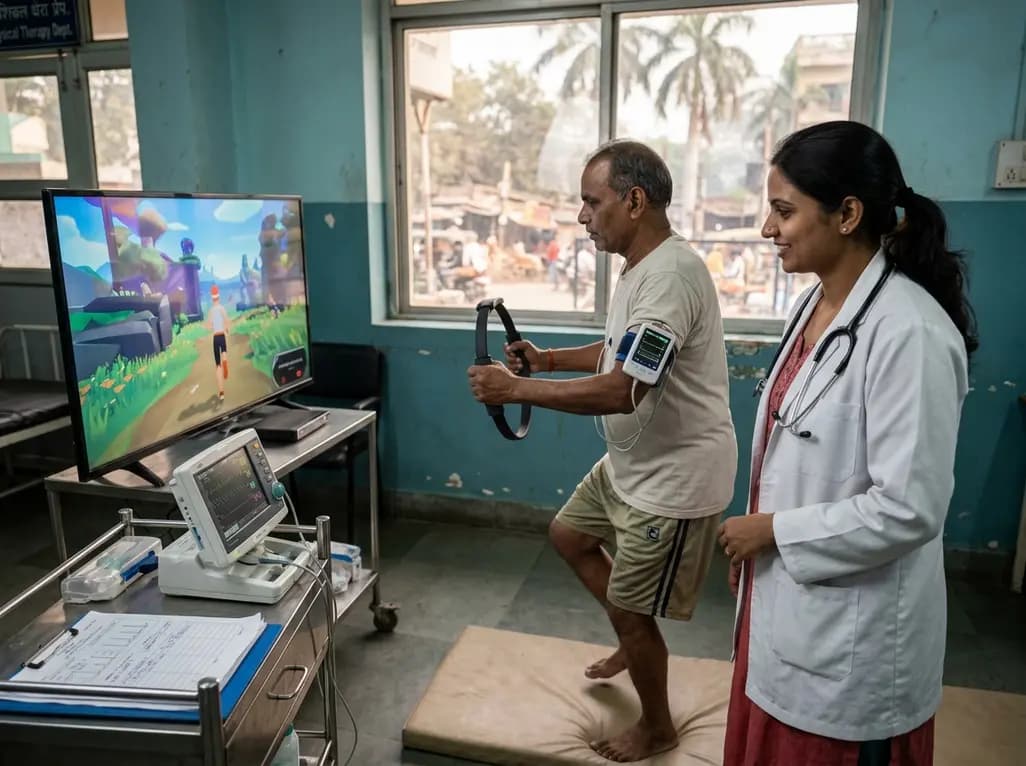
A clinical study evaluated Ring Fit Adventure in adults with chronic conditions, revealing that exergaming achieves moderate-to-vigorous exercise intensity while maintaining hemodynamic stability, high enjoyment, and zero adverse events.
Today

A retrospective cohort study reveals that selecting the touched vertebra as the lowest instrumented vertebra in thoracic adolescent idiopathic scoliosis yields a 20.8% distal add-on rate, driven by remnant motion segments and axial rotational discrepancies.
Today
A study evaluates a cardiometabolic HFpEF model combining metabolic stress with chronic mineralocorticoid excess. The findings reveal profound diastolic stiffness, endothelial dysfunction, and pulmonary hypertension, illuminating key pathophysiological mechanisms for targeted cardiopulmonary therapies.
Today
