

Loading, please wait...
Loading, please wait...

Cancer therapies often create complex psychosexual complications in developing adolescents and young adults. However, healthcare teams frequently neglect sexual wellness discussions during routine clinical evaluations. A groundbreaking proof-of-concept study evaluated an interactive training suite designed to enhance pediatric oncology sexual health care. Led by Dr. Natasha Frederick and colleagues, the investigation examined whether digital educational modules could improve provider communication, knowledge, and clinical self-efficacy. Ultimately, the study demonstrated that targeted clinician training bridges critical communication gaps, equipping oncology professionals to provide comprehensive, developmentally appropriate supportive care.
Adolescent and young adult cancer patients experience unique physical and psychological vulnerabilities during treatment. Gonadotoxic chemotherapy, pelvic radiation, and extensive surgeries often cause persistent physiological dysfunctions. Consequently, patients frequently face premature menopause, erectile dysfunction, dyspareunia, and profound body image changes. In addition, cancer diagnoses disrupt normal developmental milestones, dating dynamics, and emotional intimacy. Despite these severe complications, clinicians rarely discuss intimate wellness during oncology visits.
Furthermore, observational research reveals that healthcare professionals often avoid psychosexual discussions entirely. Many oncologists report feeling unprepared, rushed, or embarrassed when addressing intimate matters with younger patients. Clinicians also worry about offending conservative family members during outpatient evaluations. Meanwhile, young patients remain reluctant to introduce these topics independently due to fear or embarrassment. Therefore, adolescents silently expect their healthcare providers to guide these essential discussions. Without proactive intervention, these unaddressed sexual health problems can degrade long-term quality of life and psychosocial recovery.
To resolve these entrenched barriers, researchers developed four interactive educational modules for pediatric oncology clinicians. The curriculum methodically targeted clinician attitudes, foundational scientific principles, risk assessment strategies, and communication techniques. Specifically, the modules addressed cancer-induced sexual dysfunction, safe sexual practices, teratogenicity risks, and fertility preservation. Additionally, the digital platform integrated realistic case studies, practical clinical scripts, and interactive self-assessment exercises.
Crucially, the educational program emphasized practical tools that clinicians could apply immediately in outpatient clinics. Participants learned how to establish private time with adolescent patients while respectfully navigating parental presence. The curriculum also provided standardized screening phrases to help providers normalize sensitive conversations. Moreover, the self-paced digital format allowed oncologists and nurse practitioners to complete the modules around demanding clinical schedules. By providing evidence-based communication frameworks, the curriculum effectively demystified difficult topics and strengthened clinician readiness.
The proof-of-concept trial enrolled 45 pediatric oncology clinicians to test feasibility, acceptability, and perceived clinical utility. The study established stringent a priori feasibility benchmarks, requiring a 60% completion rate and a 70% retention rate. Ultimately, 39 clinicians completed the four modules and all associated survey instruments, achieving an impressive 86.6% completion rate. Furthermore, the study achieved a 100% retention rate among participants who finished the educational curriculum, far exceeding the initial targets.
Equally important, subjective ratings demonstrated widespread enthusiasm and clinician approval across multiple specialties. In fact, 100% of participants rated the educational intervention favorably, confirming exceptional acceptability in pediatric oncology environments. Additionally, 94.9% of clinicians confirmed the perceived usefulness of the educational content in their daily practices. Qualitative feedback highlighted that participants especially valued the concrete conversational scripts and nuanced discussions of developmental needs. Thus, the findings confirm that busy clinicians eagerly embrace sexual health training when programs offer practical, flexible digital formats.
Beyond verifying feasibility, the study evaluated improvements in clinician knowledge, attitudes, and perceived self-efficacy. Post-intervention surveys signaled substantial increases in clinician competence across all targeted educational domains. Participants demonstrated significant knowledge gains regarding cancer-related sexual dysfunction, contraceptive management, and appropriate referral options. Consequently, clinicians felt significantly more capable of broaching sensitive sexual health topics during regular patient encounters.
Additionally, the intervention fundamentally reshaped clinician perceptions regarding professional responsibility in oncology care. Before the training, many clinicians believed that patients would proactively voice sexual distress if symptoms became severe. Following module completion, however, clinicians recognized that providers must actively initiate these conversations. Qualitative insights confirmed that participants developed deeper empathy for adolescent vulnerabilities and romantic concerns. Therefore, the curriculum successfully motivated providers to integrate routine psychosexual assessments into standard oncology consultations, dismantling long-standing institutional reluctance.
Translating these educational gains into routine practice requires intentional workflow adjustments and institutional backing. First, clinical teams must normalize dedicated confidential time for adolescent patients during outpatient visits. Although parents provide vital emotional support, their presence frequently prevents young patients from discussing sexual behaviors honestly. Consequently, clinicians must frame private one-on-one intervals as a mandatory standard of adolescent oncology care.
Furthermore, oncology centers should embed standardized sexual health prompts into electronic medical records. Automated intake screening questions remove individual clinician awkwardness and ensure equitable assessment across all eligible patients. Additionally, institutions need clear referral pathways to connect patients with reproductive endocrinologists, gynecologists, and certified sex therapists. When frontline oncology clinicians possess practical conversational tools and reliable multidisciplinary referral pathways, they can promptly resolve emerging psychosexual complications. Consequently, this holistic approach protects both physiological survival and long-term psychosocial well-being.
Although this proof-of-concept study confirms training feasibility, larger randomized trials must evaluate sustained clinical effectiveness. Researchers must assess whether improved clinician communication directly enhances patient-reported outcomes, intimacy satisfaction, and distress scores. Moreover, future studies should explore how cultural nuances influence sexual health communication across diverse global healthcare environments. In many international settings, sociocultural taboos around youth sexuality create additional barriers for patients and clinicians alike.
Therefore, adapting educational curricula to honor local cultural and religious values represents an urgent priority. Clinicians in traditional societies can utilize tailored communication scripts that frame sexual wellness as an essential component of physical recovery. In addition, medical educators should integrate adolescent psychosexual care into pediatric oncology fellowship and nursing training programs. Establishing these competencies early will ensure that future oncologists routinely provide compassionate, comprehensive care throughout cancer survivorship.
Clinicians frequently overlook sexual health communication because of inadequate training, clinic time pressures, and personal discomfort discussing intimacy with young patients. Additionally, many oncology professionals mistakenly assume that adolescents will speak up spontaneously if distress occurs. Meanwhile, young patients often stay silent due to embarrassment, expecting their doctors to lead the conversation. Consequently, without routine screening protocols, critical issues concerning fertility, contraception, and sexual dysfunction remain entirely unaddressed.
Clinicians should initiate sexual health discussions at the time of cancer diagnosis and continue them across all treatment stages. Introducing the topic early establishes intimate well-being as a standard aspect of routine oncology care. Furthermore, prompt baseline discussions allow providers to address fertility preservation, teratogenicity, and contraception before gonadotoxic regimens begin. Regular follow-up evaluations help oncology teams identify and manage ongoing complications such as hormone deficiencies, painful intercourse, and relationship anxiety.
Clinicians ensure privacy by informing parents early that private one-on-one intervals represent a standard quality metric in adolescent care. Explaining this protocol upfront prevents parental suspicion and reduces anxiety. During this private interval, clinicians outline confidentiality parameters, confirming that conversations remain private unless safety risks arise. Consequently, this secure environment encourages young patients to ask sensitive questions, report distressing symptoms, and receive personalized counseling without fear of parental judgment.
Disclaimer: This content is for informational and educational purposes only and should not be considered as medical advice. Always seek the advice of a qualified healthcare provider with any questions you may have regarding a medical condition. Refer to the latest local and national guidelines for clinical practice.
References

Read summarized clinical updates, watch expert medical content, and earn CME certifications right from your smartphone.
Open your smartphone camera to scan and install.





A proof-of-concept study demonstrates that interactive educational modules significantly enhance pediatric oncology clinicians' knowledge, confidence, and communication on sexual health care for adolescent and young adult cancer patients, addressing a vital yet frequently overlooked aspect of supportive oncology.
Today

Bioengineered subcutaneous hydrogels can form ectopic tertiary lymphoid structures, decoupling immune activation from the immunosuppressive tumor microenvironment to generate potent anti-tumor responses.
Today

A novel high-permeation vesicle-in-gel platform enhances transdermal fulvestrant delivery, achieving sustained release, robust intradermal retention, and superior antitumor efficacy in breast cancer models while circumventing the drawbacks of painful intramuscular depot injections.
Today
A recent study highlights the utility of measuring cardiac effort after surgery. In older, frail individuals undergoing cardiac surgery, combining continuous ECG with the six-minute walk test provides vital physiologic insights, demonstrating that heart rate responses mirror cycle ergometry.
Today

A systematic review and meta-analysis of 8 RCTs evaluated bipolar versus monopolar electrocautery in primary total hip and knee arthroplasty. Pooled data revealed no significant differences in haemoglobin drop, blood loss, or length of stay, concluding that routine bipolar electrocautery is not supported.
Yesterday
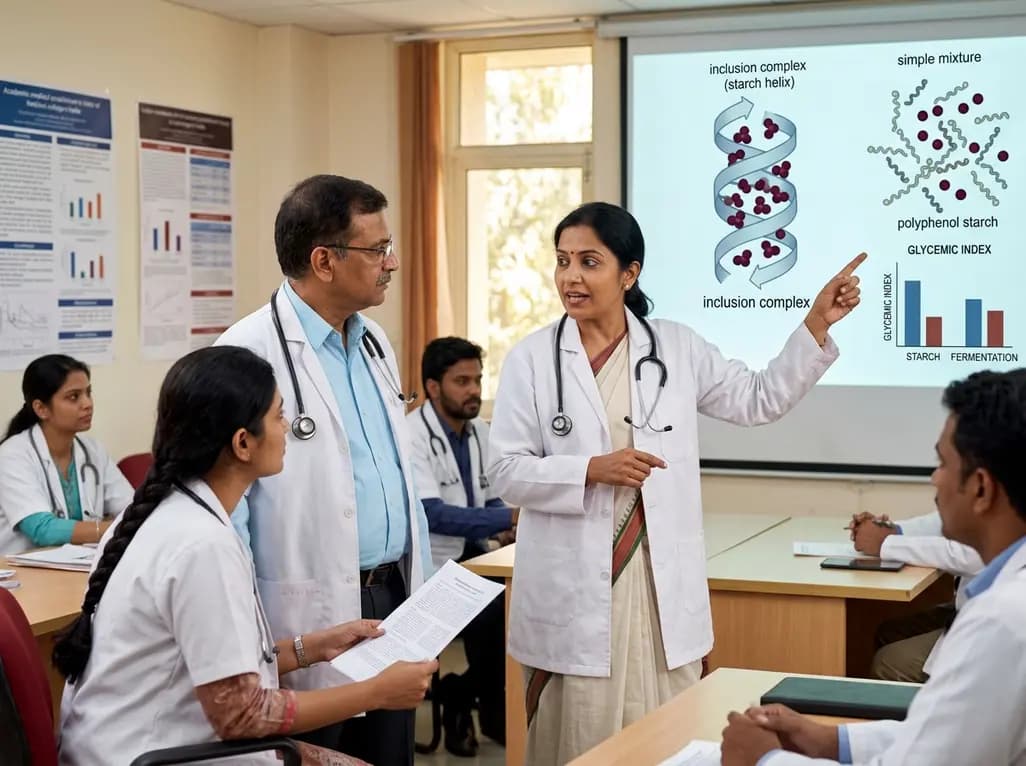
A critical review evaluates whether starch-polyphenol complexes meet structural and metabolic criteria to qualify as type 5 resistant starch. The proposed tiered evidence framework distinguishes true inclusion complexes from simple mixtures, clarifying mechanisms for glycemic modulation and gut fermentation.
Today
