.webp&w=384&q=75)

Loading, please wait...
Loading, please wait...

Clinicians now focus on the link between oral and pharyngeal functions to improve patient outcomes in acute care. Therefore, understanding how these systems interact is essential for managing conditions like dysphagia and oral frailty. A recent study investigated 183 patients at Tohoku University Hospital to evaluate their oral status and swallowing capacity. Notably, many patients presented with head and neck tumors or degenerative diseases, leading to a high prevalence of oral hypofunction.
The assessment involved measuring factors such as poor oral hygiene, dryness, and tongue pressure. Furthermore, researchers found a significant correlation between limited tongue movement and the Hyodo-Komagane score. Consequently, patients with decreased tongue pressure often demonstrate hypopharyngeal residuals during swallowing. This suggests that oral and pharyngeal functions are deeply intertwined, requiring a holistic diagnostic approach.
Establishing medical-dental cooperation in acute hospitals allows for the simultaneous assessment of these vital functions. Moreover, this collaborative model helps medical teams design appropriate rehabilitation plans for safer oral intake. Early intervention can reduce the risk of aspiration and improve the overall nutritional status of the patient. Thus, interdisciplinary teams should prioritize oral health as a foundational element of dysphagia management.
Low tongue pressure significantly increases the risk of hypopharyngeal residuals. This condition makes it difficult for patients to clear food from the throat, potentially leading to aspiration or choking.
Oral dryness, or xerostomia, can impair the formation of a cohesive food bolus. This lack of lubrication makes it harder for the pharyngeal muscles to propel food efficiently into the esophagus.
Disclaimer: This content is for informational and educational purposes only. It does not constitute professional medical advice, diagnosis, or treatment. Always seek the advice of your physician or other qualified health provider with any questions you may have regarding a medical condition. Refer to the latest local and national guidelines for clinical practice.
References

Read summarized clinical updates, watch expert medical content, and earn CME certifications right from your smartphone.
Open your smartphone camera to scan and install.





A study explores how oral and pharyngeal functions correlate in acute hospital patients, highlighting the role of medical-dental cooperation in dysphagia ca...
7 months ago

Explore why official drug package inserts fail to reflect modern evidence for clozapine prescribing. Learn how legal standards of care, case law, slow titration, and vital adverse event monitoring empower clinicians to prioritize evidence-based medical practice over outdated manufacturer labeling.
Today
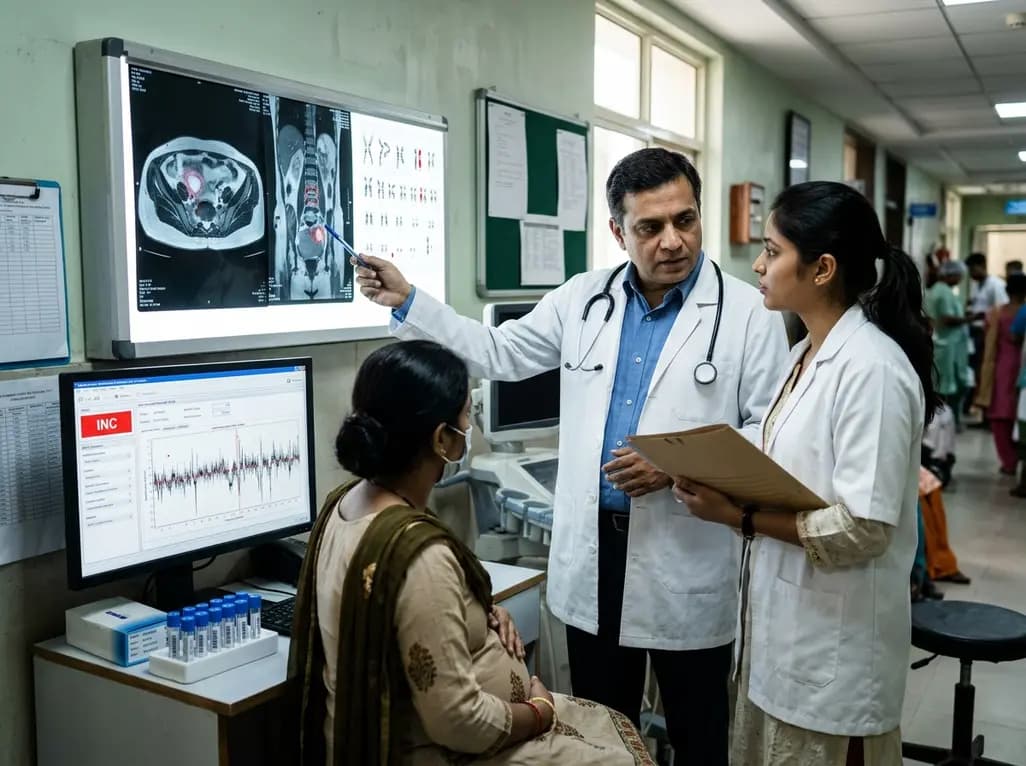
Occult maternal malignancy accounts for 3.82% of persistent unreportable NIPT results with genomic noise. Multiple chromosomal aberrations, notably on chromosome 18, warrant thorough oncological evaluation and whole-body MRI to ensure timely maternal diagnosis while preserving fetal care.
Today

This article reviews the forensic and clinical complexities of acute myocarditis arising on left ventricular hypertrophy in children, highlighting early diagnostic red flags and multidisciplinary postmortem autopsy protocols.
Today
A randomized controlled trial demonstrates that an eight-week dual-task training intervention significantly improves static and dynamic postural control over standard balance exercises in individuals with chronic ankle instability, addressing critical neurocognitive deficits during athletic and daily activities.
Today

A retrospective cohort study of 7,716 ICU patients from the MIMIC-IV database demonstrates that Gradient Boosting Decision Trees significantly outperform traditional SOFA scores in predicting in-hospital mortality among patients with sepsis and diabetes, with SHAP analysis providing clinical interpretability.
Today
