

Loading, please wait...
Loading, please wait...

Posttraumatic stress disorder remains a significant psychiatric condition that imposes a heavy burden on healthcare systems globally. Clinicians often face major resource constraints when delivering trauma-focused psychotherapies. Consequently, novel service delivery models have emerged to address these systemic barriers. A recent landmark study investigated online stepped care PTSD interventions to optimize therapeutic efficiency and accessibility. By starting with internet-delivered self-guided modules and escalating non-responders to specialized therapist-led sessions, healthcare providers hope to expand psychiatric capacity. Therefore, evaluating whether such adaptive frameworks match standard trauma therapy represents a critical priority for contemporary psychiatric practice.
Traditional psychiatric treatment for posttraumatic stress disorder typically relies on intensive, therapist-led trauma-focused cognitive behavioral protocols. However, specialized therapists remain scarce, which leads to prolonged waitlists and untreated morbidity. In resource-limited clinical environments, this structural barrier severely delays vital psychiatric interventions. Stepped care designs address this disparity by matching patients to proportional care levels. Initially, patients engage with low-intensity digital programs that require minimal clinician intervention. When patients show insufficient symptom reduction, clinicians step them up to higher-intensity therapies such as cognitive processing therapy. Furthermore, this staged triage model reserves specialized therapist hours for individuals with severe, resistant psychopathology. As a result, healthcare systems can potentially treat larger cohorts without compromising baseline quality of care. Additionally, digital stepped pathways provide flexible access for rural or underserved demographics who cannot attend frequent hospital visits. Therefore, modern psychiatric research increasingly explores digital platforms to deliver structured, evidence-based trauma interventions efficiently.
To evaluate clinical equivalence, investigators conducted a randomized controlled non-inferiority trial among 84 adults with full or subthreshold posttraumatic stress disorder. The study population was predominantly female and presented with significant symptom severity. Researchers randomized participants to either a remote stepped care protocol or direct cognitive processing therapy delivered via telehealth. In the stepped care arm, participants first completed This Way Up, an online self-guided cognitive behavioral intervention. Clinicians monitored participant progress and applied pre-specified diagnostic thresholds to determine stepping decisions. If individuals did not reach satisfactory symptom remission, they stepped up to standard telehealth cognitive processing therapy. Meanwhile, participants in the active comparator cohort received direct cognitive processing therapy from the start. Investigators tracked longitudinal outcomes across multiple intervals, including post-treatment, three-month follow-up, and six-month follow-up. Through this rigorous comparative framework, the trial sought to determine whether starting with lower-intensity digital tools preserves clinical gains while conserving vital therapist resources.
Both treatment modalities achieved substantial clinical improvements across the follow-up periods. Specifically, participants demonstrated robust reductions in trauma severity, depressive symptoms, and functional disability. On the clinician-administered Clinician-Administered PTSD Scale for DSM-5, effect sizes ranged from 1.19 to 2.09 across both study cohorts. Statistical non-inferiority was successfully established for clinician-rated posttraumatic stress symptoms at the post-treatment benchmark. Furthermore, the stepped care model demonstrated non-inferiority for depressive symptoms across all follow-up time points on the DASS-21 scale. However, the outcomes revealed important nuances when analyzing self-reported psychometric instruments. On the self-reported PTSD Checklist for DSM-5 and health-related quality of life assessments, stepped care failed to establish non-inferiority. Instead, direct telehealth cognitive processing therapy achieved superior self-reported symptom relief. Therefore, while clinician ratings confirm meaningful therapeutic recovery in stepped programs, subjective distress and quality of life may respond more favorably to immediate therapist engagement.
A central promise of stepped care models involves the conservation of scarce clinical resources. In this randomized trial, the stepped care pathway reduced clinician time by approximately 8% to 10% compared to direct cognitive processing therapy. Consequently, psychiatric clinics could leverage such time savings to onboard additional patients who otherwise face prolonged treatment delays. Nevertheless, these administrative benefits were accompanied by notable clinical tradeoffs. Specifically, the stepped care cohort exhibited an attrition rate of 43%, whereas only 26% of participants discontinued direct telehealth therapy. High dropout during early self-guided modules highlights a frequent challenge in digital psychiatric therapeutics. Many traumatized individuals struggle to maintain motivation without direct therapist accountability. Furthermore, unguided exposure exercises may provoke acute emotional distress that prompts premature disengagement. Thus, while stepped care conserves precious professional time, elevated attrition rates pose a genuine barrier to consistent treatment completion in real-world clinical settings.
These empirical findings offer valuable guidance for mental health specialists managing large, diverse patient populations. Because stepped care demonstrated robust feasibility even among patients with complex trauma, digital front-door strategies represent a viable pathway for psychiatric care delivery. However, clinicians must avoid applying a uniform stepped model to all presenting individuals. Patients with profound trauma, severe co-occurring personality dysfunction, or high distress tolerance deficits may require immediate, therapist-led trauma processing. Conversely, highly motivated individuals with mild-to-moderate impairment can achieve rapid clinical gains through guided digital platforms alone. Clinicians should therefore implement vigilant tracking mechanisms during early self-guided phases to detect disengagement promptly. When a patient shows faltering compliance or escalating distress, the care team must step up therapy without administrative delays. Additionally, integrating human coaching or brief check-in calls into self-directed modules could mitigate premature dropout while preserving overall cost efficiency.
Future research must refine predictive algorithms that identify ideal candidates for initial low-intensity interventions. Currently, clinicians lack validated clinical biomarkers or baseline prognostic rules to stratify patients accurately. Developing robust stepped algorithms will prevent unnecessary distress caused by prolonged, ineffective lower-tier treatments. Moreover, health systems must evaluate how stepped care models perform within primary care environments. Integrating digital psychiatric modules into community health clinics can empower general practitioners to triage trauma cases systematically. As mental health infrastructure expands in developing regions, scalable digital stepped care offers a pragmatic mechanism to narrow treatment gaps. Nevertheless, successful implementation requires structured clinician training, reliable digital infrastructure, and clear escalation pathways. Ultimately, stepped care represents an evolutionary step toward personalized, scalable trauma care, provided clinicians proactively address treatment attrition and monitor patient outcomes diligently.
An online stepped care approach delivers mental health interventions in hierarchical stages. Patients begin with an accessible, low-intensity digital program before advancing to more intensive therapy. If symptoms persist above pre-specified thresholds, clinicians promptly escalate care to therapist-led modalities like cognitive processing therapy, thereby optimizing clinical resources effectively.
Stepped care achieved non-inferiority on clinician-rated PTSD assessments at post-treatment and reduced depression scores equivalently across all follow-ups. However, direct telehealth therapy yielded superior self-reported PTSD symptom relief and quality of life scores. Stepped care also demonstrated higher participant dropout than standard therapist-delivered cognitive processing therapy.
Self-guided digital programs frequently suffer from increased attrition because patients lack direct therapist rapport, immediate emotional support, and external accountability. Furthermore, confronting traumatic memories without real-time clinician guidance can provoke acute distress, leading some individuals to discontinue treatment prematurely before reaching the higher-intensity therapist stage.
Disclaimer: This content is for informational and educational purposes only and should not be construed as medical advice or substitute for professional healthcare judgment. Seek advice from a qualified healthcare professional regarding any medical condition or treatment. Clinical presentations and institutional protocols may vary. Refer to the latest local and national guidelines for clinical practice.
References

Read summarized clinical updates, watch expert medical content, and earn CME certifications right from your smartphone.
Open your smartphone camera to scan and install.





A randomized non-inferiority trial shows online stepped care for PTSD saves clinician time and matches direct telehealth cognitive processing therapy on clinician-rated PTSD and depression, though patient attrition was higher.
Today

A landmark study reveals that aeronautical expertise bolsters cognitive reserve, helping pilots preserve visuospatial skills, attention, and executive speed across adulthood while avoiding age-related decline breakpoints observed in non-pilots.
Today

Assam reduced maternal sepsis deaths from 21% to 8% through rigorous infection prevention protocols and digital monitoring. Explore the clinical strategies, sterilization quality checks, early recognition pathways, and antimicrobial stewardship lessons essential for obstetric teams across India.
Today
A new study reveals that total thymectomy during neonatal cardiac surgery impairs 6-month lymphocyte recovery compared to partial resection. While unadjusted analysis showed higher infection rates, multivariable adjustment rendered this non-significant, highlighting the urgent need for thymic preservation strategies.
Today
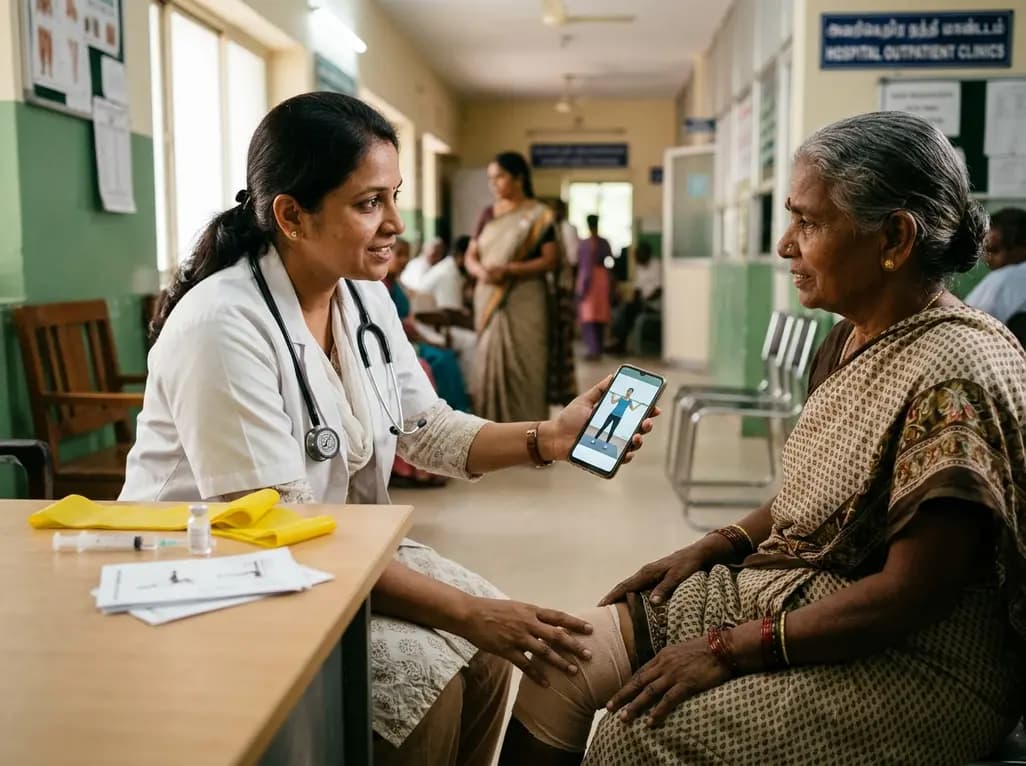
Adding a 12-week tele-supervised resistance band exercise program to intra-articular hyaluronic acid injections significantly improves physical function, chair stands, and mobility in knee osteoarthritis, despite showing no additive reduction in baseline pain scores.
Today

New evidence links altered sex steroids, cortisol elevation, and glycemic stress to natural killer cell dysfunction in type 2 diabetes. Understanding these endocrine-immune pathways provides valuable insights for Indian clinicians managing metabolic inflammation and infection susceptibility in diabetic patients.
Today
