.webp&w=384&q=75)

Loading, please wait...
Loading, please wait...
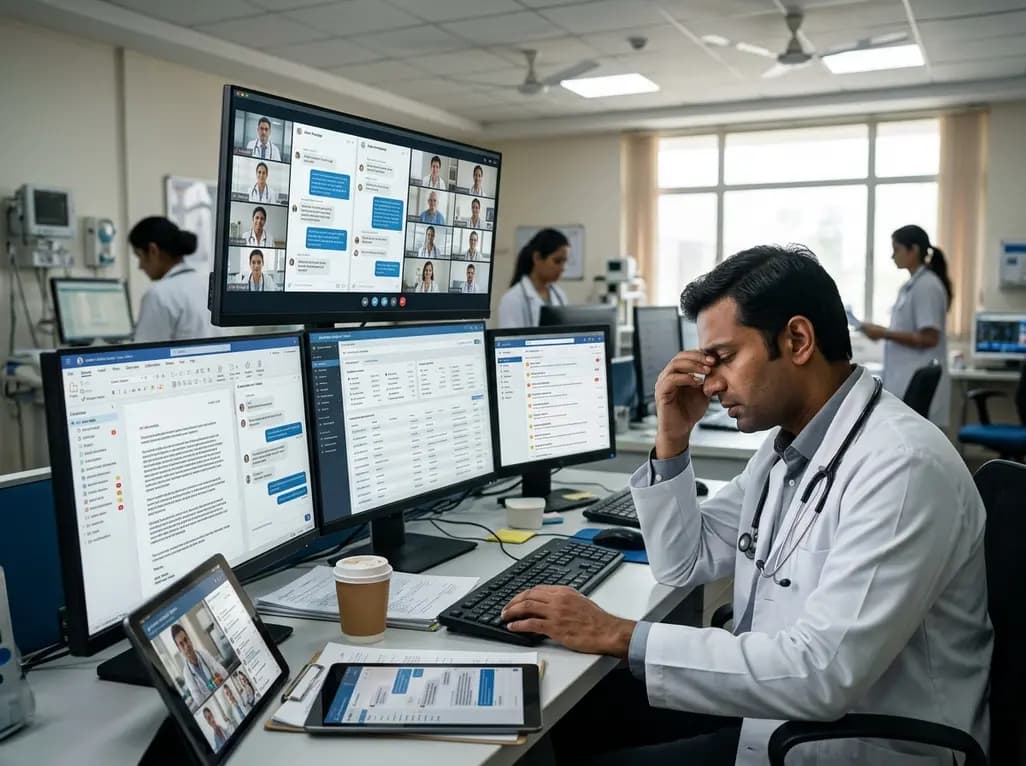
Telemedicine is rapidly transforming healthcare delivery through collaborative structures known as Online Medical Teams (OMTs). These digital platforms allow patients to consult with multiple doctors during a single care episode. However, recent research suggests that this collaborative approach significantly impacts online medical team effectiveness. While teamwork generally improves outcomes in traditional hospital settings, digital collaboration presents unique challenges that can sometimes hinder performance.
A comprehensive study recently analyzed data from 1,181 OMTs on a leading telemedicine platform between 2017 and 2023. Researchers utilized difference-in-differences designs and large language models to measure the impact of collaboration. Surprisingly, the results indicated that increased physician collaboration actually reduces overall team effectiveness. To understand this phenomenon, the authors explored two potential mechanisms: the cognitive-load effect and the free-riding effect.
The findings revealed that the cognitive-load effect is the primary driver behind reduced performance. When multiple physicians interact online, the mental effort required to coordinate and process information becomes excessive. Consequently, this burden slows down the consultation process. Conversely, the study found no empirical evidence to support the free-riding effect, where members might contribute less effort. Therefore, the issue is not a lack of physician motivation but rather an information bottleneck.
Additionally, the research highlighted that physician experience plays a crucial role in mitigating these challenges. Heterogeneity analyses showed that involving more experienced doctors helps neutralize the negative impacts of collaboration. Experienced clinicians likely possess better communication strategies to manage the high cognitive demands of digital platforms. Consequently, platform designers should focus on developing tools that streamline communication to improve clinical outcomes for patients.
The primary cause is the cognitive-load effect. This occurs when doctors are overwhelmed by the mental effort needed to coordinate with multiple colleagues and process large amounts of digital information simultaneously.
No, the research found no evidence of the free-riding effect. Physicians generally maintain their individual effort levels, but the complexity of the collaboration process itself reduces overall team efficiency.
Platforms can improve outcomes by involving more experienced physicians and designing interfaces that reduce cognitive strain. Streamlining communication management is essential for maintaining high levels of care in a team-based virtual environment.
Disclaimer: This content is for informational and educational purposes only and does not constitute medical advice. It is not intended to replace professional medical judgment, diagnosis, or treatment. Always seek the advice of your physician or other qualified health provider with any questions you may have regarding a medical condition. Refer to the latest local and national guidelines for clinical practice.
References
Zhou L et al. The Impact of Physician Collaboration on Online Medical Team Effectiveness: Evidence from a Telemedicine Platform. J Health Commun. 2026 Jun 06. doi: 10.1080/10810730.2026.2682508. PMID: 42251481.
Smith A, et al. Digital Health and Collaborative Care Models. Telemed J E Health. 2025;31(4):112-119.
Kumar R. The Rise of Telemedicine in India: Strategic Management of Virtual Teams. Indian J Med Res. 2024;159(2):45-52.

Read summarized clinical updates, watch expert medical content, and earn CME certifications right from your smartphone.
Open your smartphone camera to scan and install.





A study on 1,181 online medical teams reveals that excessive collaboration may reduce effectiveness due to increased cognitive load on physicians....
4 months ago

Explore why official drug package inserts fail to reflect modern evidence for clozapine prescribing. Learn how legal standards of care, case law, slow titration, and vital adverse event monitoring empower clinicians to prioritize evidence-based medical practice over outdated manufacturer labeling.
Today

Occult maternal malignancy accounts for 3.82% of persistent unreportable NIPT results with genomic noise. Multiple chromosomal aberrations, notably on chromosome 18, warrant thorough oncological evaluation and whole-body MRI to ensure timely maternal diagnosis while preserving fetal care.
Today

This article reviews the forensic and clinical complexities of acute myocarditis arising on left ventricular hypertrophy in children, highlighting early diagnostic red flags and multidisciplinary postmortem autopsy protocols.
Today
A randomized controlled trial demonstrates that an eight-week dual-task training intervention significantly improves static and dynamic postural control over standard balance exercises in individuals with chronic ankle instability, addressing critical neurocognitive deficits during athletic and daily activities.
Today

A retrospective cohort study of 7,716 ICU patients from the MIMIC-IV database demonstrates that Gradient Boosting Decision Trees significantly outperform traditional SOFA scores in predicting in-hospital mortality among patients with sepsis and diabetes, with SHAP analysis providing clinical interpretability.
Today
