.webp&w=384&q=75)

Loading, please wait...
Loading, please wait...

Sepsis remains a formidable challenge in modern critical care units worldwide. Systemic inflammatory cascades frequently induce multiorgan failure, with the renal parenchyma serving as an exceptionally vulnerable target. Clinicians recognize that septic acute kidney injury significantly amplifies patient morbidity, prolongs intensive care unit hospitalization, and escalates in-hospital mortality rates. Consequently, researchers continue to explore novel pharmacotherapeutic compounds capable of attenuating sepsis-driven tubular injury. A compelling preclinical investigation has illuminated the protective role of nimbolide, a natural limonoid extracted from the neem tree (Azadirachta indica), in preventing progressive renal dysfunction.
The pathogenesis of sepsis-induced renal damage involves complex interactions among microcirculatory dysfunction, excessive systemic inflammation, and cellular metabolic reprograming. Bacterial endotoxins and damage-associated molecular patterns trigger profound immune activation within the renal microenvironment. Subsequently, circulating immune cells infiltrate the renal interstitium, causing widespread tubular vacuolization and structural epithelial collapse. Furthermore, the localized burst of reactive oxygen species overwhelms endogenous antioxidant defenses, leading to severe lipid peroxidation and cellular death. Therefore, standard hemodynamic resuscitation alone often fails to halt parenchymal necrosis. Clinicians urgently require targeted therapeutic agents that effectively interrupt these interconnected pathogenic pathways at the cellular level.
In this landmark experimental study, investigators established a standard polymicrobial sepsis model using cecal ligation and puncture in mice. Sepsis induced pronounced elevations in serum creatinine and blood urea nitrogen, signaling severe acute renal failure. Additionally, histopathological examination revealed extensive tubular lumen dilation, loss of brush border integrity, and intense leukocyte infiltration. However, therapeutic administration of nimbolide markedly reversed these pathological disruptions. Treated animals demonstrated significant reductions in both serum creatinine and blood urea nitrogen concentrations. Histological evaluations confirmed preserved tubular architecture and minimal interstitial inflammatory infiltration. These biochemical and morphological improvements demonstrate nimbolide's robust capacity to preserve renal filtration capacity during systemic endotoxemia.
Uncontrolled hyperinflammation represents a hallmark of septic renal pathology. During severe sepsis, activated renal tubular cells and resident macrophages release an overwhelming surge of pro-inflammatory mediators. The study quantified vital inflammatory cytokines, specifically interleukin-6, interleukin-1β, and tumor necrosis factor-α, in both systemic circulation and renal tissue homogenates. Untreated septic mice displayed dramatic elevations in these circulating and tissue-specific mediators. Conversely, nimbolide treatment exerted potent anti-inflammatory effects by substantially reducing the concentrations of interleukin-6, interleukin-1β, and tumor necrosis factor-α across all tested compartments. Consequently, mitigating this cytokine surge prevented secondary endothelial activation, sustained microvascular perfusion, and halted systemic inflammatory escalation.
Oxidative stress plays an equally destructive role in damaging tubular epithelial cells during sepsis. Excessive free radical generation initiates lipid peroxidation, which destabilizes mitochondrial membranes and induces programmed cell death. In this study, septic control animals showed high levels of malondialdehyde, alongside depleted concentrations of endogenous glutathione and reduced superoxide dismutase enzymatic activity. Remarkably, nimbolide administration restored the intracellular redox equilibrium. Nimbolide significantly decreased renal malondialdehyde content while bolstering superoxide dismutase activity and glutathione stores. Furthermore, terminal deoxynucleotidyl transferase dUTP nick end labeling assays showed that nimbolide suppressed renal tubular epithelial apoptosis, thereby preserving vital nephron architecture.
To uncover the molecular mechanisms driving these nephroprotective effects, researchers examined intracellular transcription cascades via Western blot analysis. Nuclear factor-kappa B and signal transducer and activator of transcription 3 represent two master regulatory proteins that govern inflammatory transcription and cell death. The investigators found that sepsis induced hyperphosphorylation of NF-κB p65 and STAT3 in renal tissues. Notably, nimbolide treatment effectively inhibited the phosphorylation of both NF-κB p65 and STAT3. By silencing this dual signaling axis, nimbolide prevented the transcriptional upregulation of inflammatory cytokines and apoptotic cascades. Thus, the concurrent blockade of NF-κB and STAT3 explains nimbolide's profound multimodal therapeutic efficacy.
Nimbolide is a natural bioactive limonoid obtained from Azadirachta indica, commonly known as the neem tree. Botanists and pharmacologists have long studied this plant for its diverse therapeutic properties. Modern pharmacological evaluations demonstrate that nimbolide exhibits potent anti-inflammatory, antioxidant, antiproliferative, and cellular protective characteristics across various experimental disease models, including acute inflammatory organ dysfunction.
Nimbolide directly interferes with intracellular signal transduction by preventing the phosphorylation and activation of NF-κB p65 and STAT3 transcription factors. Consequently, the cell downregulates the transcription of major inflammatory cytokines like interleukin-6 and tumor necrosis factor-α. This molecular blockade also reduces reactive oxygen species generation, enhances endogenous antioxidant enzymes, and prevents mitochondrial-mediated tubular epithelial apoptosis.
Although these murine findings provide compelling proof-of-concept for nimbolide's nephroprotective efficacy, clinical implementation requires substantial further investigation. Researchers must first establish human pharmacokinetic profiles, optimal dosing regimens, bioavailability standards, and comprehensive safety parameters through rigorous phased clinical trials before integrating nimbolide into routine human critical care protocols for sepsis-induced kidney injury.
Disclaimer: This content is for informational and educational purposes only, and should not be taken as medical advice. Laboratory and animal research findings may not translate directly to clinical practice. Refer to the latest local and national guidelines for clinical practice.
References

Read summarized clinical updates, watch expert medical content, and earn CME certifications right from your smartphone.
Open your smartphone camera to scan and install.





A novel preclinical study demonstrates that nimbolide, a bioactive neem limonoid, mitigates septic acute kidney injury in murine models by curbing inflammation, reducing oxidative stress, and inhibiting the activation of NF-κB and STAT3 signaling pathways.
last month

A recent clinical case series highlights the synthetic polylactic acid matrix as an innovative local therapy for refractory pyoderma gangrenosum. The bioresorbable scaffold demonstrated complete ulcer closure and favorable scar quality across chronic wounds, presenting a viable regenerative modality.
Today

A nationwide South Korean study shows underreporting of smoking among women dropped from 57.4% to 36.4% between 2008 and 2021. However, over one-third of female smokers still conceal their habit, highlighting the critical role of cotinine verification in clinical risk assessment.
Today
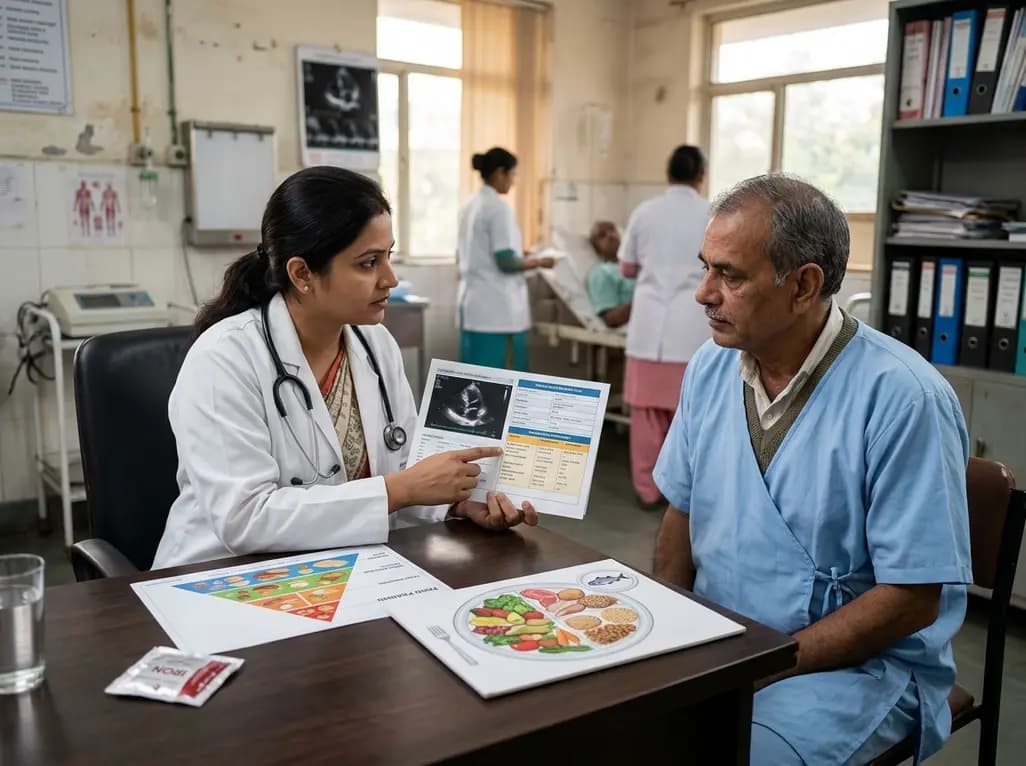
A scientific statement highlights the crucial role of nutrition in managing chronic heart failure. It emphasizes GLIM-based screening, individualized dietary patterns like the Mediterranean diet, appropriate protein and energy intake, avoiding unnecessary fluid restriction, and targeted iron supplementation.
Today

A new study evaluates the rheological stability of decellularized peripheral nerve matrix hydrogels under varied storage conditions. Findings show -80°C storage and freeze-drying preserve gelation kinetics and mechanical stiffness, offering key insights for shipping and translational clinical applications.
Today

A qualitative meta-synthesis highlights the complex interplay between gender dysphoria, minority stress, and eating disorders in transgender and gender-diverse individuals. Clinicians must recognize these distinct drivers to offer supportive, gender-affirming, and interdisciplinary eating disorder care.
Today
