.webp&w=384&q=75)

Loading, please wait...
Loading, please wait...
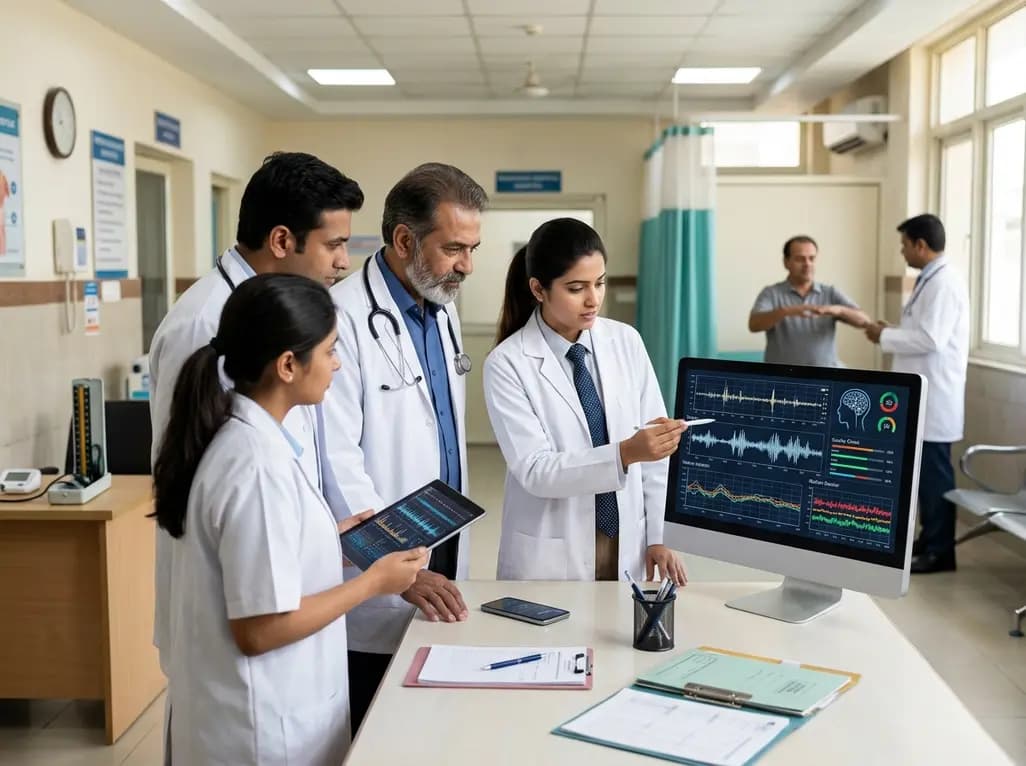
Digital health technologies now enable automated screening and continuous motor monitoring directly in domestic settings. However, clinical implementation of remote Parkinson disease assessment faces major hurdles regarding audio and video recording fidelity. Unsupervised domestic recording frequently introduces task-specific technical errors that compromise algorithmic precision. Consequently, innovative automated quality assurance frameworks are essential to maintain diagnostic reliability in virtual neurology care.
Clinicians increasingly rely on virtual platforms to evaluate progressive movement disorders outside formal consultation rooms. However, unsupervised telemedicine recordings present severe vulnerabilities that standard multimedia screening fails to recognize. For example, generic video algorithms rarely detect hand occlusion during rapid finger-tapping tasks. Similarly, traditional checks overlook poor facial framing during smile evaluations or subtle background ambient interference during speech recordings. Therefore, automated disease detection models frequently process corrupted inputs, which causes misleading symptom scoring and erratic clinical decisions. In countries with expansive patient populations like India, where geographical distance limits regular specialist visits, remote evaluation offers remarkable potential. Nevertheless, telemedicine systems require rigorous data validation before machine learning tools can analyze patient motor function. Without automated quality assessment, clinicians cannot distinguish between true motor deterioration and basic recording artifacts. Consequently, engineering task-aware data validation tools has become a critical clinical priority in modern neuro-telehealth. Moreover, poor video quality causes diagnostic delays and increases patient frustration when tests must be repeated.
To resolve these data integrity challenges, researchers engineered NeuroSift as a task-aware quality assurance framework. Specifically, the team collected and evaluated 2,516 home-recorded multimedia segments across three standard diagnostic activities. These activities included repetitive finger-tapping, voluntary facial smile expression, and standardized speech pangram vocalization. Furthermore, clinical experts established detailed task-specific annotation protocols to standardize recording evaluations. Three independent reviewers initially assessed recordings and categorized them into poor, borderline, or good quality tiers. Subsequently, the researchers implemented structured guideline revisions that significantly improved interrater agreement across all task types. For instance, quadratic weighted Cohen kappa increased markedly from 0.46 to 0.89 for finger-tapping assessments. Pairwise agreement and intraclass correlation coefficients also demonstrated substantial statistical enhancements across facial and vocal diagnostic tasks. Thus, creating standardized quality guidelines established a dependable foundation for training intelligent machine learning classifiers. In addition, consensus labeling ensured that borderline recordings received consistent classification for supervised training.
The development of NeuroSift focused on engineering interpretable mathematical features directly connected to real clinical quality criteria. Instead of deploying opaque deep networks, the developers trained task-tailored classifiers using transparent, domain-specific metrics. For video assessments, the algorithm evaluated hand visibility, finger landmark tracking, frame stability, and facial illumination. For acoustic tasks, the framework analyzed signal-to-noise ratio, background voice contamination, and acoustic clipping. When tested on held-out consensus datasets, the machine learning models demonstrated excellent classification accuracy and ordinal precision. Specifically, ordinal classification accuracy reached high benchmarks across all evaluated modalities. Furthermore, the researchers utilized Shapley additive explanations to inspect feature contributions across every automated prediction. This explainability ensures that the software identifies exact failure modes rather than functioning as an uninformative black-box classifier. Consequently, the model delivers actionable feedback that allows patients to rectify camera positioning or acoustic issues immediately. Therefore, users receive clear guidance on whether poor lighting, distance, or ambient sound compromised the assessment.
Integrating automated quality assessment transforms the reliability of remote movement disorder tracking. Historically, corrupted home recordings either contaminated downstream diagnostic algorithms or required laborious manual screening by clinical staff. NeuroSift effectively filters noncompliant multimedia data before diagnostic artificial intelligence models compute symptom severity scores. Consequently, downstream predictive models receive only standardized, high-fidelity inputs. Moreover, real-time quality triage empowers elderly patients to re-record faulty tasks instantly during their home session. This automated feedback loop dramatically reduces the rate of uninterpretable clinical telehealth encounters. For neurologists managing Parkinson disease, continuous access to dependable longitudinal data provides clear insights into symptom fluctuations and medication on-off cycles. In addition, transparent quality scoring protects clinicians against automated algorithmic bias stemming from lighting or hardware variances. Ultimately, task-aware quality screening strengthens clinical trust in home-based neurodegenerative monitoring tools. Thus, movement disorder specialists can make evidence-based pharmacological adjustments with heightened diagnostic certainty.
Scaling artificial intelligence frameworks into diverse healthcare environments demands robust validation across heterogeneous digital infrastructure. In India, patients utilize widely varied mobile devices, camera resolutions, and domestic lighting environments. Therefore, prospective studies must evaluate whether quality assurance frameworks maintain high accuracy across diverse socioeconomic demographics. Furthermore, developers must integrate lightweight quality checks directly into smartphone applications to provide instantaneous edge-computing feedback. Such on-device evaluation eliminates unnecessary data transmission of corrupted recordings across bandwidth-constrained networks. Moving forward, clinical trials should also evaluate the direct impact of automated quality filters on long-term clinical outcomes. Beyond Parkinson disease, this task-aware quality paradigm offers valuable utility for remote stroke rehabilitation, amyotrophic lateral sclerosis tracking, and ataxia monitoring. Consequently, adopting explainable quality assurance represents a pivotal milestone toward equitable, reliable digital neurology nationwide. As telemedicine adoption accelerates across rural and urban centers, robust quality assurance will underpin safe digital clinical practice.
NeuroSift extracts interpretable multimedia features specifically aligned with clinical motor task requirements rather than relying on generic video metrics. For finger-tapping tasks, the framework continuously monitors hand visibility, finger landmark tracking, and motion stability. For speech tasks, it precisely measures signal-to-noise ratios and background acoustic interference. Consequently, the system accurately identifies whether home recordings satisfy strict clinical standards for automated symptom assessment.
Explainable machine learning allows digital health platforms to deliver immediate, actionable guidance directly to patients during home recording sessions. Instead of simply rejecting an uninterpretable video, the system highlights the exact defect, such as improper facial illumination or hand occlusion. Therefore, patients can instantly adjust their environment and repeat the task, significantly reducing frustrating technical failures during remote neurological monitoring.
Automated quality screening prevents corrupted, noncompliant multimedia recordings from reaching downstream diagnostic machine learning algorithms. Consequently, clinicians receive accurate motor symptom assessments without misleading artifacts caused by poor lighting or background noise. Furthermore, this automated process eliminates the need for manual video curation by medical staff, streamlining telemedicine workflows and supporting dependable longitudinal care for chronic movement disorders.
Disclaimer: This content is for informational and educational purposes only and does not constitute medical advice. Refer to the latest local and national guidelines for clinical practice.
References

Read summarized clinical updates, watch expert medical content, and earn CME certifications right from your smartphone.
Open your smartphone camera to scan and install.





NeuroSift introduces an interpretable machine learning framework to evaluate data quality and task compliance in home multimedia recordings for remote Parkinson disease assessment, improving diagnostic reliability.
last month
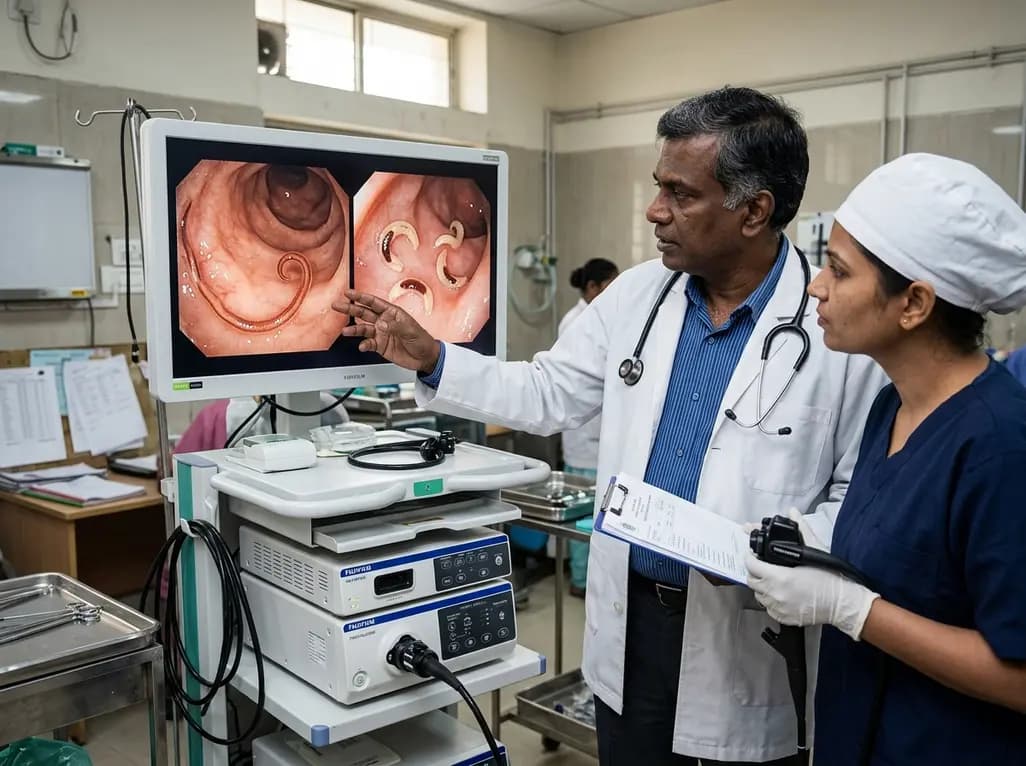
A review of incidental intestinal parasitic infections detected during colonoscopy, highlighting diagnostic morphology, the absence of peripheral eosinophilia, and tailored antihelminthic treatment.
Today

A nationwide South Korean study shows underreporting of smoking among women dropped from 57.4% to 36.4% between 2008 and 2021. However, over one-third of female smokers still conceal their habit, highlighting the critical role of cotinine verification in clinical risk assessment.
Today

PepsiCo and Monster Beverage have challenged the FSSAI ban on the energy drink label in Indian courts. While companies highlight supply disruptions, regulatory actions spotlight severe cardiovascular and metabolic risks associated with excessive caffeine, sugar, and taurine consumption, especially in adolescents.
Today

A new study evaluates the rheological stability of decellularized peripheral nerve matrix hydrogels under varied storage conditions. Findings show -80°C storage and freeze-drying preserve gelation kinetics and mechanical stiffness, offering key insights for shipping and translational clinical applications.
Today

A Bayesian multilevel meta-analysis reveals that aerobic training combined with moderate carbohydrate restriction modestly lowers HbA1c in type 2 diabetes. However, sparse data and very low certainty leave incremental benefits over exercise or diet alone unproven, highlighting the need for individualized care.
Yesterday
