

Loading, please wait...
Loading, please wait...

Managing neonatal hyperbilirubinemia represents a primary clinical challenge in routine newborn care. In August 2022, the American Academy of Pediatrics updated its clinical practice guideline for infants born at 35 weeks of gestation or later. This revision raised treatment thresholds to safely curb unnecessary phototherapy and reduce family disruption. However, clinicians require real-world evidence to evaluate post-discharge outcomes and readmission severity. A recent comparative study specifically analyzes hospital readmission patterns and serum bilirubin concentrations before and after guideline implementation.
For nearly two decades, clinicians relied on historical guidelines to manage neonatal jaundice. While that approach lowered kernicterus rates, it also prompted hospitalizations for many borderline cases. Consequently, excessive interventions disrupted maternal bonding and impeded early breastfeeding establishment. The revised 2022 guideline introduced higher, individualized phototherapy thresholds while accounting for specific neurotoxicity risk factors. These factors include gestational age, hemolytic disease, clinical instability, and hypoalbuminemia. In addition, the guideline introduced a formalized escalation of care protocol for infants nearing critical thresholds. Many clinicians welcomed these updates because they minimized overtreatment in low-risk infants. Nevertheless, raising treatment cutoffs sparked clinical debate regarding delayed presentations. Pediatricians questioned whether infants might present later with substantially higher bilirubin concentrations. Furthermore, providers worried about unexpected surges in severe readmissions requiring urgent intensive care. Therefore, tracking post-discharge metrics became imperative to confirm that clinical safety remains intact across health systems. Ongoing surveillance ensures that hospital admission policies protect newborn health without overburdening families. Comprehensive evaluation of readmissions provides the necessary objective validation for revised pediatric protocols.
To evaluate clinical outcomes, investigators conducted a single-center retrospective study at a free-standing children's hospital. The research team identified neonates born at 35 or more weeks of gestation. Furthermore, they included infants readmitted between 24 hours and 14 days of age with neonatal jaundice as the primary diagnosis. The authors divided participants into two chronological groups. The pre-guideline cohort comprised infants born between July 2020 and June 2022. In contrast, the post-guideline cohort included neonates born between January 2023 and December 2024. In total, the study evaluated 941 readmitted patients. Notably, the pre-guideline group contained 553 infants, whereas the post-guideline group included 388 neonates. This comparison revealed a notable reduction in total readmissions following the revised framework. Across both groups, the mean gestational age at birth was 38 weeks, and the mean chronological age at readmission was 5.5 days. Consequently, the basic demographic profile of readmitted neonates remained consistent despite the shift in diagnostic cutoffs. Clinical outcomes directly reflect the impact of guideline implementation rather than shifting patient demographics. These findings demonstrate that healthy late-preterm and term infants follow predictable post-discharge trajectories.
Although total readmissions declined, laboratory evaluations revealed distinct differences in total serum bilirubin levels between cohorts. The median bilirubin concentration on admission reached 19.9 mg/dL overall, rising from 19.1 mg/dL before the revision to 21.0 mg/dL afterward. Similarly, the mean admission bilirubin was 19.1 mg/dL in the earlier group compared to 20.9 mg/dL in the updated group. This modest difference was statistically significant. More importantly, investigators noted a marked increase in infants requiring urgent escalation protocols. Specifically, 33 infants in the post-guideline cohort presented with bilirubin levels at or exceeding the exchange transfusion threshold, compared to 20 infants in the historical cohort. Moreover, an additional 41 patients in the post-revision group met criteria for escalation of care without reaching exchange transfusion levels, compared to 29 patients previously. These escalations demand aggressive intensive phototherapy and continuous surveillance. Consequently, while fewer babies returned to the hospital overall, those who did presented with higher biochemical severity. Timely identification prevents severe hyperbilirubinemia from progressing to acute bilirubin encephalopathy. Therefore, post-discharge surveillance systems must rapidly identify concerning bilirubin trajectories.
These findings offer critical insights for clinicians caring for discharging newborns. Because guidelines set higher thresholds, infants tolerate higher physiological bilirubin levels safely in home environments. As a result, hospitals observe substantial reductions in unnecessary inpatient admissions and lower financial burdens on healthcare systems. However, the observed rise in admission bilirubin concentrations emphasizes the critical need for meticulous outpatient monitoring. When clinicians release newborns home under higher thresholds, they shrink the margin for clinical delay. Thus, early outpatient evaluations become non-negotiable safety checkpoints. Pediatricians must schedule the first post-discharge follow-up within 24 to 48 hours for infants with rapid bilirubin rise or borderline predischarge levels. Furthermore, clinicians must evaluate feeding adequacy, weight loss, and maternal lactation progress thoroughly. Dehydration and inadequate caloric intake accelerate hyperbilirubinemia rapidly. In addition, providers must educate parents regarding early warning signs such as excessive lethargy and poor feeding. Clear communication empowers families to seek immediate clinical assistance before bilirubin reaches neurotoxic ranges. Consequently, structured outpatient follow-up serves as an essential safety net for successful community recovery.
Modern neonatal medicine continuously strives to balance overtreatment risks against the catastrophic danger of kernicterus. The 2022 AAP revision successfully curbed overtreatment and decreased costly hospital stays for healthy newborns. Nevertheless, the emergence of higher readmission bilirubin values highlights the imperative for robust risk stratification. Pediatricians should not interpret higher phototherapy thresholds as permission for relaxed clinical surveillance. Instead, clinicians must actively screen for neurotoxicity risk factors, such as blood group isoimmunization and glucose-6-phosphate dehydrogenase deficiency. Additionally, transcutaneous bilirubinometry provides an indispensable non-invasive screening tool during early follow-up visits. Whenever transcutaneous measurements approach treatment thresholds, clinicians must promptly obtain confirmatory serum testing. In regions with diverse healthcare access, standardized discharge planning and established community follow-up pathways prevent catastrophic delays. Furthermore, neonatologists must review escalation protocols regularly so that bedside staff can deploy intensive phototherapy without hesitation. By integrating revised thresholds with diligent community follow-up, healthcare teams protect vulnerable neonates effectively. Ultimately, maintaining high vigilance preserves newborn health across diverse neonatal care environments.
The revised guideline raised phototherapy and exchange transfusion thresholds across term and late-preterm newborns based on extensive safety data. In addition, it eliminated older risk categorization tables and introduced granular gestational age-specific nomograms. Crucially, the update established a defined escalation of care protocol for infants within 2 mg/dL of exchange transfusion levels, emphasizing intensive phototherapy, emergent intravenous hydration, and strict neurotoxicity risk assessments.
Admission bilirubin levels increased primarily because higher initiation thresholds permit infants to remain safely in the community at concentrations that previously triggered hospital admission. Consequently, neonates who experience delayed clearance or rapid hemolysis accumulate higher biochemical levels before meeting readmission criteria. Therefore, while total readmissions decreased, the subset of infants returning to the hospital presented with higher average bilirubin levels requiring intensive clinical management.
Clinicians should schedule early follow-up visits within 24 to 48 hours following discharge, especially for late-preterm infants or those with elevated predischarge bilirubin levels. Furthermore, providers must assess feeding competence, measure percentage weight loss, and utilize objective transcutaneous bilirubin screening. In addition, clinicians must educate parents on dehydration symptoms and lethargy to facilitate timely emergency presentations before bilirubin concentrations approach exchange transfusion thresholds.
Disclaimer: This content is for informational and educational purposes only... Refer to the latest local and national guidelines for clinical practice.
References

Read summarized clinical updates, watch expert medical content, and earn CME certifications right from your smartphone.
Open your smartphone camera to scan and install.





A study evaluates hospital readmissions for neonatal hyperbilirubinemia before and after the 2022 AAP guideline update, showing fewer total readmissions but higher admission bilirubin levels and increased escalations of care.
Today

The AustrAIHANZ consensus guidelines offer evidence-informed recommendations on the investigation, first- and second-line treatments, transfusion strategies, and supportive care for autoimmune haemolytic anaemia.
Today

Assam reduced maternal sepsis deaths from 21% to 8% through rigorous infection prevention protocols and digital monitoring. Explore the clinical strategies, sterilization quality checks, early recognition pathways, and antimicrobial stewardship lessons essential for obstetric teams across India.
Today
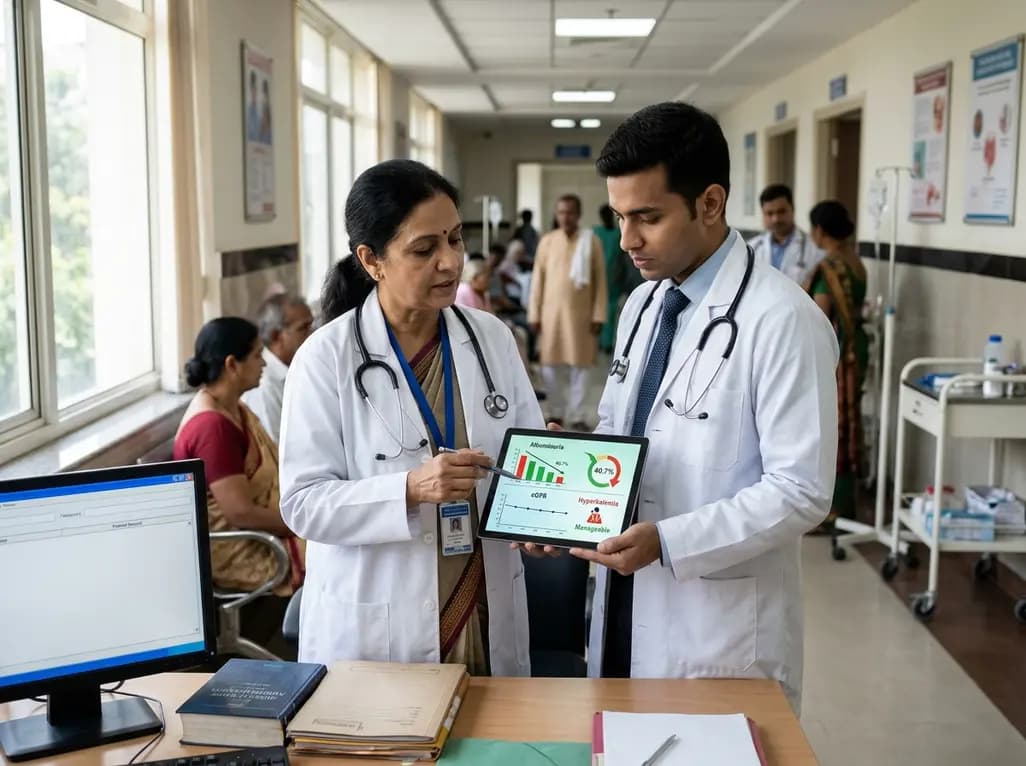
A real-world cohort study of 6,537 patients from the FOUNTAIN platform demonstrates that initiating finerenone significantly reduces albuminuria by 40.7% with minimal eGFR decline and manageable hyperkalemia risk, confirming its practical effectiveness and safety in diabetic kidney disease.
Today
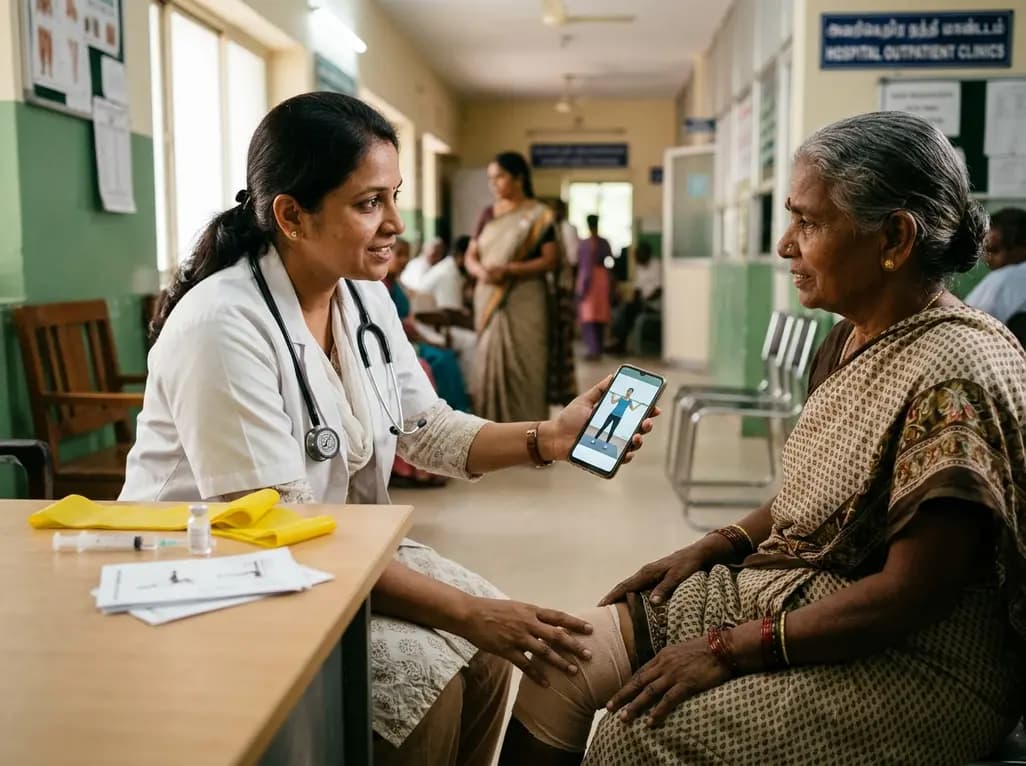
Adding a 12-week tele-supervised resistance band exercise program to intra-articular hyaluronic acid injections significantly improves physical function, chair stands, and mobility in knee osteoarthritis, despite showing no additive reduction in baseline pain scores.
Today

A secondary analysis of the OMDOT-1 trial highlights how tirzepatide and semaglutide uniquely reshape gut microbial diversity and metabolic pathways in type 2 diabetes, providing new insights into incretin-mediated metabolic regulation.
Today
