.webp&w=384&q=75)

Loading, please wait...
Loading, please wait...

On Monday, the Supreme Court refused to direct the NTA to conduct the NEET-UG 2026 re-test online. Consequently, the upcoming examination on June 21 will proceed in the traditional pen-and-paper mode. A vacation bench comprising Justices PS Narasimha and Aravind Kumar deferred the matter to July. Therefore, the physical format remains unchanged for now. This decision comes after a petition requested immediate digital reforms to prevent malpractice.
First, the bench highlighted the massive practical difficulties that the examination authorities face. Justice Narasimha noted that the National Testing Agency is already dealing with severe administrative pressure. The agency is working hard to quickly reconduct the test after paper leaks cancelled the original May exam. Thus, the court decided that altering the format at this late stage is not feasible. However, the bench did not dismiss the petition entirely. Instead, they scheduled the next hearing for July, after the court vacation ends.
RJD MP Sudhakar Singh filed the plea to seek sweepingly secure digital systems. Specifically, the petitioner requested a transition to a secure computer-based testing format. Additionally, the plea sought a time-bound roadmap detailing infrastructure development and cybersecurity safeguards. Furthermore, the petition demanded biometric verification and AI-enabled surveillance. These measures aim to restore student trust after recent exam controversies. However, physical arrangements for the June 21 test are already in the final stages. Meanwhile, the CBI continues its investigation into the initial paper leak.
Q1: Why did the Supreme Court refuse to hold the NEET-UG 2026 re-test online?
The Supreme Court declined the plea because changing the format now poses practical difficulties. Currently, the National Testing Agency faces intense pressure to reconduct the exam on June 21.
Q2: What was the reason behind the cancellation of the original NEET-UG 2026 exam?
The authorities cancelled the original NEET-UG exam held on May 3, 2026, due to widespread paper leaks. Consequently, they scheduled a fresh pen-and-paper re-test for June 21 to protect the interests of the candidates.
Q3: What reforms did the petitioner request for the NEET examination system?
The petitioner sought a transition to a computer-based exam format with robust cybersecurity. Additionally, the plea requested biometric verification, AI-enabled surveillance, and a clear roadmap for digital infrastructure development.
Disclaimer: This content is for informational and educational purposes only. It does not constitute medical advice or replace professional judgment. Refer to the latest local and national guidelines for clinical practice.
References

Read summarized clinical updates, watch expert medical content, and earn CME certifications right from your smartphone.
Open your smartphone camera to scan and install.





The Supreme Court of India has declined a petition to conduct the upcoming June 21 NEET-UG 2026 re-examination via computer-based testing. The bench cited practical challenges and ongoing pressure on the National Testing Agency, confirming the test will remain in the traditional pen-and-paper format.
4 months ago

Explore why official drug package inserts fail to reflect modern evidence for clozapine prescribing. Learn how legal standards of care, case law, slow titration, and vital adverse event monitoring empower clinicians to prioritize evidence-based medical practice over outdated manufacturer labeling.
Today
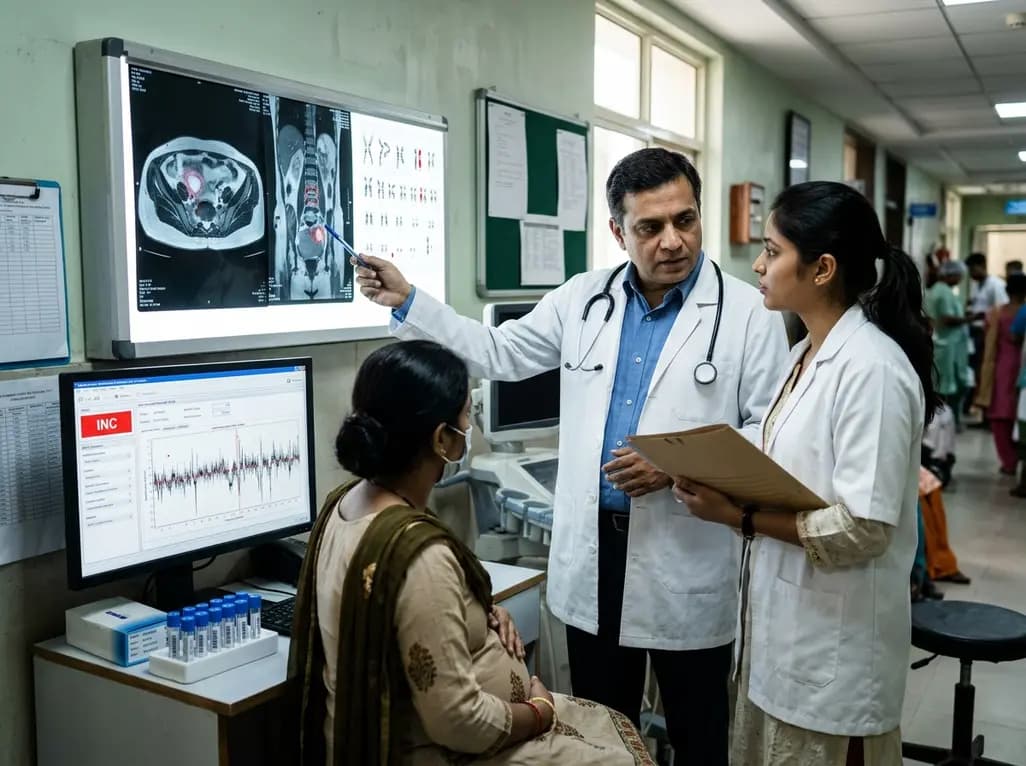
Occult maternal malignancy accounts for 3.82% of persistent unreportable NIPT results with genomic noise. Multiple chromosomal aberrations, notably on chromosome 18, warrant thorough oncological evaluation and whole-body MRI to ensure timely maternal diagnosis while preserving fetal care.
Today
This article reviews the forensic and clinical complexities of acute myocarditis arising on left ventricular hypertrophy in children, highlighting early diagnostic red flags and multidisciplinary postmortem autopsy protocols.
Today
A randomized controlled trial demonstrates that an eight-week dual-task training intervention significantly improves static and dynamic postural control over standard balance exercises in individuals with chronic ankle instability, addressing critical neurocognitive deficits during athletic and daily activities.
Today

A retrospective cohort study of 7,716 ICU patients from the MIMIC-IV database demonstrates that Gradient Boosting Decision Trees significantly outperform traditional SOFA scores in predicting in-hospital mortality among patients with sepsis and diabetes, with SHAP analysis providing clinical interpretability.
Today
