

Loading, please wait...
Loading, please wait...
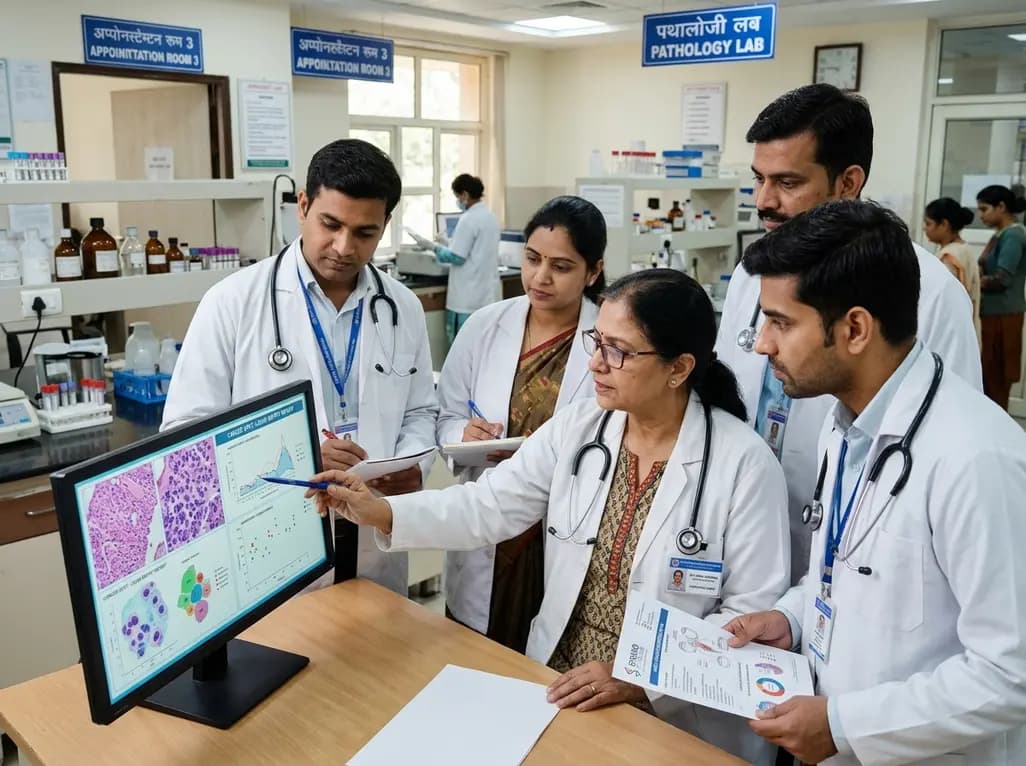
Cancer diagnosis at advanced stages remains one of the greatest clinical challenges facing healthcare providers across India. Multi-cancer early detection tests now offer a transformative approach to identifying malignant diseases before clinical symptoms manifest. Historically, screening protocols targeted single anatomical sites, leaving many lethal malignancies without viable screening pathways. However, emerging blood-based liquid biopsies evaluate circulating biomarkers across numerous organ systems simultaneously. Strand Life Sciences recently announced plans to scale its proprietary CancerSpot test to capture substantial domestic market share over the coming years. Consequently, this diagnostic evolution promises to shift cancer care from late-stage crisis management toward proactive, curative intervention.
Standard population screening in India focuses primarily on breast, cervical, and oral cancers. Yet, malignancies such as pancreatic, ovarian, esophageal, and gallbladder cancers often escape detection until metastatic spread occurs. Therefore, clinicians frequently encounter patients who have already progressed to Stage III or Stage IV disease. Multi-cancer early detection addresses this severe diagnostic blind spot through a single peripheral blood draw. By surveying biological signals from multiple organ systems at once, these innovative assays detect occult malignancies when tumors remain localized. Furthermore, detecting cancer in localized stages radically improves curative surgical resection rates and long-term overall survival. For example, localized colorectal and esophageal lesions respond far better to standard curative intent protocols than widely disseminated disease. Additionally, blood-based screening minimizes patient reluctance associated with invasive endoscopic procedures or cumulative radiation exposure from diagnostic imaging. As a result, this universal testing strategy provides a scalable platform to expand preventive healthcare delivery throughout the country. Primary care physicians can utilize these tools to identify silent malignancies in individuals who lack overt family history or classical symptoms. Consequently, multi-cancer screening represents a vital strategic leap toward closing critical diagnostic equity gaps.
Liquid biopsy assays rely on the shedding of cell-free deoxyribonucleic acid into systemic circulation. When malignant cells undergo programmed apoptosis or uncontrolled necrosis, they release fragmented tumor DNA directly into blood plasma. However, isolating these minute tumor fractions presents significant analytical hurdles because non-malignant somatic cells also shed circulating fragments. To overcome this limitation, developers employ high-throughput next-generation sequencing combined with artificial intelligence algorithms. Specifically, the CancerSpot platform examines genome-wide DNA methylation patterns rather than relying purely on somatic mutations. Abnormal DNA methylation serves as a hallmark epigenetic modification that distinguishes malignant tissue from surrounding normal physiological tissue. Moreover, research recently published in the Proceedings of the National Academy of Sciences revealed a critical physiological insight. Circulating DNA derived from immune cells rises in tandem with tumor-derived fragments during active malignancy. Historically, scientists feared that expanding leukocyte DNA would dilute subtle tumor signals. Instead, the study demonstrated that higher overall cell-free DNA concentrations actually strengthen cancer-associated methylation signatures. As a result, coordinated immune signaling sharpens epigenetic detection even when primary tumor burden remains comparatively modest. This biological finding directly enhances test accuracy across heterogeneous patient cohorts.
Robust clinical validation remains mandatory before any novel screening tool enters routine oncological practice. Strand Life Sciences validated the clinical performance of CancerSpot through its extensive EMERGE study. This retrospective case-control trial enrolled 1,480 participants across 43 specialized hospital centers located throughout India. Importantly, the cohort incorporated newly diagnosed patients across 14 distinct cancer categories alongside matched healthy control subjects. In an independent, held-out validation cohort, the assay demonstrated an overall cancer detection sensitivity of 72 percent. Furthermore, the test maintained an exceptionally low false-positive rate of only 1.4 percent. Maintaining a low false-positive rate represents a paramount clinical priority in asymptomatic cancer screening. High specificity prevents unnecessary follow-up radiological scans, invasive biopsies, and profound psychological distress for healthy individuals. In addition, the assay accurately pinpointed the tissue of origin across the majority of confirmed malignancies. Staging analysis confirmed that detection sensitivity scaled effectively across both early and locally advanced tumors. Nevertheless, clinicians must recognize that case-control validation cohorts primarily involve symptomatic patients. Consequently, ongoing prospective screening studies will further define real-world test characteristics among asymptomatic, average-risk individuals in routine clinical practice.
Advanced genomic diagnostics historically carried prohibitive retail prices that restricted their clinical adoption to affluent demographics. In India, multi-cancer liquid biopsies currently cost around ₹26,000 per patient. However, Reliance-backed Strand Life Sciences has initiated an ambitious program to dramatically reduce test expenditures. Over the next two years, the enterprise intends to lower the cost below ₹10,000, ultimately targeting ₹1,000 over the long term. Company leadership explicitly compares this pricing transition to the rapid market expansion observed during the telecom revolution. To achieve this unprecedented price disruption, manufacturers are implementing several strategic operational levers. Specifically, domestic reagent manufacturing, laboratory automation, microfluidic miniaturization, and indigenous genomic sequencing capabilities will lower baseline operational overheads. India contains an estimated addressable population of 52 million individuals aged 50 to 75 years. Even a conservative five percent market adoption rate translates into a ₹2,600-crore diagnostic market opportunity. Furthermore, substantial price reductions will allow public health programs and corporate wellness initiatives to incorporate routine genomic screening. As economies of scale expand, widespread testing could significantly reduce downstream therapeutic expenditure by preventing late-stage chemotherapy and surgical emergencies.
Physicians must understand the precise clinical role of multi-cancer early detection within current screening pathways. Multi-cancer liquid biopsy tests do not replace validated standard-of-care screening methods. Therefore, patients must continue adhering to recommended mammography, cervical cytology, and colonoscopy guidelines. Instead, clinicians should view blood-based multi-cancer tests as complementary diagnostic tools that address hard-to-screen malignancies. When an assay reports a positive cancer signal, practitioners must initiate a systematic diagnostic workup. Because the test predicts the suspected tissue of origin, physicians can order targeted imaging such as computed tomography or magnetic resonance imaging. If radiological studies locate an anatomical lesion, specialists perform a definitive histopathological biopsy to confirm the diagnosis. Conversely, a negative screening result never guarantees the absolute absence of microscopic malignancy. Some tumors shed negligible quantities of cell-free DNA into the bloodstream. Hence, clinicians must educate patients that annual screening and prompt evaluation of new clinical symptoms remain indispensable. Moreover, proper pre-test counseling ensures that patients understand both the benefits and potential diagnostic limitations of cell-free DNA profiling. By integrating these tests responsibly, medical practitioners can improve early tumor interception while avoiding unnecessary interventions.
Q1: What biological markers does CancerSpot measure to detect malignancy?
CancerSpot evaluates chemical modifications known as DNA methylation across circulating cell-free DNA fragments extracted from peripheral blood. Malignant cells display unique, abnormal methylation patterns compared to healthy somatic tissues. In addition, machine-learning algorithms analyze these epigenetic signatures to identify the presence of malignant disease and predict the anatomical tissue of origin. This advanced molecular profiling allows clinicians to uncover hidden malignancies across 14 organ systems using a single blood collection.
Q2: Can a multi-cancer blood test replace routine mammograms and colonoscopies?
No, multi-cancer liquid biopsies cannot replace established standard screening tests such as mammography, Pap smears, or colonoscopy. Instead, these molecular assays serve as powerful complementary tools designed to detect cancers that lack conventional population screening methods, including pancreatic, gastric, and ovarian tumors. Therefore, clinicians must continue recommending routine conventional screenings. If a liquid biopsy detects a positive cancer signal, physicians must confirm the finding using targeted radiological imaging and definitive histological biopsy.
Q3: How will domestic manufacturing influence the accessibility of genomic cancer screening?
Domestic manufacturing and operational automation directly reduce the cost of proprietary reagents, sequencing equipment, and laboratory workflows. Currently priced at ₹26,000, test developers aim to reduce pricing below ₹10,000 within two years and eventually down to ₹1,000. Consequently, this substantial price reduction will democratize advanced molecular testing across broader socio-economic tiers in India, enabling public health programs and community practitioners to deploy proactive cancer screening at unprecedented national scale.
Disclaimer: This content is for informational and educational purposes only. It does not constitute medical advice or replace professional judgment. Refer to the latest local and national guidelines for clinical practice.
References

Read summarized clinical updates, watch expert medical content, and earn CME certifications right from your smartphone.
Open your smartphone camera to scan and install.





Strand Life Sciences scales its CancerSpot liquid biopsy test across India following clinical validation in PNAS. With 72% sensitivity and 1.4% false-positive rate across 14 cancers, domestic manufacturing aims to lower costs from ₹26,000 to under ₹1,000, broadening early screening access for millions of eligible adults.
Today

A simulation study evaluated emergency physicians performing EPSS and Teichholz methods for bedside LVEF estimation. While EPSS proved faster and more accurate for novices, hands-on training equalized skills across preserved EF, though EPSS showed significant error in severe ventricular dysfunction.
Today
Researchers have engineered a sensitive electrochemiluminescent sandwich immunosensor utilizing silver nanoparticles and quantum dots to quantify placental growth factor, paving the way for rapid, accurate, and accessible early preeclampsia screening in clinical practice.
Today

This report reviews the successful off-pump surgical retrieval of a migrated patent ductus arteriosus closure device in an 8-week-old preterm infant, preventing cardiopulmonary bypass morbidity while relieving aortic obstruction.
Today
A real-world cross-sectional study in Thailand reveals that a web-based bone health self-assessment tool effectively captured clinical risk profiles, prompting DXA recommendations in 37% of users—over half of whom were below standard screening ages due to non-age clinical vulnerabilities.
Today
A landmark 30-year cohort study reveals that progressive dysglycemia from young adulthood impairs midlife memory, processing speed, and brain structure. These findings highlight an urgent need for Indian physicians to screen young adults early to prevent neurological decline.
Today
