.webp&w=384&q=75)

Loading, please wait...
Loading, please wait...
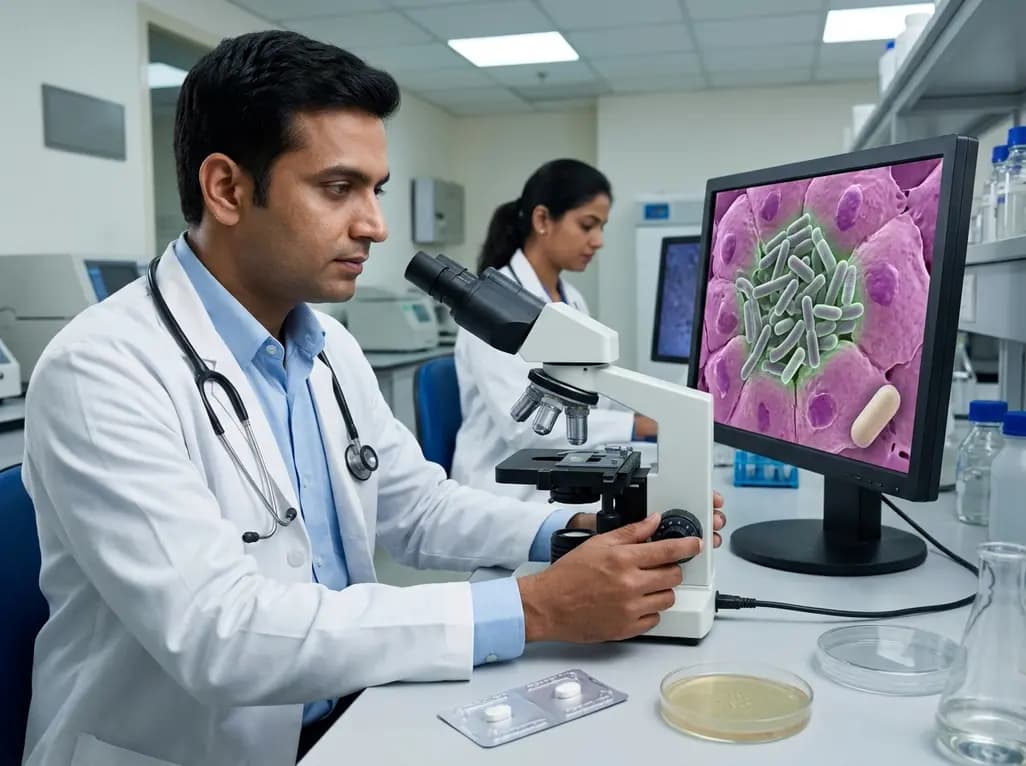
Initially, researchers developed innovative mucoadhesive probiotic vaginal tablets to combat dysbiosis. Specifically, these tablets utilize Lactobacillus gasseri strains isolated from healthy vaginal microbiota. Furthermore, the study evaluated both H14 and H15 strains for their probiotic potential. Moreover, the team incorporated mucoadhesive polymers to extend the contact time of these beneficial bacteria. Additionally, this approach facilitates successful epithelial colonization. Consequently, the formulation enhances the overall therapeutic efficacy in restoring balance. Therefore, this technology represents a significant advancement in women's health management.
Notably, maintaining bacterial viability during manufacturing is a critical challenge. In addition, researchers applied lyophilization before the direct compression process. As a result, this method protected the bacteria from the adverse effects of tableting. Similarly, the study tested various polymers, including polyacrylic acid and sodium alginate. However, hydroxypropyl methylcellulose (HPMC) emerged as the most effective excipient. Indeed, HPMC provided superior swelling and disintegration properties. Thus, it ensures the sustained release of viable probiotics in the vaginal environment.
Significantly, the L. gasseri H15 strain demonstrated exceptional resilience and adhesion. Specifically, it showed high post-lyophilization viability compared to other strains. Moreover, HeLa cell assays confirmed its strong capacity to adhere to vaginal epithelial cells. Furthermore, the tableting process did not impair this essential functional property. Accordingly, H15 is the most suitable candidate for clinical applications. Finally, these stable vaginal solid dosage forms offer a reliable way to prevent recurrent infections. Consequently, gynecologists may soon have a more effective tool for managing vaginal micro-ecology.
Primarily, mucoadhesive polymers allow the tablet to stick to the vaginal mucosa. Therefore, the probiotics remain in the target area for a longer duration. Consequently, this leads to better colonization and more effective restoration of the healthy microbiota.
Notably, the H15 strain exhibited superior survival rates after the freeze-drying process. In addition, it showed a remarkably high ability to bind to epithelial cells. Thus, it provides a better therapeutic profile than other strains for vaginal health.
Disclaimer: This content is for informational and educational purposes only and does not constitute professional medical advice, diagnosis, or treatment. Always seek the advice of your physician or other qualified health provider with any questions you may have regarding a medical condition. Refer to the latest local and national guidelines for clinical practice.
References
Kayserilioglu BB et al. Preparation and Evaluation of Mucoadhesive Vaginal Tablets Containing Probiotic Lactobacillus gasseri Strains Isolated from the Vaginal Microbiota. J Appl Microbiol. 2026 Jun 11. doi: undefined. PMID: 42275112.
Valenta C. The use of mucoadhesive polymers in vaginal delivery. Adv Drug Deliv Rev. 2005 Nov 3;57(11):1692-712. doi: 10.1016/j.addr.2005.07.004.
Pagar R, Deshkar S, Mahore J, et al. The microbial revolution: Unveiling the benefits of vaginal probiotics and prebiotics. Microbiol Res. 2024;286:127787. doi: 10.1016/j.micres.2024.127787.

Read summarized clinical updates, watch expert medical content, and earn CME certifications right from your smartphone.
Open your smartphone camera to scan and install.





Researchers have developed mucoadhesive probiotic vaginal tablets using Lactobacillus gasseri H15. These stable tablets maintain high bacterial viability and adhesion to epithelial cells, providing a promising approach to treating vaginal dysbiosis and maintaining a healthy reproductive environment.
4 months ago

Discover the crucial role of glymphatic dysfunction in stroke, where perivascular clearance failure and neuroinflammation exacerbate cerebral edema and post-stroke brain injury.
Today

A prenatal case highlights severe glutaric acidemia type II presenting as bilateral hyperechoic cystic kidneys at 18 weeks. Whole-exome sequencing revealed a novel homozygous ETFDH frameshift variant, demonstrating the power of rapid genetic testing in fetal renal anomalies.
Today

Review how tailored exercise programs benefit frail older patients with heart failure. Explore pathophysiological mechanisms, individualized training prescriptions, and strategies to overcome adherence barriers in clinical practice.
Yesterday

This comparative study evaluates posterior labral tears with and without glenohumeral instability, highlighting distinct demographic patterns, MRI underestimation in stable shoulders, and successful arthroscopic repair outcomes.
Yesterday

A clinical study demonstrates that early intervention with tocilizumab, either as monotherapy or bridged with corticosteroids, achieves significant proptosis reduction and resolves active inflammation in treatment-naive thyroid eye disease.
Yesterday
