.webp&w=384&q=75)

Loading, please wait...
Loading, please wait...

Surgical recovery for gastric cancer patients often presents significant clinical challenges. Recent research highlights that integrating resting energy expenditure (REE) into postoperative complication prediction models can enhance accuracy. This study analyzed REE dynamics in 193 patients using machine learning algorithms. Specifically, researchers measured metabolic indices before surgery and on postoperative day 1. Consequently, they identified specific ratios, such as preH-B% and D1H-B%, as critical predictors for complications like Clavien-Dindo grade II or higher.
Furthermore, the study prioritized predictors using advanced techniques like random forest and support vector machines. Traditional models often overlook these metabolic fluctuations. However, the integrated model showed a marked improvement in discrimination. Specifically, the area under the curve (AUC) rose from 0.758 to 0.812 when adding REE metrics. This improvement suggests that metabolic monitoring provides a deeper layer of physiological insight than standard clinicopathological factors alone.
Clinicians can now leverage metabolic data for better risk stratification. Notably, the parsimonious model developed in this study allows for easy clinical visualization. Additionally, internal validation through bootstrapping confirmed the model's robustness and calibration. Therefore, integrating indirect calorimetry into routine perioperative care might soon become a standard for identifying high-risk patients. This approach ensures that surgeons can implement early interventions and personalized recovery protocols effectively.
REE reflects a patient's metabolic response to surgical stress. By capturing these dynamic changes, postoperative complication prediction models can identify physiological deviations that traditional metrics like BMI might miss.
The researchers utilized random forest, support vector machines, and LASSO regression. These tools helped prioritize metabolic indices, which ultimately enhanced the model's predictive discrimination and reclassification capabilities.
Disclaimer: This content is for informational and educational purposes only. It is not intended to be a substitute for professional medical advice, diagnosis, or treatment. Always seek the advice of your physician or other qualified health provider with any questions you may have regarding a medical condition. Refer to the latest local and national guidelines for clinical practice.
References
Yang D et al. Dynamic machine learning model integrating resting energy expenditure for predicting postoperative complications after gastrectomy for gastric cancer. J Cancer Res Clin Oncol. 2026 May 10. doi: 10.1007/s00432-026-06492-y. PMID: 42107025.
Siriwardhana et al. The role of resting energy expenditure in cancer-related malnutrition. Clinical Nutrition. 2024.
Soguero-Ruiz et al. Machine learning for surgical site infection prediction. Journal of Biomedical Informatics. 2023.

Read summarized clinical updates, watch expert medical content, and earn CME certifications right from your smartphone.
Open your smartphone camera to scan and install.





A new study reveals that integrating metabolic REE dynamics into machine learning models significantly improves post-gastrectomy complication predictions....
5 months ago

Explore why official drug package inserts fail to reflect modern evidence for clozapine prescribing. Learn how legal standards of care, case law, slow titration, and vital adverse event monitoring empower clinicians to prioritize evidence-based medical practice over outdated manufacturer labeling.
Today
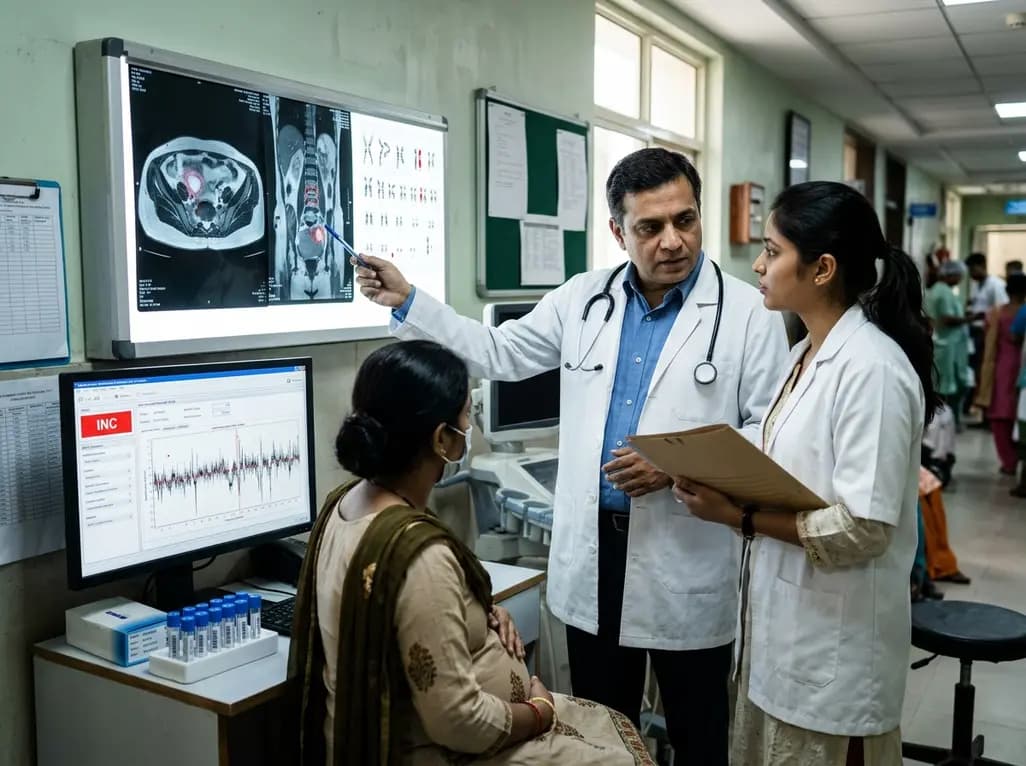
Occult maternal malignancy accounts for 3.82% of persistent unreportable NIPT results with genomic noise. Multiple chromosomal aberrations, notably on chromosome 18, warrant thorough oncological evaluation and whole-body MRI to ensure timely maternal diagnosis while preserving fetal care.
Today

This article reviews the forensic and clinical complexities of acute myocarditis arising on left ventricular hypertrophy in children, highlighting early diagnostic red flags and multidisciplinary postmortem autopsy protocols.
Today
A randomized controlled trial demonstrates that an eight-week dual-task training intervention significantly improves static and dynamic postural control over standard balance exercises in individuals with chronic ankle instability, addressing critical neurocognitive deficits during athletic and daily activities.
Today

A retrospective cohort study of 7,716 ICU patients from the MIMIC-IV database demonstrates that Gradient Boosting Decision Trees significantly outperform traditional SOFA scores in predicting in-hospital mortality among patients with sepsis and diabetes, with SHAP analysis providing clinical interpretability.
Today
